Amazon tells workers it will cut 16,000 jobs worldwide in second big wave of layoffs
Amazon has told workers it is cutting 16,000 jobs around the world to streamline its operations, hours after sending out a message to staff about the layoffs apparently in error.It is the second big wave of job cuts at the US online retail company, and comes just three months after the company said it was slashing 14,000 roles.Amazon employs about 1.5 million workers worldwide.Most job cuts are expected to be in the US, although some roles in the UK may also be affected.
The company said the “additional organisational changes” were designed to “strengthen our organisation by reducing layers, increasing ownership, and removing bureaucracy”, according to a blogpost to staff from Beth Galetti, the senior vice-president of people experience and technology.Galetti said some teams had not been affected by the job cuts announced in October, but this was not the beginning of regular waves of layoffs.“Some of you might ask if this is the beginning of a new rhythm – where we announce broad reductions every few months.That’s not our plan,” she wrote.US-based employees who are affected will be offered 90 days to find a new role internally, with the timing for applying for new roles varying in other countries.
Galetti said Amazon would continue to hire new staff and invest in “strategic areas and functions that are critical to our future”.The official announcement came just hours after workers at Amazon Web Services (AWS) received an online meeting invitation from a top executive on Tuesday for the following day – subsequently cancelled – that also contained a draft email revealing the cuts.The message erroneously said that affected employees in the US, Canada and Costa Rica had already been told they had lost their jobs.It was signed by Colleen Aubrey, a senior vice-president of applied AI solutions at AWS, while the layoffs were referred to in the email as “Project Dawn”.“Changes like this are hard on everyone,” Aubrey wrote in the email, which was seen by multiple news outlets including Reuters and Bloomberg.
“These decisions are difficult and are made thoughtfully as we position our organisation and AWS for future success.”The email referred to a separate message from Amazon’s human resources boss, which did not appear to have been sent.Amazon has been trying to reverse a pandemic hiring spree in an effort to cut costs and slim down its vast operation.Its chief executive, Andy Jassy, has previously warned white-collar workers at the company that their jobs could be taken by AI in the next few years.The news of fresh Amazon layoffs came as the US delivery company United Parcel Service (UPS) said it would cut up to 30,000 jobs this year, adding to last year’s staff reductions, as it focuses on higher-margin shipments.
UPS has been working to cut millions of low-value deliveries it carries out for Amazon, which is its largest customer but increasingly also a delivery rival.UPS has called its business with Amazon “extraordinarily dilutive” to margins.It is understood that a few hundred of the job cuts are expected to be in UK corporate offices in London and Manchester, with warehouses unaffected.Additional reporting by Sarah Butler

SpaceX mulls $1.5tn IPO timed to ‘align with Musk’s birthday and the planets’
Elon Musk’s SpaceX is considering a flotation valuing the rocket company at $1.5tn (£1.1tn) that will reportedly be timed for early summer to coincide with a planetary alignment and the multibillionaire’s birthday.The world’s richest person is targeting a symbolic date of mid-June for the initial public offering, according to the Financial Times. This would be around the same time as Jupiter and Venus appear in close proximity to each other and shortly before Musk turns 55 on 28 June

Wall Street index rises above 7,000 for the first time; SpaceX mulls $1.5tn IPO in June – business live
On Wall Street, the S&P 500 index has gone through the 7,000 mark for the first time, driven by optimism around artificial intelligence and expectations of strong results from big technology companies.The index is now up 29 points just below the 7,000 level. The tech-heavy Nasdaq rose 150 points, or 0.6%, to 23,967 at the open.It took about three years for the S&P 500 to rise to 5,000 points from 4,000, but only about nine months to jump from 5,000 to 6,000, in November 2024
The easy thing for the RBA to do next week is raise rates. The smart move is to wait | Greg Jericho
There is a kind of sickness in Australia’s coverage and discussion about the economy – an obsession that interest rates need to do something. Go up, go down – anything! Unemployment fell, interest rates must do something (apparently fewer people being out of a job is bad and needs to be cured). Oh no, inflation went up in one month – we need interest rates to do something!!We see this as well with investors – or let’s be honest, speculators – who are determined that interest rates will go up next week.Even before the December CPI figures were released, investors were betting (and that is all it is) that there was a 58% chance the Reserve Bank of Australia would increase rates on 3 February:If the graph does not display click hereAfter the figures were released, showing inflation rose from 3.4% in November to 3

US dollar sinks to its lowest level in four years
The US dollar has fallen to its lowest level in four years after Donald Trump brushed off concerns over the currency’s fall, sending investors fleeing to traditional havens including gold and the Swiss franc.The dollar dropped by 1.3% against a basket of currencies after the president’s comments on Tuesday, marking its fourth day of declines, then slipped by a further 0.2% on Wednesday morning.“No, I think it’s great,” Trump said of the weaker dollar, during a visit to Iowa to promote his record on the economy

How has your local high street changed since 2019? Check your postcode
From department stores to discount shops, bookmakers to beauty salons, the makeup of Britain’s high streets has shifted dramatically since 2019. Shopping-led town centres are giving way to areas increasingly dominated by services, food, and leisure – but the scale and shape of that change varies widely from place to place.The last six years have coincided with a series of shocks to the economy. Lockdowns during the Covid pandemic disrupted footfall and accelerated online retail, while Brexit, energy bill hikes, a cost of living crisis and national changes to wages and employer tax contributions have piled further pressure on both independent businesses and national chains. What remains on Britain’s high streets – and what has disappeared – offers a snapshot of how the country shops, eats and spends its time
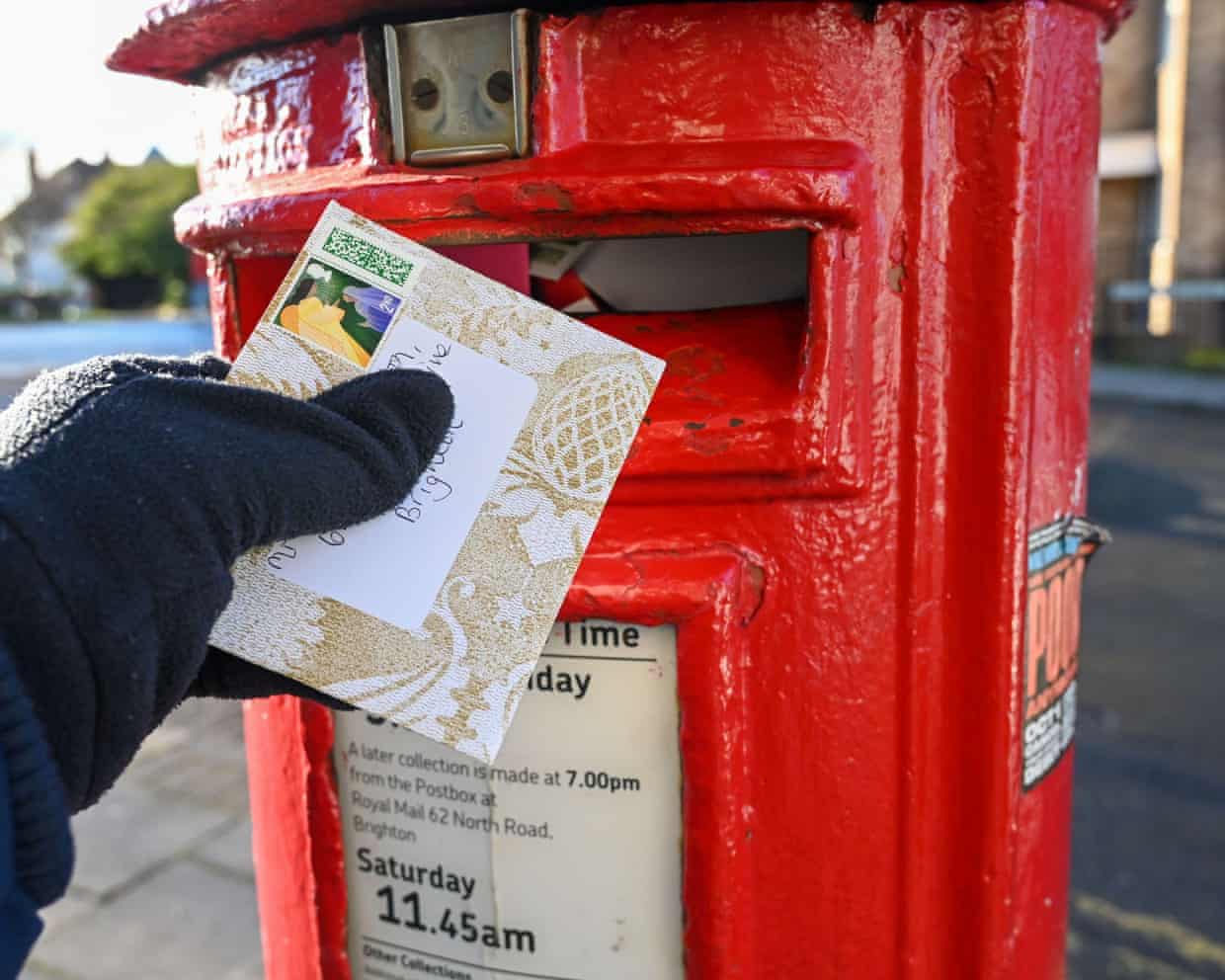
Royal Mail delivered Christmas letters and parcels late to about 16m people
Royal Mail has been criticised for offering an “unacceptable” performance over the crucial Christmas period after it failed to deliver letters and cards on time to about 16 million people, Citizens Advice found.The consumer watchdog, which carried out research into Christmas deliveries, said that figure was 50% higher than in 2024, and the highest level over the festive period in five years, excluding when Royal Mail was hit by strike action in the run-up to Christmas four years ago.“We’re afraid there’s no light at the end of the tunnel for consumers struggling with Royal Mail’s persistent delivery failures,” said Anne Pardoe, the head of policy at Citizens Advice. “When people have no other postal provider to choose from, the sheer volume of delays is simply unacceptable.”The research, based on a survey of almost 2,100 adults conducted by Yonder, calculated that 5

US TikTok users: tell us how you feel about the app after the new US deal

YouTube criticised after pulling out of UK TV audience measurement
Amazon tells workers it will cut 16,000 jobs worldwide in second big wave of layoffs

Coinbase adverts banned in UK for suggesting crypto could ease cost of living crisis

Pornhub to stop new UK users accessing site from next week

How ICE is using facial recognition in Minnesota