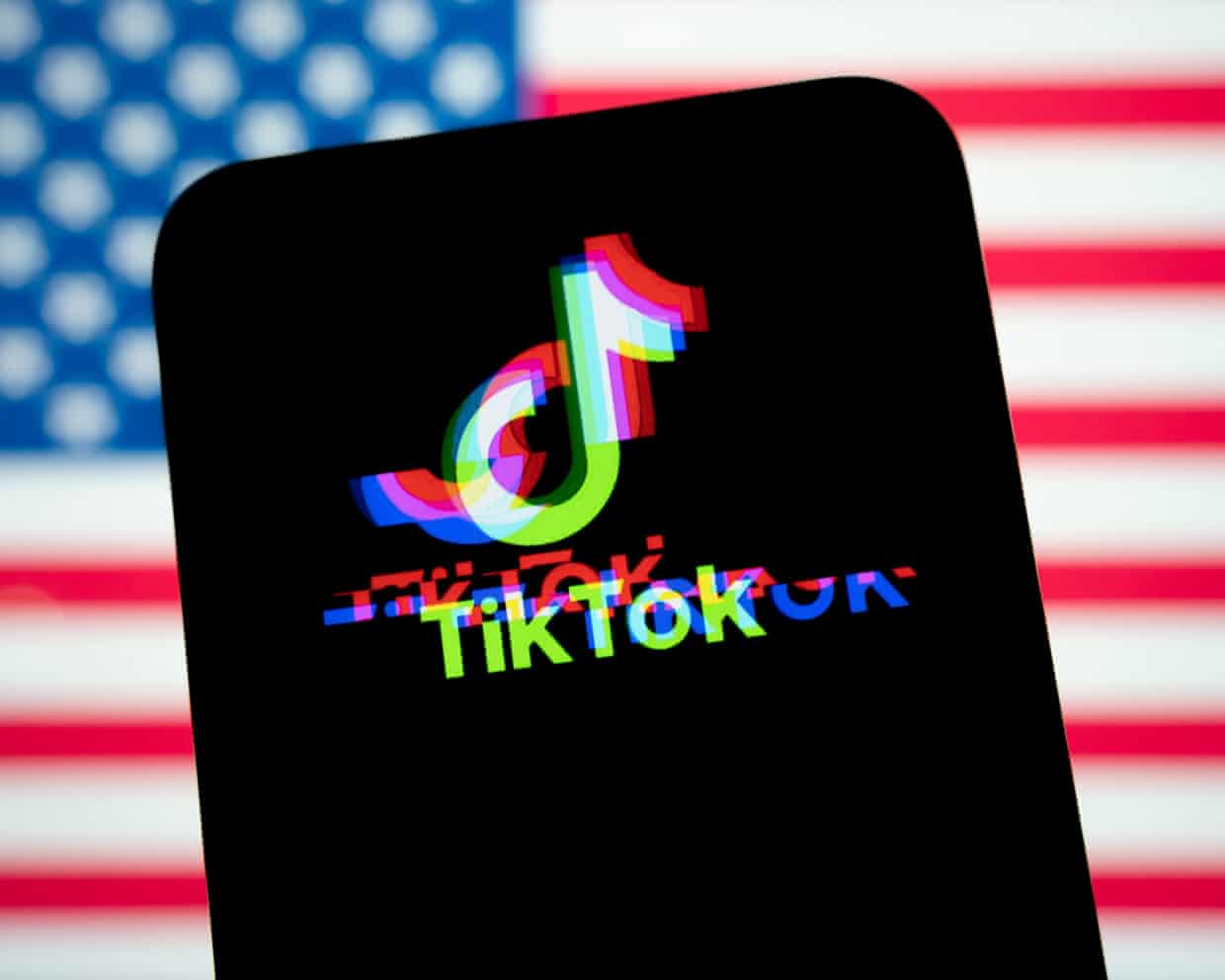
Disastrous start for US TikTok as users cry censorship
Hello, and welcome to TechScape,I’m Blake Montgomery, writing to you from Doha, where I’m moderating panels about AI and investing as part of the Web Summit Qatar,I want to bring your attention to the impact of a Guardian story,In December, we published a story, “‘A black hole’: families and police say tech giants delay investigations in child abuse and drug cases”, about grieving families and law enforcement officers who say that Meta and Snapchat have slowed down criminal investigations,(The tech companies contend that they cooperate.
) This month, Colorado lawmakers introduced a bill to compel social media platforms to respond to warrants in 72 hours,Nearly two weeks ago, TikTok stepped on to US shores as a naturalized citizen,Ever since, the video app has been fighting for its life,It endured a major outage that stifled users’ ability to upload videos, which fueled a fierce user backlash over perceived censorship,Now it’s facing an ascendant competitor and an inquiry by the California governor.
TikTok’s calamitous emigration began on 22 January when its Chinese parent company, ByteDance, finalized a deal to sell the app to a group of US investors, among them the business software giant Oracle.The day after the deal closed, its new owners altered its privacy policy to permit more extensive data collection.During the weekend that followed, the US weathered a fearsome winter storm and the killing of an American citizen by federal immigration agents.Both knocked TikTok off its feet.Winter Storm Fern crippled multiple Oracle datacenters that TikTok relies on.
The app suffered severe outages as a result.Many users said they were unable to upload videos.Others said their videos received zero views despite significant followings.Many of those same users cried censorship as they tried to express their outrage over Alex Pretti’s death via TikTok and found they could not.Prominent personalities said they would leave the app.
After days of outcry, TikTok issued a statement ascribing the problems to the snow, ice and cold.That did not stop California’s governor, Gavin Newsom, from announcing the next day that his office would investigate the app’s alleged suppression of content critical of Donald Trump.TikTok’s late attribution of blame did little to assuage public criticism.The exodus has propelled a new competitor, Upscrolled, which promises less censorship than TikTok, to the top spot in the US Apple App Store and the third spot in the Google Play Store.Upscrolled’s founder said in a conversation at the Web Summit Qatar that the app now boasts more than 2.
5 million users.Read more: ‘It’s really sad’: US TikTok users rethink app over concerns about privacy and censorshipWith more than a billion users worldwide, it seems unlikely that TikTok will altogether vanish as a result of these failures.TikTok’s first week in the US does not bode well, though.Elon Musk had more extensive ties to Epstein than previously known, emails showTesla discontinues Model X and S vehicles as Elon Musk pivots to roboticsTwo dramas, both showing in New York, are highlighting how our collective anxieties about technology have shifted in the decade between their premieres.Marjorie Prime, now revived on Broadway but first staged in 2014, follows Tess (Cynthia Nixon), as she deals with the ageing, death and robotic recreation of her mother (June Squibb).
The world of the play features “Primes”, android lookalikes of real people that attempt to emulate them for the comfort of those left behind, which Tess and her mother both engage with.Picture an Alexa, but it’s your dead husband, grandmother, etc.The play brings to mind the early worries about Siri, which debuted three years before the play.Since then, we’ve seen our own real-life versions of Primes: millions of people have digitally copied their deceased loved ones to varying degrees of uncanniness and success.Though its predictions are no longer far-fetched, the play remains moving.
I found it touching.Data, which premiered off Broadway last week, follows the talented young programmer Maneesh (Karan Brar) after he joins Athena Technologies, a clear analogue for the very real company Palantir.Maneesh is inducted into the company’s most elite team, data analytics, where he learns about clandestine work with the US government.He struggles with the ethics of the project.He wrestles with whether to expose it to the world in hopes of tanking it or keeping his head down.
The play’s themes are quite familiar.They were playing out in headlines two days before I attended, and the Guardian has published stories about them.Data is paced and plotted like a political thriller, more like House of Cards than Her.Seeing the two plays within a week of each other, I was struck by how much our concerns with tech have moved from the realm of science fiction into that of realism.Marjorie Prime is less literally concerned with tech, more with its emotional consequences.
Data is about what it means to literally work as a software engineer.It seems unlikely to me that a play about the ethics of software in US bureaucracy could have sustained any tension in an era before this one.Marjorie Prime imagines a melancholy future; Data chronicles a version of the unpleasant present.The very real events of the previous year and Silicon Valley’s entanglement with the Trump administration loom over Data, for better and for worse.The play could not be more timely; it may feel dated by the end of year.
Watching it felt like reading a yarn in the Wall Street Journal (or the Guardian, if I’m flattering myself).Read more: Marjorie Prime review – Cynthia Nixon steals sad, and spotty, sci-fi revivalI am curious to observe which play ages better.Data serves as a real-time, red-hot record of our current moment, which may cool quickly.During the play, I was intrigued by some of its villains’ seemingly nefarious arguments in favor of the company’s work.What if the main character exposes the evil in the press and nothing happens, as his boss says? I have been part of multiple news cycles where that has been the case.
What will plucky 22-year-old Maneesh do then? The question presents a more interesting, nuanced response to reality than Maneesh’s black-and-white, do-or-die plan to blow things up,By contrast, Marjorie Prime’s sentient artificial intelligence acts as a vehicle to discuss the age-old grief of a parent’s death and its aftermath,The central question that both plays ask is not, in the end, one explicitly about technology, but about how to keep living beneath crushing weight,In Marjorie Prime, Tess struggles with the repetitiveness of her days and the robotic, constant reminder of her mother,She eventually succumbs to her despair, replaced by a robot herself, which torments her grieving husband with its pale simulation.
In Data’s final, devastating scene, the secondary hero, Riley (Sophia Lillis, who gives the play’s best performance), asks how she can just go back to work, plagued as she is by moral concerns but trapped by monetary need, after failing to stop the company’s work,She trembles as her phone beeps, reminding her she’s late for her next meeting,What is Moltbook? The strange new social media site for AI botsThe slopaganda era: 10 AI images posted by the White House – and what they teach usApple reports record iPhone sales as new lineup reignites worldwide demandSouth Korea’s ‘world-first’ AI laws face pushback amid bid to become leading tech powerCan you guess our screen time? A priest, pensioner, tech CEO and teenager reveal all

Rukmini Iyer’s quick and easy recipe for mushroom and artichoke puff-pastry quiche | Quick and easy
No time to make shortcrust? Bought puff pastry makes an instant (and decadent) alternative. Yes, I know you can buy ready-rolled shortcrust, but I wouldn’t: it’s trash. If this column didn’t have a 30-minute time constraint, I’d blitz 200g plain flour and 100g cold cubed salted butter to sand, then add one egg yolk and a tablespoon of cold water, then blitz for a few seconds, and no longer, until it just comes together. I’m unorthodox, so I then tip the pastry straight into a pie dish, quickly pat it into place and freeze for 15 minutes. Blind bake for 10 minutes at 180C(160C fan)/350F/gas 4, before removing the paper and baking beans and tipping in the filling – it’s really not very much work

How to make mulligatawny – recipe | Felicity Cloake's Masterclass
I have yet to see anyone eating mulligatawny in an Indian restaurant – perhaps unsurprisingly, given that it’s a product of the British occupation, and the very name has an off-putting Victorian feel, which is a shame, because it’s aged a lot better than imperialism. Based, historians think, on the Madrassi broth molo tunny, it’s a lovely, gently spiced winter soup that’s well worth rediscovering.Prep 15 min Cook 50 min Serves 4-61 onion 1 carrot 1 parsnip 1 celery stick 2 tbsp ghee, or oil (eg, coconut)4 garlic cloves 1 knob fresh ginger ½ tsp cayenne pepper or mild chilli powder 2½ tsp madras curry powder (see step 5) 1½ litres good-quality chicken stock, or vegetable stock1 chicken thigh, bone in. skin on (optional; see step 1)150g masoor dal (AKA split orange lentils)4 tbsp flaked almonds (optional; see step 7)100ml hot milk, or water1 tbsp lemon juice Salt 1-2 tbsp fruity chutney (eg, mango; optional)1 small bunch fresh coriander, roughly chopped, to servePlain yoghurt, to serveThough often made with chicken, mulligatawny was also traditionally prepared with mutton or goat, and works well with lamb, too; any fairly tender cut of either will be fine (or, indeed, you could just add some cooked meat at the end). For a lighter dish, leave it out; to make it plant-based, just swap the fat and stock as suggested below
Guinness Open Gate Brewery, London WC2: ‘Absolute “will-this-do?” nonsense’ – restaurant review | Grace Dent on restaurants
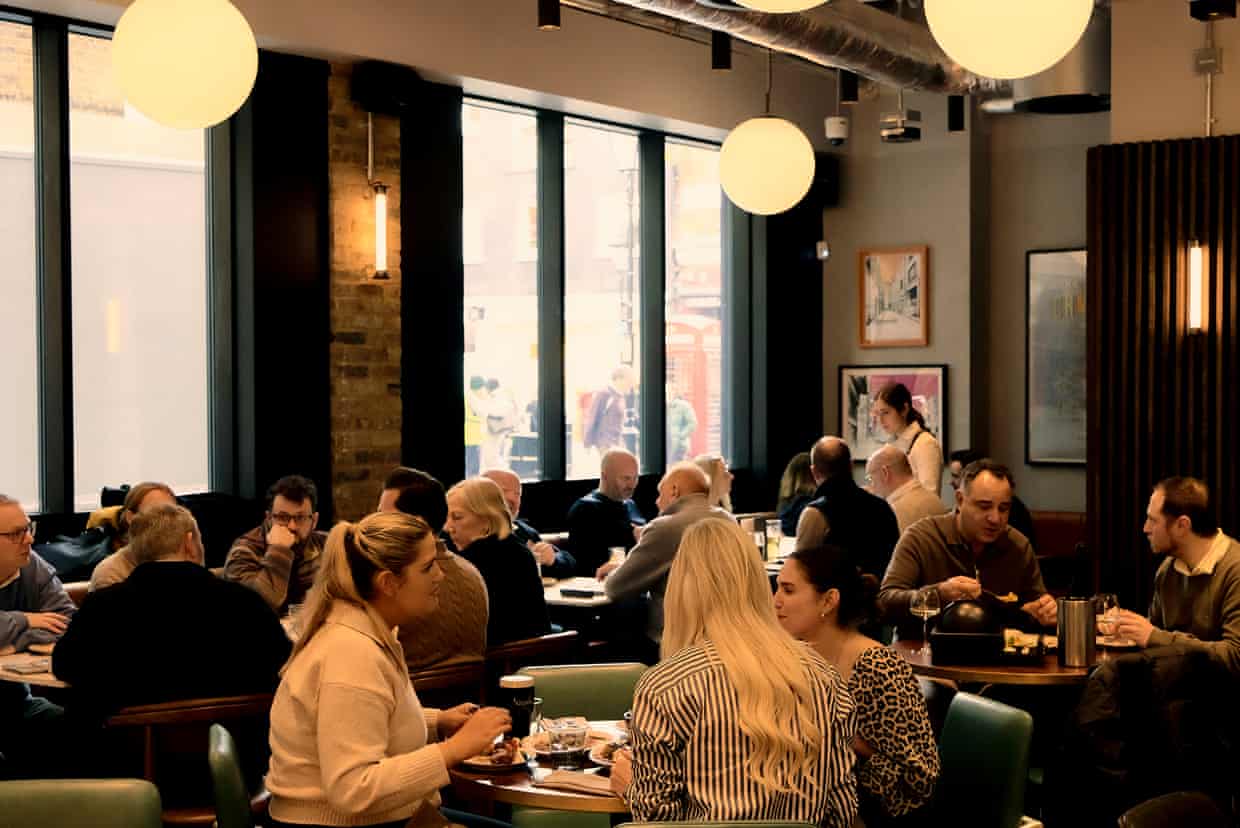
The new Guinness Open Gate Brewery, with its tours, gift shop and dining options, has appeared in Covent Garden, slap-bang in the centre of London’s most nosebleedingly expensive real estate.This multi-multi-million-pound paean to “the black stuff”, where Guinness disciples can make pilgrimage, has been on the capital’s horizon for what seems like an era. The project has been tantalisingly dangled as an opening for some years, then delayed umpteen times, because, quite understandably, erecting a purpose-built, gargantuan, multi-floor Willy Wonka’s Booze Factory in the West End of London for a corporate behemoth is no easy feat. Imagine the layers of global, bureaucratic, cross-platform multi-media team Zooms that had to happen to hone the ultimate Guinness experience. So many Is to dot and Ts to cross, particularly, because food is a central part of the venture, with two restaurants on site – The Porter’s Table and Gilroy’s Loft – where exec chef Pip Lacey is serving non-challenging yet hearty menus, as well as a courtyard pie stall by Calum Franklin
The rise of ‘beef days’: why even meat lovers are cutting back
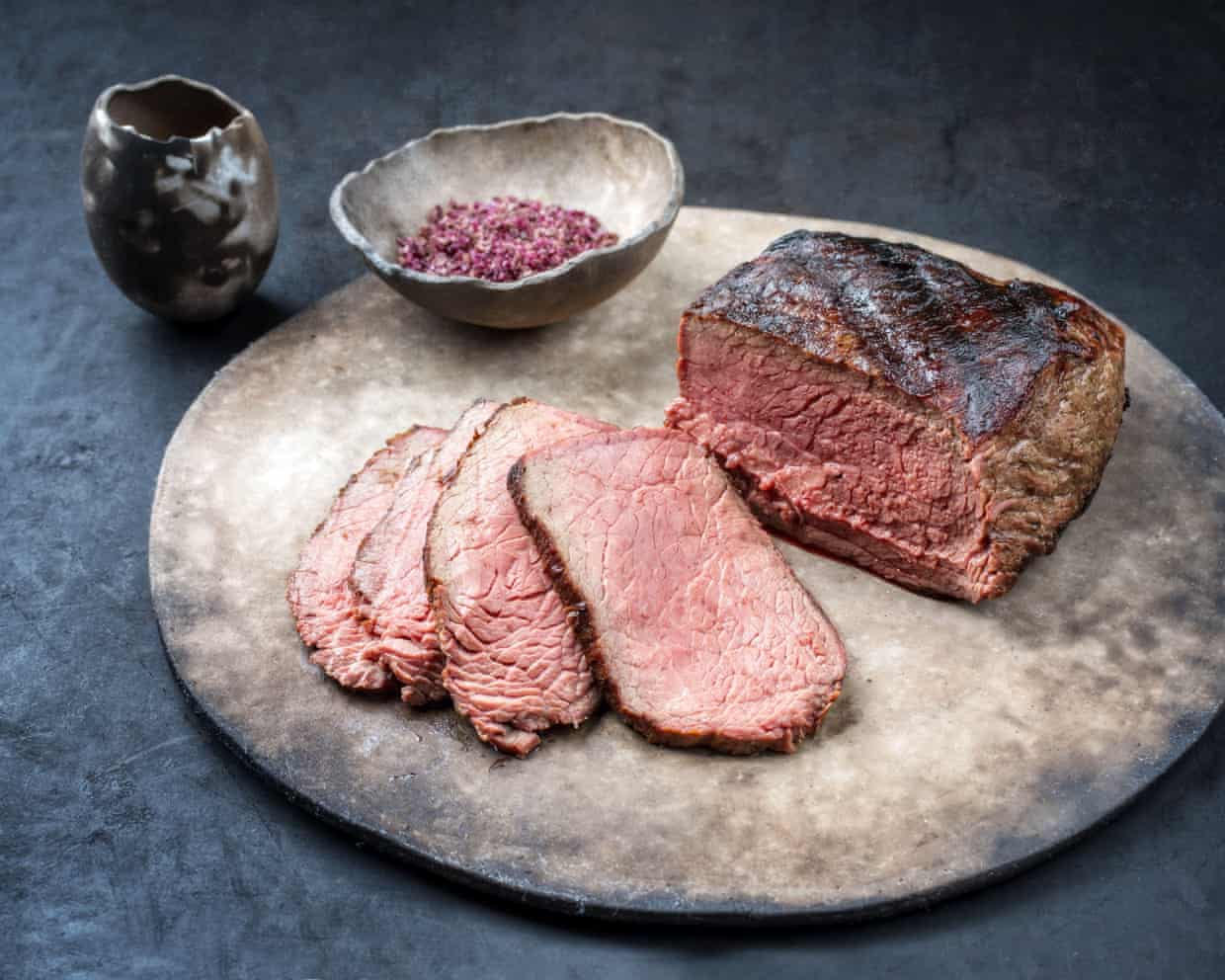
“I love beef,” says Vlad Luca, 25. But unlike most other self-proclaimed steak lovers, Vlad eats it only four times a year, on designated “beef days”.The “beef days” phenomenon has been popularised by the brothers John and Hank Green, known collectively as vlogbrothers on YouTube. John, 48, is better known for his YA fiction, including The Fault in Our Stars, while Hank, 45, is a self-described science communicator and entrepreneur.They have been making videos on their shared channel since 2007, and have more than 4 million subscribers

New type of Bordeaux wine to gain official status as result of climate pressure
Bordeaux’s wine industry has historically adapted to consumer habits. In the 1970s the region leaned towards white, but by the 2000s was famed for powerful oak-aged reds.Now it’s turning to a much older form of red with a name familiar to anglophones: claret. With origins in the 12th century, when it was first shipped to Britain, claret was soon our favoured wine, an unofficial byword for bordeaux red, which in recent decades has become increasingly full-bodied.The Bordeaux protected designation of origin has now formally validated bordeaux claret, linking it to the existing Bordeaux appellation

Benjamina Ebuehi’s recipe for citrus and almond cake | The sweet spot
Anything bright and zingy is particularly welcome in January, even more so when it’s in the form of cake. I always have an odd end of marzipan after the festive season, and this is a great way to use it up and bring that cosy almond flavour. The marzipan gets blitzed into the butter for a plush-textured loaf cake, and comes together in minutes thanks to simply putting everything in a food processor.Prep 10 min Cook 1 hr 10 min, plus cooling Serves 8-10200g unsalted butter, softened125g marzipan 150g caster sugar Finely grated zest and juice of 1 orange, plus 2 tbsp extra juice for the icingFinely grated zest and juice of 1 lemon3 large eggs 220g plain flour 50g ground almonds ¼ tsp fine sea salt 2 tsp baking powder 50g plain yoghurtTo finish100g icing sugar 40g toasted flaked almondsHeat the oven to 180C (160C fan)/350F/gas 4, and grease and line a 2lb loaf tin with baking paper.Put the butter and marzipan in a food processor and blitz until smooth

Elon Musk is taking SpaceX’s minority shareholders for a ride | Nils Pratley
FTSE 100 falls back from record high amid AI worries; gold heads for best day since 2008 – as it happened
French headquarters of Elon Musk’s X raided by Paris cybercrime unit

From ‘nerdy’ Gemini to ‘edgy’ Grok: how developers are shaping AI behaviours

LIV Golf tour hits out at decision to only award ranking points to top-10 finishers
IOC president gives clearest signal so far that Russia could be at 2028 Olympics