‘It’s really sad’: US TikTok users rethink app over concerns about privacy and censorship
Many TikTok users across the US say they’re rethinking their relationship with the platform since its ownership and terms and conditions have recently changed, with some citing censorship and lack of trust as reasons why they’re removing themselves from the app.Keara Sullivan, a 26-year-old comedian, says TikTok jumpstarted her career and provided a pathway to getting a manager and a literary agent.“I’m not one of those creators who’s a TikTok hater,” said Sullivan, who has more than half a million followers on the platform.“I’m very transparent about the fact that where I am in my career is largely because of TikTok.”That’s why, she said, it’s “really sad” for her to step away from the platform – at least for now.
TikTok, the short-form video platform owned by Chinese company ByteDance, has faced scrutiny after the decision to create a new US-based entity, TikTok USDS Joint Venture, in an effort to avoid being banned in the country,Investors in the majority US-owned venture include Oracle, which is owned by Donald Trump ally Larry Ellison, the private equity-group Silver Lake and Abu Dhabi’s MGX, who will own 80,1% of the new entity,ByteDance will own the remaining 19,9%.
The announcement was made five years after Trump first threatened to ban the popular app in the US during his first term in office.TikTok’s new deal has been accompanied by changes to app’s terms and conditions, reports of technical issues and a growing debate among users and creators about privacy and censorship.The daily average of US users deleting the TikTok app has increased 195% from 22 Januaryto 28 January compared with the previous 90 days, according to data collected by Sensor Tower, a market intelligence firm.Many social media users have voiced concern over language in the app’s terms and conditions, which specifically point out the types of data that TikTok may collect on its users, including “racial and ethnic origin” and “sexual life or sexual orientation, status as transgender or nonbinary, citizenship or immigration status, or financial information”.That language was present in the previous version of platform’s terms, which were updated in 2024, but one noticeable new feature in the terms is the explicit acknowledgment that TikTok collects precise location data (unless you opt out), as reported by Mashable.
TikTok user Julia, a 32-year-old caregiver based in Washington, told the Guardian that she deleted the app as soon as she heard about the company’s new agreement.“I trust Oracle and Ellison about as much as I trust eating a raw burger on a hot summer day,” she said.After the killing of Alex Pretti by federal agents on 24 January, some content creators expressed concern that videos condemning the federal agency were being suppressed by TikTok.Comedian Meg Stalter said in an Instagram post that a video she made urging fellow Christians to speak up against ICE tactics was not being uploaded to the app.In response, she decided to delete the app.
“[TikTok] is under new ownership and we are being completely censored and monitored,” she wrote in her post,California governor Gavin Newsom also voiced concern about potential TikTok censorship this past week, writing on X: “Following TikTok’s sale to a Trump-aligned business group, our office has received reports – and independently confirmed instances – of suppressed content critical of President Trump,” Newsom announced that the state will be launching an investigation into the platform and whether it is violating California law by censoring anti-Trump content,TikTok USDS Joint Venture attributed the issues to a power outage at a US datacenter, unrelated to the weekend’s events,On 27 January, the entity issued the following statement: “We’ve made significant progress in recovering our U.
S.infrastructure with our U.S.data center partner.However, the U.
S.user experience may still have some technical issues, including when posting new content.We’re committed to bringing TikTok back to its full capacity as soon as possible.”A 21-year-old software engineer, who asked to remain anonymous, first encountered TikTok in 2020 as a high school junior.“I was amazed how quickly it learned my interests, kept up with trends and recommended things I would’ve never sought out myself,” he said.
“For better or for worse, I was probably using it at least four hours a day.”He says he stayed on the app for so long due to the quality of his algorithm; but after TikTok’s temporary shutdown in the US in January 2025, he began to notice differences.“I didn’t like how the pop-up message painted Trump as the ‘savior’ that would bring back TikTok once he was in office,” he said.“After it was brought back, I noticed a significant decline in recommendation quality.”Sullivan also noticed major changes following TikTok’s brief blackout, including a reduction in the income she was receiving through the company’s creator rewards program.
She ultimately made the decision to pivot away from TikTok after noticing potential censorship issues, including the banning of Palestinian journalist Bisan Owda, who had 1.4 million followers on the app.Even before TikTok found its US owner, Sullivan knew that it was in her best interest to disseminate her content far and wide.“In the internet ecosphere, you kind of have to create these different avenues for yourself, because you can’t rely on one platform,” she said.“The algorithm could change at any time.
”
‘It’s really sad’: US TikTok users rethink app over concerns about privacy and censorship
Many TikTok users across the US say they’re rethinking their relationship with the platform since its ownership and terms and conditions have recently changed, with some citing censorship and lack of trust as reasons why they’re removing themselves from the app.Keara Sullivan, a 26-year-old comedian, says TikTok jumpstarted her career and provided a pathway to getting a manager and a literary agent.“I’m not one of those creators who’s a TikTok hater,” said Sullivan, who has more than half a million followers on the platform. “I’m very transparent about the fact that where I am in my career is largely because of TikTok.”That’s why, she said, it’s “really sad” for her to step away from the platform – at least for now
Why TikTok’s first week of American ownership was a disaster
A little more than one week ago, TikTok stepped on to US shores as a naturalized citizen. Ever since, the video app has been fighting for its life.TikTok’s calamitous emigration began on 22 January when its Chinese parent company, ByteDance, finalized a deal to sell the app to a group of US investors, among them the business software giant Oracle. The app’s time under Chinese ownership had been marked by a meteoric ascent to more than a billion users, which left incumbents such as Instagram looking like the next Myspace. But TikTok’s short new life in the US has been less than auspicious

US authorities reportedly investigate claims that Meta can read encrypted WhatsApp messages
US authorities have reportedly investigated claims that Meta can read users’ encrypted chats on the WhatsApp messaging platform, which it owns.The reports follow a lawsuit filed last week, which claimed Meta “can access virtually all of WhatsApp users’ purportedly ‘private’ communications”.Meta has denied the allegation, reported by Bloomberg, calling the lawsuit’s claim “categorically false and absurd”. It suggested the claim was a tactic to support the NSO Group, an Israeli firm that develops spyware used against activists and journalists, and which recently lost a lawsuit brought by WhatsApp.The firm that filed last week’s lawsuit against Meta, Quinn Emanuel Urquhart & Sullivan, attributes the allegation to unnamed “courageous” whistleblowers from Australia, Brazil, India, Mexico and South Africa

We have lost so much of ourselves to smartphones: can we get it back?
In 2003, the Stanford social scientist BJ Fogg published an extraordinarily prescient book. Persuasive Technology: Using Computers to Change What We Think and Do predicted a future in which a student “sits in a college library and removes an electronic device from her purse”. It serves as her “mobile phone, information portal, entertainment platform, and personal organiser. She takes this device almost everywhere and feels lost without it.”Such devices, Fogg argued, would be “persuasive technology systems … the device can suggest, encourage, and reward”

Elon Musk had more extensive ties to Epstein than previously known, emails show
Elon Musk had more extensive – and more friendly – communications with the financier and sex offender Jeffrey Epstein than previously publicly known, according to documents released on Friday by the Department of Justice. Emails in the files appear to show the two cordially messaging each other on two separate occasions to make plans for Musk to visit Epstein’s island.The documents include Musk and Epstein emailing in both 2012 and 2013 to determine when Musk should make the trip to Little St James. Neither exchanges appear to have resulted in Musk visiting the island, due to logistical issues.“Will be in the BVI/St Bart’s area over the holidays

What good is a social media ban when screens are rife in classrooms? | Letters
Your recent coverage of children’s screen use (How screen time affects toddlers: ‘We’re losing a big part of being human’, 22 January) highlights an issue that still receives remarkably little attention: the amount of screen time built into the school day. While politicians debate bans on social media for under‑16s, and teachers report children trying to swipe the pages of books, it is puzzling that the question of screen time in schools is left out of discussions.Every morning, most primary school children are greeted by an electronic whiteboard glowing in the classroom, often left on all day. Lessons are delivered as slides, tablets are used for activities, and many schools require homework to be completed online.When it rains, “wet play” means more screen‑based entertainment
US jobs report delayed again amid government shutdown

Gold and silver prices seesaw as FTSE 100 hits record high

‘A mixed blessing’: crowdfunding has changed the way we give, but is it fair and effective?
‘Marketplace for predators’: Meta faces jury trial over child exploitation claims
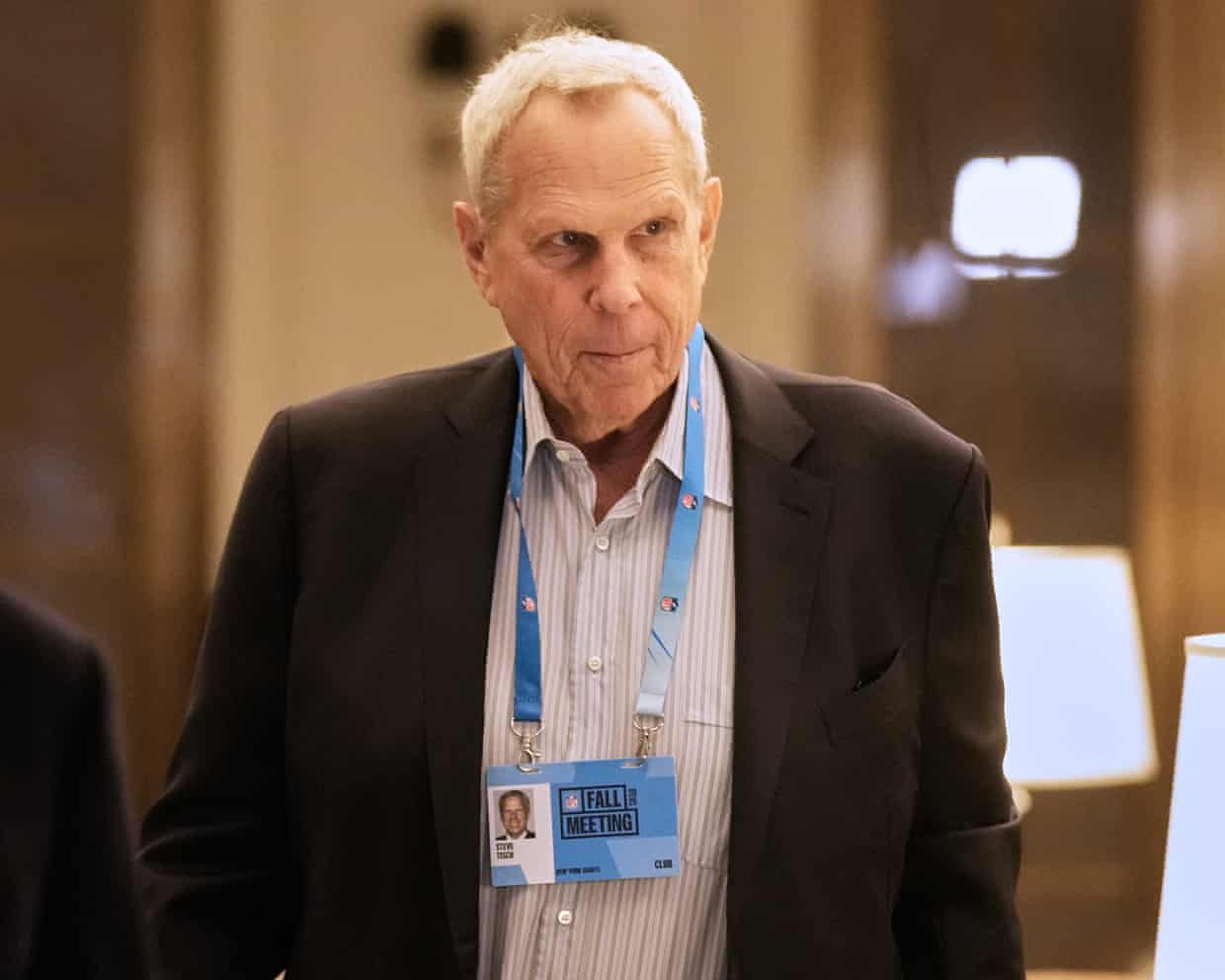
NFL looking into messages between Giants co-owner Steve Tisch and Jeffrey Epstein

Australia to face debutants Hong Kong in opening match of 2027 Rugby World Cup