Robo athletes miss the point of sport – there is no drama without emotion | Emma John
It hurts to miss an unmarked shot in basketball.And it certainly seemed to pain the Alvark Tokyo shooter, halfway through April’s Japanese league game against Shimane Susanoo Magic.As the ball bounded off the rim, the player wheeled away, head lowered, eyes downcast.The disappointment looked glaringly real.Which is interesting, because it was not.
The player could not have cared less.They literally could not care at all, and not just because this was a half-time exhibition.It was because they were a robot, created by Alvark Tokyo’s team sponsor, Toyota.CUE7 is not the first AI-powered b-baller, but it is the coolest-looking so far.At 7ft 2in, it wears the team kit well, gliding easily around the court with wheels for feet and hoops for hands.
Red, jointed limbs sport a metallic sheen that might, on a human, be sweat.Alongside a cyclops-style eye, the cameras that help guide its movements have been fashioned into deeply familiar features, like the LeBron James-style beard and headband.Its look and its movements are recognisable enough that it is impossible to watch it line up at the foul line without a twinge of anticipation.Is Big Red going to make the shot? Even when watching a highly edited clip, I found myself anthropomorphising the robot so quickly that I felt a guilty horror when I saw him – it, dammit, it – being hoisted away at the end of the demo by a crane.No athlete should suffer so undignified an exit from the arena.
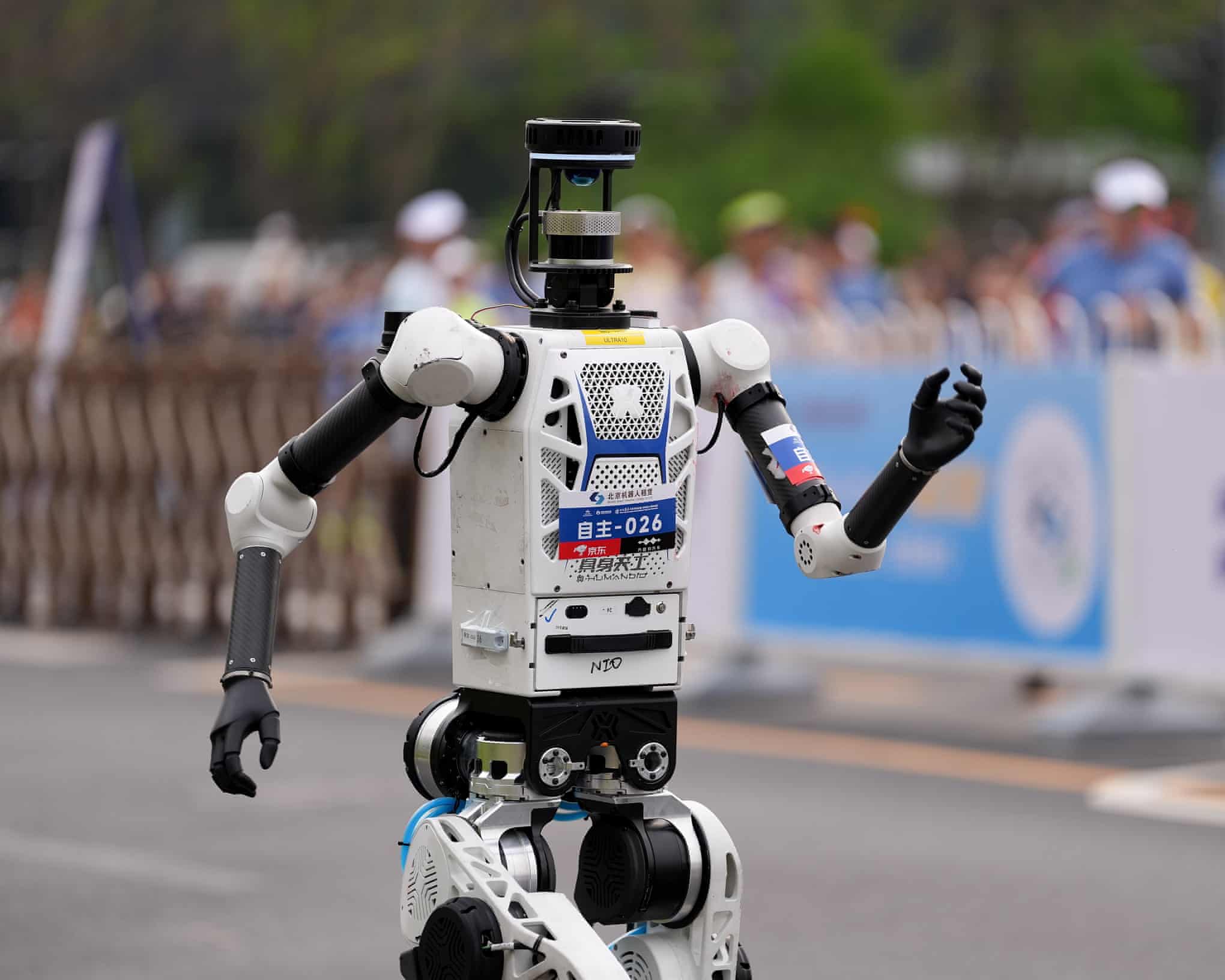
For anyone who has never contemplated the rising dawn of robot athletes, the past two weeks may come as a shock.Just a few days before CUE7 made its debut, the Beijing half-marathon saw humans and robots running the course together, albeit in separate lanes.This is the second consecutive year the experiment has been tried: in 2025, several of the non-human competitors struggled to get away from the start line, and most failed to finish.The winning robot, Tiangong, which needed its battery replaced three times around the course, finished in 2hr 40min, twice as long as the quickest man.Last month’s results, then, are a miracle of technological advancement (or, depending on your outlook, yet another death knell for humanity).
All three robots on the podium beat the current world record, set in Lisbon in March by Jacob Kiplimo.Kiplimo ran 57:20; Lightning, a robot created by smartphone manufacturer Honor, was nearly seven minutes faster in Beijing.Once, we could comfort ourselves that however good machines were at, say, chess, they could never mimic the super-fast physical reactions that occur so naturally and instinctively in a human athlete.Now, thanks to advances in AI, they can.Only a week ago, Sony AI shared footage of their table tennis-playing robot, Ace, winning three out of five matches against elite players.
Ace is not the kind of athlete anyone is putting on a magazine cover soon.There is nothing humanoid about its appearance at all – it is a robotic arm on a moving platform that looks like it manufactures cars in its spare time.While short clips of Ace in action against the professionals are diverting enough, it is hard to imagine a future where people tune in en masse for the spectacle.But that is not the ultimate goal of sporting robots, say the experts: their value will be in training flesh-and-blood sportspeople.To date, sporting history bears out the argument.
Bowling machines may be more consistently accurate, and capable of faster speeds, than the best paceman on your cricket team, but no one has changed the laws to include one in a team yet.Ever since Deep Blue beat the world champion Garry Kasparov exactly three decades ago, computers that can easily beat humans have established their place in chess as training companions.And Ace has already proved its worth in that regard: a former Olympian, watching the footage, saw it play a shot he had previously thought impossible.The development of sports-playing robots generally is not about sport at all – rather, it is a focus for research and development in the wider scientific field.RoboCup, the annual football tournament which celebrates its 30th anniversary this year, aims to develop robots capable of beating the World Cup winners by 2050.
The average football fan may consider that ambitious: in last year’s final, the half-height humanoids stamped around the pitch at walking pace, shuffling up to the ball and occasionally falling flat on their face.But whether RoboCup achieves its goal or not, the tech it has inspired is already benefiting society from search and rescue operations to Amazon warehouses.There are plenty more sports that robots are already being taught to play, from badminton to pool, archery to martial arts, skiing to parkour (there is also a Tesla machine that does yoga, although what it gets out of it is unclear).But even some of those most invested are realistic about the more general appeal.Peter Stone, chief scientist at Sony AI and a former president of RoboCup, has said that after the initial “buzz” of robots achieving or surpassing human skills, “it tends to get less interesting” to the public.
Fundamentally, the philosophical question of what meaning there might be in any theoretical future contests between machines and humans remains unanswered.For humans, sport is a physical and mental trial, an effort of body and will.What pleasure can be had watching the exchange of shots or blows between contestants that experience no nerves, fatigue, or elation?Which brings me back to CUE7’s on-court miscue.One of its older siblings – a 2019 incarnation named CUE3 – set a world record when it shot 2,020 consecutive free throws over six and a half hours.Perfect scores might be impressive, but they are also fundamentally dull.
Perhaps with that miss last month, sporting AI learned its most valuable lesson yet.Do you have an opinion on the issues raised in this article? If you would like to submit a response of up to 300 words by email to be considered for publication in our letters section, please click here.

ACCC v Woolworths may have exposed the ‘magic’ of supermarket discounts – but will it change how we shop?
Picture this: you’re at Woolworths, weighing up which laundry powder offers the best value for money.A 2kg box of Fab is on sale with a “Prices Dropped” promotional ticket showing it “Is” $8. The label also says the laundry powder has been reduced, and “Was” $14.What Woolworths didn’t tell you is that the Fab cost $14 for only 19 days, and that it had been just $7 for 425 days before that. Were you enchanted by the “subtle magic” of the “Prices Dropped” ticket – as the consumer regulator’s lawyer suggested in its court action against Woolworths over the promotional scheme – into thinking the laundry powder was nearly 50% off?The central legal question is whether Australia’s largest supermarket chain intended to deceive you
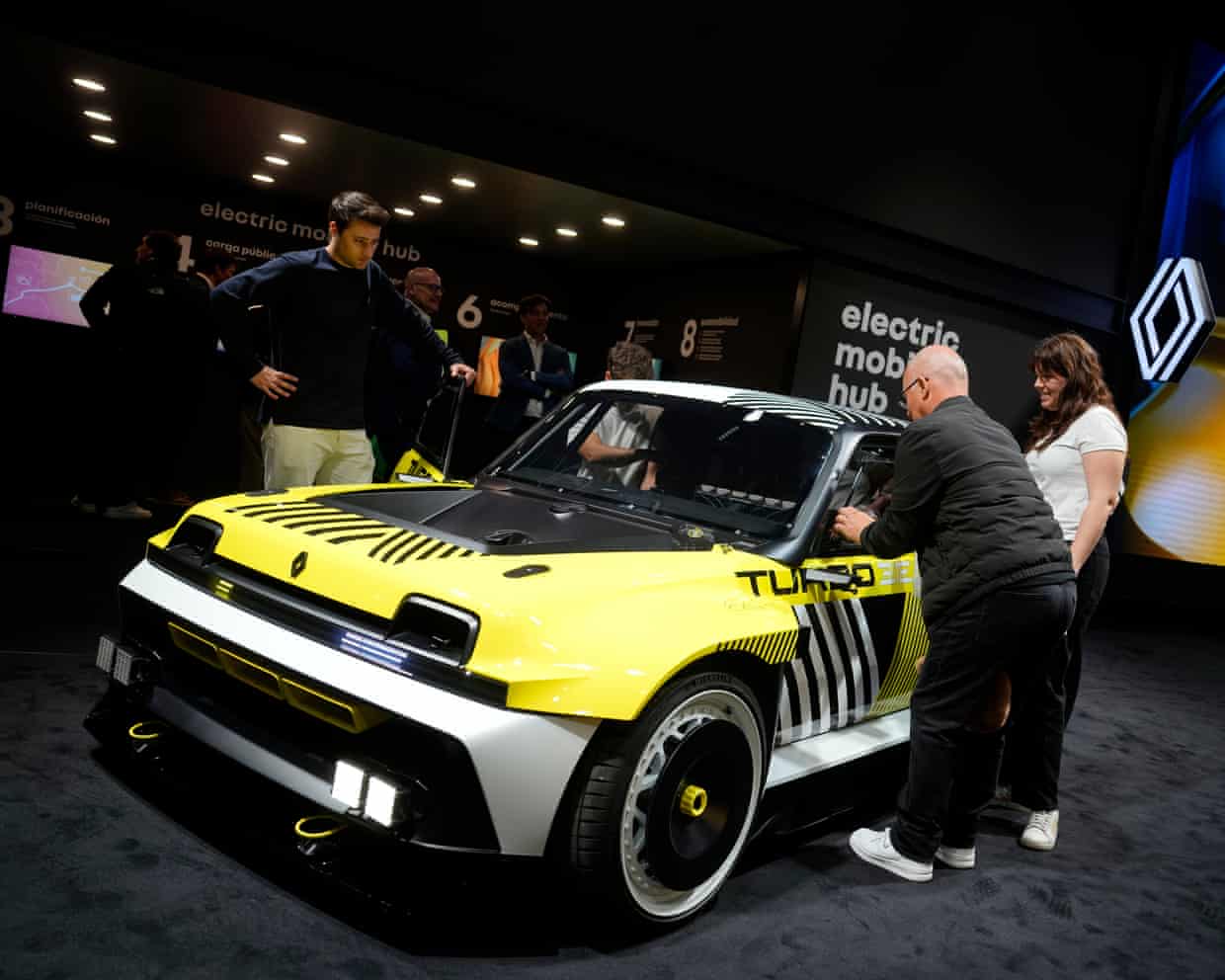
Renault says ‘seismic shift’ in electric car interest after Iran war oil price shock – as it happened
Manufacturers around the world have reined back their electric car production in the last two years after fearing demand could fall. In the US Donald Trump further undermined the sector by tearing up several pro-electric vehicle policies.Yet Trump may have – ironically – ended up boosting global electric car sales, by making petrol prohibitively expensive. The US-Israeli war on Iran has entered its third month, with no sign that the blockade of the strait of Hormuz will end.Renault’s UK boss on Friday said the Iran war oil price surge has started a “seismic shift upwards” in interest in electric vehicles
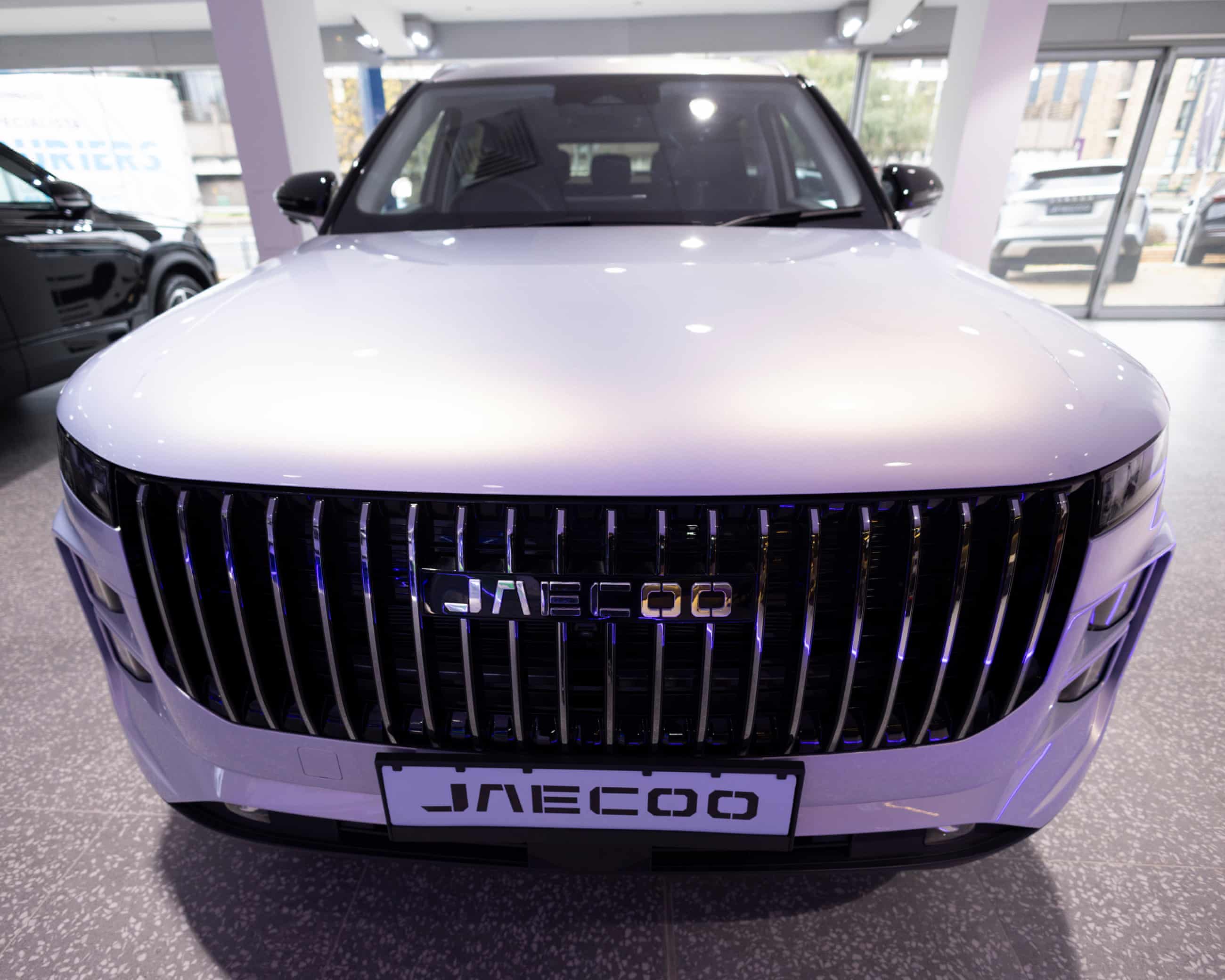
‘Temu Range Rover’: what the bestselling Jaecoo 7 says about China’s electric car ascendancy
Loaded with extras and produced at a cut price, the crossover SUV has overtaken rival cars from US, Japanese and Korean firmsThe UK is no stranger to foreign cars. The bestseller lists in recent years have been dominated by the US’s Ford Puma, Japan’s Nissan Qashqai, Korea’s Kia Sportage and occasionally even Tesla’s Model Y.But in March the top 10 provided a shock: a Chinese car leapt into the lead.Little more than a year after launching in the UK, China’s Chery sold 10,064 of its Jaecoo 7 crossover SUVs during the month, beating all the usual suspects.It was not the first Chinese-made car to make it to UK number one (it follows Tesla’s Shanghai-made Model 3 and the HS made by MG, a formerly British brand owned by China’s SAIC)
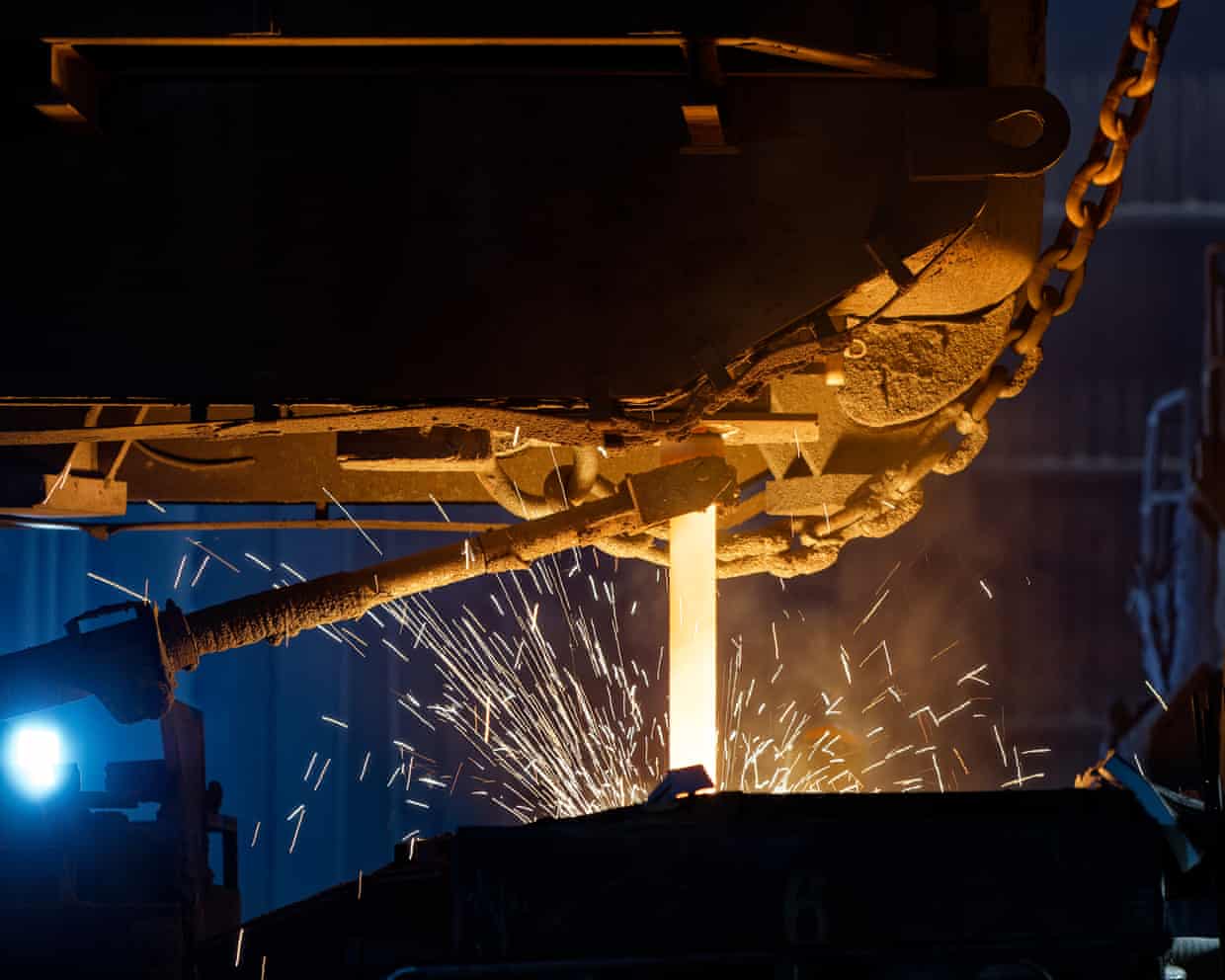
Czech energy group hints at combined bid for British Steel and Speciality Steel UK
The owner of the UK’s largest electric steelworks has said the government should find a single buyer for British Steel and Speciality Steel UK (SSUK), a move that would create the country’s biggest steelmaker.Sev.en Global Investments, owned by the Czech billionaire Pavel Tykač, said it not only plans to invest £100m in the UK – mainly in the electric arc steelworks in Cardiff it bought last year – but also has the ability to invest “hundreds of millions of pounds” more in Britain under its 7 Steel brand.Alan Svoboda, Sev.en’s chief executive, told the Guardian the government should look for a large company with a track record of steel production to take on British Steel’s plant in Scunthorpe, Lincolnshire, and the SSUK electric arc furnace operation in South Yorkshire, in a thinly veiled pitch for the government to consider 7 Steel as a potential buyer

FCA faces four lawsuits over £9.1bn compensation scheme for car loan victims
The UK financial watchdog is facing four legal challenges against its £9.1bn compensation scheme for victims of the motor finance scandal.The Financial Conduct Authority (FCA) said that it will defend the scheme “robustly” as the “fastest, simplest route for consumers and the most efficient way for firms to put things right”.The FCA confirmed the Guardian’s report of a legal challenge from the consumer group Consumer Voice, which claims that the scheme massively short-changes victims. It is represented by Courmacs Legal

CEO pay soared in 2025, 20 times faster than workers’ pay
CEO pay increased 20 times faster than worker pay around the world in 2025, according to a new analysis from Oxfam and the International Trade Union Confederation, the world’s largest trade union federation.When adjusted for inflation, global worker pay declined 12% between 2019 and 2025, the equivalent of 108 days of free work during that time period. In comparison, CEO compensation increased by 54% between 2019 and 2025.The average CEO received $8.4m in total compensation in 2025 compared to $7
Judge cuts off Musk’s AI doomsday talk as his testimony ends in OpenAI case

AI outperforms doctors in Harvard trial of emergency triage diagnoses

Calls grow to ban Palantir in Australia after manifesto described by UK MP as ‘ramblings of a supervillain’

Galaxy S26 review: Samsung’s still-compact flagship Android
‘Your questions are designed to trick me’: combative Musk grilled over battle with Sam Altman

Maryland becomes first state to ban surveillance pricing in grocery stores