Mary Rand obituary
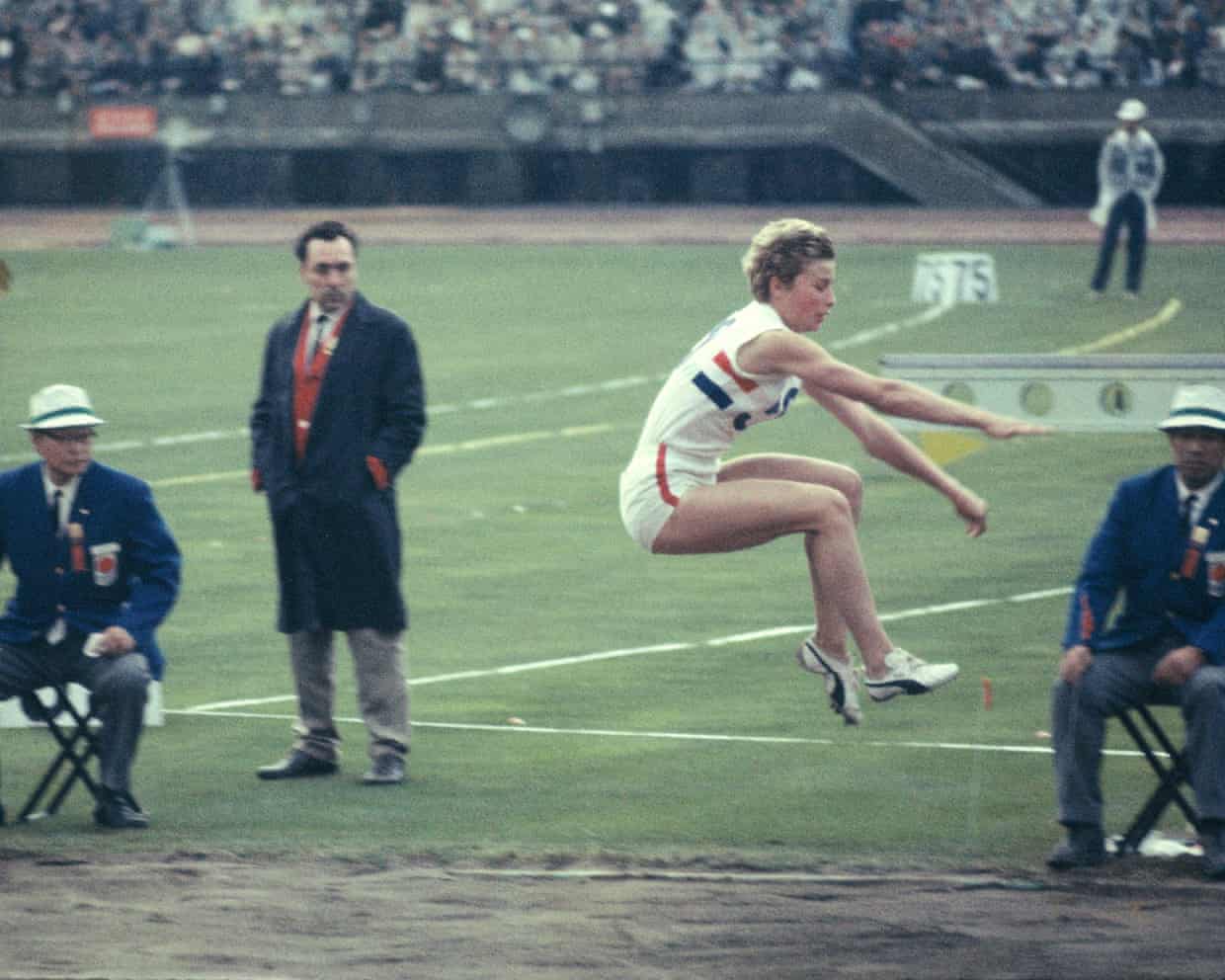
One of the true “golden girls” of the swinging 60s, Mary Rand, who has died aged 86, emerged as the brightest British sporting star of her era when she became her nation’s first female gold medallist in Olympic athletics, taking long jump victory with a world record leap in the Tokyo games of 1964,She also won silver in the pentathlon and bronze in the sprint relay at the event, making her the first British athlete to have claimed three medals in one Olympic Games,Her life was transformed after she broke the previous record on a wet day with a leap of 6,76 metres,On a cinder track, running into a headwind, her performance was spectacular.
Always photogenic, Rand’s face became one of the most instantly recognisable as her every move was celebrated in newspapers and on television.Almost inevitably, she was named the BBC Sports Personality of the Year for 1964 and was made MBE 12 months later.Famously, the Rolling Stones lead singer Mick Jagger named her as the woman he would most like to take on a date.Born in Wells, Somerset, Mary was brought up in a council house by her parents, Hilda, a nurse, and Eric Bignal, a chimney sweep and window cleaner, along with a brother and a number of half siblings.Mary’s prodigious natural athleticism had begun to catch the eye at an early age, leading to her being offered a scholarship at Millfield, the leading public school for sports, where she won All England Schools titles and broke the British record for the pentathlon aged only 17.
“I was always a tomboy,” Rand remembered.“I always followed my brothers, and I think I started out running around an orchard in Wells.I eventually went to the All England Schools.I got a scholarship to Millfield and, when I got there, I had a coach, and the rest is history.”In 1958 she won her first major senior championship medal after being selected to represent England in the British Empire and Commonwealth Games in Cardiff.
She took silver in the long jump, also finishing fifth in the high jump.By her own admission Mary was “a little impetuous” agreeing to marry the Olympic rower Sid Rand three days after meeting him in 1961, with the two getting married only five weeks later.Her first daughter, Alison, was born 11 months later, leading her to be described as “a housewife” by some reporters, although another description calling her “Marilyn Monroe on spikes” may have been closer to the public’s perception, especially considering that to fund her training Rand had to keep working at her day job in the postal office of the Guinness factory in London, where she was happy enough to get a free half-pint of the black stuff every lunchtime.Beloved by sports writers because of her readiness to talk about her career, she made sufficient progress as an athlete to arrive at the 1960 Rome Olympics among the favourites for a medal in the long jump, and her chances seemed bright after breaking the British record with a leap of 6.33m in the qualifying round.
However, two no jumps put paid to her chances and she finished only ninth in the competition, also taking fourth in the 80-metres hurdles.The press criticism that followed inspired Rand four years later.In Japan she shared a room with three other athletes, including Mary Peters and Ann Packer, who won the 800 metres six days after her friend’s victory.Packer vividly recalled Rand’s performances: “Mary was the most gifted athlete I ever saw.There never has been anything like her since, and I don’t think there will be again.
”After returning from Tokyo with her three medals, Rand continued to reign supreme domestically, winning six long jump WAAA (Women’s Amateur Athletic Association) titles, two high jump victories, two sprint hurdles and two pentathlon crowns, and she took the long jump gold medal at the 1966 Commonwealth Games in Kingston, Jamaica,But an achilles tendon injury prevented her from defending the Olympic title in 1968,It was won by the Romanian Viorica Viscopoleanu, who broke Rand’s world long jump record in the high altitude conditions of Mexico City,Rand’s first marriage ended in divorce and she moved to the US to be with Bill Toomey, the 1968 Olympic decathlon champion, whom she married in 1969,They settled in California and she had two more daughters, Samantha and Sarah, before their marriage also ended in divorce after 22 years.
She was married for a third time, to John Reese, until his death in 2019.She never returned to athletics and her home remained in the US, finally near Reno, Nevada.In the modern professional era, Rand would have made fortunes through advertising endorsements, but she never was able to capitalise on her fame because of the strict rules protecting the sport’s amateur status at the time.In 2009, Rand was inducted into the England Athletics Hall of Fame.Prior to the 2012 Olympic Games in London, Rand visited the UK and her home city, where she was given a rapturous reception and awarded the freedom of Wells.
Her daughters survive her.Mary Denise Rand, athlete, born 10 February 1940; died 27 March 2026

Labour has left its loyal supporters disillusioned | Letters
I wonder how many members still clinging on to the Labour party winced at Gaby Hinsliff’s article (Ed Miliband’s stock is rising because he’s a rare commodity in Labour these days: a thinker, 27 March). Like everyone else, she recognises that Labour has become an intellectual vacuum, with its only clear features being unpleasant policies designed to exploit the far right’s prejudices.But the electorate is ahead here. They know that resurrecting the once admirable but now compromised Ed Miliband will do nothing to heal the existential injury in the party. Most people no longer hark back to the halcyon days of New Labour’s claim to build a better society

EU offers UK ‘emergency brake’ on youth mobility scheme numbers
An “emergency brake” could be put on the number of people coming to the UK from Europe as part of a new youth experience scheme, under terms being offered to Britain by EU negotiatorsBritain wants an outright cap, but the EU opposes this on the basis that the scheme is supposed to be a positive one aimed at celebrating and preserving links with the EU.Keir Starmer’s government agreed to work towards a “youth experience scheme” with the EU in May last year, but the specifics are still being negotiated.The scheme is part of talks in which the EU hopes to “reset” relations with the UK amid fears negotiations have been foundering before a planned July summit.The forthcoming talks are viewed in Brussels as the start of a new phase of relations and take place as the UK will also feel knock-on effects from internal EU changes such as a new migration pact among member states from 12 June.The EU’s pact on migration and asylum – which is aimed at governing flows of migrants across Europe and governs how they will be checked at borders – is expected to have an impact on Channel crossings

‘A cruel penalty’: disabled people face lower benefit payments if conditions not deemed lifelong
Hundreds of thousands of severely ill and disabled people making new claims will have their benefits cut if the government assesses that their condition might improve, charities have said.In April, the health element of universal credit – an extra payment for people assessed as too unwell to work or prepare for work – will be halved to £50 a week and frozen for new claimants unless their condition is found to be terminal or severe and lifelong with no prospect of improvement.Ministers had pledged last summer that the “severe and lifelong” clause – known as the severe conditions criteria – would shield the most severely disabled and ill people from the new lower benefit rate.But charities and disabled people’s organisations (DPOs) have told the Guardian that a wide range of debilitating conditions may not meet the strict eligibility criteria, despite them often leaving someone unable to work. This includes multiple sclerosis, learning disabilities, bipolar, Parkinson’s, ME and long Covid
Reform insiders fear links to extreme figures such as Andrew Tate will scare off voters
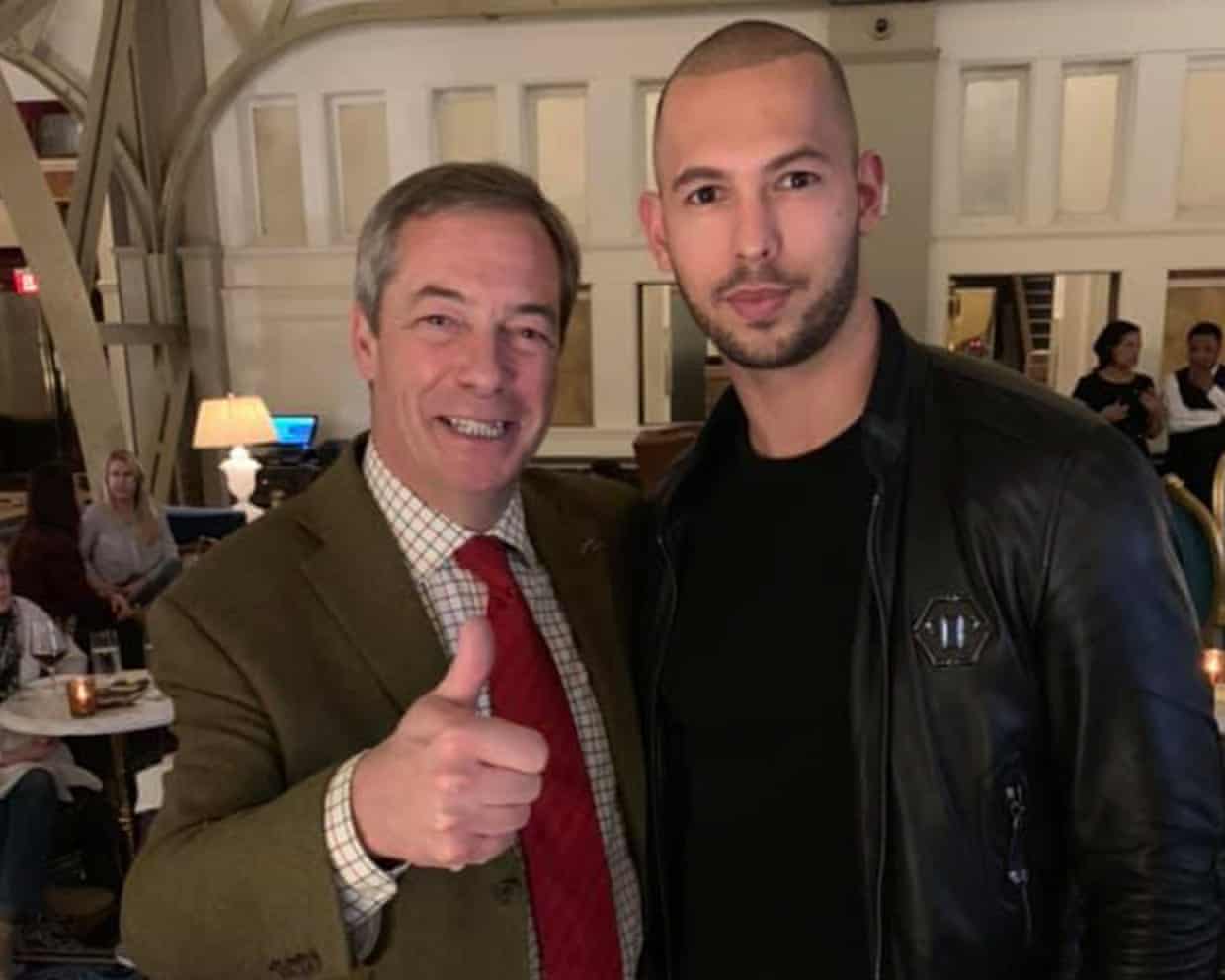
Reform insiders are becoming increasingly irritated by the party’s association with Andrew Tate and other extreme online celebrities whose views are too toxic for the mainstream voters Nigel Farage needs to win over.Insiders have revealed that as Reform prepare for power they are trying to end their association with more controversial figures on the right such as Tate, whose extreme and misogynistic content could taint the party’s credibility.While courting online popularity before the party’s boom in the polls, their leader, Farage, appeared loth to criticise the online “manosphere” influencer. Tate is facing 21 charges for crimes including human trafficking should he ever return to the UK.In 2024, Farage said in online interviews that Tate was an “important voice” for the “emasculated” and giving boys “perhaps a bit of confidence at school”

Badenoch criticised for ‘peddling dangerous fantasy’ about North Sea oil drilling
Kemi Badenoch is “peddling a dangerous fantasy” about North Sea energy in her attempt to reverse a ban on new oil and gas licences, a leading campaign group has said.The Conservative leader is expected to call on the government to lift its suspension of the licences as part of a drive to reduce energy prices, as the party launches a new campaign aimed at boosting the fossil fuel sector.However, critics have questioned the efficiency of the policy, claiming it would be unlikely to cut household bills.Tessa Khan, executive director of the renewable energy campaign group Uplift described it as “vapid, political game playing at the expense of ordinary people”.“Kemi Badenoch is peddling a dangerous fantasy on the North Sea and is completely out of step with the UK public who just want an affordable supply of energy,” Khan said
Reform UK’s ‘pro-family’ policies are an exclusionary sham, minister says
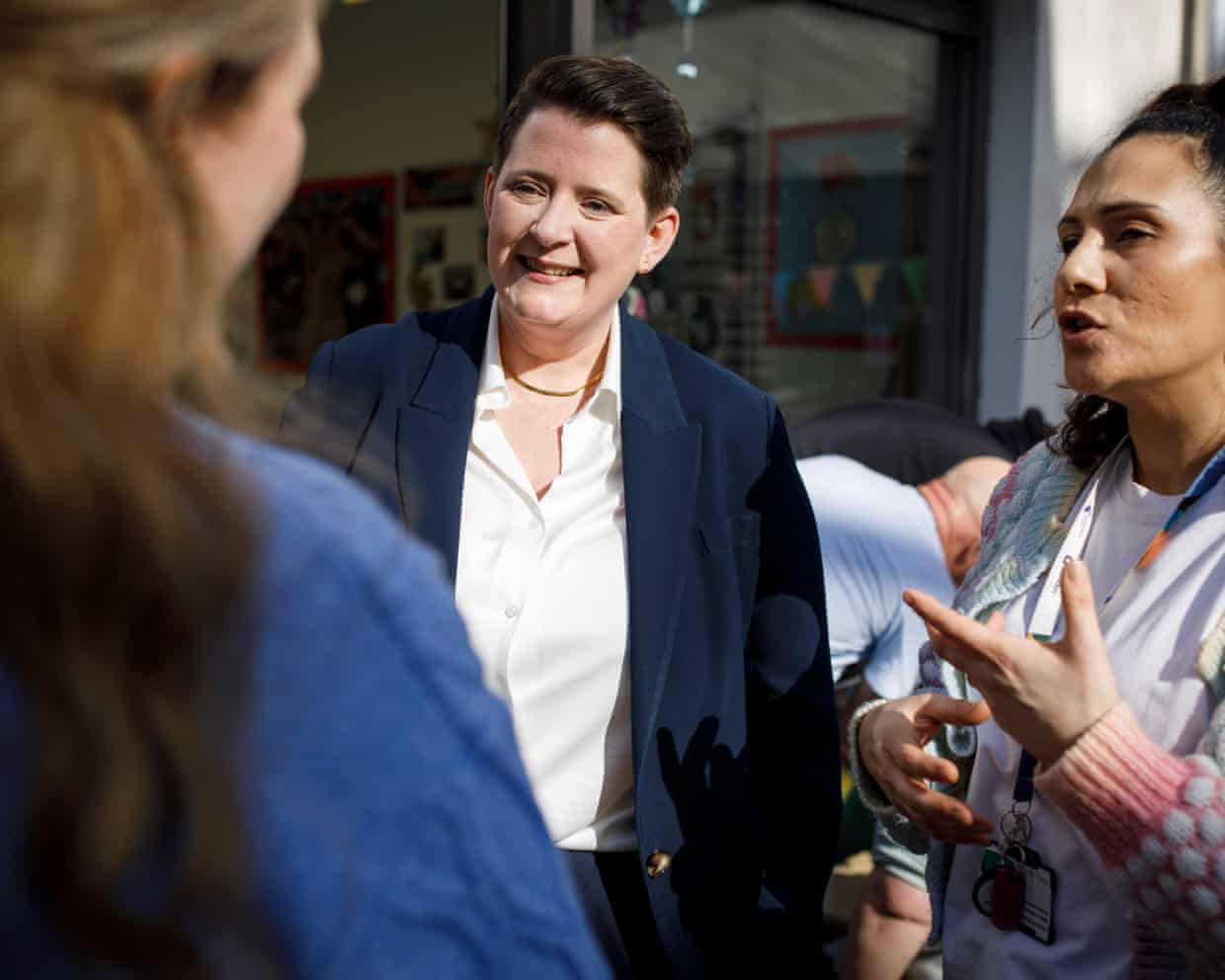
Reform UK’s “pro-family” policies are a sham and exclude non-traditional families, the government’s early years minister has said before the rollout of hundreds of new Sure Start-style family centres across England on Monday.Olivia Bailey said she wanted the hubs to be inclusive for all families and transform communities, after what she called the “criminal” dismantling of Sure Start under the last Conservative government.“Sure Start is one of our proudest achievements as a Labour party,” she said. “Best Start is central to what we’re trying to do as a government. For the first time in a long time, even ever, this is a government that is really focusing on the early years and making sure that we give every child the best possible start in life

‘They feel true’: political deepfakes are growing in influence – even if people know they aren’t real

Sony to hike PS5 prices by $100 as AI and Iran war push up memory chip costs

Wikipedia bans AI-generated content in its online encyclopedia

Number of AI chatbots ignoring human instructions increasing, study says

‘Accountability has arrived’: dual US court losses show shifting tide against Meta and co

New York City hospitals drop Palantir as controversial AI firm expands in UK