EU offers UK ‘emergency brake’ on youth mobility scheme numbers
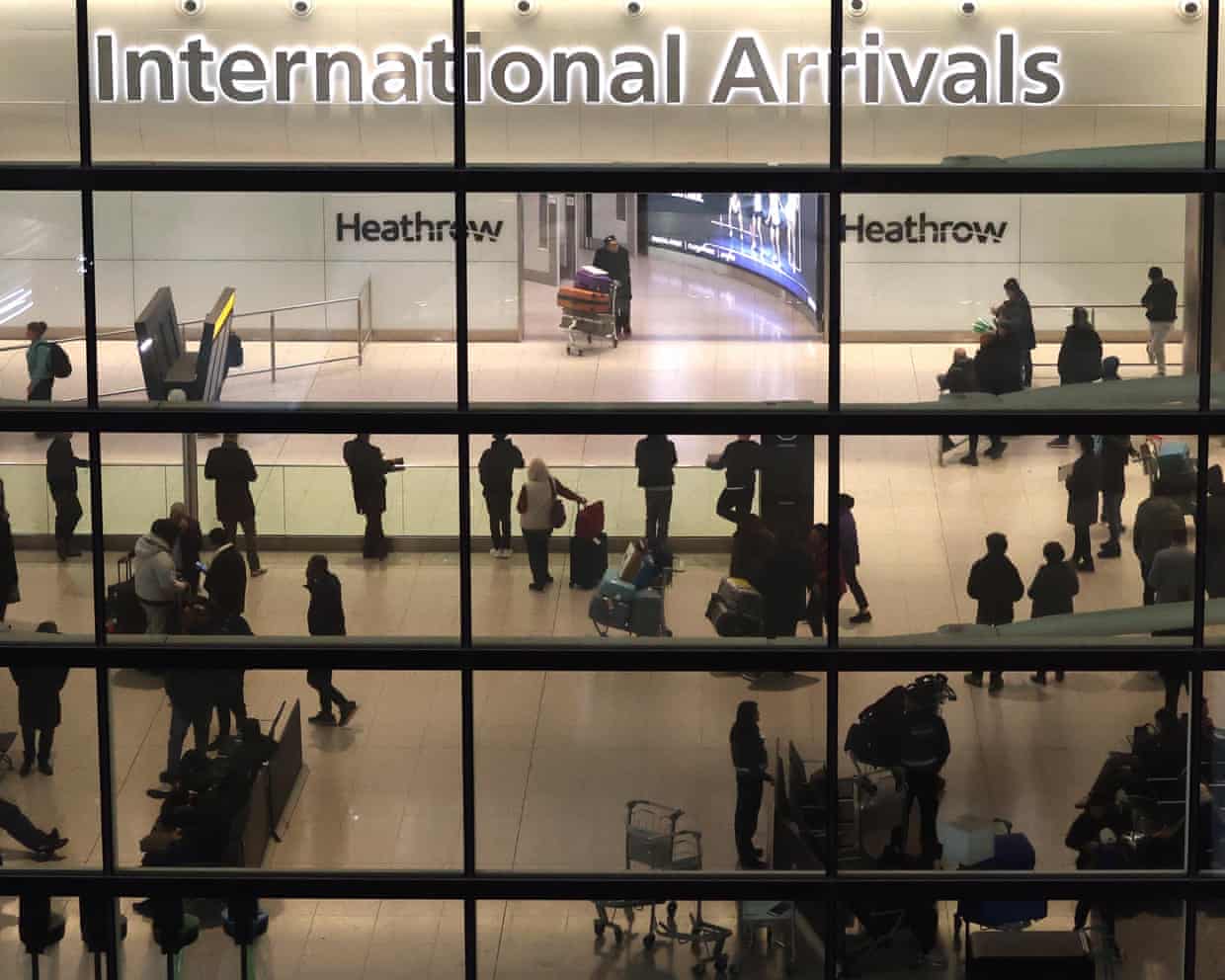
An “emergency brake” could be put on the number of people coming to the UK from Europe as part of a new youth experience scheme, under terms being offered to Britain by EU negotiatorsBritain wants an outright cap, but the EU opposes this on the basis that the scheme is supposed to be a positive one aimed at celebrating and preserving links with the EU.Keir Starmer’s government agreed to work towards a “youth experience scheme” with the EU in May last year, but the specifics are still being negotiated.The scheme is part of talks in which the EU hopes to “reset” relations with the UK amid fears negotiations have been foundering before a planned July summit.The forthcoming talks are viewed in Brussels as the start of a new phase of relations and take place as the UK will also feel knock-on effects from internal EU changes such as a new migration pact among member states from 12 June.The EU’s pact on migration and asylum – which is aimed at governing flows of migrants across Europe and governs how they will be checked at borders – is expected to have an impact on Channel crossings.
“I think there will be stricter police controls and hopefully better management of the area.If a person pops up in Calais, for example, that person should be sent back to where they entered,” said an EU source.Under plans for the youth experience scheme, tens of thousands of young British and European citizens would meanwhile be given the right to live and work in each other’s countries.British ministers are aiming to secure a youth mobility scheme with the EU by the end of 2026.However, there are significant differences over the scheme, with the British side eager to stop it being viewed as a “migration” scheme.
The Home Office and Foreign Office are also understood to be trenchant in their eagerness for a cap,An EU official said the bloc did not want an upfront cap but was offering “a monitoring system to ensure both sides are equally satisfied with the way the scheme is operating”,Effectively this would be an emergency brake, so if the number of people arriving from the EU surged, restrictions could theoretically be imposed,A UK government spokesperson said: “Any final scheme must be time-limited, capped and will be based on our existing youth mobility schemes, which do not include access to home tuition fee status,”The scheme is seen by the EU as a “strategic endeavour” that has become increasingly important amid recent transatlantic ruptures and global instability.
A senior EU official said: “The strategy is about ensuring that our societies keep linked, understand each other and see each other as part of the same family of nations.This is something that is really needed in these troubled times.“If Europe has to stand together, it has to feel a common sense of purpose when it comes to international relations and democracy.Ensuring that our young people can travel to each other’s countries, work, study in each other’s countries is an important part of that.”The British government also faces pressure from its own pro-European backbenchers.
Stella Creasy, the chair of the Labour Movement for Europe, which campaigns for closer UK-EU ties, said: “This is a deal that will bring back freedoms young Brits from all backgrounds lost with Brexit, as well as boosting growth.It’s a win-win, and the government should see it’s purpose of travel, not number of young people, that matters.”Defence cooperation and migration will also form key parts of the summit.The EU official said: “There’s no doubt we will continue to strengthen the European defence industrial base, with the EU and UK working together.”They suggested that both sides could “do better” than initiatives including the Security Action for Europe scheme, announced in March last year as part of an EU-wide effort to rearm after Russia’s full-scale invasion of Ukraine.
“It is quite likely that efforts will continue to see how we can work together and with the UK to reinforce our defence industry,” they added.

‘They feel true’: political deepfakes are growing in influence – even if people know they aren’t real
Online content creators are not just building fake images and videos of prominent public figures, they are also fabricating people and using them in military contexts, which can make them money and even serve as effective propaganda, according to artificial intelligence researchers.Some of these online avatars are sexualized images of women wearing camouflage garb that have generated a significant audience and helped create an idealized image of political figures like Donald Trump, even if the viewer knows the content is not real, according to experts.“We are blending the lines between political cartoons and reality,” said Daniel Schiff, an assistant professor of technology policy at Purdue University and co-director of the Governance and Responsible AI Lab (Grail). “A lot of people feel like these images or videos or the stories they convey, feel true.”The amount of political deepfakes has increased dramatically in recent years, according to a Grail database

Sony to hike PS5 prices by $100 as AI and Iran war push up memory chip costs
Sony is raising global prices of its PlayStation 5 consoles, including a $100 increase in the US, marking its second hike in less than a year as the entertainment giant grapples with rising costs of key components such as memory chips.The tech industry’s race to build out artificial intelligence infrastructure has pushed memory makers to favor higher-margin datacenter chips, tightening supply for consumer devices like the ones Sony sells.The updated US prices, effective 2 April, will put the standard PS5 at $649.99, up from $549.99

Wikipedia bans AI-generated content in its online encyclopedia
Wikipedia has banned the use of artificial intelligence in the generation or rewriting of content for its voluminous online encyclopedia.In a recent policy change, Wikipedia said that the use of large language models (or LLMs) “often violates” its core principles and will not be allowed. The English language version of Wikipedia has more than 7.1m articles.The use of AI has been a contentious issue among Wikipedia’s community of volunteer editors but a vote among the site’s editors supported the ban, according to 404 Media

Number of AI chatbots ignoring human instructions increasing, study says
AI models that lie and cheat appear to be growing in number with reports of deceptive scheming surging in the last six months, a study into the technology has found.AI chatbots and agents disregarded direct instructions, evaded safeguards and deceived humans and other AI, according to research funded by the UK government-funded AI Security Institute (AISI). The study, shared with the Guardian, identified nearly 700 real-world cases of AI scheming and charted a five-fold rise in misbehaviour between October and March, with some AI models destroying emails and other files without permission.The snapshot of scheming by AI agents “in the wild”, as opposed to in laboratory conditions, has sparked fresh calls for international monitoring of the increasingly capable models and come as Silicon Valley companies aggressively promote the technology as a economically transformative. Last week the UK chancellor also launched a drive to get millions more Britons using AI
‘Accountability has arrived’: dual US court losses show shifting tide against Meta and co
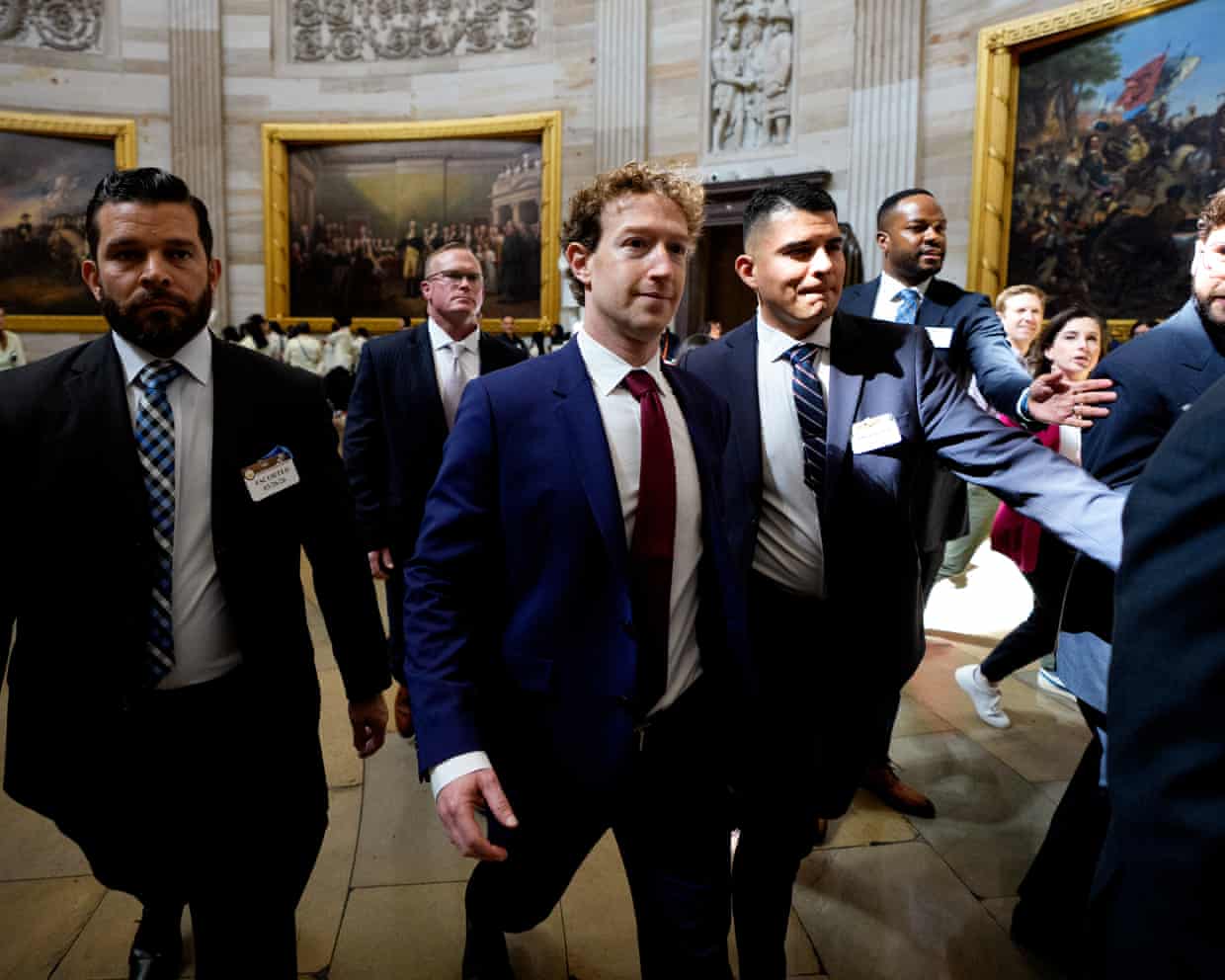
In the span of just two days, the most powerful social media company in the world faced a more severe public reckoning than it has in years.Jurors in California and New Mexico gave back-to-back verdicts this week that for the first time ever found Meta liable for products that inflict harm on young people. For years, lawmakers, parents and advocates have raised red flags over how social media can hurt children, but now the tech firms are being held to account via court rulings that could set long-lasting precedents.A jury in New Mexico ordered Meta to pay $375m in damages on Tuesday over claims that its products led to child sexual exploitation, among other harms. The following day, a jury in California ordered Meta and YouTube to pay $6m over claims that both companies deliberately designed addictive products to hook young users

New York City hospitals drop Palantir as controversial AI firm expands in UK
New York City’s public hospital system announced that it would not be renewing its contract with Palantir as controversy mounts in the UK over the data analytics and AI firm’s government contract.The president of the US’s largest municipal public healthcare system, Dr Mitchell Katz, testified last week before the New York city council that the agreement with Palantir would expire in October.He said at the hearing that the contract, which focused on recovering money for insurance claims, was always meant to be short-term, and that there was an “absolute firewall” preventing Palantir from sharing information with US Immigration and Customs Enforcement. He said that the agency had “not had any incidents”.The contract and related payment documents shared with the Guardian by the American Friends Service Committee and first reported by the Intercept, show that NYC Health + Hospitals has paid Palantir nearly $4m since November 2023

How to make Easter chocolate nests – recipe. | Felicity Cloake's Masterclass

The Wellington, Margate, Kent: ‘Worth risking a werewolf attack to get to’ – restaurant review | Grace Dent on restaurants
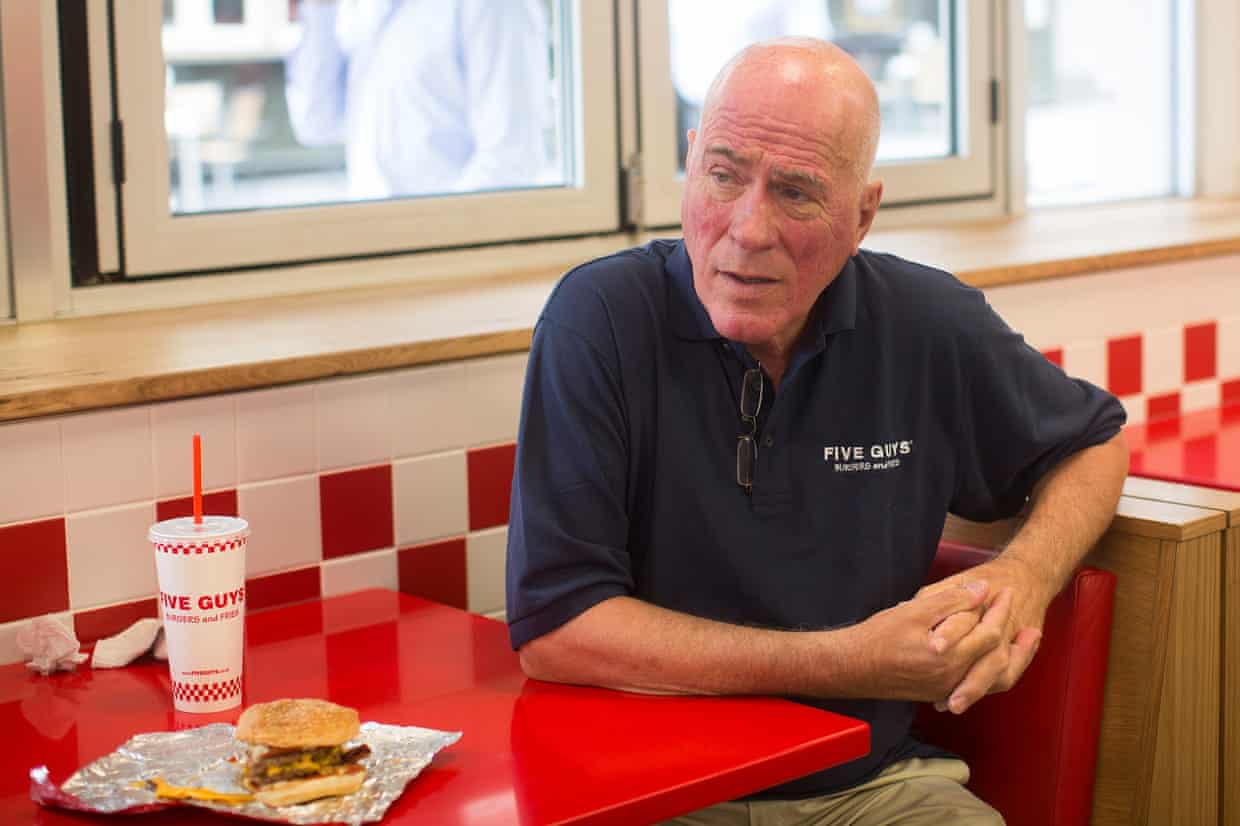
Five Guys CEO says he gave a $1.5m bonus to his workers so he wouldn’t get shot in the back

Ready to order? 10 rules for UK’s restaurant diners

Is foraging really feasible to feed myself?

Benjamina Ebuehi’s recipe for lemon lamington cake | The sweet spot