Mary Rand, first British woman to win Olympic athletics gold, dies aged 86
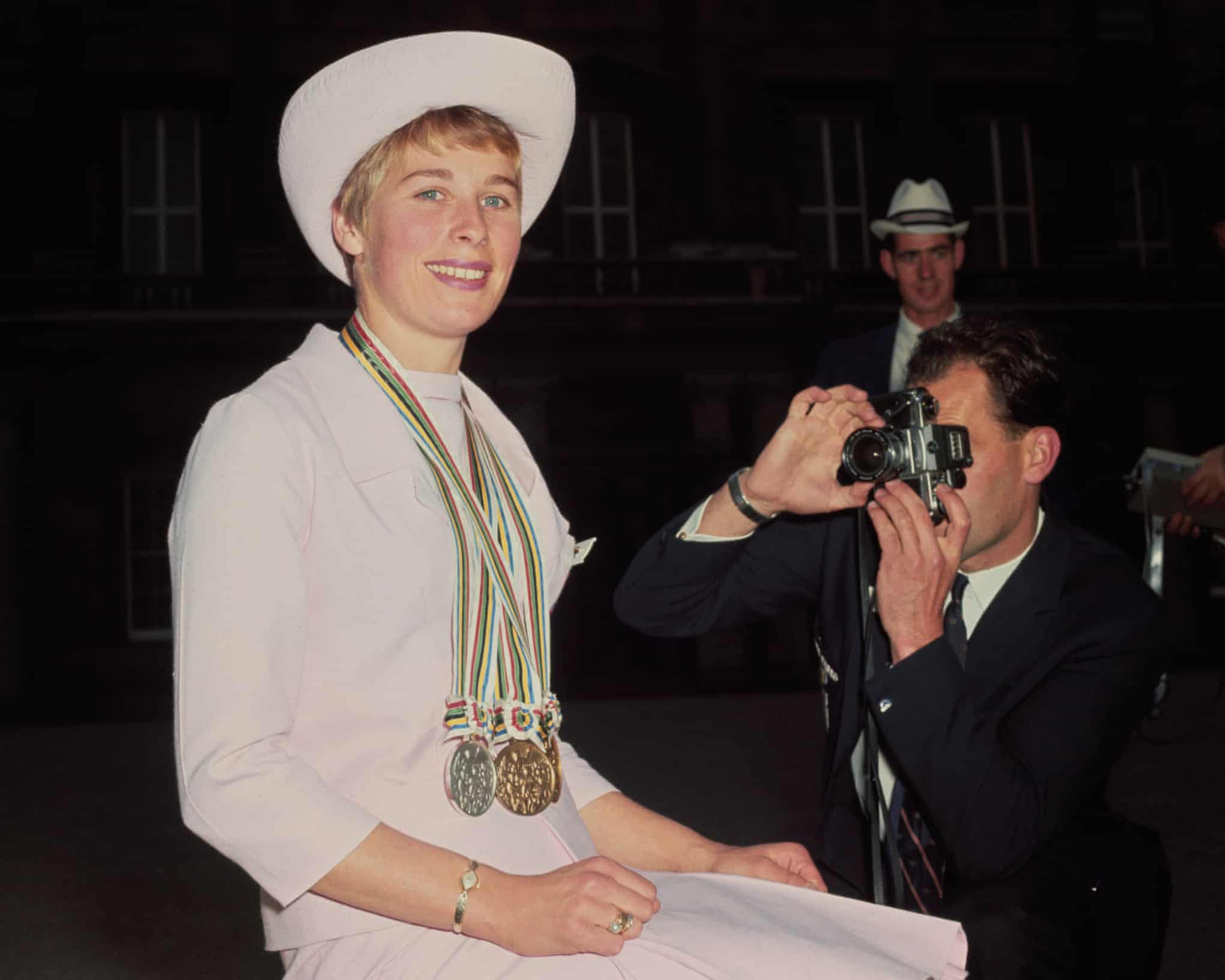
Rand won gold, silver and bronze medals at Tokyo 1964Mary Peters pays tribute to ‘most gifted athlete ever’Mary Rand, the British track and field athlete who blazed a trail for women by winning three Olympic medals at the Tokyo Games in 1964, has died at the age of 86.Rand was one of the giants of her sport: the epitome of speed, power and grace.Her long jump victory in Tokyo made her Britain’s first female Olympic gold medallist in athletics, and she followed it up with a silver in the pentathlon and a bronze in the 4x100m relay.That supreme talent was also fused with 60s style.She was famously called “Marilyn Monroe on spikes” by one journalist, because of her blonde highlights, while Mick Jagger declared her to be his dream date.
After Rand’s death was announced, the tributes were led by Mary Peters, one of her four roommates in Tokyo and a pentathlon gold medallist at the 1972 Games, who told the Guardian: “She was the golden girl of her era and the most gifted athlete I ever saw.“She worked hard and played hard, and she was a very talented all-around athlete.She could swim, she could she could play netball, she was a hockey player.And if you put her on the trampoline she would do front and back flips.“I even went with her to dart tournaments once at Crystal Palace, and whoever threw the first bullseye won a free set of golden darts.
Naturally she got a bullseye with her first dart,”But it is was a long jump performance on a rainy day in Tokyo that earned Rand her place in history,The gold medal that changed her life, she revealed to the Guardian’s John Rodda, came following a lunch of chicken, cake and Ovaltine,Perhaps someone had hidden rocket fuel in Rand’s drink too,Because despite jumping into a -1.
6m headwind on a sodden tinder track, she broke the world record with a leap of 6,76m,To put that distance into context, it was only four centimetres shy of the distance required for bronze at the 2026 World Indoor Championships,Rand might well have won a second gold in the pentathlon, but in the shot put she was more than six metres behind the Soviet athlete Irina Press, whose gender was the subject of much speculation and who stopped competing in 1966 after chromosome testing was introduced,A third medal followed for Rand in the 4x100m relay but her work in Tokyo did not end on the track.
She was 24 at the time, and had a young daughter, and she would sing her three young roommates, including Peters and the 800m Olympic champion, Ann Packer, to sleep.“There were four of us in the room, and we were all competing on different days, and all nervous and apprehensive,” said Peters.“And so Mary used to sing lullabies to us that she sang to her daughter, Alison, and that’s how we got to sleep at night before our competition.”Rand’s performances in Tokyo were ahead of their time.But, unfortunately for Rand’s financial situation, she was an athlete of her time.
It meant that she was unable to earn money from competing and before Tokyo she got by on £10 a week working in the postal department of the Guinness factory – where she got a free daily lunch and pint and was able to ride around London on a Lambretta.There were plenty of offers after the Olympics.Indeed, she was even invited to the Cannes Film Festival, where she was approached about starring in a series of “woman James Bond” films.She turned the producers down, however, as she wanted to focus on track and field.However, just before the Mexico Olympics in 1968 she tore an achilles tendon and was forced to retire, aged 28.
But it turned out to be some career for the girl who was born Mary Bignal in Wells, Somerset in 1940 and grew up in a council house, with her father a chimney sweeper and window cleaner and her mother a nurse.Having shown athletic prowess from an early age she was given a sports scholarship at Millfield School and quickly progressed up the ranks.By the time she arrived at her first Olympics in Rome in 1960, aged 20, she was among the favourites for gold.But she could only finish ninth after fouling on her first two jumps in the final.She was to make amends in Tokyo.
And when Ann Packer, who was also her roommate along with Peters, was asked about Rand she could not have been more effusive.“Mary was the most gifted athlete I ever saw,” she said.“She was as good as athletes get; there has never been anything like her since.And I don’t believe there ever will be.”In 1969 Rand moved to the United States with her second husband, Bill Toomey, the Olympic decathlon champion.
It meant that she was out of sight – and too often out of mind – for the next 57 years.But her momentous contribution to British sport is immense and undeniable.

Seth Meyers on Donald Trump’s ‘present’ from Iran: ‘Is the president getting catfished?’
Late-night hosts speculated on Donald Trump’s mystery “present” from Iran, as well as his delusions about a war he claims the US is not in.On Wednesday’s Late Night, Seth Meyers reminded viewers, once again, that Donald Trump “promised no more wars in the Middle East” before his recent military strikes on Iran.“But you guys, good news! It’s not a war,” he joked. Instead, according to Trump, it’s an “excursion” or “a little journey” in Iran. “Stop calling it an excursion!” Meyers exclaimed
Ministers consider charging tourists to enter national museums in England
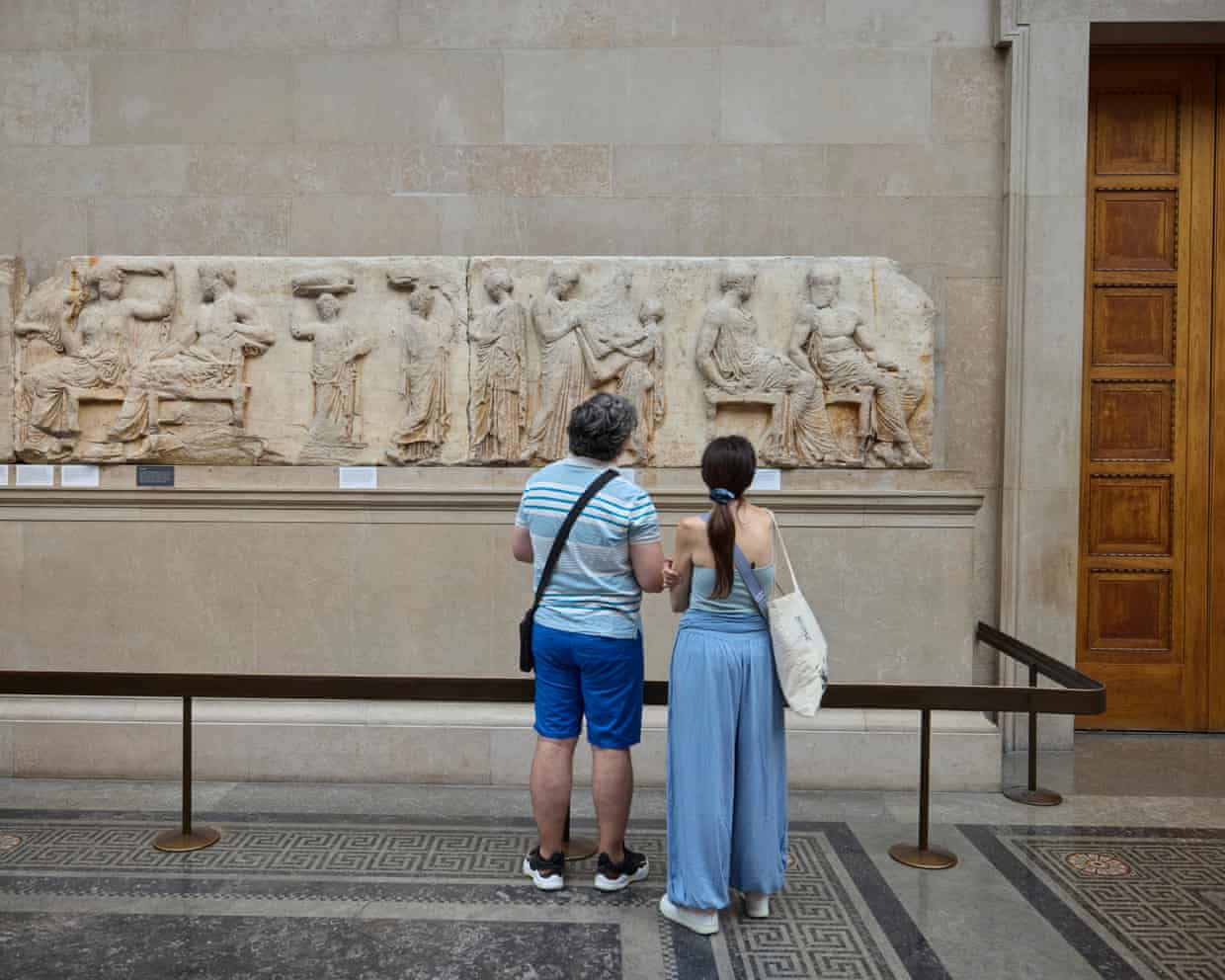
Ministers are considering charging international tourists to access permanent collections at national museums as part of an initiative to improve arts funding.The government said there was a need for long-term options to fund the struggling arts sector in its response to a review of Arts Council England, which distributes public funding to the arts. Among the options cited was a hotel levy, a policy being consulted on.But Alison Cole, the director of the Cultural Policy Unit thinktank, said charging international tourists would be a “very bad idea”.“There’s a much better way to save our wonderful civic museums and cultural infrastructure across the country, and that we believe is a hotel levy,” she said

Jimmy Kimmel on Trump’s election integrity push: ‘Like Bill Cosby telling you he’ll watch your drink for you’
Late-night hosts mocked Donald Trump’s mail-in voting as he tries to end mail-in voting, ICE agents in US airports and a mysterious “gift” from Iran.On Tuesday’s Jimmy Kimmel Live!, the host checked in on Donald Trump’s efforts to pass the so-called Save America act. The sweeping restrictive voting bill would require proof of US citizenship for new voters and end mail-in voting, or what Trump called “mail-in cheating”.“That’s right, he prefers in-person cheating,” Kimmel quipped.“He keeps saying that it was brought to his attention today that we’re the only country that does mail-in voting – when is someone going to step in and tell him that’s not true?” he continued
Shoplifting, sex shows and sheepdog-breeding: great artists and the side-hustles they did to get by
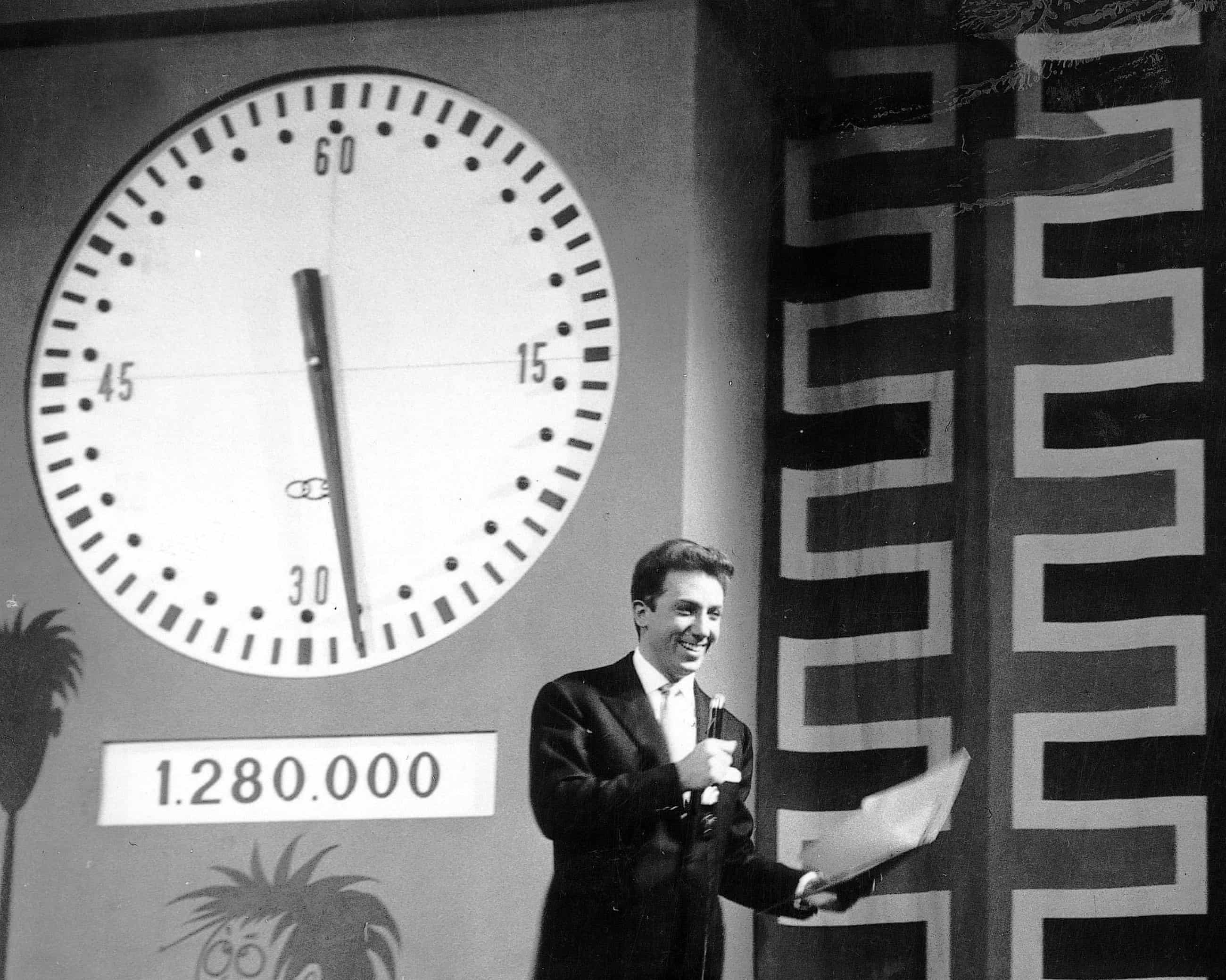
John Cage appeared on an Italian quizshow. Jean Genet stole rare books. Emily Carr reared bobtails. And Kathy Acker did X-rated acts with her boyfriend … we explore the unlikely sidelines of struggling artistsBefore he pioneered a new genre of semi-autobiographical writing, the great French novelist and playwright Jean Genet pioneered something very different indeed: a special briefcase for stealing valuable books that he would later resell – after reading them first, of course. “I perfected a trick briefcase,” he later recalled, “and I became so handy in these thefts that I could push politeness to the point of pulling them off under the very nose of the bookseller
Who’s Afraid of Virginia Woolf? at 60: Elizabeth Taylor still crackles with feral energy
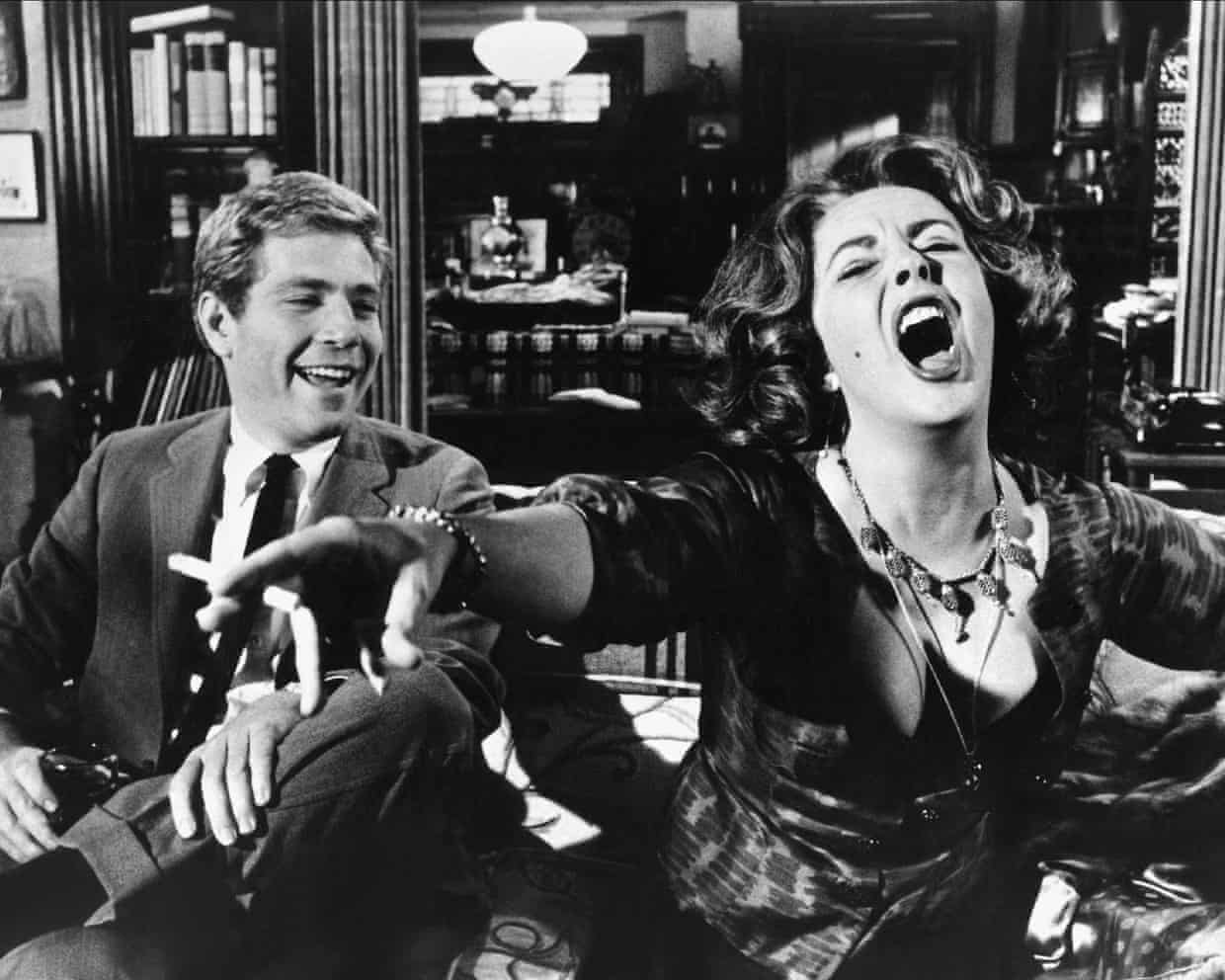
After a long day at work, we may not instinctively leap to films about toxic marriages and relationship breakdowns – but by God they can make good drama. Blue Valentine, The Squid and the Whale and A Separation are some of the great portraits of love turned septic. But perhaps greatest of all is Mike Nichols’ directorial debut – a sizzling adaptation of Edward Albee’s legendary Who’s Afraid of Virginia Woolf?, which arrived in 1966, four years after the play, and helped cement it in the zeitgeist.The film was nominated for every eligible Academy award and won five, including best actress for Elizabeth Taylor, who delivers a searing performance as the ferocious yet vulnerable Martha. It’s lost none of its gut-busting charge today and her brilliantly performed experience still crackles with emotional electricity
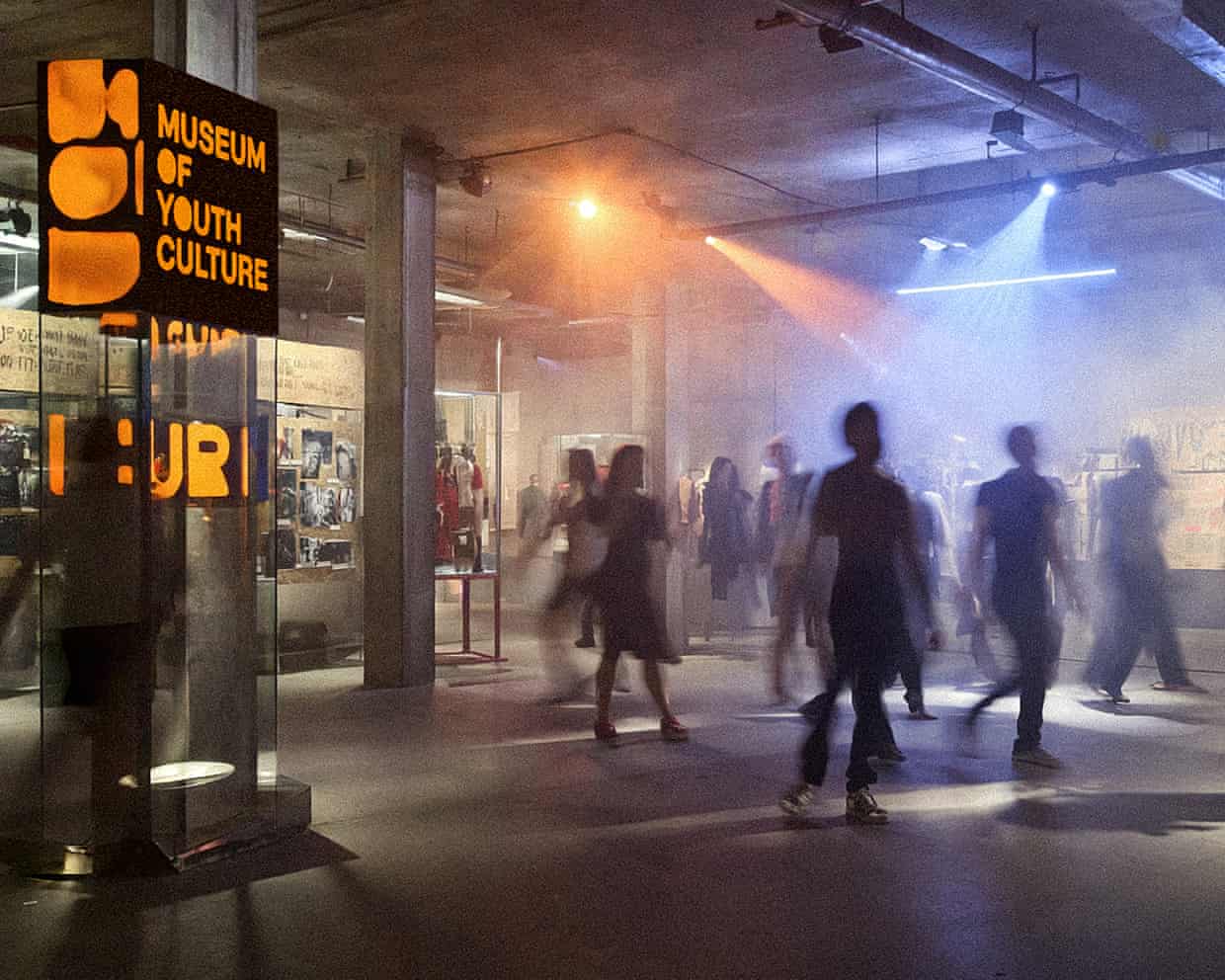
Punk masks, Walkmans and Choppers: Museum of Youth Culture to open in London
In the basement of a new-build housing block in Camden, the ventilation system is working flat out. The fans whir like a chainsaw orchestra bouncing around the concrete room as they attempt to deal with a slight damp problem. “This is what it’d sound like if there was a fire!” shouts Jon Swinstead, the driving force behind the Museum of Youth Culture, as he tries to make himself heard above the din.It’s hard to imagine but in a few weeks this empty, slightly soggy space will be transformed into an institution dedicated to all things teenage – a project Swinstead has been working on in one way or another for almost 30 years.Opening on 15 May, the museum has amassed a 100,000-item archive that tells the story of British youth subcultures from mods and rockers, to ravers and emo
UK government borrowing costs hit 5% as Iran war fuels bond market sell-off

Italy investigates beauty brands over concerns about young girls’ mental health

Ministers should ‘start doing stuff’ to help farmers and cut fuel costs, says Asda boss

‘It’s fired people up’: support grows, including within Labor, for new gas tax to curb wartime profits

Blink and miss: Trump’s tactic of threats first and U-turn later is proving stale in Iran war

UK car production falls 17% as industry warns of ‘worrying’ decline