Ministers consider charging tourists to enter national museums in England
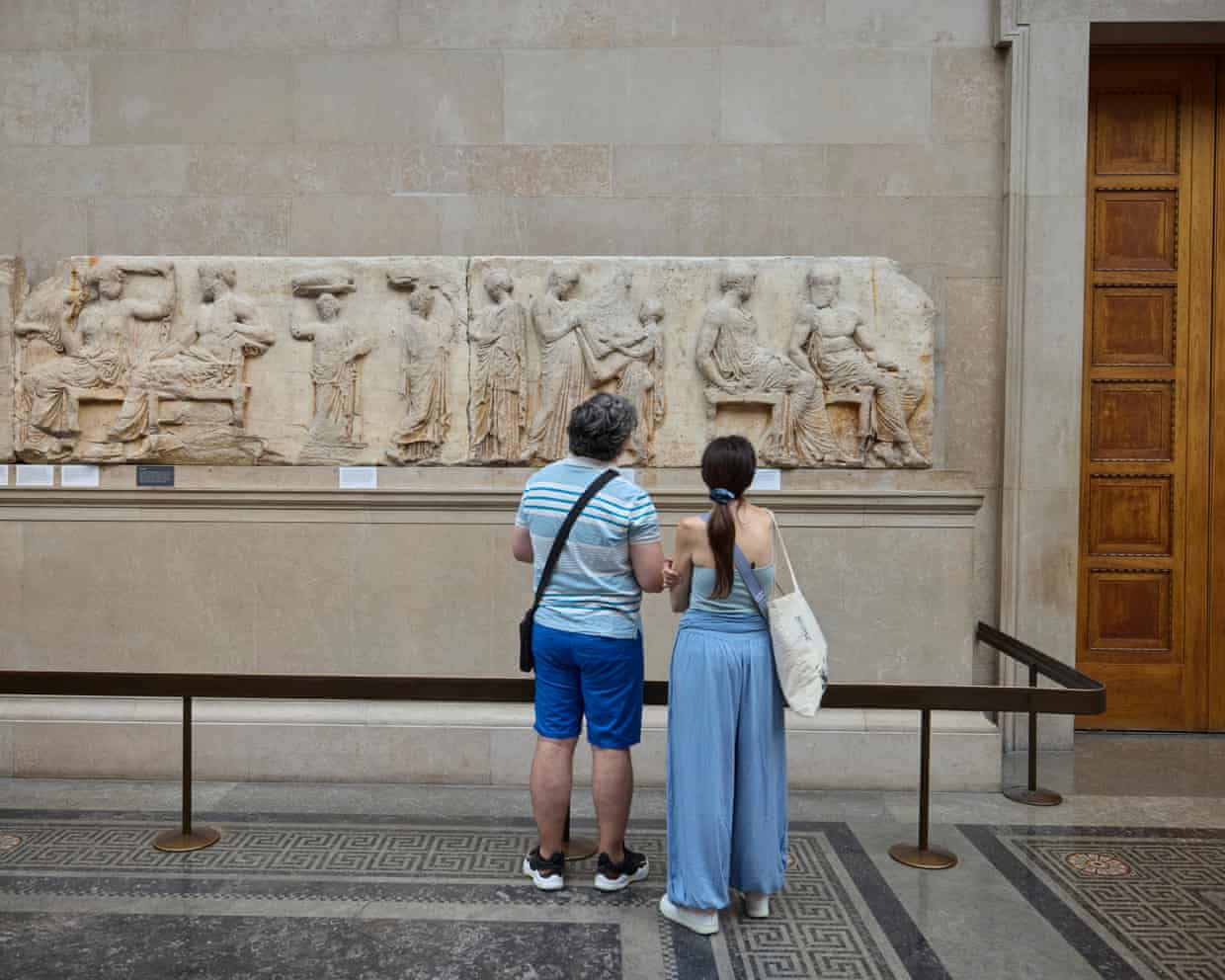
Ministers are considering charging international tourists to access permanent collections at national museums as part of an initiative to improve arts funding.The government said there was a need for long-term options to fund the struggling arts sector in its response to a review of Arts Council England, which distributes public funding to the arts.Among the options cited was a hotel levy, a policy being consulted on.But Alison Cole, the director of the Cultural Policy Unit thinktank, said charging international tourists would be a “very bad idea”.“There’s a much better way to save our wonderful civic museums and cultural infrastructure across the country, and that we believe is a hotel levy,” she said.
National museums and galleries have been free to all visitors since 2001, a landmark policy credited with boosting visitor numbers and tourism.The Treasury is understood to have previously considered ending free entry to museums and galleries as part of spending cuts in the November 2025 budget, though this was scrapped after pushback from culture ministers.Separate research from Art Fund showed 72% of the public supported a tourist levy subsidising free entry to national museums.The proposals were set out in the government’s response to recommendations made by Margaret Hodge in December in her Arts Council England review, which urged ministers to protect funding from politicisation and remove red tape from burdensome application processes.The government said it would explore all the recommendations, including greater funding to support creative careers for people from backgrounds under-represented in the arts and a plan to develop the creative sector across the country.
The government agreed with Hodge that the Arts Council should be “strong, politically impartial and independent”, ensuring “diversity of ideas” and freedom of expression.It said it would earmark £8m to help it simplify its application processes to enable creators to spend less time on funding applications, and endorsed a move away from the present “one size fits all” strategy.Hodge’s criticism of political interference in the arts was partly driven by Arts Council England’s decision to force the English National Opera to move from London to Manchester as part of its levelling up strategy.She said those involved had told her it had been a “raw experience”.The government’s response also set out how a new fund would be targeted at creatives with “fewer opportunities”, alongside work to improve access to arts education at school.
It also agreed with Hodge’s call for “closer engagement with communities, particularly in places where people have been less able to access or participate in arts and culture”, citing a £2m investment in regional arts scenes and the reintroduction of regional arts boards.Darren Henley, the chief executive of Arts Council England, said the organisation had “absolutely heard” that it needed to become a “simpler and easier organisation to deal with”, and would be taking steps to streamline its monitoring and funding application processes over the next six months.The Arts Council would also start looking at new ways to generate funding, including investing in ways similar to a commercial producer but with profits reinvested in the sector to make funding “work harder”, alongside tax breaks and a philanthropy drive, he said.He added that the Arts Council would work more closely with citizens to find out what they wanted to see from their local arts scenes.He cited Bradford’s newfound “artistic confidence” as an example of how long-term regional cultural investment could “really change a place and what a place thinks about itself, and how it acts and behaves”.
The culture secretary, Lisa Nandy, said: “For far too long, the benefits of culture have not been equally distributed.I refuse to sit back while communities are forgotten in our national story.Change must start today.That change begins with a culture sector that is proud and unafraid to tell the whole story of our nation.“A reformed and independent Arts Council will sit at the heart of this vision to reach, inspire and nurture young people who otherwise would not have the opportunity to be creative, let alone pursue a creative career.
” This article was amended on 26 March 2026.An earlier headline referenced “UK national museum collections” when the proposals only apply to England.This has been corrected.
Ministers consider charging tourists to enter national museums in England
Ministers are considering charging international tourists to access permanent collections at national museums as part of an initiative to improve arts funding.The government said there was a need for long-term options to fund the struggling arts sector in its response to a review of Arts Council England, which distributes public funding to the arts. Among the options cited was a hotel levy, a policy being consulted on.But Alison Cole, the director of the Cultural Policy Unit thinktank, said charging international tourists would be a “very bad idea”.“There’s a much better way to save our wonderful civic museums and cultural infrastructure across the country, and that we believe is a hotel levy,” she said

Jimmy Kimmel on Trump’s election integrity push: ‘Like Bill Cosby telling you he’ll watch your drink for you’
Late-night hosts mocked Donald Trump’s mail-in voting as he tries to end mail-in voting, ICE agents in US airports and a mysterious “gift” from Iran.On Tuesday’s Jimmy Kimmel Live!, the host checked in on Donald Trump’s efforts to pass the so-called Save America act. The sweeping restrictive voting bill would require proof of US citizenship for new voters and end mail-in voting, or what Trump called “mail-in cheating”.“That’s right, he prefers in-person cheating,” Kimmel quipped.“He keeps saying that it was brought to his attention today that we’re the only country that does mail-in voting – when is someone going to step in and tell him that’s not true?” he continued

Jon Stewart on Donald Trump’s Iran lies: ‘Our Supreme Misleader’
Late-night hosts reacted to Donald Trump’s tweet celebrating Robert Mueller’s death, his ICE intervention at chaotic airports and his bluffing on “talks” with Iran.Jon Stewart hoped you had a happy Monday, because “the dizzying, chaotic carnival ride that is Donald Trump’s America continues to careen down Shitshow Hill”, he said on The Daily Show. “It’s fucking madness out there: TSA lines longer than your actual trip, escalating threats in the Middle East, planes driving into trucks.”In fact, “the only thing giving me joy is looking forward to this season of The Bachelorette”, he joked, referring to the doomed season with The Secret Lives of Mormon Wives star Taylor Frankie Paul, pulled three days before its premiere after video surfaced of a previously reported domestic violence incident from 2023. “I mean, they’ve got a strong Mormon woman
Who’s Afraid of Virginia Woolf? at 60: Elizabeth Taylor still crackles with feral energy
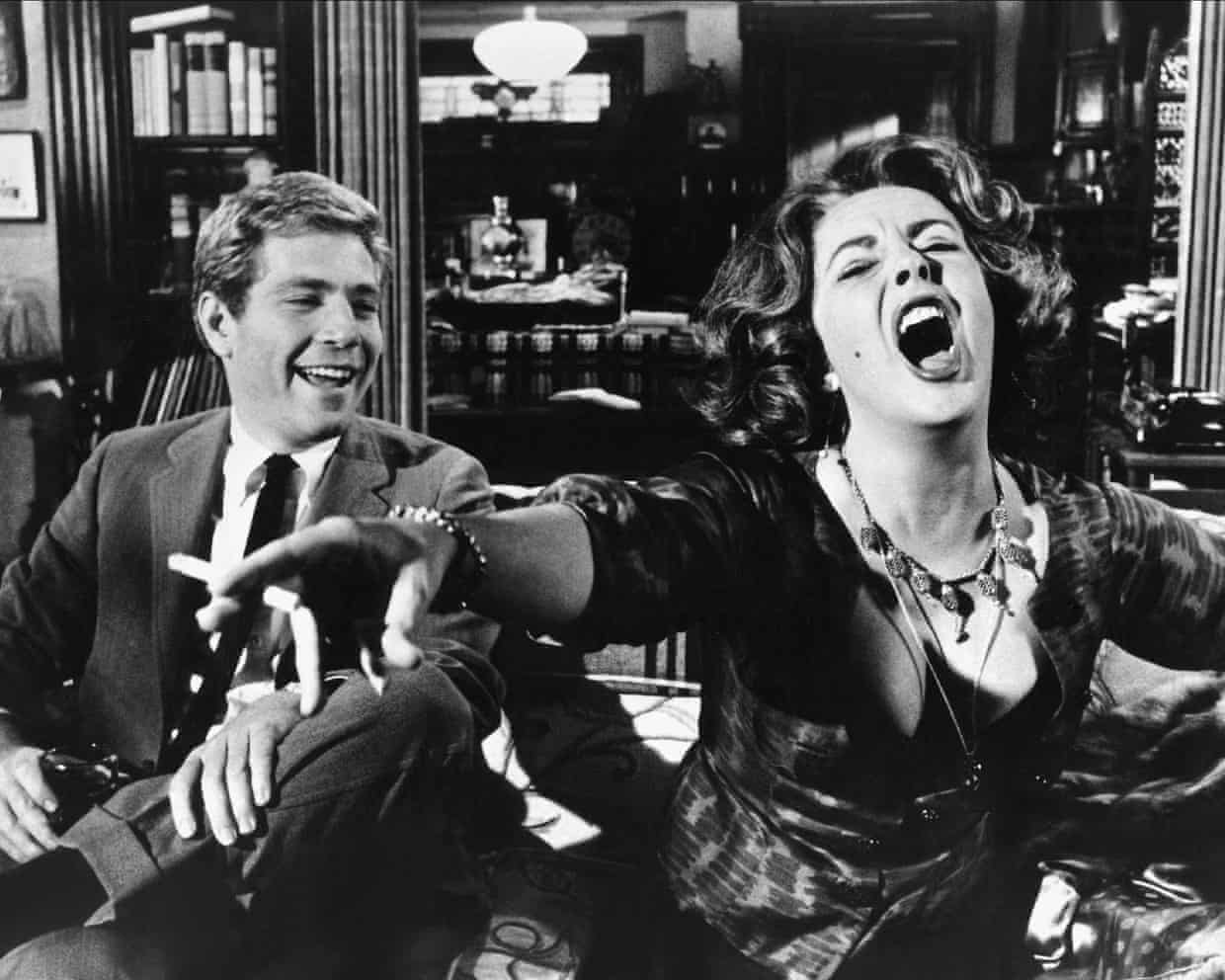
After a long day at work, we may not instinctively leap to films about toxic marriages and relationship breakdowns – but by God they can make good drama. Blue Valentine, The Squid and the Whale and A Separation are some of the great portraits of love turned septic. But perhaps greatest of all is Mike Nichols’ directorial debut – a sizzling adaptation of Edward Albee’s legendary Who’s Afraid of Virginia Woolf?, which arrived in 1966, four years after the play, and helped cement it in the zeitgeist.The film was nominated for every eligible Academy award and won five, including best actress for Elizabeth Taylor, who delivers a searing performance as the ferocious yet vulnerable Martha. It’s lost none of its gut-busting charge today and her brilliantly performed experience still crackles with emotional electricity
Punk masks, Walkmans and Choppers: Museum of Youth Culture to open in London
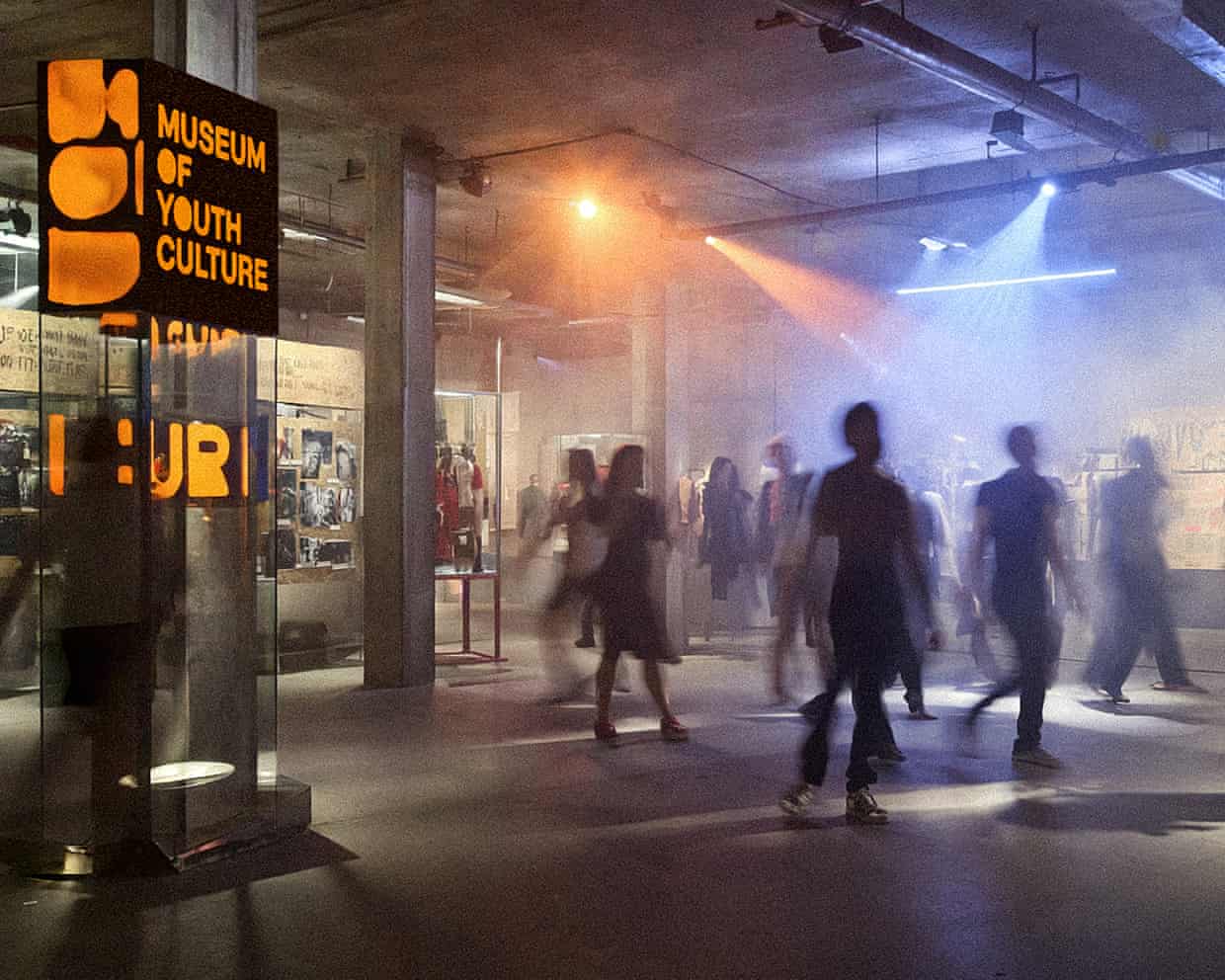
In the basement of a new-build housing block in Camden, the ventilation system is working flat out. The fans whir like a chainsaw orchestra bouncing around the concrete room as they attempt to deal with a slight damp problem. “This is what it’d sound like if there was a fire!” shouts Jon Swinstead, the driving force behind the Museum of Youth Culture, as he tries to make himself heard above the din.It’s hard to imagine but in a few weeks this empty, slightly soggy space will be transformed into an institution dedicated to all things teenage – a project Swinstead has been working on in one way or another for almost 30 years.Opening on 15 May, the museum has amassed a 100,000-item archive that tells the story of British youth subcultures from mods and rockers, to ravers and emo
‘Audiences told us we didn’t show enough teacher sex’: how we made Waterloo Road
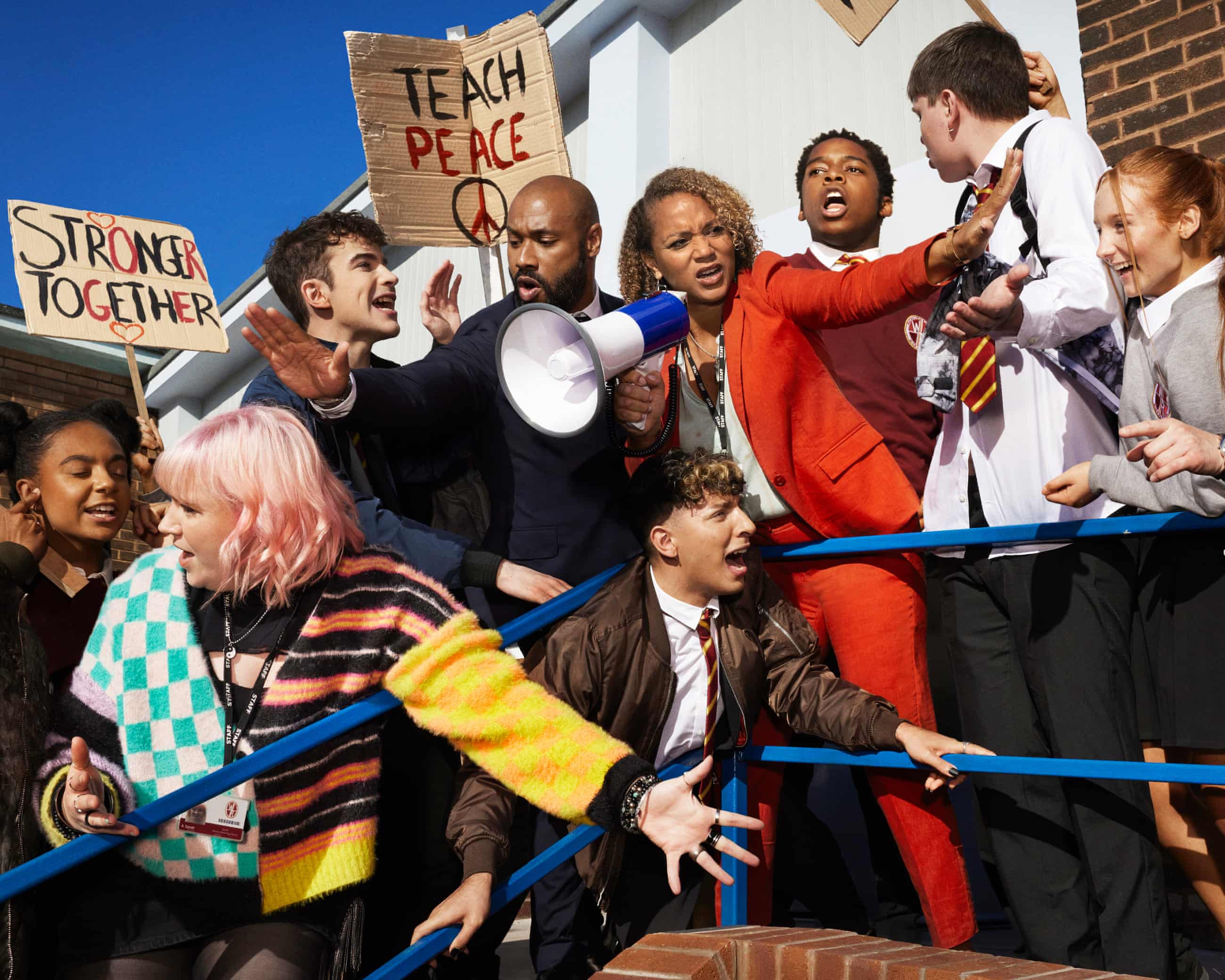
‘In series one, it was bullying, drugs and alcohol. Twenty years on, it’s vapes, cyber-bullying and bloody energy drinks’I was working on women’s prison drama Bad Girls when the idea for Waterloo Road came up. Bad Girls creators Maureen Chadwick and Ann McManus had a fiery belief in social justice and did rigorous research. Those are often the foundations of successful serial drama. Ann had once taught in a Glasgow comprehensive and was passionate about education: she believed we write off young people too readily

UK car production falls 17% as industry warns of ‘worrying’ decline

Almost half a million Lloyds customers had personal data exposed in IT glitch

Five firms including Autotrader and Just Eat investigated over fake review failings

US markets see biggest slump since start of US-Israel war on Iran
The Middle East price shock hasn’t hit Next – yet | Nils Pratley
NS&I chief executive replaced in ‘fresh start’ over missing savings crisis; bad day for markets – as it happened