Prem Rugby introduces minimum salary floor of £5.4m for clubs next season

Prem Rugby will introduce a minimum salary floor of £5.4m for each club next season as part of a long-term plan to increase competitiveness.The Rugby Football Union Council voted last month to ringfence the existing 10-team Prem until the 2029-30 season, when it is hoped two clubs will be added provided they meet minimum financial and sporting standards.Explaining the Prem’s growth plans in detail for the first time, its chief executive, Simon Massie-Taylor, revealed they are aiming to open expansion windows every four years, when up to two clubs could join.The first tender process will take place during 2027 and the most impressive applicants could be invited to join Champ Rugby the following season, with a view to moving up to the Prem in 2028-29 as long as they reach the playoffs in the second tier.
The new salary floor was signed off by the Prem board on Thursday and is £1m lower than the current cap, which will not change next season.“Our vision is to be the best league in the world,” Massie-Taylor said.“We are on a journey to define exactly what that means, but it doesn’t mean we are going to spend beyond everyone else and create wage inflation around the world.“We will only increase our salary cap when we’ve established a formula as part of our financial control, but the salary floor has been agreed.It has been established in principle and agreed in principle.
”As part of the growth strategy the Prem want to stage several so-called Big Games.“Big games are really important as they appeal to a wider fanbase,” Massie-Taylor said.“Our ambition is to have 10 by 2030 and that includes the final and the potential for neutral playoffs.“England have a game against Fiji this summer at the Hill Dickinson Stadium in Liverpool, which is a great new 55,000-seater stadium and in an area where there is clearly demand.There are a lot of options.
We’re intending to do this in 2029 because it takes time to secure venues, find the right spot and build demand,”
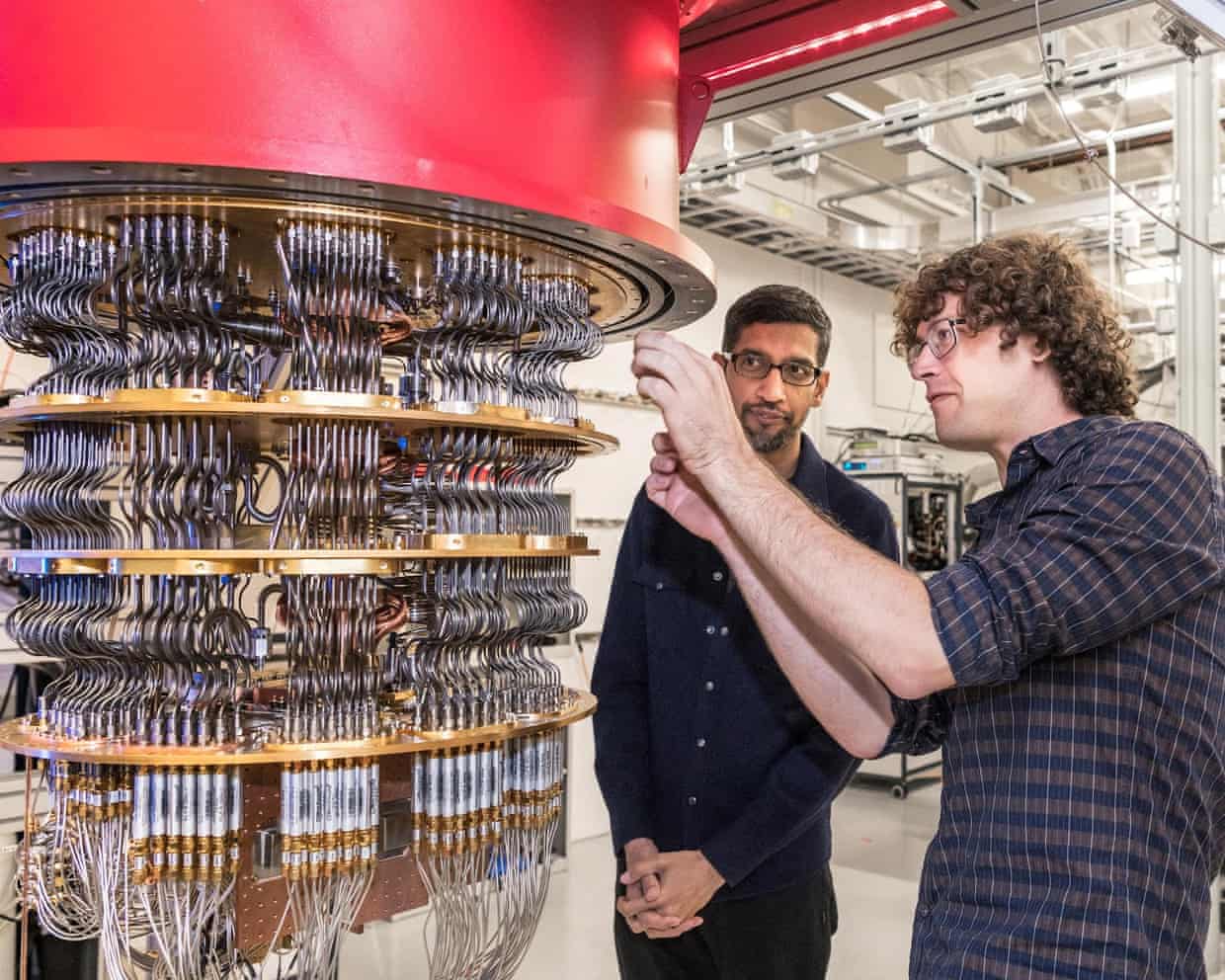
Google warns quantum computers could hack encrypted systems by 2029
Banks, governments and technology providers need to be prepared for quantum computer hackers capable of breaking most existing encryption systems by 2029, Google has warned.The tech company said in a blogpost that quantum computers would pose a “significant threat to current cryptographic standards” before the end of the decade and urged other companies to follow its lead.The company, owned by Alphabet, said: “The encryption currently used to keep your information confidential and secure could easily be broken by a large-scale quantum computer in coming years.”As it stands, quantum computers – which can rapidly carry out complex tasks – are a nascent technology with great potential and significant obstacles to being widely usable.Google, Microsoft and universities across the UK and the US are in the midst of building systems that harness the physics of quantum mechanics to perform extremely sophisticated mathematical calculations

Starmer vows to tackle social media’s ‘addictive features’ to protect children
Keir Starmer has said he will tackle “addictive features” in social media amid increasing signs the UK government is preparing to crack down on risks to children after a US court verdict that held Meta and YouTube responsible for harms caused by designing addictive technology.The prime minister said the verdict in a California court signalled a rising public expectation for more aggressive regulation and said: “I’m absolutely clear that we need to go further.”“The status quo isn’t good enough,” he said. “We need to do more to protect children. That’s why we’re consulting about issues such as banning social media for under-16s

Creator of AI actor Tilly Norwood says she received death threats over project
The creator of the AI actor Tilly Norwood has said she received death threats after a global backlash against the project, and said she developed it to “provoke thoughts and discussion” about the impact of AI in the entertainment world.Eline van der Velden caused anger and panic in Hollywood and beyond last year after she said talent agents had been interested in signing her creation. Prominent actors and acting unions immediately condemned the idea.In an interview with the Guardian, Van der Velden said she had been prepared for a backlash against the provocative idea of AI performers. However, she said she was “quite shocked by the vitriol” that followed
Charity Commission warns Alan Turing Institute of its legal duties after complaints
The board of the UK’s leading AI research institute has been reminded of its legal duties in areas such as financial oversight and managing organisational change by the charity watchdog after a whistleblower complaint.The Charity Commission issued formal regulatory advice and guidance to trustees at the Alan Turing Institute (ATI), the organisation’s board, after it was contacted by a group of staff with a list of concerns.The commission told ATI it was closing the case and was not launching a statutory inquiry – a formal investigation. However, the watchdog said if there was evidence of trustees ignoring its advice, it could resume contact with the institute.The commission launched a compliance case related to ATI after receiving the complaint last summer

Meta and YouTube designed addictive products that harmed young people, jury finds
Meta and YouTube have been found liable for deliberately designing addictive products that hooked a young user and led to her being harmed, a jury ruled on Wednesday. Jurors found the tech companies to be both negligent and having failed to provide adequate warnings about the potential dangers of their products.The jury awarded the plaintiff in the case damages of $6m, with Meta to pay 70% and YouTube the remainder. It took nearly nine days of deliberations for the Los Angeles jury to reach its verdict. This lawsuit, over social media’s alleged harm to young people, was the first of its kind to go to trial

Record investment in quantum computing talent | Letter
Dr Simon Williams (Letters, 19 March) writes that ambition in quantum computing cannot succeed without sustained investment in people and fundamental science. He is correct on that point, but wrong to say that UK’s investment plans risk losing quantum computing talent.The UK’s advantageous position in quantum has only emerged through sustained long-term public investment from UK Research and Innovation (UKRI) and partners into fundamental physics research projects, and the best people, infrastructure and partnerships. It is through this that the UK is poised to reap the benefits of the quantum revolution.In the last 10 years, UKRI’s councils have made investments in physics research, supporting hundreds of academics and building the foundation for where we are today

Spanish woman who won legal battle for right to euthanasia has assisted death

Labour failing to shift power from Whitehall to local areas, analysis finds

London has England’s highest levels of child poverty, data shows

Coming across a terrible dilemma | Brief letters

Resident doctors in England to begin six-day strike after rejecting offer in pay dispute

Fifteen new councils to be created in south and east of England