
H
sport
H
HOYONEWS
HomeBusinessTechnologySportPolitics
Others
  • Food
  • Culture
  • Society
Contact
Home
Business
Technology
Sport
Politics

Food

Culture

Society

Contact
Facebook page
H
HOYONEWS

Company

business
technology
sport
politics
food
culture
society

© 2025 Hoyonews™. All Rights Reserved.
Facebook page
cultureSee all
A picture

How to keep free entry to UK museums and galleries | Letters

I believe that national museums should be free for all. Your report (Is the UK’s golden era of free museum entry coming to an end?, 21 February) quoted me from a Daily Telegraph article that selectively used parts of a much longer interview. I said in principle that people would be willing to pay; however, I then outlined all the reasons this would not work financially, practically and ethically. I do not wish to be represented as a mouthpiece for those who wish to introduce charges.Nick MerrimanHastingleigh, Kent There is an easy answer to the budget difficulties faced by many UK art galleries and museums: identity cards

2 days ago
A picture

‘You’re sweet – and I’m old!’: Billy Porter and Sam Morrison on teaming up for a comedy about love and death

The Emmy-winning singer and actor was so struck by the standup’s autobiographical one-man show Sugar Daddy that he signed on as producer. The pair discuss ‘bears’, blood sugar and bridging the divides between generations of gay menSugar Daddy is a one-man show about “love, grief and insulin” by the 31-year-old standup Sam Morrison. An autobiographical monologue that turns tragedy into comedy, it tells of how Morrison fell in love with Jonathan, who was 24 years his senior, after meeting him at a gay bear festival in Provincetown, Massachusetts. In 2021, two and a half years into their relationship, Jonathan died from Covid.For the last four years, Morrison has been performing Sugar Daddy around the world; next month he brings an updated version to London’s West End

3 days ago
A picture

‘Seems I’m not dead’: Magda Szubanski says she is in remission after treatment for stage four cancer

Magda Szubanski has revealed the “fantastic news” she has finished chemotherapy and is in remission from a rare, aggressive cancer she was diagnosed with nine months ago.Wishing her fans a “Happy Mardi Gras” in a video on Instagram on Friday, Szubanski said: “I wanted to share the fantastic news, which is that I’ve completed chemo, and I am now in remission. So phew, big relief.“It’s not a cure, but because I’ve got a good remission, that hopefully means that I will … keep the cancer at bay for a good long time.”In May the 64-year-old actor and comedian said she had stage four mantle cell lymphoma, an uncommon and aggressive form of non-Hodgkin lymphoma and said she had shaved her head ahead of treatment

3 days ago
A picture

Seth Meyers on Trump’s State of the Union address: ‘A vehicle to attack anyone who doesn’t bend the knee’

Late-night hosts tore into Donald Trump’s extremely long State of the Union address and a bombshell new report on redactions from the Jeffrey Epstein files.Donald Trump arrived to his State of the Union address on Tuesday evening with low expectations and even lower goodwill, with his approval rating hovering somewhere around a dismal 36%. “So the polling was bad before the speech and bad after the speech,” Seth Meyers reported on Wednesday evening, “and on top of that it was long and boring,” clocking in at a record one hour and 47 minutes.Or, if you’re Republican, it was “the best State of the Union speech that I’ve seen”, to quote the House speaker, Mike Johnson. Ted Cruz went one step further, calling it “majestic”

3 days ago
A picture

‘The sky’s the limit’: Newcastle Art Gallery unveils its ‘divisive’ $48m expansion with a blockbuster opening show

On Friday night, the Newcastle Art Gallery (NAG) is throwing open its doors and filling the road and park with giant fluffy doughnuts, live music, dancing and art in a free-for-all street party – themed “industrial disco” – that has been 16 years in the making.For the NAG team, and Novocastrians more broadly, this is a significant moment, marking the long-awaited completion of the $48m gallery expansion project, which went from being “very divisive” in the community to something that’s generating “a remarkable buzz and excitement,” according to Jeremy Bath, the CEO of Newcastle city council.Now the largest public gallery in NSW outside of Sydney, it opens with the major exhibition Iconic Loved Unexpected, displaying 500 artworks from its 7,000-strong collection. Displayed over the 13 gallery spaces (eight of which are new, in a floor space that’s more than double that of the 1997 building), it’s a star-studded showcase of the gallery’s $145m collection, including Australian greats Emily Kam Kngwarray, John Olsen, Margaret Preston, Brett Whiteley, Daniel Boyd and Margaret Olley.It’s the headliners who will draw the crowds, but the gallery – led by the NAG director, Lauretta Morton – has been intentional in championing lesser-known local artists, too

3 days ago
A picture

Dead-end boys and West End girls: Lily Allen’s greatest songs – ranked!

Ahead of her UK tour and her three nominations at this weekend’s Brit awards, we appraise Allen’s sharp, candid songcraftThe final track of West End Girl is as close as the album’s break-up saga comes to conciliation, which isn’t terribly close (there’s a glancing lyrical reference to fault on both sides). But in its dreamy trip-hoppy backing and the sweetness of its melody lurks something else: a sense of closure.“I ripped off the chorus … and can’t be bothered with the paperwork,” shrugged Allen of Who’d Have Known’s distinct similarity to Take That’s Shine. They let her use it anyway, and understandably so: Who’d Have Known is an entirely lovely drawing of a relationship in its early stages, that seems to gently glow with possibilities.A genuinely great song from Allen’s flawed third album Sheezus, Our Time neatly captures a sense of here-comes-the-weekend anticipation

3 days ago
societySee all
A picture

Poorly regulated clinics in England are putting children with ADHD at risk, warn doctors
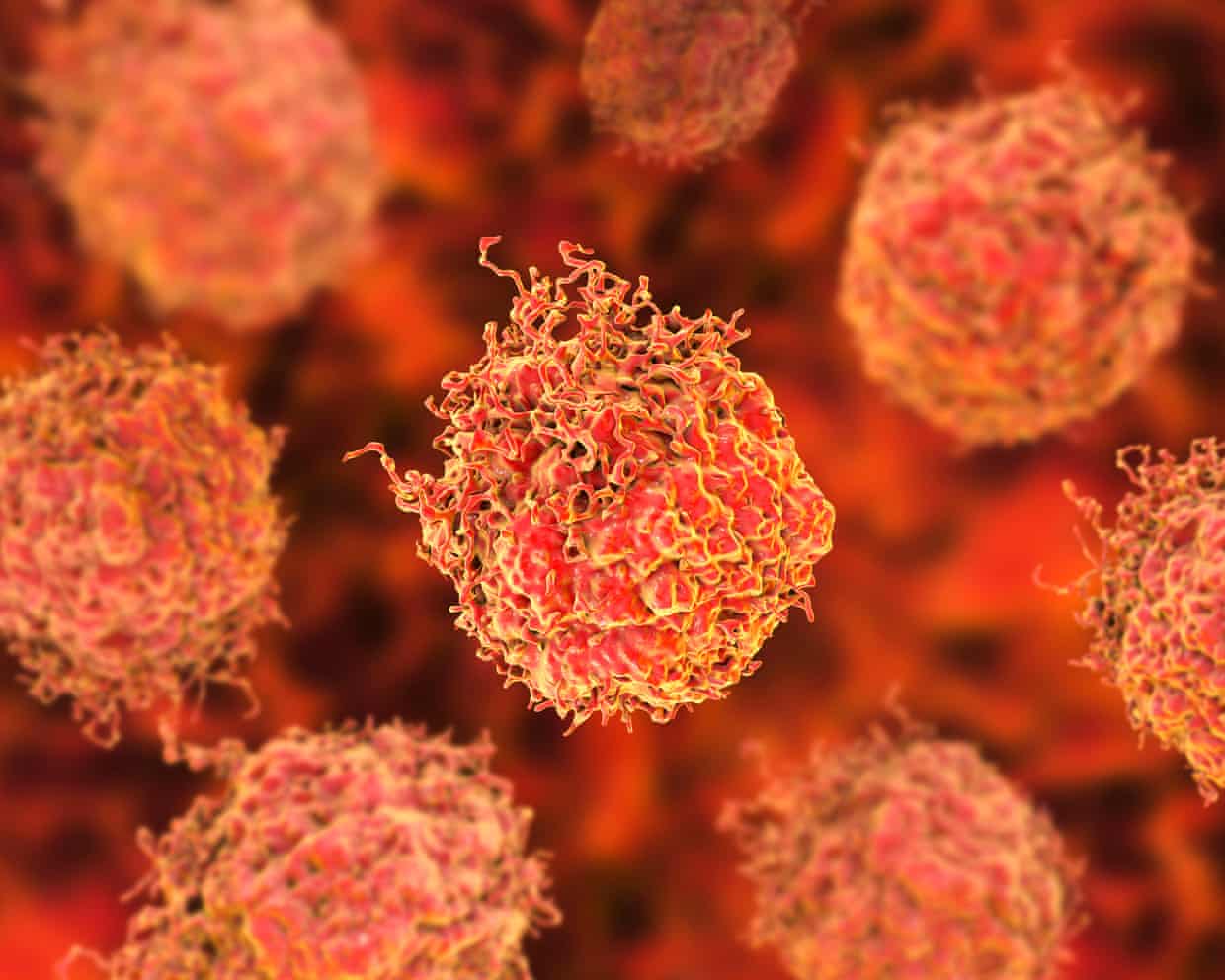
1 day ago
A picture

Researchers praise ‘stunning’ results of new prostate cancer treatment

2 days ago
A picture

Scouting America to reinstate ban on trans children to appease Pentagon

2 days ago
A picture

Mental health units discharging eating disorder patients with ‘dangerously low’ BMIs

2 days ago
A picture

Diagnosing mental health conditions need not be a case of yes/no | Letters
2 days ago
A picture

‘Violent bully’ who broke partner’s neck and left her paralysed jailed for 16 years

2 days ago

The ultimate breakdown: everything you need to know about F1’s new regulations for 2026

about 18 hours ago
A picture


In a week’s time, a new era will begin in Formula One as a major shift in regulations brings with it an air of unpredictability when the Australian Grand Prix gets under way in Melbourne.The cars have been made smaller and lighter with the intent of making them more nimble and better to drive, and to facilitate improved racing.The wheelbase has been reduced by 20cm to 340cm and the width by 10cm to 190cm.Across changes in the chassis and to the engine, the overall weight has been reduced by 30kg.Drivers such as Lewis Hamilton have declared themselves generally pleased with the improved handling characteristics of their more sprightly rides, which will operate with approximately 40% less drag, but they will not enjoy the same downforce or pace as with last year’s models and are expected to open the season a second or two slower per lap than last year.

New hybrid engines and a slew of design and technological changes have also brought a whole new lexicon that needs to be mastered from active aero to super-clipping.Read on for a full technical guide to F1’s key 2026 changes.Perhaps the single biggest change in the new regulations is the adoption of new hybrid engines, which now deliver a nearly equal split in power from the internal combustion engine and electrical energy.The 1.6-litre V6 turbocharged internal combustion engine (ICE), now powered by fully sustainable fuel, will deliver approximately 400KW or 536bhp and will be combined with the motor generator unit – kinetic (MGU-K), capable of producing 350KW or 469bhp, an expansion of almost 300% on last year’s electrical energy delivery.

Notably the MGU-H (motor generator unit – heat) has been removed.This was employed to harness energy when off throttle to then re-employ it to ensure the turbo was spooled up and prevent turbo-lag – the delay in response from the engine as the turbo comes up to speed to deliver the boost.Turbo lag is an issue drivers and teams will have to deal with, notably at the start and in exiting corners.Both are being addressed.The FIA has trialled a new start procedure featuring a five-second hold on the grid to allow the cars to apply the revs to spool up the turbos.

Equally drivers are already experimenting with cornering in lower gears to keep the revs high for the turbo and to harvest energy better.Ferrari have opted to use a smaller turbo on their engine and are enjoying quick starts and great pace on corner exit.To reduce drag and allow for the potential effects of the electrical energy being drained by the end of a straight and causing cars to have to slow, both the front and rear wings will be able to open on a straight and then close through corners (or, in the case of one innovative Ferrari experiment, flip the entire rear wing upside down).Similar to the previous drag reduction system (DRS) on the rear wing that has been removed, it will be available to all drivers at all times.The wings will open in designated “straight mode” zones and return to the default “corner mode” for everywhere else on the circuit.

DRS has been removed after 15 years and replaced by the driver-actuated overtake mode.As with DRS it can be deployed when within one second of the car in front at the designated detection point.On activation it allows the driver to deploy additional electrical energy to maintain a higher velocity to assist in overtaking.It can be used in one fell swoop or in small increments across a lap up to a defined limit of energy.However, the energy employed will still have to be recovered after use, offering the opportunity for a car that has been passed to come back at a rival as they attempt to harvest energy.

Lando Norris, the defending champion, has suggested that it could lead to unusual overtaking opportunities and to the potential “yo-yoing” of positions across a lap.This allows for the driver-deployed management of the power delivery from the electrical system that was previously largely managed and run by software and engine mapping.Use of additional energy at the driver’s discretion can be deployed in attack or defence at any point across a lap, allowing the use of the maximum 350KW available.However, it must then be recovered.With the employment of electrical energy now a vital part of the armoury, maintaining it to maximum effect across a lap will be a fundamental demand on drivers.

Alongside the energy recovered from braking, techniques will include that of lift and coast (previously deployed in fuel saving), by maintaining high revs through corners in a lower gear, and most notably “super‑clipping”.This is the process by which the hybrid begins recharging the battery when the car is at full throttle at the end of straights, causing a loss of power and speed.Much of this has already faced considerable criticism from drivers, not least in that even on a qualifying lap there may be some level of having to manage rather than going all-out to attack.If this materially affects the racing, F1 and the FIA can be expected to intervene to adjust the rules.The ground-effect era of 2022 to 2025 comes to an end as “flat” floors return.

The ground effect was intended to produce high downforce from the low pressure flow of air through the floor aerodynamics, known as venturi tunnels.It did deliver huge downforce but was unpopular in how it made the cars handle and did not provide the hoped‑for ability for cars to follow one another closely.Instead of the floor, the rear diffuser has once more become key but there will be a downforce reduction of approximately 15-30% in 2026.This is another factor to which drivers will have to become accustomed but which, as with overall speed, the teams can be expected to begin to overcome in no short order as they develop the new cars.The wheels remain at 18 inches but the tyres have been made narrower, at the front by 25mm and at the rear by 30mm.

Doing so will reduce drag and cut weight but it also decreases the size of the contact patch between the tyre and the track, reducing the mechanical grip to which drivers had previously been accustomed.There will also be adaptation and understanding required as to how these new size tyres function in terms of degradation on different circuits, temperatures, conditions and across a race distance.Another new challenge and a very technical one for the fuel manufacturers.All fuels must be certified as 100% sustainable by the FIA.This can be from a synthetic fuel made using sustainably sourced hydrogen gas and carbon monoxide, or a biofuel.

The latter must use sources from “non-food” biomass or waste products to make no impact on the food chain.It is a potential battleground in the years ahead with great import for the manufacturer that could return a little extra bang per buck from their juice.The increased capacity and role of the electrical energy and its deployment and recharging means it will now play a fundamental part in racing.Efficiency in usage and management of the electrical components will be a major target for engineers as they develop the cars and this could well become a key differentiator, with the Red Bull already having demonstrated an ability to recover quicker and thus deploy longer than its rivals.Similarly, drivers who can adapt quickest to these new demands, adjust to the new style required and best use the new options open to them will steal a march.

Grasping and exploiting what will be complex new methodologies, including both in-the-moment tactical, as well as strategic, decision making, constitutes a formidable challenge.Many, including the four-time champion Max Verstappen, have already expressed discontent, saying that energy management across a lap is antithetical to the idea of racing, and this has led F1’s chief executive, Stefano Domenicali, to call for calm as the sport adapts.