The Spin | Nimble or nervous 90s? Cricket maths show best approach to scoring a century
Stats tell us batters have less reason to be anxious in the 90s than common lore suggests, though the pain and fear of falling short is all too realIf you’ve ever been lucky enough to score a century you’ll know how seismic a moment it is when you finally get over the line.Some play the game for a lifetime and never make one, the three-figured kingdom for ever out of reach, a promised land they are destined never to enter.Yet cricket lures you back like a devilish lover.You just can’t quit it.Next time might be your time.
It could be you.Why not?In cricket the century is the hallmark of individual success for a batter, the team sport unique in the way that it lauds personal milestones.The Test Match Special statistician Andy Zaltzman says that a century “carves an immutable notch in a player’s history and, at the highest level, an eternal legacy in the annals of the game”.The difference between a two- and three-figure score might be only one run but in cricket they may as well be different realms.Galaxies divided by a single.
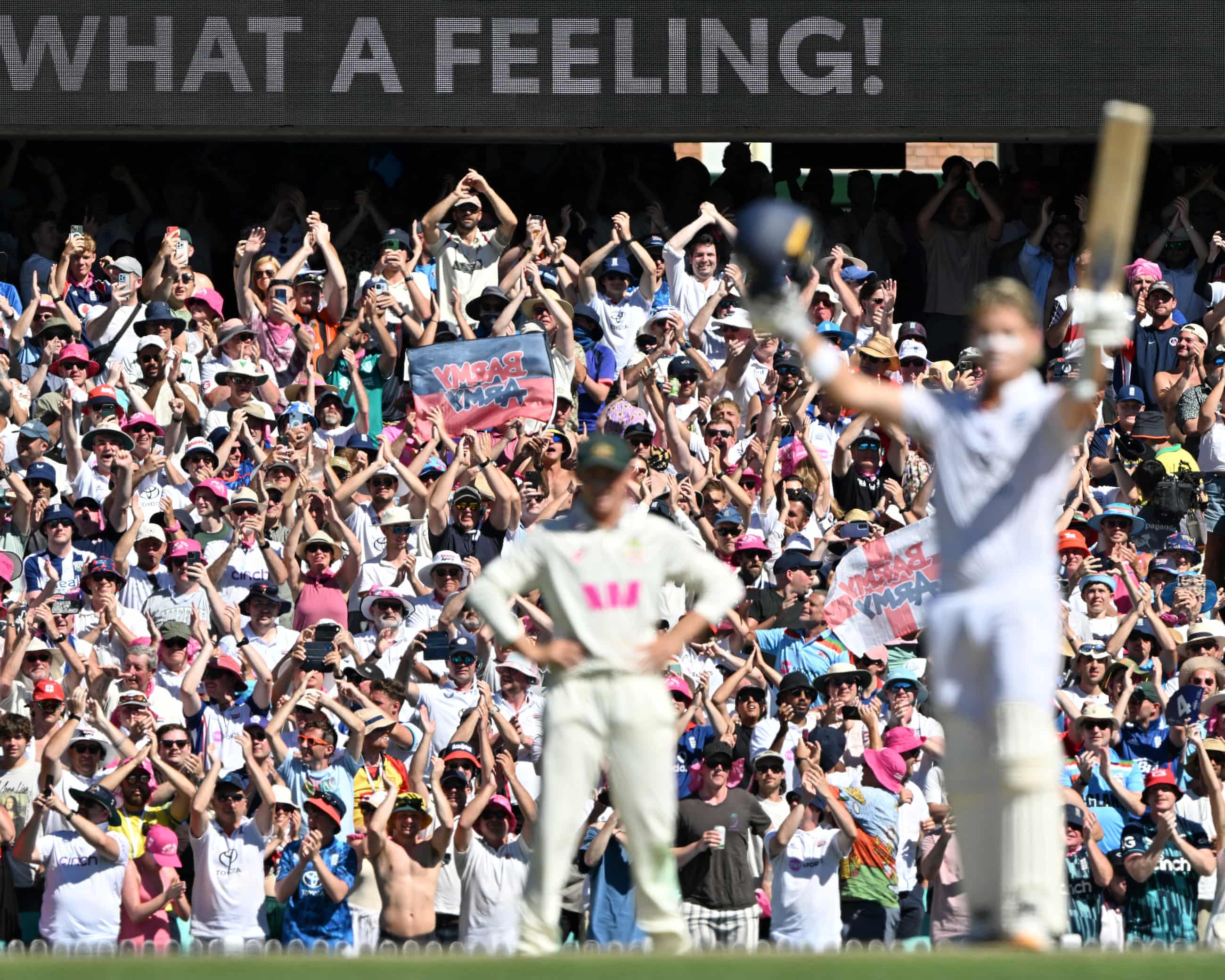
Ask the handful of players who have been out for 99 in Test cricket, they’ll tell you.It’s one run and yet it is everything.Getting close to these “slivers of immortality” has prompted plenty of players, even the greats, to wilt while on the cusp.“I was a little bit nervous,” Jacob Bethell admitted after scoring his sunburst of a maiden first class and Test century in Sydney last week.Bethell spent eight balls on 99, his parents Graham and Giselle and his sister Laura having an entire cattery’s worth of kittens in the Brewongle Stand.
Their boy appeared at least to be ice cold, shutting up shop to the returning threat of Mitchell Starc and the unrelenting Scott Boland before seizing on the opportunity to skip down and loft Beau Webster’s off-spin over midwicket to get over the line and carve his first notch,“I was nowhere near as nervous as I was in New Zealand when I forgot to watch the ball,” Bethell added, recalling his previous highest Test score of 96 in the second Test against the Kiwis in Wellington last winter,On that occasion Bethell tried to get over the line with a rasping cover drive off Tim Southee only to edge behind and be caught agonisingly short,“It would have been flair if I’d smacked him through the covers to bring it up,” Bethell apparently said to Ben Stokes in the dressing room afterwards,Bethell’s response says much about his confidence in his own talent.
“It was always coming,” he noted matter of factly in the press conference after that first century.His bustling approach to the 90s in Wellington is actually a common one and is borne out by a published academic paper on the phenomena of the nervous 90s by a group of Australian academics in 2023.“You could actually call it the nimble 90s,” says Dr Leo Roberts, one of the authors of the paper and a research fellow at the University of Melbourne.“Our findings showed that actually batters accelerated their scoring as they approached a hundred and were more likely to hit a boundary when they were close to it too.”The nervous energy is more likely to mean a batter at Test level rattles towards a ton than gets out it seems.
Zaltzman’s findings back this up.He sends the Spin a series of brain-melting spreadsheets that, when deciphered, show that in the history of men’s Test cricket, 38.4% of all batters’ innings result in them getting out between 0 and 9 and that 17.3% of innings that reach 90 end with the player dismissed before reaching a century.In Test matches since 2000 those figures are 37.
8 % and 16.6%.The numbers reveal that the 90s are actually the 10-run bracket in which a Test batter is least likely to get out, not just between 0 and 100 but also from 0-140.This isn’t to say players don’t get nervous as they approach the milestone.Many, including most recently Bethell, will admit to feeling the butterflies as they approach cricket’s immutable landmark.
Test history shows us players that are rendered shotless and stupefied on the ascent to three figures despite the comfort blanket the overall statistics provide,If only they knew,Zaltzman himself laughs in the face of such numerical pressure,“In my first hundred, I went from 84 to 100 with four successive cuts for four,It was a local derby, Penshurst v Chiddingstone, so massive pressure.
”All of which is to say that if you do ever find yourself, inexplicably or otherwise, out in the middle and approaching a hundred, remember, the 90s are not the minefield you might think they are.It might even pay to put your foot down and do it in style, plenty of players at the highest level have taken this approach and succeeded.Be flair, but most importantly: get there.This is an extract from the Guardian’s weekly cricket email, The Spin.To subscribe, just visit this page and follow the instructions

‘It opened my eyes’: Félix Auger-Aliassime on tennis, Togo and his father’s journey
The world No 7 on his teenage trip to west Africa, his fundraising efforts and finding his form ahead of the Australian Openith a smile, Félix Auger-Aliassime says: “Well, imagine you’re 13. I had been to Europe. I had been to America. I live in Canada. And then you go to Togo; it’s a little different, you know?”Auger-Aliassime, the seventh best tennis player in the world, was describing the homecoming he enjoyed 12 years ago as he first caught a glimpse of Togo, the country his father, Sam, was born in and emigrated from to Canada before his son’s birth

Why is Stephen A Smith blaming Renee Good for her own death? | Etan Thomas
This past weekend there were hundreds of demonstrations across the United States after Renee Good, an American citizen and mother of three, was shot dead by Jonathan Ross, an Immigration and Customs Enforcement (ICE) officer, in Minnesota.The anger has permeated throughout the NBA as well. Steve Kerr and Doc Rivers, the head coaches of the Golden State Warriors and Milwaukee Bucks respectively, described Good’s death as “murder”. Kerr also attacked the Trump administration’s attempts to portray Good as a terrorist.“It’s shameful that the government can come out and lie about what happened when there’s video and witnesses who have all come out and disputed what the government is saying,” Kerr said
The Spin | Nimble or nervous 90s? Cricket maths show best approach to scoring a century
Stats tell us batters have less reason to be anxious in the 90s than common lore suggests, though the pain and fear of falling short is all too realIf you’ve ever been lucky enough to score a century you’ll know how seismic a moment it is when you finally get over the line. Some play the game for a lifetime and never make one, the three-figured kingdom for ever out of reach, a promised land they are destined never to enter. Yet cricket lures you back like a devilish lover. You just can’t quit it. Next time might be your time
Windrush and the rise of wandering Caribbean cricket clubs that fuelled talent in English game
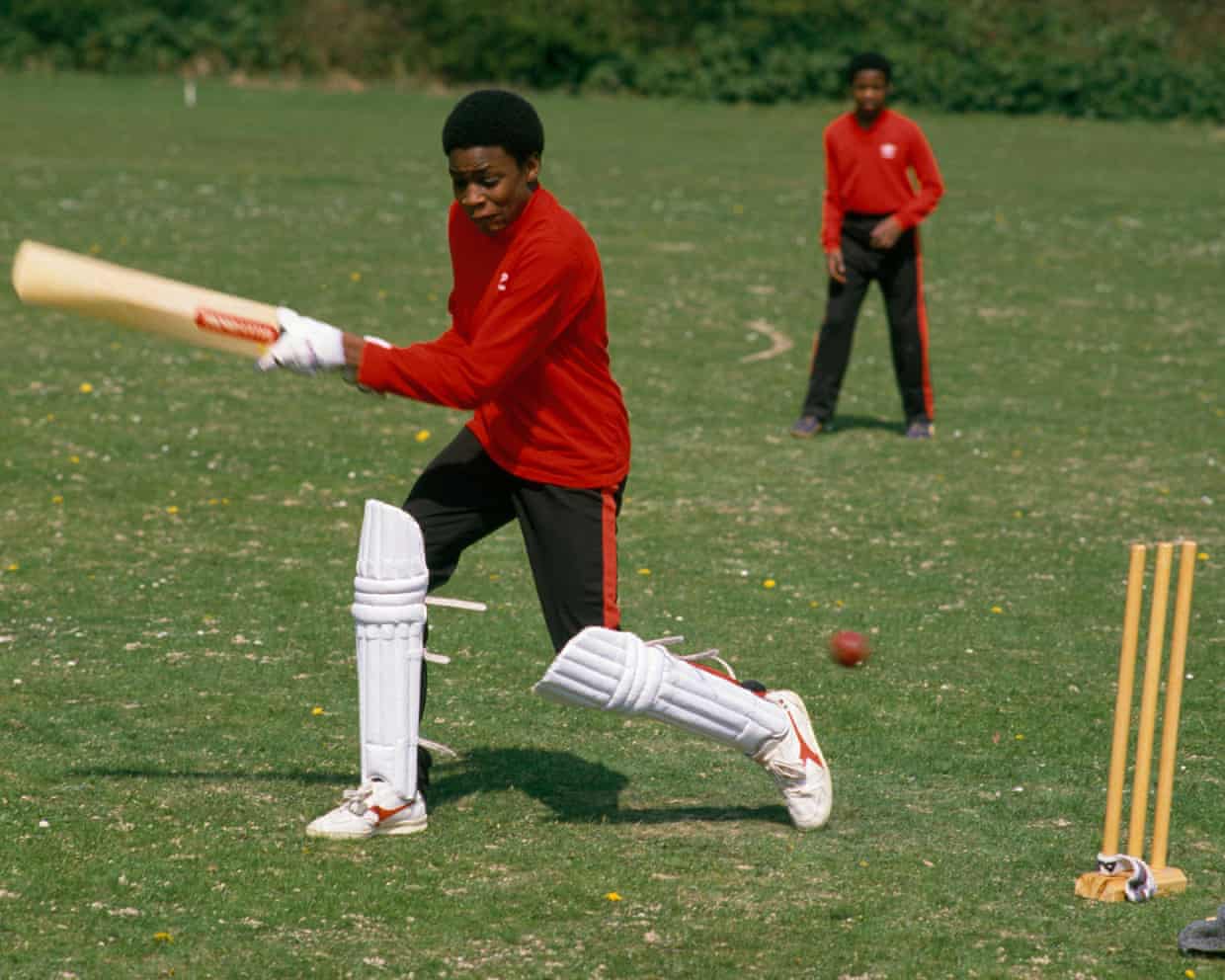
In the early 1980s there were scores of “Caribbean” cricket clubs playing across England, many of them bearing evocative names such as New Calypsonians, Island Taverners, Paragon, Starlight and Carib United.Mostly these clubs operated under the radar – as wandering sides renting pitches on municipal grounds that were outside the traditional league structures. With few physical records of their existence, their history has been in danger of being lost as numbers have plummeted since the late 1990s.Thankfully, though, there are at least a few people dedicated to documenting the players and personalities who made up such a vibrant part of the domestic game from the late 1940s. And now there’s a new book, Windrush Cricket, by the University College London associate professor of history Michael Collins, setting out their origins and impact

Emma Raducanu recovers in Hobart to post first win in over three months
Emma Raducanu offered an impressive demonstration of her resilience at the Hobart International as she rallied from an overnight second‑set deficit in her rain-delayed first-round match to defeat Camila Osorio of Colombia 6-3, 7-6 (2).The victory marks Raducanu’s first win since September after struggling with a foot injury in the final weeks of the 2025 season. She had contested just one match this season after being sidelined for much of the off‑season, losing in three sets against Maria Sakkari in the United Cup.Considering those recent challenges, this is a positive start for Raducanu. She will next face Taylah Preston, the 20-year-old Australian wildcard, in the quarter-final after Raducanu’s second-round opponent Magdalena Frech withdrew from their last-16 match because of injury

John Higgins and Kyren Wilson win at Masters as curious run of 6-2 scorelines goes on
Kyren Wilson, the 2024 world champion, defeated Si Jiahui in impressive fashion to reach the Masters quarter-finals with the 6-2 result continuing a curious statistic: every match at Alexandra Palace this week had finished with the same scoreline. That record extended in the evening session as John Higgins saw off Barry Hawkins, 6-2, to reach the last eight.After edging the first frame following a run of snookers, Wilson – yet to win a tournament this season having broken his cue at the start of the campaign – looked set to build a maximum in the next, but just missed the 11th red into the bottom corner pocket as he moved 2-0 ahead.Si got on the board with a well-crafted break of 97 before the world No 2, who lost to Shaun Murphy in last year’s Masters final, dug in to re-establish his lead at 3-1 heading into the mid-session interval.Although Si pulled another one back by taking a close fifth frame, Wilson, looking to move on from a disappointing first-round exit to Elliot Slessor at the UK Championship, then took the sixth 82-28 before closing out an impressive victory with successive century breaks of 101 and 105

Circumcision kits found on sale on Amazon UK as concerns grow over harm to baby boys

One in four UK teenagers in care have attempted to end their lives, study says

Five minutes more exercise and 30 minutes less sitting could help millions live longer

NHS spending up to £19k a time treating people suffering after overseas surgery, research finds

LGB+ people in England and Wales ‘much’ more likely to die by suicide than straight people

Football fan took his own life after using illegal ‘predatory’ betting sites, inquest told