The Breakdown | Rugby’s leaders should show courage of their convictions as Stephen Jones did
He never won an international cap nor played a single minute of professional rugby.So why did a national newspaper devote four and a half pages of its sports section to celebrating him at the weekend? There have been generational British & Irish legends who spawned less coverage than Stephen Jones in recognition of the latter’s 42-year stint as rugby correspondent of the Sunday Times.Just think about that for a second.Forty-two years of journalistic thunderbolts and lightning, some of it very, very frightening for those in the firing line.One or two world heavyweight champs have landed fewer career knockout punches than our mate Steve dished out in print every week.
If you were to compare his writing to one of the players he most admired, it would probably be Martin Johnson: direct, unflinching to the point of obstinacy, fiercely committed to the sport he adored,When individuals of that calibre step aside, they leave a sizeable hole,They may be striking a slightly different tone in New Zealand, of course, where Steve’s Sabbath sermons were never in danger of winning any popularity contests,Who can forget the establishment in Queenstown which, for a while, had a urinal with his face in it,The irony was that he respected the greatest All Blacks as much as anyone.
What he disliked was the po-faced notion that Kiwi rugby was somehow exempt from external criticism, particularly from irreverent voices north of the equator,And so he teasingly hammed it up even more, to the point where his targets were so braced for extravagant spin that they started to miss the straight ones,Jonesey’s casually brilliant prose – he still plans to file the occasional column – invariably landed with a compelling thump even when he was wrong,Which, according to rumour, did occasionally happen,Though, as I type, I can already hear the indignant riposte: “Never wrong for long, old son”.
Like Jeremy Clarkson he cared diddly squat for his detractors.Less well publicised has been his kindness to many people over the years, including your correspondent.Not that he would wish us to dwell too long here on his softer side.Among the most-asked questions in this line of work – along with “Did you play yourself?” and “What do you do in the summer?” – is that perennial classic: “What is Stephen Jones really like?” The answer, disappointing to relate, is cuddlier than you might think.What a pity he never looked to pursue the really big money and join a proper paper such as the Guardian.
Through all those endless winters, however, he did manage to teach us also-rans several invaluable life lessons.And as we hit the first rucks of 2026 two particularly stand out: the timeless importance both of having the courage of your convictions and of preserving the game’s life-enhancing spirit at all costs.Almost everywhere you look there is a pressing need for administrators and the more influential rugby brains to heed both mantras.For much of the past 42 years rugby union’s instinct has been to fudge, delay or obfuscate when it comes to off-field leadership and innovation; when Jones first stood on the pitchside duckboards the Rugby Football Union’s phone number was still ex-directory.But right now, in both hemispheres, there are some urgent nettles to be grasped.
If, for example, there is a collective desire to embrace a franchise-based league in England and ban relegation for at least the next five years then for heaven’s sake ensure it is done with vision and for the greater good,And if the Champions Cup format isn’t working terribly well – which it transparently isn’t – then fix it quickly before the whole concept permanently loses its lustre,The inaugural Nations Championship, set to kick off this year in a change to the established summer tour rhythm, also needs a vibrant start if it is to be the gamechanger some are hoping it will be,If it merely splutters meekly into life, overshadowed by the football World Cup, Wimbledon et al, and struggles to capture the global imagination, rugby’s grand plans really will be stymied,Then there is the shape of the game.
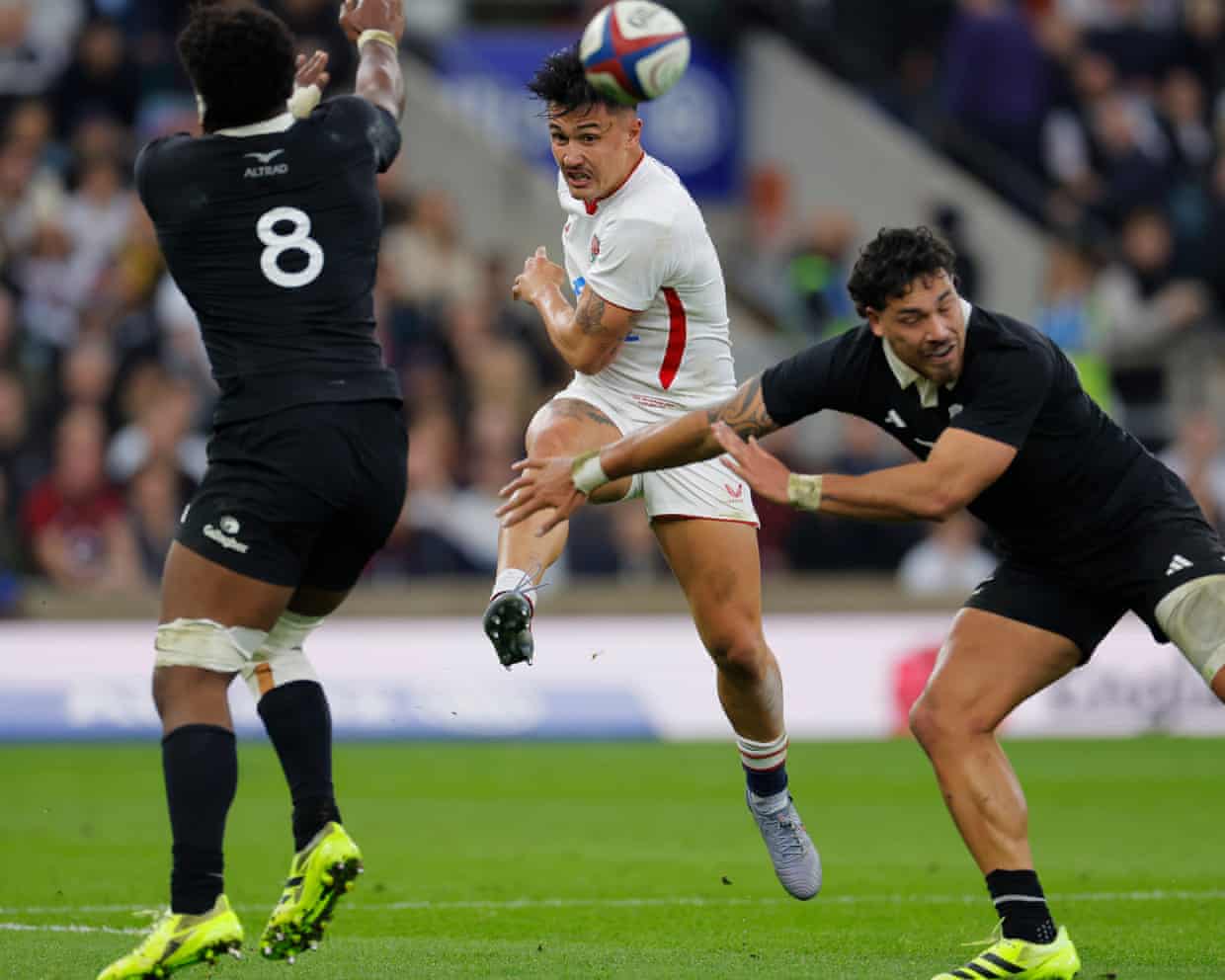
At least a couple of obvious issues have to be resolved asap if the next few years at Test level are not to sink into a quagmire of excessive kicking and ever-larger participants.The “escorting” crackdown that has removed virtually all protection for the ball catcher and massively assisted the kick chasers was brought in with the intention of creating more broken field space.More often than not, instead, it is encouraging teams to hoist the ball skywards, pick athletic giraffes and look to dominate the skies rather than attempt to pass the ball beyond a few phases.Likewise we are all now used to battalions of “impact subs” coming on with half an hour left, reducing both the fatigue factor and opportunities for creative backs to find mismatches against tiring forwards.If no action is taken or a limit is not placed on the permitted number of replacements, the blinkered “might is right” lobby will become as prevalent in rugby as seems increasingly the case in global politics.
Above all else, too, the sport must retain its collective sense of humour, without which it just becomes another sport.It should cherish its grassroots and not casually overlook the qualities – the camaraderie, the fellowship, the shared fun – that give it its innate character and still draw in Steve and the rest of us like enthralled moths to a flame.Few, if any, have better articulated that core truth than “Jack” Jones, which is another reason why the whole rugby-reading world should raise a glass to him.This is an extract taken from our weekly rugby union email, the Breakdown.To sign up, just visit this page and follow the instructions.
The Spin | Revealed after 100 years: how a corrupt official robbed Percy Fender of the England captaincy
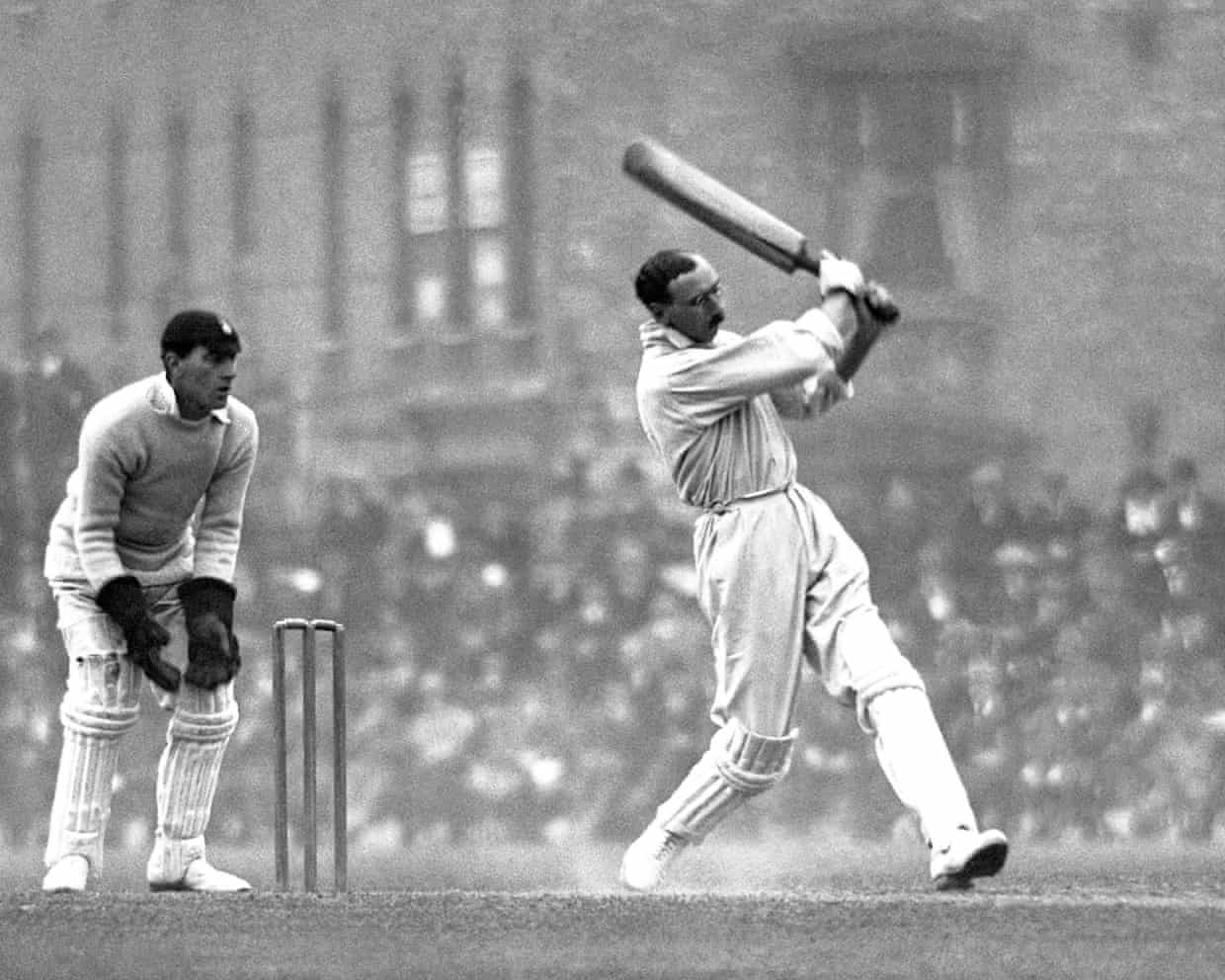
After a mere 100 years the Spin, always first with the news, is finally able to reveal the details of one of the more extraordinary secrets in the history of English cricket. The story comes from the private family archives of the former Surrey captain Percy Fender, which are being compiled into a fascinating new documentary film. It has always been a mystery that Fender, who was described by Wisden as “the shrewdest county captain of his generation” was never picked to lead England. After all these years, it now appears he was blackmailed out of the job by a corrupt cricket official.In a private audio recording made shortly before his death in 1985, Fender explains that in May 1924 he was approached “by a gentleman who was very well known in the cricket world” who, during the course of a conversation over two half-bottles of champagne in Fender’s flat at the Adelphi, offered him the England captaincy for the 1924-25 Ashes tour
Jacob Bethell plays starring role in Ashes Wars Episode 5: A New Hope | Barney Ronay
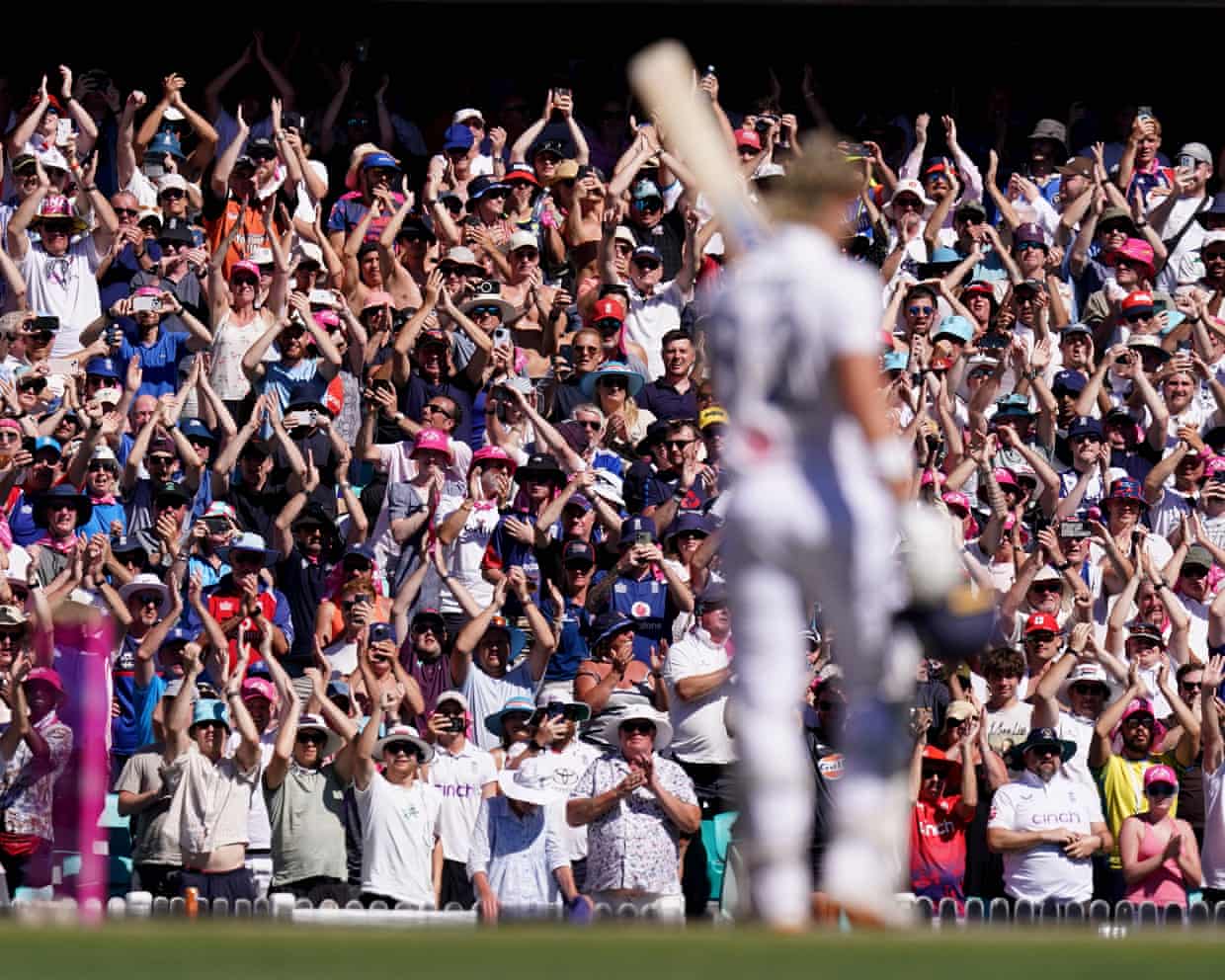
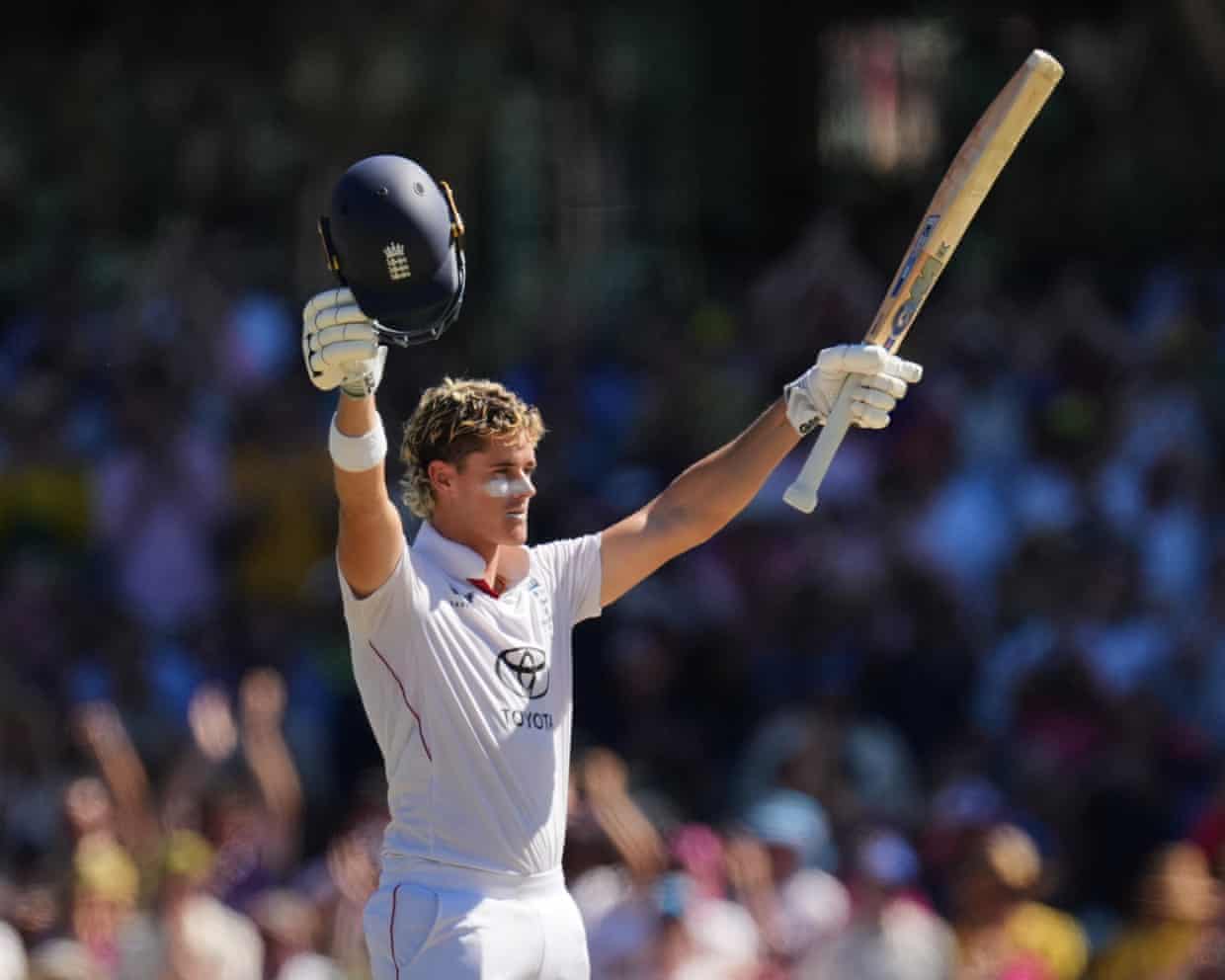
Et in dystopia ego. In the midst of death, we are in life. On a throbbingly hot deep blue afternoon in Sydney, as this ghost ship of an England Ashes tour creaked towards its final dock, the fourth day of the fifth Test produced an unexpected late plot twist. Something good happened.Jacob Bethell batted for six hours from mid-morning to close of play and scored a hundred of rare beauty at the SCG
Bethell’s elegant first Test century presses pause on Australia’s Ashes party
It was good. So good. So unbelievably good. On the penultimate day of a tour packed with regret for England, a star was born as Jacob Bethell, 22 years young, compiled a truly golden hundred that offered hope for the future.There were no histrionics upon getting there either, no suggestion this was a maiden first-class century compiled in the heat of an Ashes Test
Beau Webster steps off the sidelines into the light as promise of Cameron Green wilts | Geoff Lemon
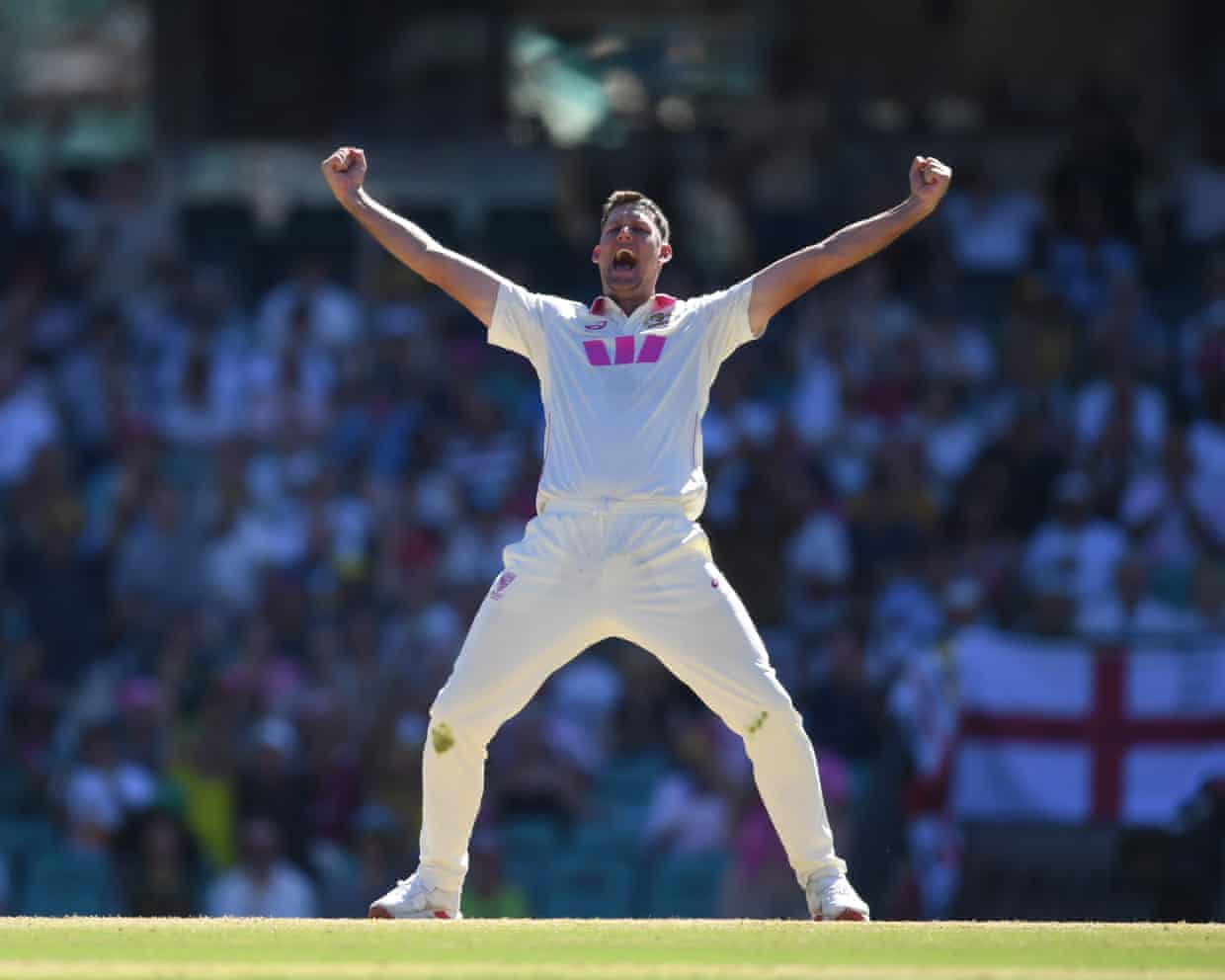
There was an irony to the fact that Cameron Green’s catch made Beau Webster’s day look even better. Green had not had a good one, having earlier dived in front of Australia’s most prolific slip catcher to spoil a simple Steve Smith catch. It followed a poor day the day before, skying a pull shot after getting settled on 37, and a poor series before that. Then came Webster, an off-break swept into the deep, and Green’s long legs ate up the turf before crashing his body into a dive that gathered up the ball in its fall, the two Australians combining for what might be the tallest wicket in Test history.There is usually only room for a single two-metre all-rounder in a team, unless they’re operating at specialist level in one discipline
Australia v England: fifth Ashes Test, day four – as it happened
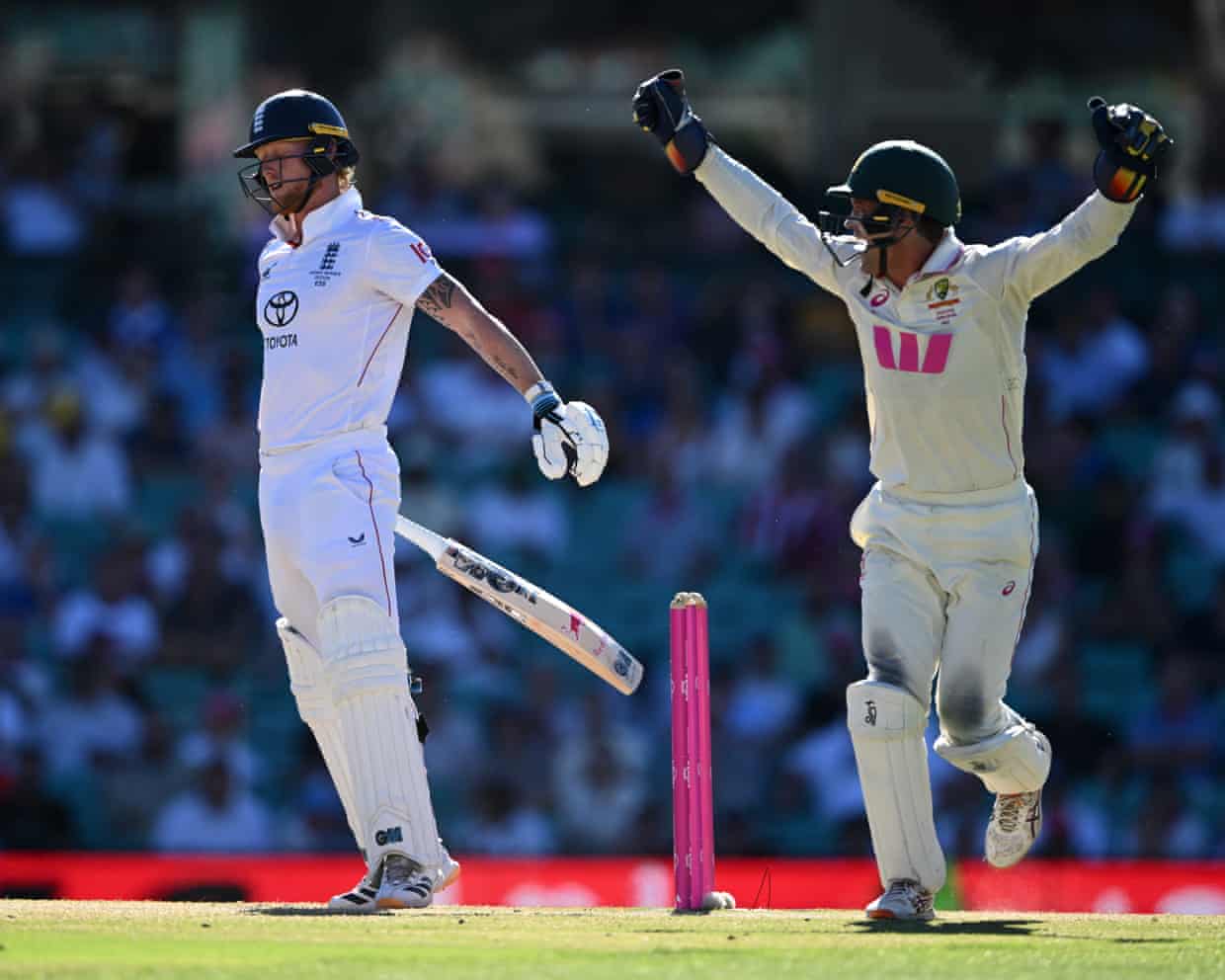
Time for me to depart, thanks for your company and comments. Stay tuned for all the wrap up from day four.Join us tomorrow for the final day of the 2025/6 Ashes series. Goodbye and toodle-oo.“Morning Jim, to this very England of mornings

John Harbaugh fired by Baltimore Ravens after 18 seasons in charge
The Baltimore Ravens have fired head coach John Harbaugh after 18 seasons in charge, the team announced on Tuesday.Harbaugh is the most successful coach in the history of the franchise and was the second longest-tenured head coach in the NFL before his dismissal. Ironically, his final game with the Ravens came against the only name ahead of him in terms of tenure length – Mike Tomlin, who has been head coach of the Pittsburgh Steelers for 19 seasons.Ravens owner Steve Bisciotti called the decision “incredibly difficult” in a statement.“Throughout what I firmly believe is a Hall of Fame coaching career, John has delivered a Super Bowl championship to Baltimore and served as a steadfast pillar of humility and leadership,” Bisciotti said

‘We’re in limbo’: the garden centre ‘golden mile’ that may be lost to a new town

Surprise dip in inflation a lightbulb moment – but RBA unlikely to deliver interest rate bargains | Greg Jericho

UK construction hit by worst run since global financial crisis

FCA fines two former Carillion directors for misleading investors before collapse

Australia Post apologises for losing Aboriginal artist’s painting worth $4,000

The FTSE at 10,000: a missed opportunity for some marketing razzmatazz | Nils Pratley