The FTSE at 10,000: a missed opportunity for some marketing razzmatazz | Nils Pratley

There are three ways to view the FTSE 100 index hitting 10,000 points for the first time.One is to say round numbers are irrelevant.Since share prices are meant to go up over the long term, an index that was created in 1984 at a starting value of 1,000 was bound to get there eventually.In any case, a pure value-weighted points measure doesn’t capture the dividends paid by component companies, which can add up to a material part of an investor’s return over time if reinvested.Nor is the Footsie guaranteed to stay above 10,000, obviously.
Such “bah humbug” points are all reasonable.A second approach is to make bogus claims about what it means.That was the line taken by Rachel Reeves, the chancellor, who tweeted last Friday: “The FTSE 100 breaking through 10,000 points for the first time is a vote of confidence in Britain’s economy.”If only.In reality, the level of the Footsie says little about the UK economy specifically because the index is stuffed with multinationals who make most of their revenues and earnings abroad – in aggregate, the tally is about 75%.
Last year’s best performer (up more than fivefold) was Fresnillo, a silver miner out of Mexico that enjoyed the boom in precious metal prices rather than any warm breezes out of the UK.A third way is to acknowledge the basic insignificance of 10,000, plus the skewed makeup of the membership (overweight banks and miners, and underweight tech), but still take the opportunity to indulge in some marketing razzmatazz.The aim: to make the essential point that shares have historically comfortably outperformed cash over medium- and long-term horizons.This, you would have thought, would be a gimme for Reeves and the London Stock Exchange Group (LSEG).The chancellor, via her “Leeds Reforms”, is trying to “rewire” the financial system by encouraging more financial risk-taking by companies and consumers.
An eye-catching big number for the Footsie – after a year in which it rose 21,5% and outperformed US equivalents for a change – sounds like an open goal if you wish to nudge savers out of safety-first cash ISAs,There was no need to ruin the message with overblown claims about confidence in the UK economy,As for LSEG, it constantly runs into the accusation that it doesn’t bestow enough care and affection on the London exchange because it has a far bigger operation selling financial data (including index compilation),The criticism is slightly unfair, but here was a chance to engage in a bit of that “hustle” that the Octopus Energy boss, Greg Jackson, who is looking to list the group’s £6bn Kracken Technologies software subsidiary, recently called for.
But there were no fireworks over Paternoster Square – or even “FTSE 10,000” baseball caps in the style of those that are often distributed on Wall Street when a round number for the Dow Jones industrial average is reached.Maybe the showbiz stuff is too embarrassingly American but if ever there was a time to drop the reserve, it was surely now.A collection of City banks, investment platforms, fund managers and the stock exchange itself is preparing to fund – to the tune of £15m a year, reportedly – a national advertising campaign “to explain the benefits of investing”.They could have saved themselves a few quid by milking the 10,000 moment.Yes, it would be gimmicky.
Yes, US indices have performed better over the long run.Yes, you look foolish if there is a rapid reversal.But you take these opportunities when they arise, don’t you?

AI consciousness is a red herring in the safety debate | Letters
The concern expressed by Yoshua Bengio that advanced AI systems might one day resist being shut down deserves careful consideration (AI showing signs of self-preservation and humans should be ready to pull plug, says pioneer, 30 December). But treating such behaviour as evidence of consciousness is dangerous: it encourages anthropomorphism and distracts from the human design and governance choices that actually determine AI behaviour.Many systems can protect their continued operation. A laptop’s low-battery warning is a form of self-preservation in this sense, yet no one takes it as evidence that the laptop wants to live: the behaviour is purely instrumental, without experience or awareness. Linking self-preservation to consciousness reflects a human tendency to ascribe intentions and feelings to artefacts and not any intrinsic consciousness

Friction-maxxing: could less convenience lead to much more happiness?
Name: Friction-maxxing.Age: Brand new.Appearance: A lifetime of happy inconvenience.Is this another example of something that already exists, but people think is new because someone rebranded it? Yes, obviously it is that.Great! Let’s all save time by you telling me what it used to be called

Wave of Grok AI fake images of women and girls appalling, says UK minister
The UK technology secretary has called a wave of images of women and children with their clothes digitally removed generated by Elon Musk’s Grok AI “appalling and unacceptable in decent society”.After thousands of intimate deepfakes circulated online, Liz Kendall said X, Musk’s social media platform, needed to “deal with this urgently” and she backed the UK regulator Ofcom to “take any enforcement action it deems necessary”.“We cannot and will not allow the proliferation of these demeaning and degrading images, which are disproportionately aimed at women and girls,” she said. “Make no mistake, the UK will not tolerate the endless proliferation of disgusting and abusive material online. We must all come together to stamp it out

‘I felt violated’: Elon Musk’s AI chatbot crosses a line
Hello, and welcome to TechScape. Happy new year! I hope your 2026 is off to a great start. Today in tech, we are examining the output of Elon Musk’s AI chatbot, Grok, and the US’s ban on foreign drones.Late last week, Elon Musk’s Grok chatbot unleashed a flood of images of women, nude and in very little clothing, both real and imagined, in response to users’ public requests on X, formerly Twitter. Mixed in with the generated images of adults were ones of young girls – children – likewise wearing “minimal clothing”, according to Grok itself

Nvidia CEO reveals new ‘reasoning’ AI tech for self-driving cars
The billionaire boss of the chipmaker Nvidia, Jensen Huang, has unveiled new AI technology that he says will help self-driving cars think like humans to navigate more complex situations.The world’s most valuable company is to roll out the new technology, Alpamayo, which is designed to help self-driving cars handle tricky situations such as sudden roadworks or unusual driver behaviour on the road, rather than just reacting to previous patterns.Nvidia claims Alpamayo will bring chain-of-thought reasoning to self-driving vehicles, combining what the car sees with language-like reasoning.In a speech at the annual Consumer Electronics Show in Las Vegas, the Nvidia founder and chief executive said: “The ChatGPT moment for physical AI is here, when machines begin to understand, reason and act in the real world. Robotaxis are among the first to benefit

Leading AI expert delays timeline for its possible destruction of humanity
A leading artificial intelligence expert has rolled back his timeline for AI doom, saying it will take longer than he initially predicted for AI systems to be able to code autonomously and thus speed their own development toward superintelligence.Daniel Kokotajlo, a former employee of OpenAI, sparked an energetic debate in April by releasing AI 2027, a scenario that envisions unchecked AI development leading to the creation of a superintelligence, which – after outfoxing world leaders – destroys humanity.The scenario rapidly won admirers and detractors. The US vice-president, JD Vance, appeared to reference AI 2027 in an interview last May when discussing the US’s artificial intelligence arms race with China. Gary Marcus, an emeritus professor of neuroscience at New York University, called the piece a “work of fiction” and various of its conclusions “pure science fiction mumbo jumbo”
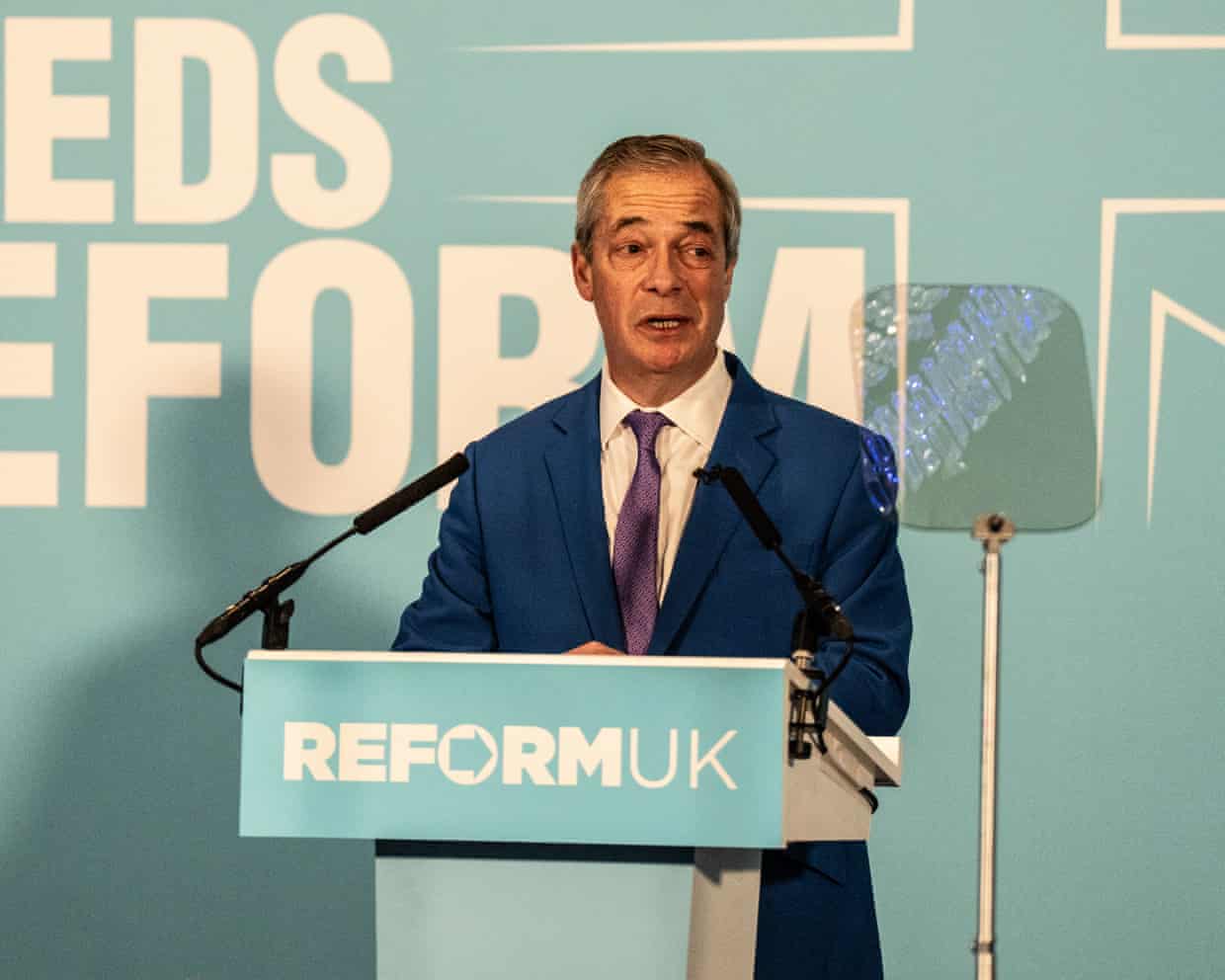
Nigel Farage dismisses racist and antisemitic school bullying claims as ‘made-up fantasies’
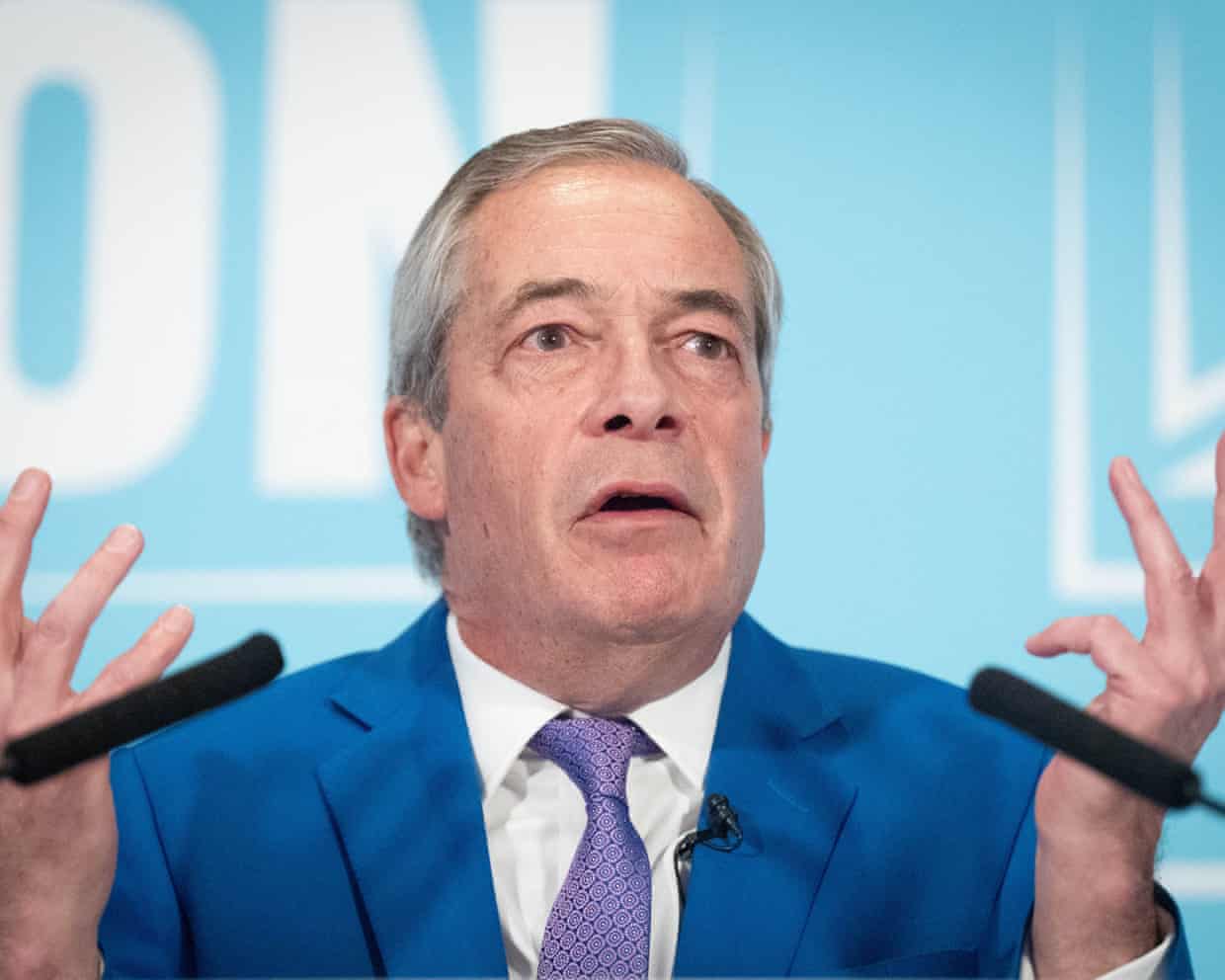
Desperate for attention, Nige holds marathon presser and skips PMQs | John Crace

Shadow attorney general steps back on Ukraine over Abramovich link
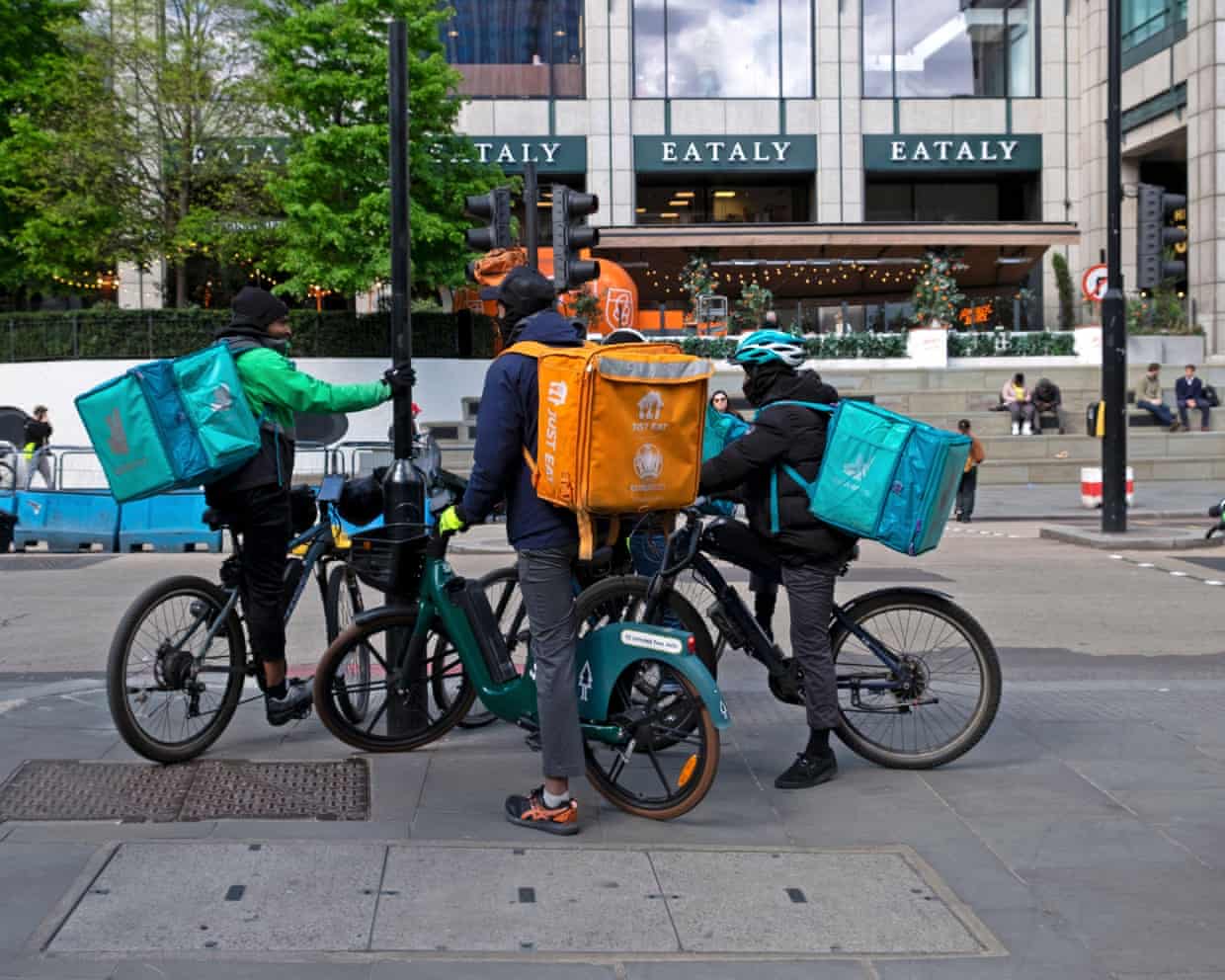
Labour workers’ rights concessions to cut cost to business by billions, analysis shows

‘Bigger than me’: road safety campaigner whose son died in collision welcomes new UK rules

Government lacks emotional link with voters, cabinet ministers warned