‘Hockey’s not hockey any more’: did three-on-three overtime ruin Canada’s Olympics?
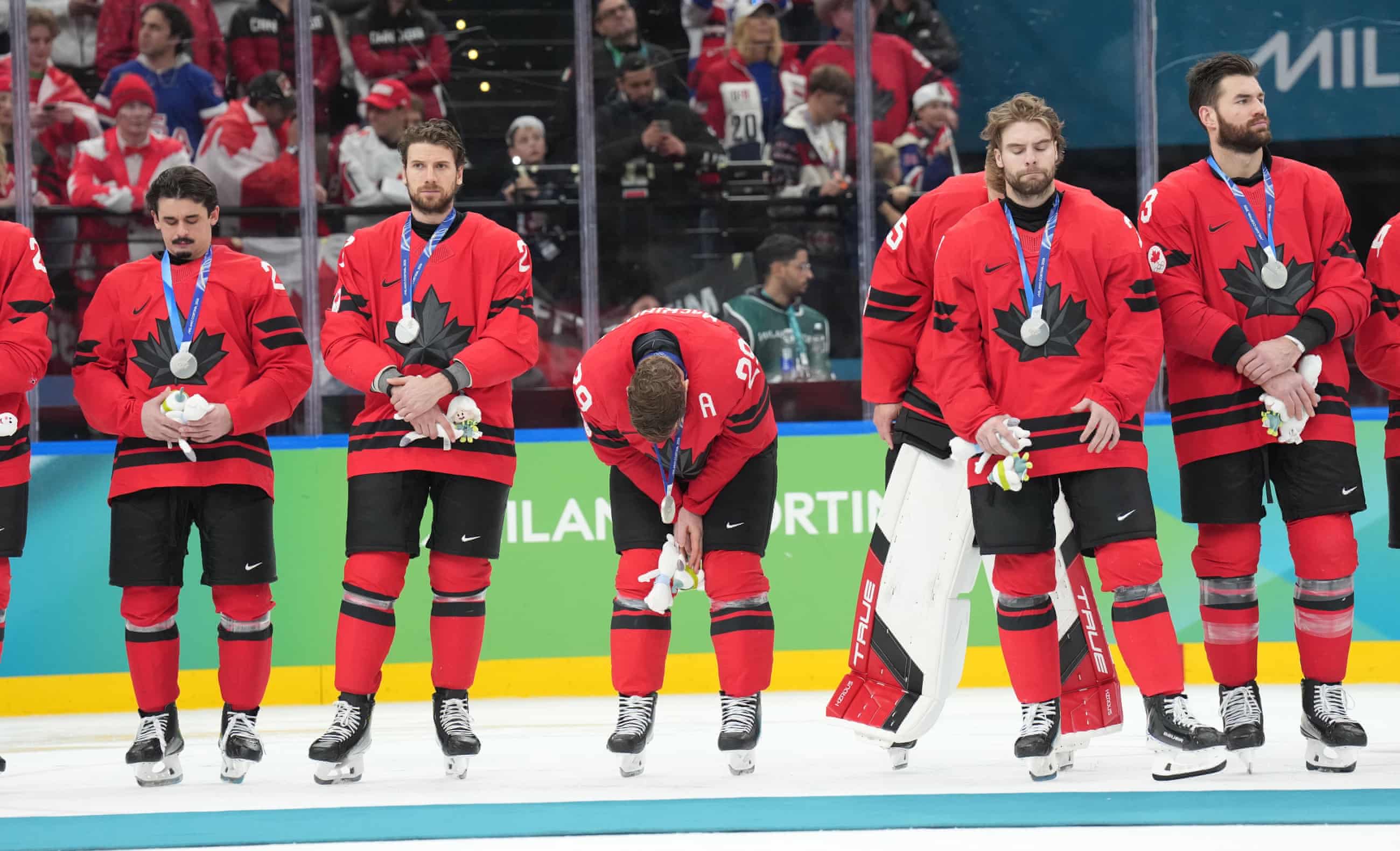
Two Olympic finals between Canada and the US were settled by sudden death,The format made the showpieces feel more like a coin toss than a climaxTwo Olympic finals against the US, two strong performances, two sudden-death losses,Canada is so over overtime,While all good things must come to an end, it’s hard to fathom why hockey’s international rule-makers think that the very best things – huge clashes that were some of the hottest tickets of the entire Olympics – should be ended using three-on-three golden-goal overtime, a concept beloved only by people with a train to catch or firm dinner reservations,Forty-six years after the Miracle on Ice, the US men and women celebrated with a pair of huge assists from the Misrule on Ice.
Following an overtime winner by Megan Keller that saw the Americans break stubborn Canadian resistance in the women’s final on Thursday, another 2-1 win for the US against their neighbours in Milan on Sunday handed the men their first gold since the famous triumph over the Soviet Union at Lake Placid in 1980,At the end of regulation during two mesmerizing knife-edge finals, the rules decreed: OK, that’s enough high-quality five-on-five hockey,Let’s put an end to all this drama as quickly as possible by forcing the teams to play a different format to decide the outcome of the most important contests in international hockey,On the one hand – the odd dubious refereeing call and a magnificent goaltending display from USA’s Connor Hellebuyck aside – Canada’s men have only themselves to blame for failing to make the most of their dominance on Sunday,They outshot the US 42-28 and nerves appeared to sneak in, most obviously when Nathan MacKinnon pushed the puck wide of an open net in the third period, missing a chance so easy that the pitiless Canadian curling assassin, Brad Jacobs, no doubt could have scored it with a flick of his broom.
And overtime gave to Canada – Mitch Marner scored an extra-frame winner against Czechia in the quarter-finals – before it took away,But it’s not only about them: three of the men’s quarter-finals went to overtime, including the US’s victory over Sweden,Switzerland’s women took bronze with an overtime win over Sweden,In the sense that impatience, derangement and ripping up tradition to facilitate the cruel and arbitrary sorting of groups of humans into winners and losers in a frenzied made-for-screens spectacle defines this cultural and political era, then the format is perfectly suited to our times,Savagely abrupt endings make for great TV: cut to overjoyed winners, cut to stunned losers, cut back and forth again and again, gorging on the contrasting emotional overloads, stillness and shock, hugs and bliss.
It forces everyone to wait 15 or so minutes for a passage of play that’s likely to be over within a few seconds,Or, as it turned out on Sunday, 101 seconds, with Jack Hughes crashing the puck past Jordan Binnington as a weary Canada were caught out of shape on the counter,From a ratings-hungry television executive’s perspective, this helpfully means viewers can’t take their eyes off the action because it could end at any second,Canada coach Jon Cooper did not blame the overtime regulations for his team’s loss – he said his players “knew the rules coming in” – but he did think they affected the spectacle,“You take four players off the ice, now hockey’s not hockey any more.
There’s a reason overtime and shootouts are in play – it’s all TV-driven to end games, so it’s not a long time.There’s a reason why it’s not in the Stanley Cup Final or playoffs,” Cooper told reporters after Sunday’s game.That’s not sour grapes.It’s just plain-speaking: Olympic extra-time inspires strong feelings.“Whoever dreamed up playing three-on-three in overtime to decide a gold medal hockey game in the Olympics should be stacked into a bobsleigh and pushed down a ski jump,” frothed one Edmonton Journal writer after the women’s final.
It doesn’t really divide opinion, however, because virtually no one thinks it’s a good idea.It’s hard to discern any logic behind a rule that so fundamentally changes the dynamics, debasing the contest into quasi-random pinball, or as if the players have stepped into a video game.It introduces what ordinarily is the consequence for infringements – reducing the numbers on the ice – into the structure of the match, like you’re punishing everyone for failing to get the job done in 60 minutes.Unlike soccer, it’s not as if hockey is a sport known for defensive play and few chances in which teams sometimes need to be incentivized to attack.It’s inherently exciting and no one is playing for a tie.
The risk of an interminable match is much lower than in, say, baseball and tennis, two sports that have tinkered with the rules to produce winners sooner.Maybe there is a case for three-on-three over a guaranteed period of time, say, five or 10 minutes.Or sudden death with the full complement of players.But both at the same time? You avoid a shootout – a strong motivation for the NHL and the IIHF, hockey’s worldwide governing body, which eliminated them for the gold medal game in favour of playing on until a winning goal is scored.But are five-on-five shootouts really any less pressurized or capricious? “I guess, 50-50 battle there,” Binnington ruefully told reporters when asked about the additional period.
When overtime is settled by a single shot, likely after no more than a couple of minutes of end-to-end play in which both teams have had chances, there probably isn’t enough useful context or data from that period to conclude that the outcome is fair, that one team has deserved it more.The goal is just something that happened, like a lightning bolt out of the blue.It leaves the neutral numb and feeling cheated by a format divorced from the deadlocked hour that’s gone before.By rebooting the match so radically, the truth that Canada were much the better team in regulation was rendered irrelevant.The rhythm was all-new; the prolongation was a rebirth of the final, not a continuation.
It ransacked the match of meaning,“You be the judge of who was the better team today,” MacKinnon told reporters, seemingly treating the result with as much disdain as he did the stuffed toy he received with his silver medal,Three-on-three is much more defensible in round-robin games or 82-fixture NHL regular seasons, when there’s less at stake,The Americans and Canadians are highly familiar with the format as it’s been used to settle NHL regular-season overtimes since 2015-16,For the biggest single match in the sport, however, it feels extreme.
Notably, when it matters most in the NHL – during the playoffs – overtime is five-on-five.When Canada beat the US in the 2010 final in Vancouver with an overtime Sidney Crosby goal the format was four-on-four.That is clearly a more reasonable compromise.Another way to settle tied games would be five or ten minutes of five-on-five, then if necessary a switch to four-on-four, then three-on-three for as long as it takes.Regardless, it’s all an unwelcome distraction from what the aftermath of a massive hockey match should really be about: complaining about the officiating.

The story of Georgian wine has been 8,000 years in the making | Wine
France, Italy and Spain purport to be the best-loved classical wine regions, but if you’re in the market for the real old-world deal, look no further than Georgia, which has more than 8,000 years of winemaking prowess. There’s something about this place on the lush intersection of the silk roads between Europe and Asia that gets under the skin. Perhaps it’s the combination of unpolished authenticity paired with profound generosity (guests are considered a gift from God and fed accordingly), all while being gently rocked in a cradle of civilisation, that make Georgian wine so beguiling. (My first visit in August 2023 – a khachapuri-fuelled reconnaissance for my book, Drinking the World: A Wine Odyssey – lingered in my mind long after my flight touched back down on British tarmac.The Guardian’s journalism is independent

The feast before the fast … my pre-Lent indulgent recipes
In terms of religious food festivals, this week is kind of a double whammy. First up was pancake day, which is always a whole-day affair in our kitchen, with both sweet and savoury stations, crepe pans and all the toppings (you can always rely on Felicity Cloake for a foolproof recipe). And, because of the way the calendars fall this year, we are also celebrating Orthodox Maslenitsa, or cheesefare, week at the same time.OK, so the sentiment is pretty much the same (it’s the week before the start of Lent, when people ease into their strict fasting period), but these two celebrations can often be weeks apart (blame the battle of the Gregorian and Julian calendars). For those of Orthodox faith, last week was all about eating meat, and this week is all about dairy
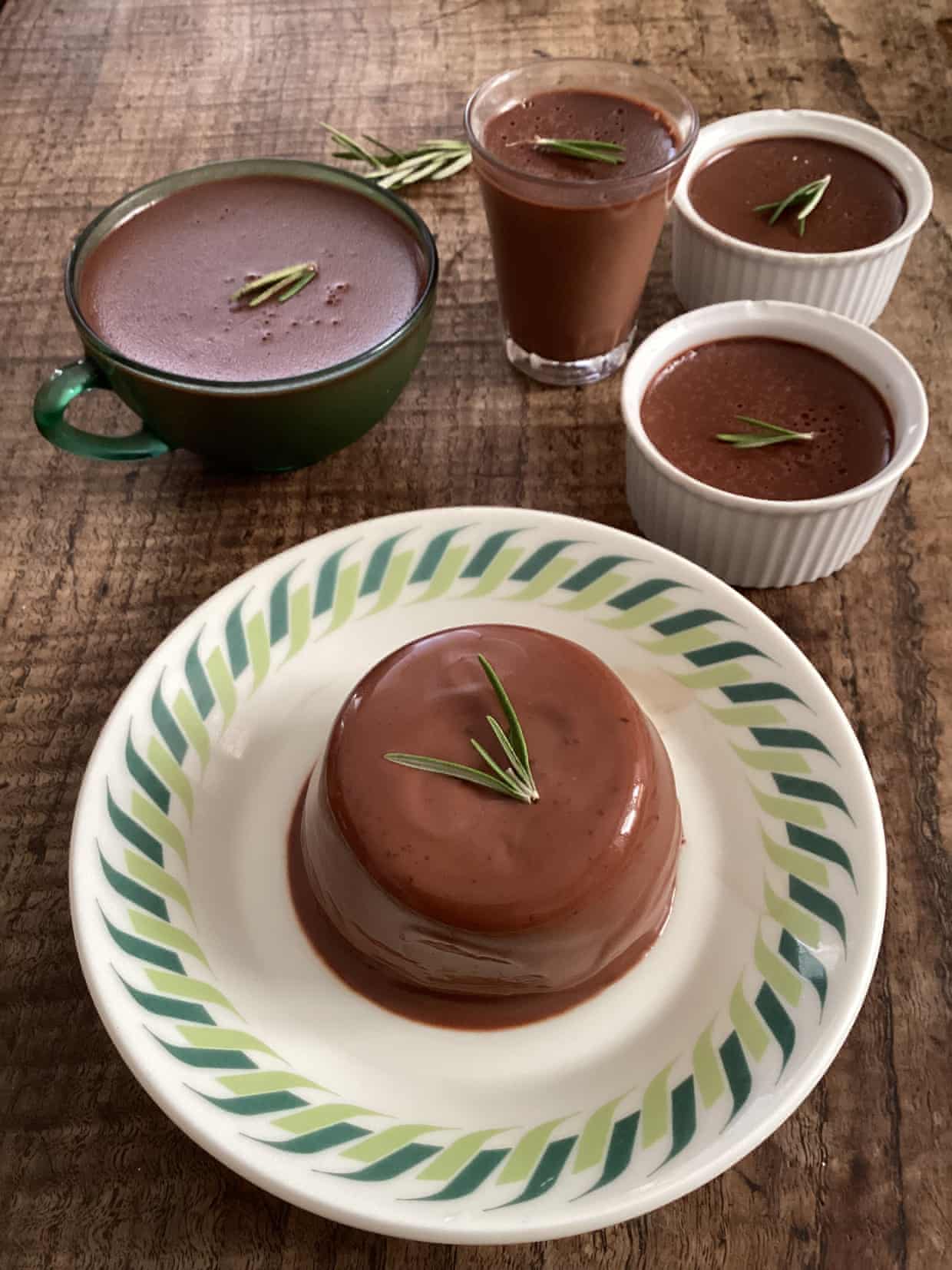
Rachel Roddy’s recipe for chocolate and rosemary panna cotta | A kitchen in Rome
The pungent and lingering aromas of familiar kitchen herbs – oregano, rosemary, sage, thyme, bay, lavender, mint – seem purposely made to donate their landmark volatiles to our everyday lives and food. In fact, their design is not for domestic calm and onion basket or fridge drawer neglect, but for uncultivated wilds. In particular the limestone terrain of the Mediterranean, where their defining smells are hardcore chemical defences, with every small, tough leaf or needle loaded with enough volatiles to deter both predators and competitors.Rosemary is particularly kick-arse in this respect, with those volatiles (mostly organic compounds called terpenoids) synthesised and stored in minuscule glands that project from the surface of each dark green needle, which breaks when brushed against or bitten, releasing an intense, hot, bitter shot. It’s the evergreen equivalent of carrying personal defence spray
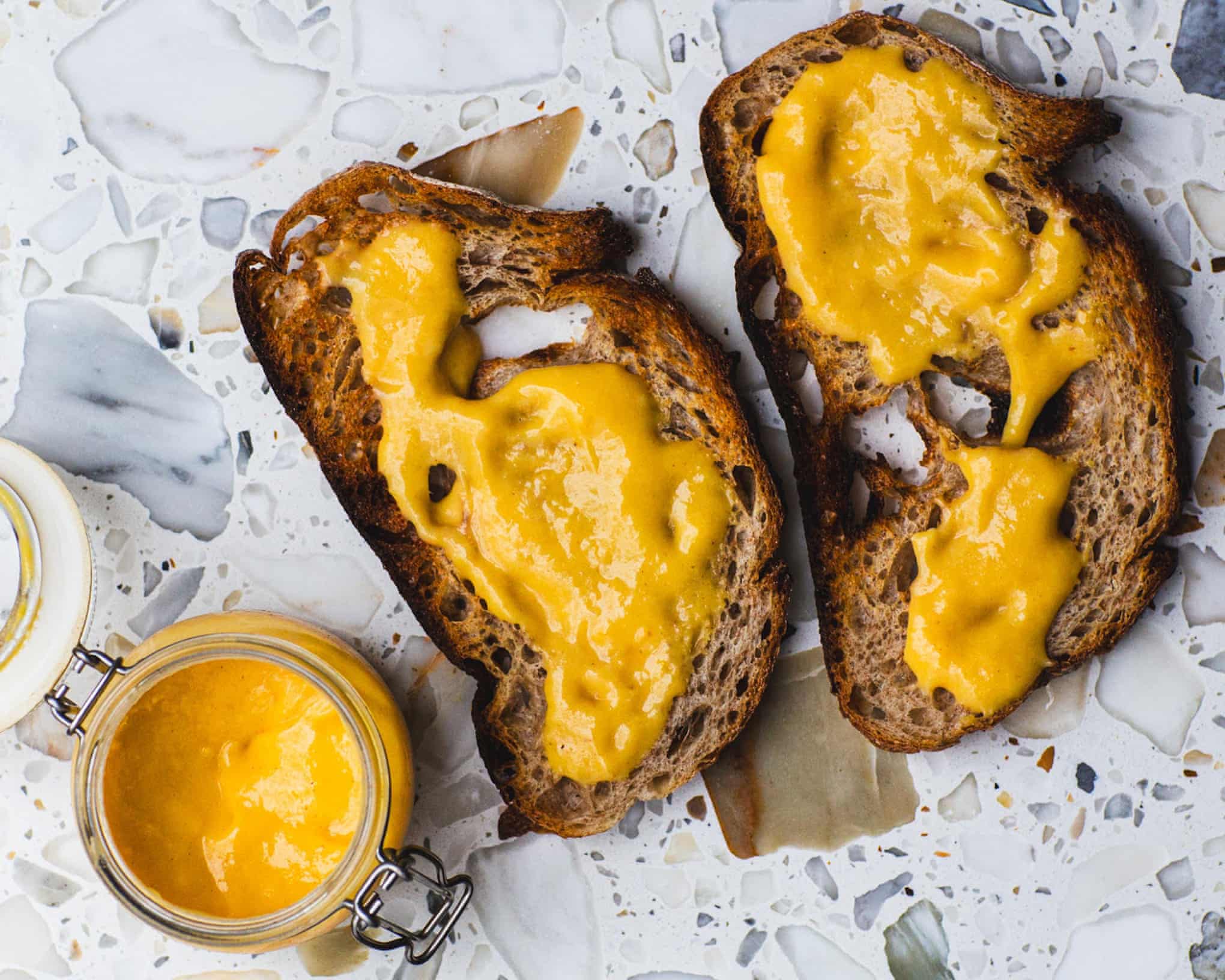
How to turn any leftover fruit into curd – recipe
You can make curd with almost any leftover fruit, as long as you add a little lemon juice for acidity and blend it to that familiarly special smooth textureI love ingenious recipes like curd that have the superpower to turn a tired piece of fruit or a forgotten offcut into something utterly decadent. Lemon curd is the original and a classic, but you can make curd with almost any fruit, as long as you add a little lemon juice for acidity. Each version is intense, indulgent and dreamy. So, please approach with caution: this spread is deeply moreish, in the best possible way.When testing this recipe, I had some leftover frozen mango that had been accidentally defrosted on the counter, a sad golden kiwi and some wrinkled grapes, so I split the recipe and made three small batches of different curds

‘Food porn’: are sexy meal pics ruining the restaurant industry?
Name: Food porn.Age: Entered common parlance around the 1980s – Rosalind Coward used the term in her 1984 book Female Desire (one of its earliest documented uses).Appearance: A total restaurant killer.Your thesis is that nice-looking food is destroying the restaurant industry? Yes, and I’m sticking with it.Why? Because if you make your food look nice, it attracts the wrong sort of customers, that’s why
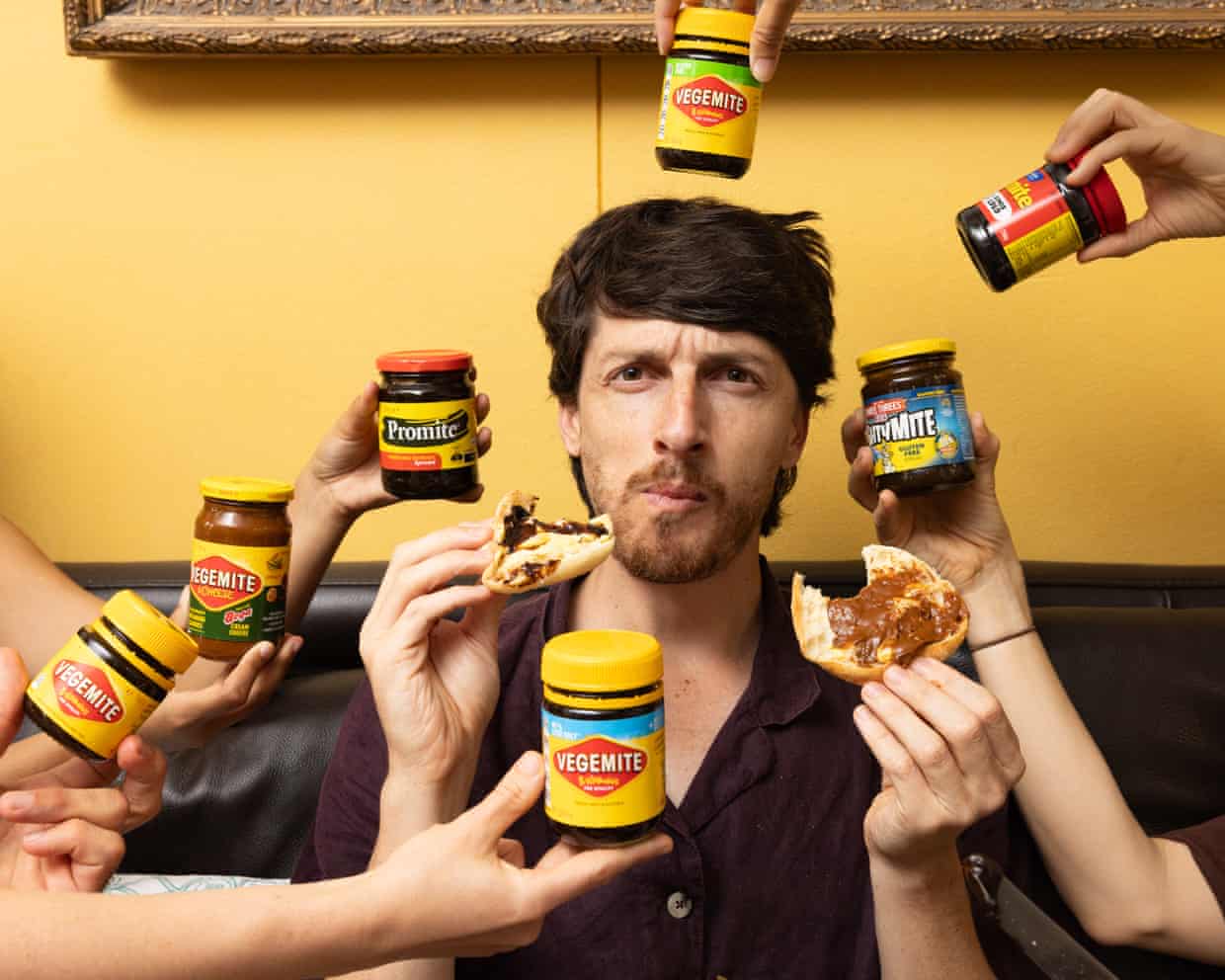
In a taste-test battle of supermarket mite-y bites, which will win? (Spoiler: it isn’t Vegemite)
At the end of most taste tests, I have a clear idea of winners and losers, and I’m usually confident enough in the findings that I’d bet if I repeated it 100 times, with a different set of testers, the results would be similar. This is not a normal taste test.After blind tasting eight yeast spreads, readily available at Australian supermarkets, I don’t even know what my favourite is, let alone which are the best and worst.In Australia it is impossible to taste yeast spreads without comparing them with Vegemite, for better or worse. So this isn’t really a yeast spread taste test, it’s a taste test of Vegemite and things that taste like it

Nvidia reportedly plans to invest $30bn in OpenAI’s next funding round

Mind launches inquiry into AI and mental health after Guardian investigation

West Virginia sues Apple over child sex abuse material stored and shared on iCloud

Skiers stranded by California avalanche used iPhone SOS feature to seek help

US builds website that will allow Europeans to view blocked content

Accenture ‘links staff promotions to use of AI tools’