Russian woman carried Ukraine team placard at Winter Olympics opening ceremony
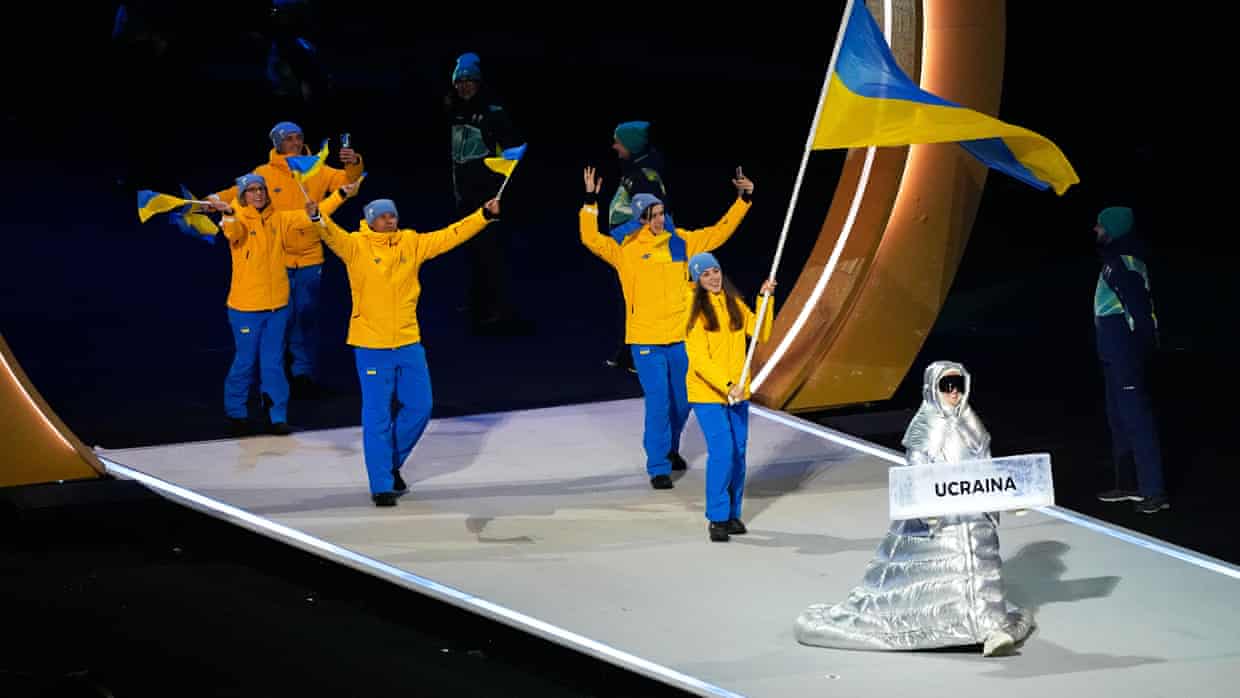
The woman who carried the Ukrainian team placard at the Winter Olympics opening ceremony was a Russian living in Milan, who chose to perform a small act of resistance to show her support for Ukraine.Anastasia Kucherova, an architect who has been living in Milan for 14 years, was unrecognisable in a hooded silver puffer coat, with her eyes also covered with dark glasses.However she has since revealed that she was the volunteer who led the five Ukrainian athletes competing in Milan into San Siro to her 879 Instagram followers and in an interview with the Associated Press.“When you walk by the side of these people you realise they have every human right to feel hatred towards any Russian,’’ she told the AP.“Still, I think it’s important to do even a small action to show them that maybe not all the people are thinking the same way.
”Kucherova said that at first the country assignments were going to be random, but the choreographer then asked if the volunteers had preferences, and she chose Ukraine,Kucherova added that the athletes immediately recognised her origins and addressed her in Russian,That was a sign for Kucherova of “some profound connection” between Russians and Ukrainians “that obviously could live on if not for the war”,Kucherova said that a small amount of resistance on the second anniversary of the poisoning death of dissident Alexei Navalny was a way of reminding the world that the war continues, even as life elsewhere goes on,“Ukrainians don’t have any possibility to avoid these thoughts or to ignore the existence of war.
So it is their reality,” said Kucherova.“They keep loving each other, getting married or doing sports, coming to the Olympics.But all of this is happening [against] a devastating background.”
California’s billionaires pour cash into elections as big tech seeks new allies
Tech billionaires are leveraging tens of millions of dollars to influence California politics in a marked uptick from their previous participation in affairs at the state capitol. Behemoths such as Google and Meta are getting involved in campaigns for November’s elections, as are venture capitalists, cryptocurrency entrepreneurs and Palantir’s co-founders. The industry’s goals run the gamut – from fighting a billionaire tax to supporting a techie gubernatorial candidate to firing up new, influential super political action committees (Pacs).The phenomenon squarely fits the moment for the state’s politics – with 2026 being the year that Politico has dubbed “the big tech flex”.Gavin Newsom, California’s tech-friendly governor who has been quick to veto legislation that cramps the sector’s unfettered growth, is reaching his term limit

No swiping involved: the AI dating apps promising to find your soulmate
Dating apps exploit you, dating profiles lie to you, and sex is basically something old people used to do. You might as well consider it: can AI help you find love?For a handful of tech entrepreneurs and a few brave Londoners, the answer is “maybe”.No, this is not a story about humans falling in love with sexy computer voices – and strictly speaking, AI dating of some variety has been around for a while. Most big platforms have integrated machine learning and some AI features into their offerings over the past few years.But dreams of a robot-powered future – or perhaps just general dating malaise and a mounting loneliness crisis – have fuelled a new crop of startups that aim to use the possibilities of the technology differently
The problem with doorbell cams: Nancy Guthrie case and Ring Super Bowl ad reawaken surveillance fears
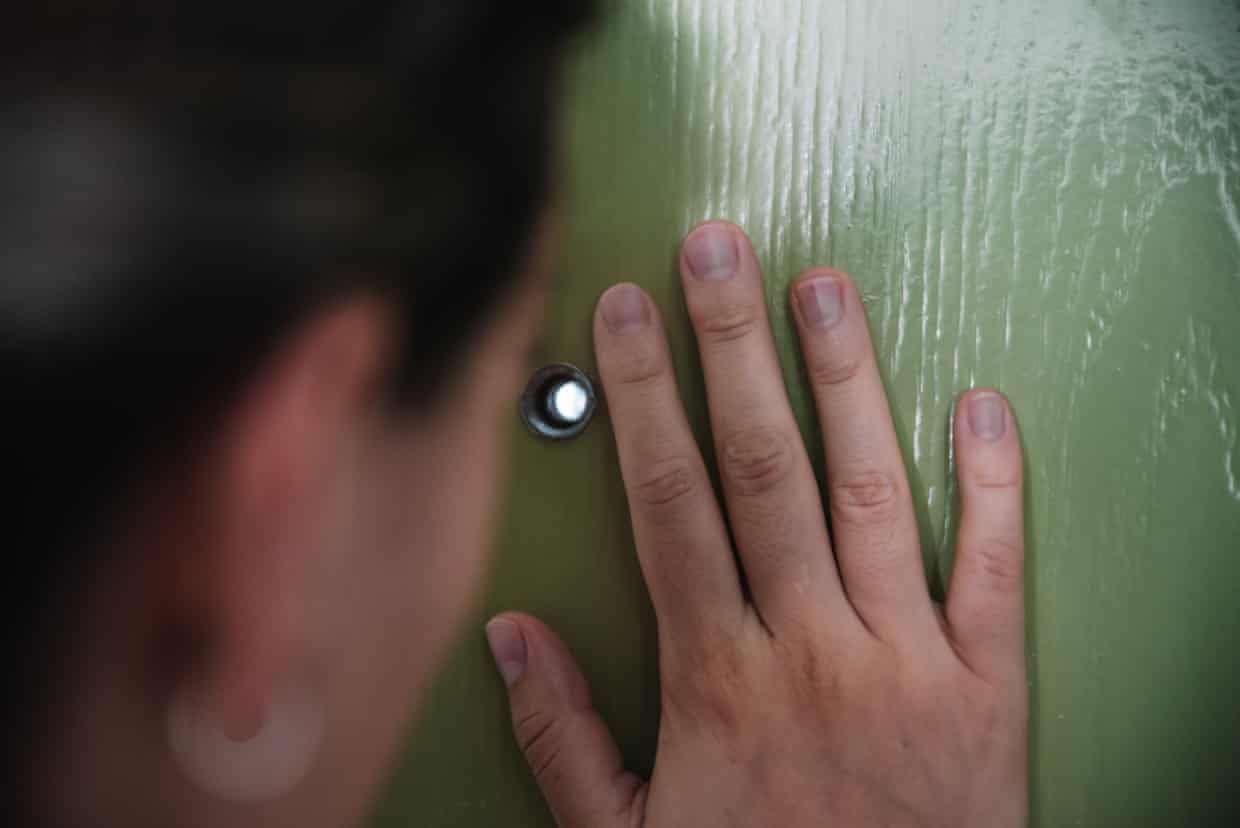
What happens to the data that smart home cameras collect? Can law enforcement access this information – even when users aren’t aware officers may be viewing their footage? Two recent events have put these concerns in the spotlight.The Guardian’s journalism is independent. We will earn a commission if you buy something through an affiliate link. Learn more.A Super Bowl ad by the doorbell-camera company Ring and the FBI’s pursuit of the kidnapper of Nancy Guthrie, the mother of Today show host Savannah Guthrie, have resurfaced longstanding concerns about surveillance against a backdrop of the Trump administration’s immigration crackdown
US military used Anthropic’s AI model Claude in Venezuela raid, report says
Claude, the AI model developed by Anthropic, was used by the US military during its operation to kidnap Nicolás Maduro from Venezuela, the Wall Street Journal revealed on Saturday, a high-profile example of how the US defence department is using artificial intelligence in its operations.The US raid on Venezuela involved bombing across the capital, Caracas, and the killing of 83 people, according to Venezuela’s defence ministry. Anthropic’s terms of use prohibit the use of Claude for violent ends, for the development of weapons or for conducting surveillance.Anthropic was the first AI developer known to be used in a classified operation by the US department of defence. It was unclear how the tool, which has capabilities ranging from processing PDFs to piloting autonomous drones, was deployed

Elon Musk’s xAI faces second lawsuit over toxic pollutants from datacenter
Elon Musk’s artificial intelligence company xAI is facing a second lawsuit alleging it is illegally emitting toxic pollutants from its enormous datacenters, which house its supercomputers and run the chatbot Grok.The new pending suit alleges xAI is violating the Clean Air Act and was filed Friday by the storied civil rights group the NAACP. The group’s 40-page notice of intent to sue alleges xAI has been polluting Black communities near its facility in Southaven, Mississippi. The pollution comes from more than a dozen portable methane gas generators that xAI set up without permits, the notice alleges.The NAACP’s first notice of intent to sue was filed last June and involves similar allegations regarding the company’s datacenter in Memphis, Tennessee
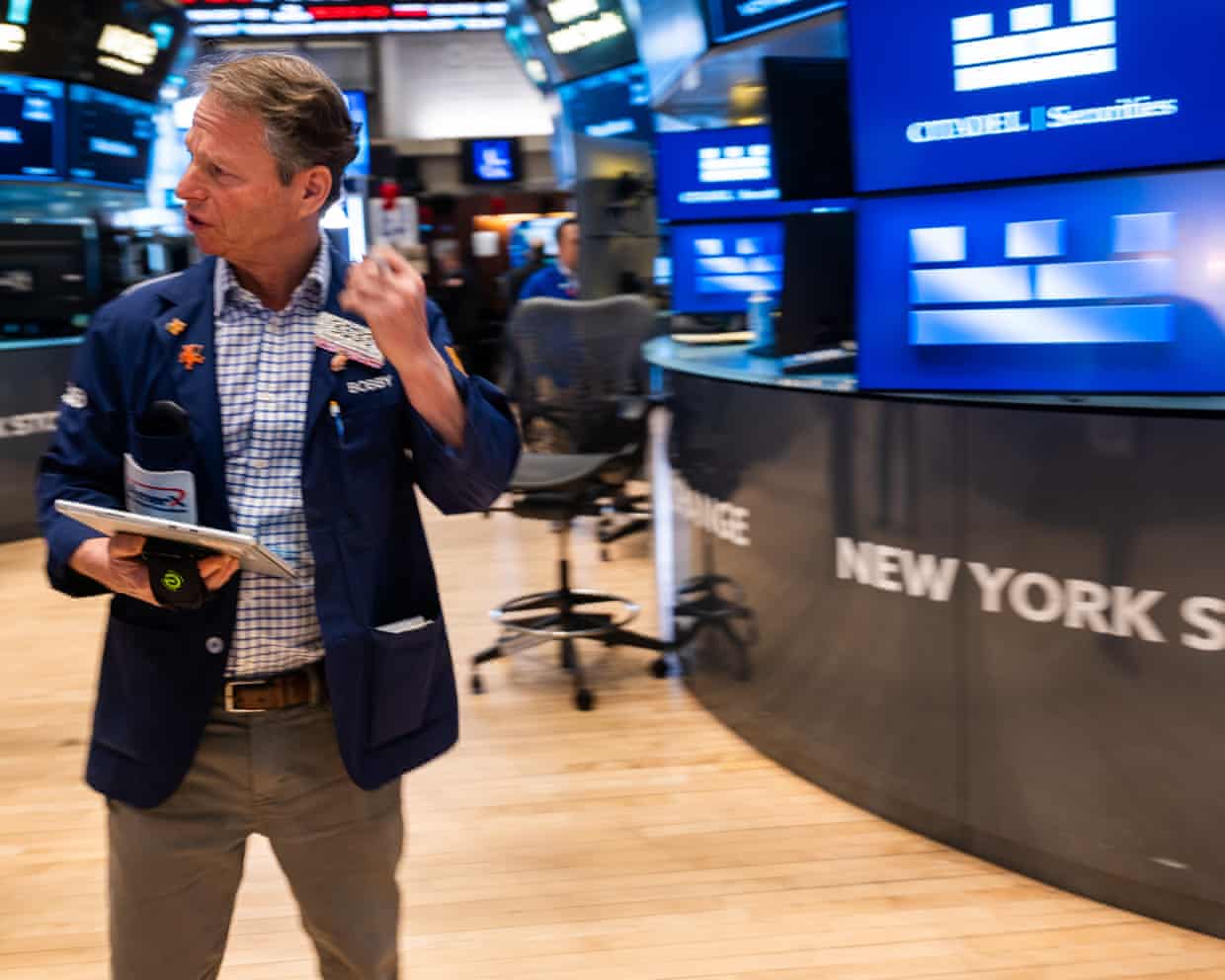
AI is indeed coming – but there is also evidence to allay investor fears
The message from investors to the software, wealth management, legal services and logistics industries this month has been clear: AI is coming for your business.The release of new, ever more powerful AI tools has coincided with a stock market slide, which has swept up sectors as diverse as drug distribution, commercial property and price comparison sites. Advances in the technology are giving increasing credibility to predictions that it could render millions of white-collar jobs obsolete – or, at least, eat into the profits of established companies.Carl Benedikt Frey, the author of How Progress Ends and an associate professor of AI and work at the University of Oxford, says investors are reassessing the value of companies that rely heavily on selling software or specialist knowledge.“AI turns once-scarce expertise into output that’s cheaper, faster, and increasingly comparable, which compresses margins long before whole jobs disappear

Why Starmer’s latest U-turn over local elections could be a gift for Reform
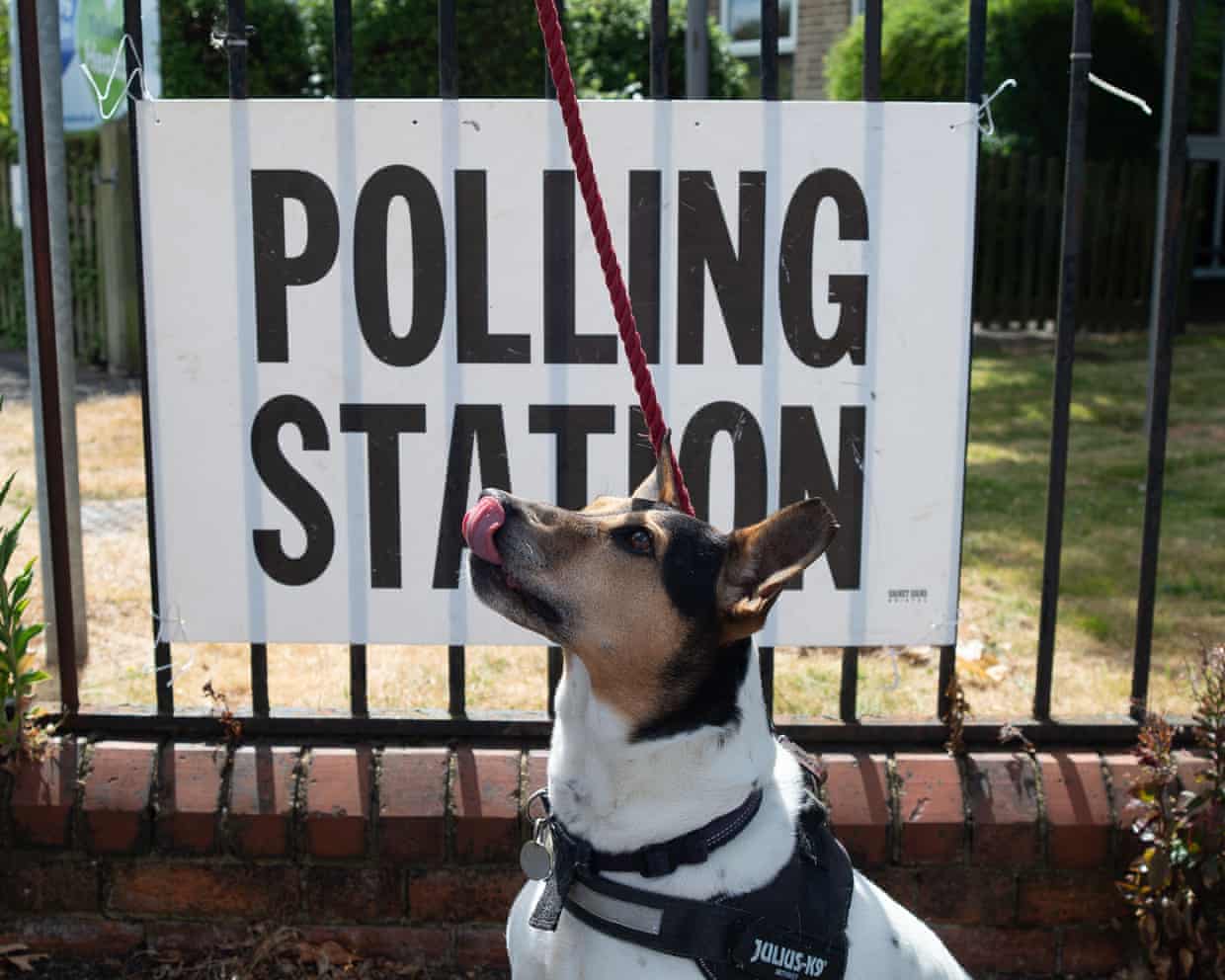
UK politics: Government abandons plans to delay 30 local council elections in May – as it happened
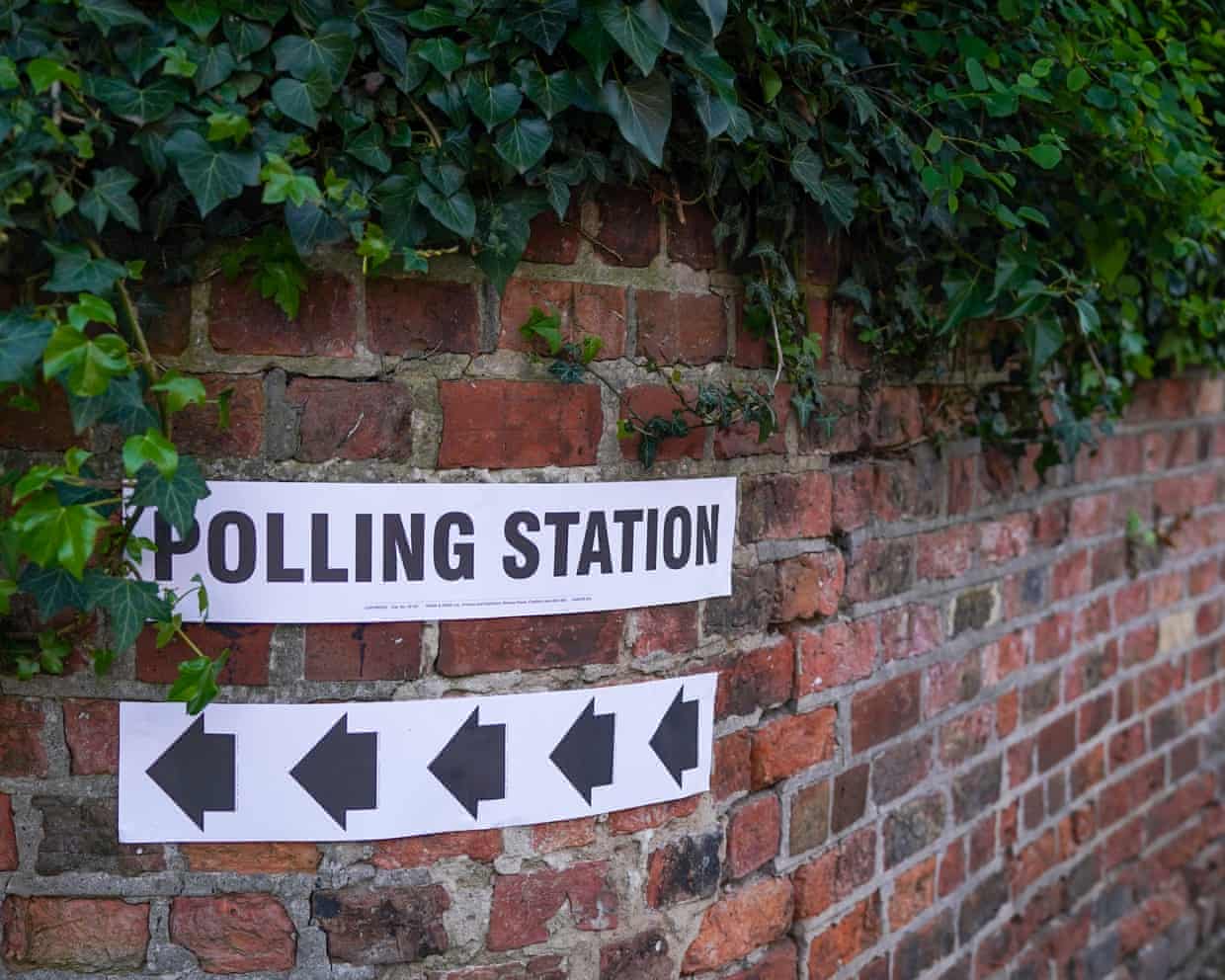
Why has government reversed its decision to postpone 30 local polls across England?

Starmer’s options in funding a further defence spending rise would be limited
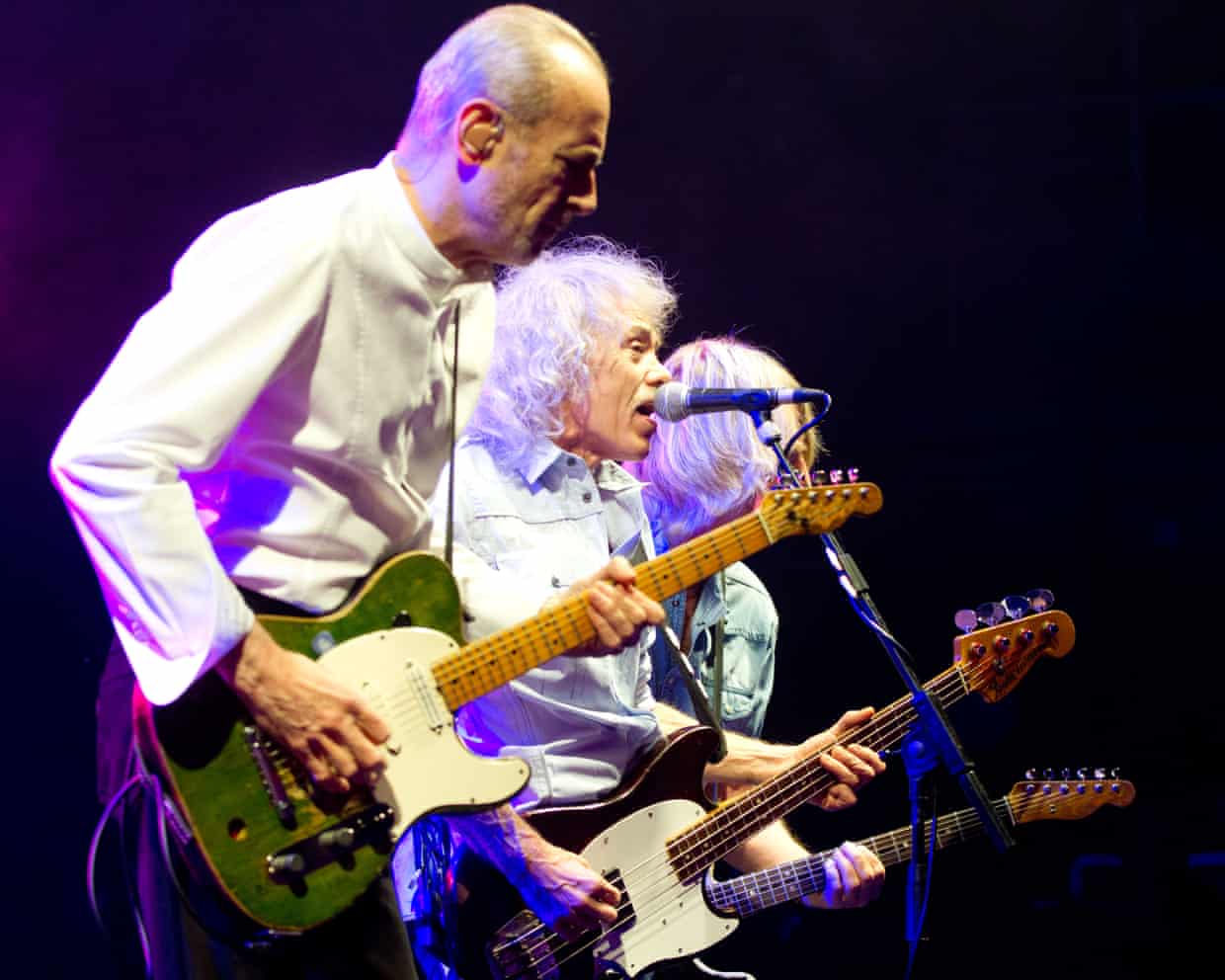
Deeper and down with Keir Starmer | Brief letters

Britain ‘needs to go faster’ on defence spending, Starmer says