Heat seekers: amazing thermal images from the Winter Olympics
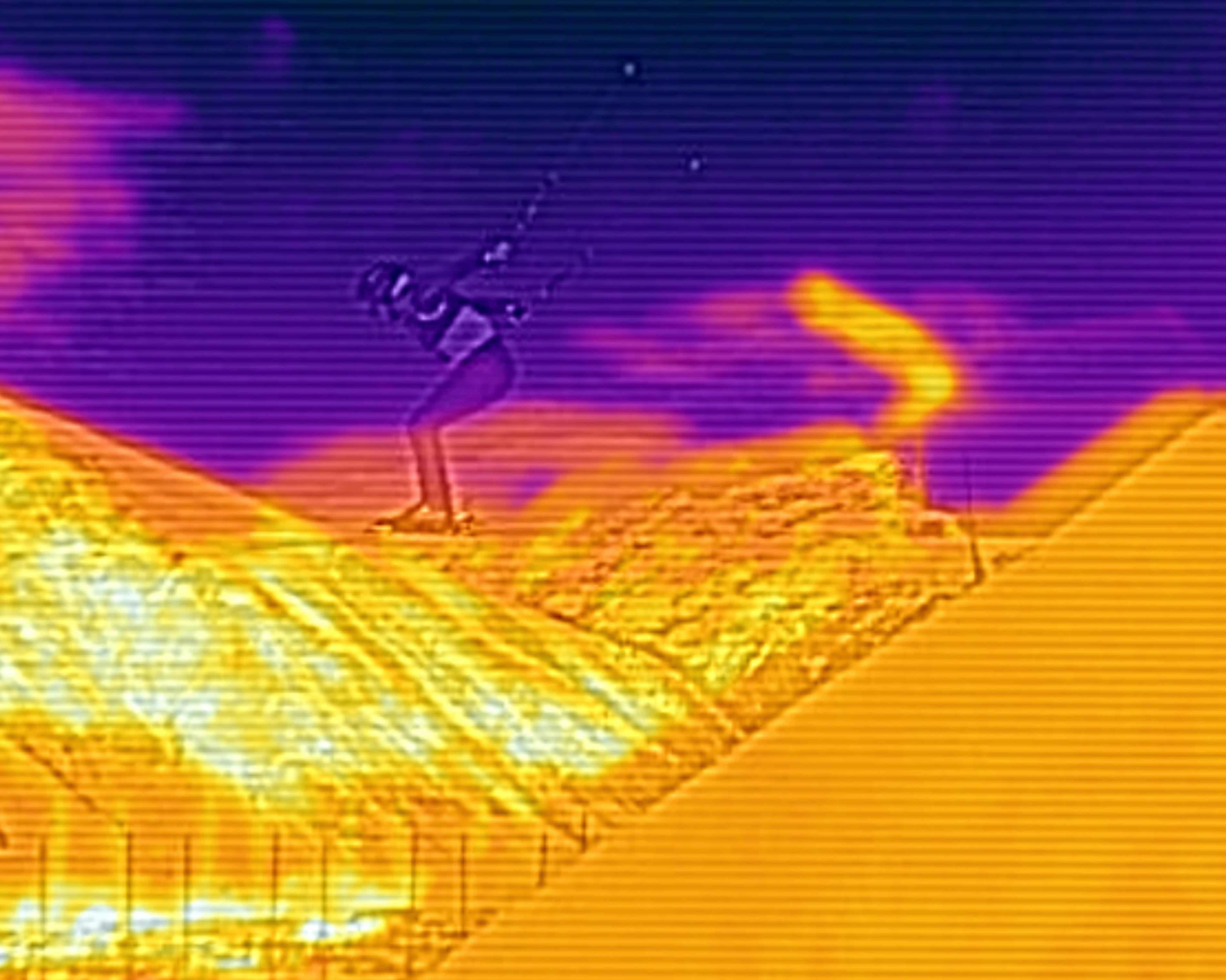
While most photographers are striving to ‘freeze’ motion using traditional cameras at the Winter Olympics this month, a creative trio from the photo agency Getty Images are seeking something much more unexpected: heat,Equipped with compact thermal-imaging cameras – the kind typically reserved for scientific or industrial purposes – Pauline Ballet, Ryan Pierse and Héctor Vivas have been crafting eerie pictures of athletes on the slopes of Cortina and in the rinks of Milan,The Olympians’ bodies are rendered as spectral yellows and reds, while the ice and snow around them appears either cyan or indigo,“As visual artists, we’re drawn to photography as a form of art that allows us to be expressive, creative and experimental,” Ballet says of their work,“Thermal cameras capture the infrared radiation emitted by bodies, thereby revealing heat, muscular effort and the thermal exchanges between the athlete and the environment in which they perform.
It’s both a documentary tool and a poetic medium.”In fact, each camera has two lenses – one thermal and one photographic – allowing the operator to produce a curious foreshadowing effect if both images are combined (best seen in the luge and free-skating images below).“[You] can see the body in motion and its delayed thermal imprint, like a memory of the gesture,” Ballet says.“It creates a visual dialogue between the visible and the invisible.”So how tricky is it to compose and shoot thermal images, compared to traditional photographs?“It’s a bit like learning photography all over again, which is fun,” Ballet says.
“The main difference lies in the visual language.In classical photography we work with light, composition and fast or slow shutter speeds; in thermal imaging we work with temperature, energy dissipation, colour and the thermal traces of movement.“We are obviously confronted with several limitations, which we play with.It’s impossible for us to choose settings such as the exposure speed, aperture and focal length.“Also, there are technical constraints such as a delay between pressing the shutter and the image being captured.
This pushes us to reinvent composition, since our visual reference points change completely,”The trio are also experimenting with several other creative projects at the Games including infra-red photography, vintage Graflex cameras and digital composites,Vivas said the Graflex cameras were “paying tribute to the type of camera that would have been used 70 years ago when Cortina previously hosted the Games in 1956”,But, in a modern twist, “[our] cameras have been adapted to record images on smartphones, enabling live transmission of the content captured”,“It’s exciting to be part of Getty’s special projects team,” Ballet adds.
“We can’t wait to share the finished set at the end of the Games.”

Logitech MX Master 4 review: the best work mouse you can buy
Logitech’s latest productivity power-house updates one of the greatest mice of all time with smoother materials, a repair-friendly design and a haptic motor for phone-like vibrations on your desktop.The Guardian’s journalism is independent. We will earn a commission if you buy something through an affiliate link. Learn more.The MX Master 4 is the latest evolution in a line of pioneering mice that dates back more than 20 years and has long been the mouse to beat for everything but hardcore PC gaming

‘It felt hypocritical’: child internet safety campaign accused of censoring teenagers’ speeches
An internet safety campaign backed by US tech companies has been accused of censoring two teenagers they invited to speak out about the biggest issues facing children online.Childnet, a UK charity part-funded by companies including Snap, Roblox and Meta, edited out warnings from Lewis Swire and Saamya Ghai that social media addiction was an “imminent threat to our future” and obsessive scrolling was making people “sick”, according to a record of edits seen by the Guardian.Swire, then 17, from Edinburgh, and Ghai, then 14, from Buckinghamshire, had been asked to speak at an event to mark Safer Internet Day in 2024 in London in front of representatives from government, charities and tech companies.The tech-backed charity also edited out references to children feeling unable to stop using TikTok and Snap, social media exacerbating a “devastating epidemic” of isolation, and a passage questioning why people would want to spend years of their lives “scrolling TikTok and binge-watching Netflix”, the edits show.The 2026 iteration of the Childnet-run event takes place on Tuesday with more than 2,800 schools and colleges listed as supporters
‘I fell into it’: ex-criminal hackers urge Manchester pupils to use web skills for good
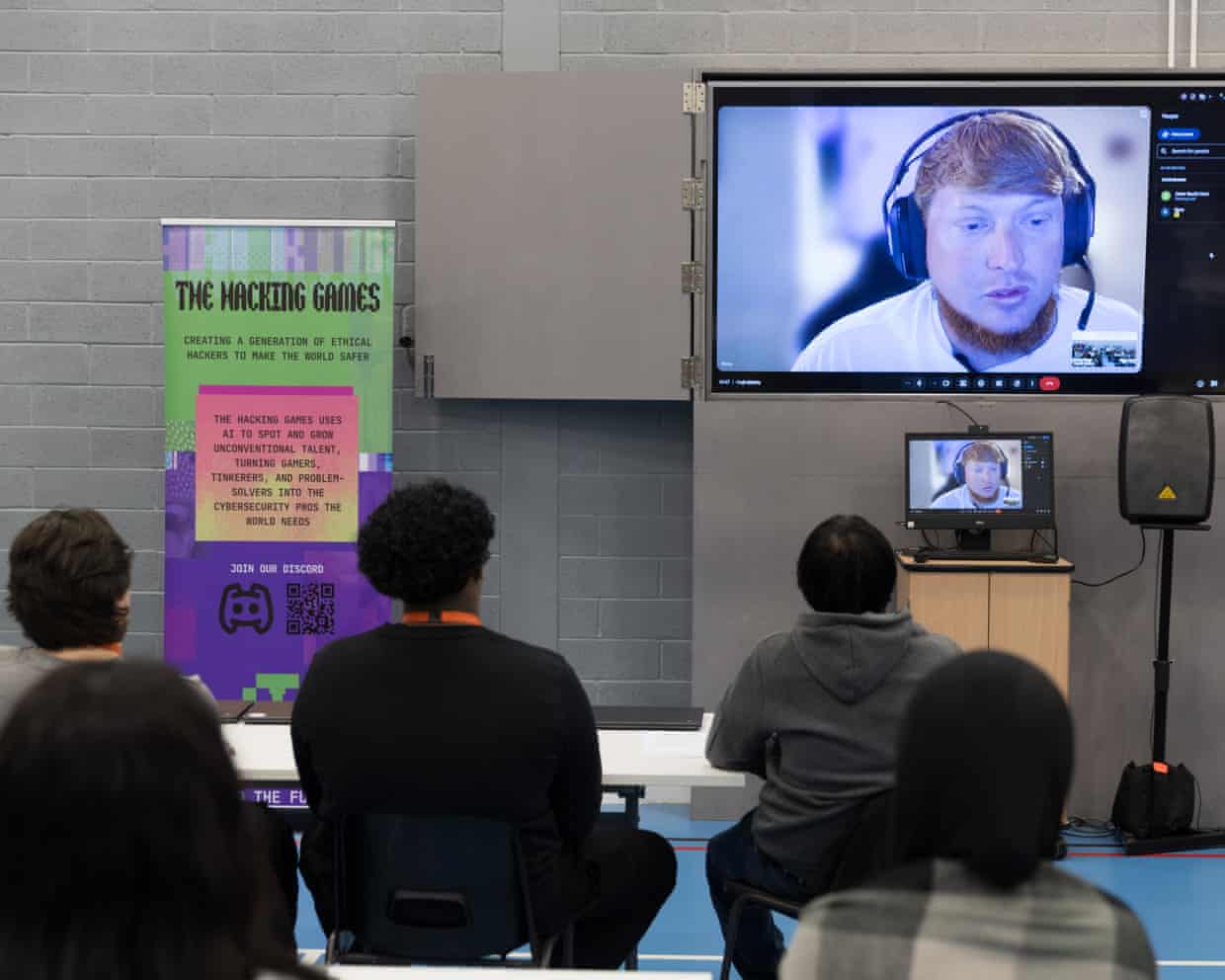
Cybercriminals, the shadowy online figures often depicted in Hollywood movies as hooded villains capable of wiping millions of pounds off the value of businesses at a keystroke, are not usually known for their candour.But in a sixth-form college in Manchester this week, two former hackers gave the young people gathered an honest appraisal of what living a life of internet crime really looks like.The teenagers in the room are listening intently, but the day-to-day internecine disputes they hear about is not the stuff of screenplays.“It’s just people getting into these online dramas and they’re swatting and doxing each other and getting people to throw bricks through their windows,” one of the hackers says.If the language sounds unfamiliar, it should – “swatting” and “doxing” involve people outing each other online by posting their genuine identities – but their message is clear: though cybercrime may seem alluring, the reality is anything but

Battle of the chatbots: Anthropic and OpenAI go head-to-head over ads in their AI products
The Seahawks and the Patriots aren’t the only ones gearing up for a fight.AI rivals Anthropic and OpenAI have launched a war of ads trying to court corporate America during one of the biggest entertainment nights of the year.Ahead of the Super Bowl, Anthropic has launched a series of ads going hard at its rival.For the scrawny 23-year-old who wants a six-pack, a ripped older man who is supposed to depict a chatbot suggests insoles that “help short kings stand tall” because “confidence isn’t just built in the gym”. And for the man trying to improve communication with his mom: his therapist prescribes “a mature dating site that connects sensitive cubs with roaring cougars” in case he can’t fix that relationship

Why has Elon Musk merged his rocket company with his AI startup?
The acquisition of xAI by SpaceX is a typical Elon Musk deal: big numbers backed by big ambition.As well as extending “the light of consciousness to the stars”, as Musk described it, the transaction creates a business worth $1.25tn (£920bn) by combining Musk’s rocket company with his artificial intelligence startup. It values SpaceX at $1tn and xAI at $250bn, with a stock market flotation expected in June to time with Musk’s birthday and a planetary alignment.However, there are questions over the deal, such as whether it is good for SpaceX’s non-Musk shareholders and whether the technological premise behind it can succeed

Victims urge tougher action on deepfake abuse as new law comes into force
Victims of deepfake image abuse have called for stronger protection against AI-generated explicit images, as the law criminalising the creation of non-consensual intimate images comes into effect.Campaigners from Stop Image-Based Abuse delivered a petition to Downing Street with more than 73,000 signatures, urging the government to introduce civil routes to justice such as takedown orders for abusive imagery on platforms and devices.“Today’s a really momentous day,” said Jodie, a victim of deepfake abuse who uses a pseudonym.“We’re really pleased the government has put these amendments into law that will definitely protect more women and girls. They were hard-fought victories by campaigners, particularly the consent-based element of it,” she added

Perth festival 2026: Swan River bursts to life with a stunning trail of stories and light

Porky Pig and Daffy Duck: ‘Jacob Elordi! That hair! Those dreamboat eyes!’
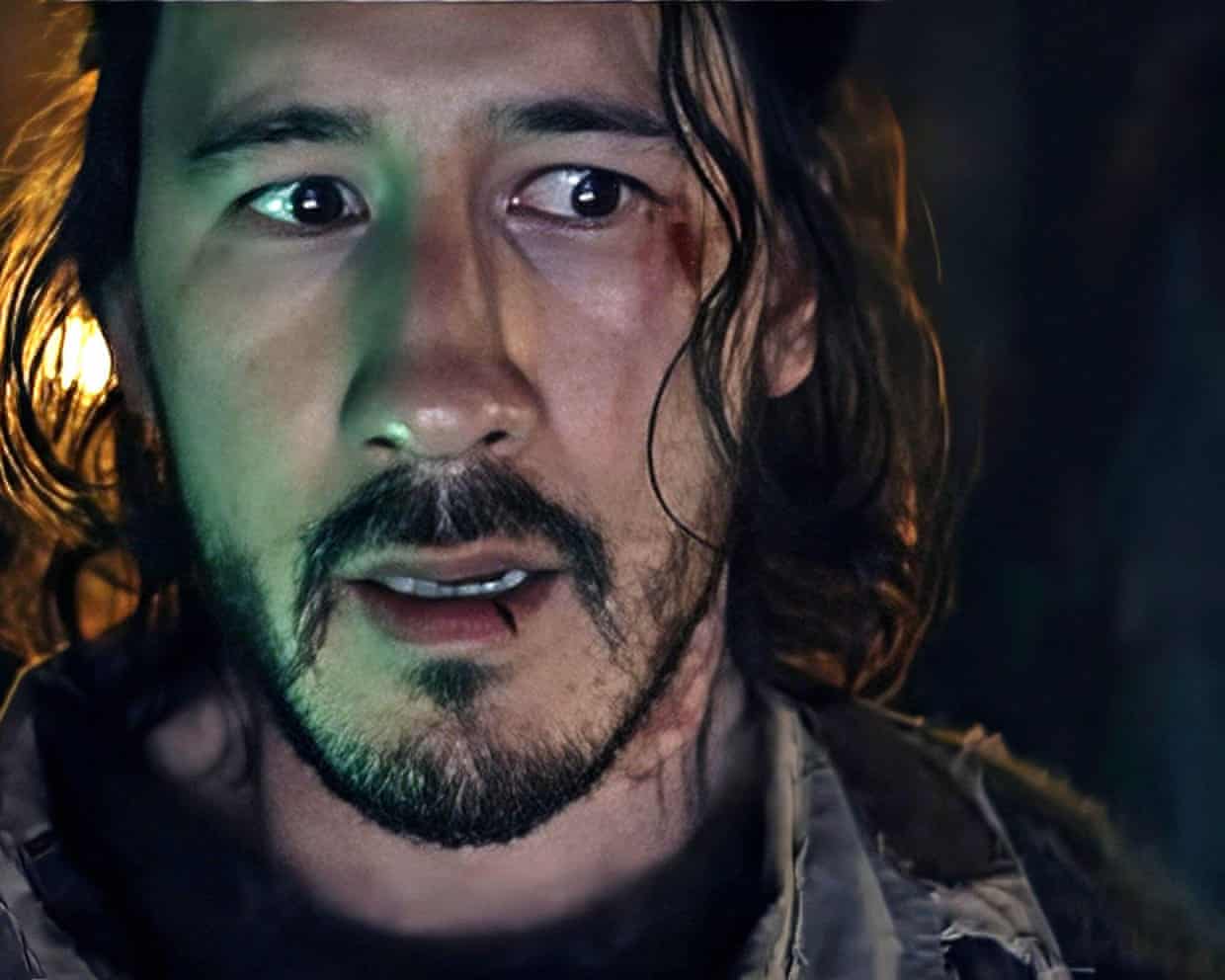
The Guide #229: How an indie movie distributed by a lone gamer broke the US box office

My cultural awakening: Bach helped me survive sexual abuse as a child

From Lord of the Flies to Deftones: your complete entertainment guide to the week ahead
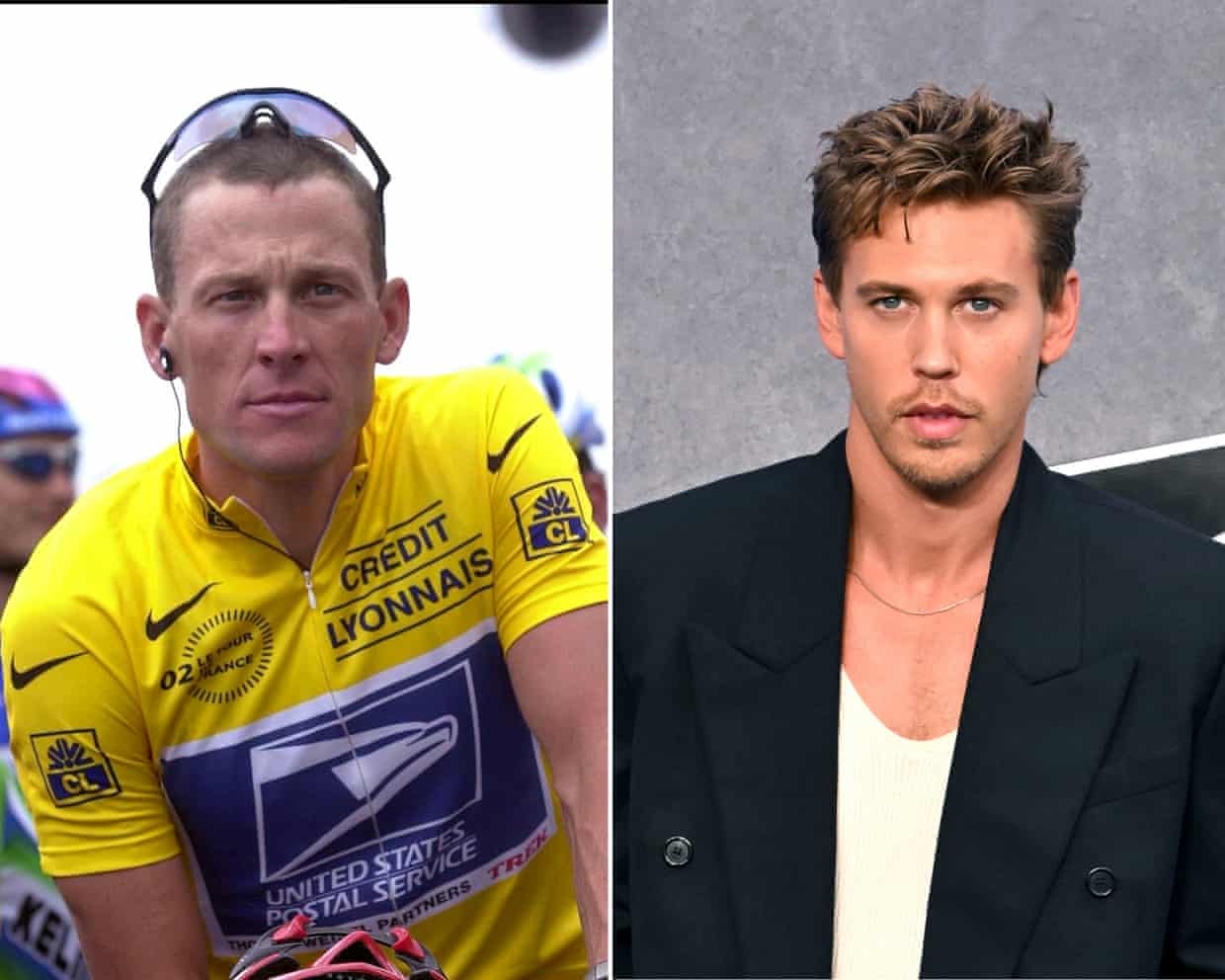
Austin Butler to play Lance Armstrong in big-screen biopic