Figure skater saved from scrapping Olympic routine after Minions music copyright dispute
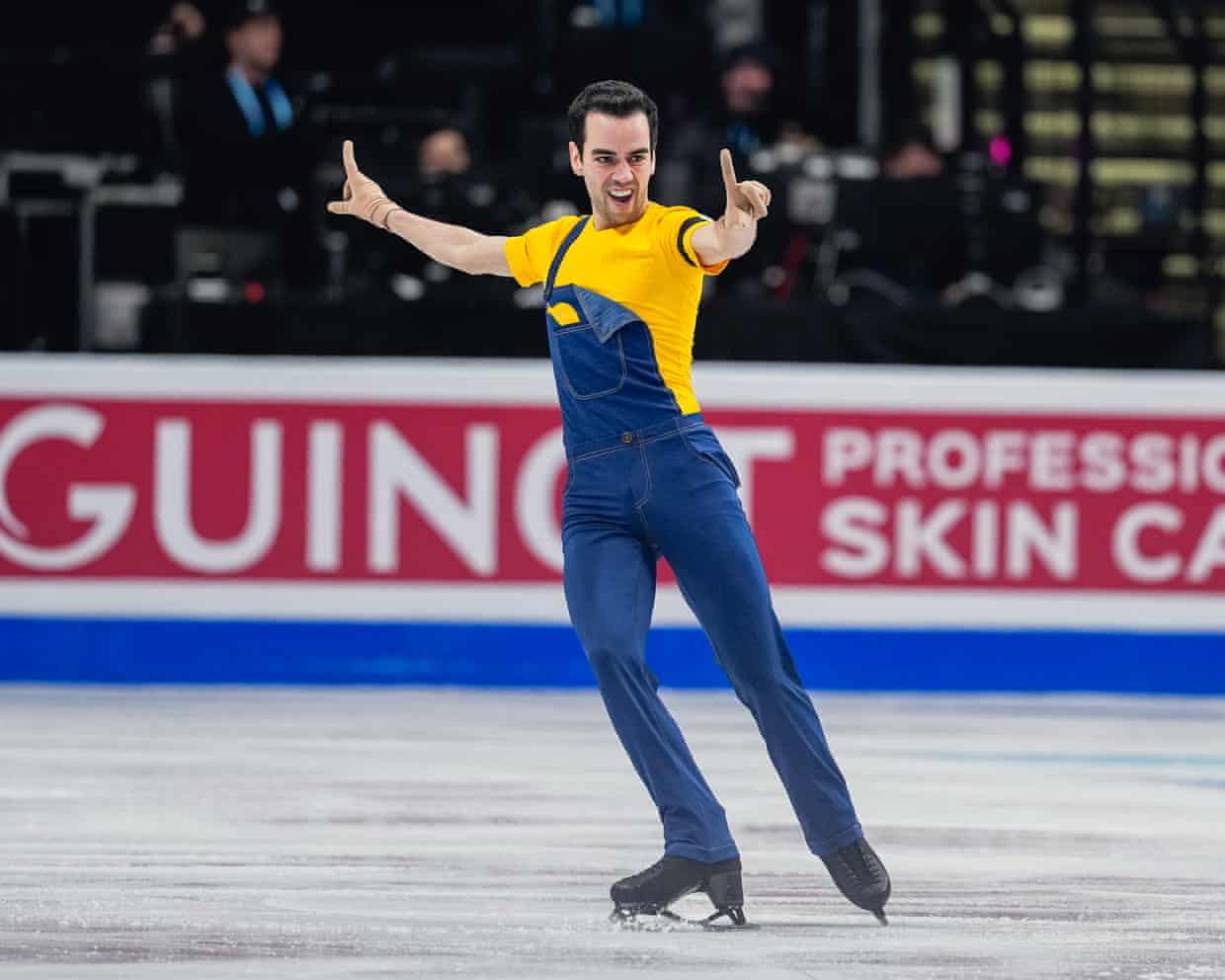
The Spanish figure skater Tomàs-Llorenç Guarino Sabaté has been spared a last-minute scramble to redesign his Olympic short program after overcoming a copyright dispute that had threatened to block him from using music from the Minions franchise at the Milano Cortina Winter Games.The six-time Spanish national champion, who is set to make his Olympic debut in the men’s singles event, said he learned late last week that the routine he has performed throughout the 2025-26 season would not be cleared for Olympic use.Guarino Sabaté said he had submitted the music through the International Skating Union’s recommended rights-clearance process months ago and had competed with the program without issue during the season, including at last month’s European championships in Sheffield.However, on Tuesday the 26-year-old thanked his fans after Universal gave him permission to use the Minions soundtrack.“Huge THANK YOU to everyone who reposted, shared and supported.
Because of you Universal Studios reconsidered and officially granted the rights for this one special occasion,” Guarino Sabaté wrote on Instagram.“There are still a couple things to be tied up with the other 2 musics of the programme but we are so close to accomplishing it! And it’s all thanks to you!! I’m so happy to see that the minions hitting Olympic ice is becoming real again!! I’ll keep you posted.”It initially appeared that Guarino Sabaté would be forced to adapt or replace choreography he had refined for months, a daunting task in a sport where musical timing and muscle memory are inseparable.The routine, which is built around music from the popular animated film franchise, has become a signature for the Barcelona native.He regularly performed wearing a yellow shirt and blue overalls reminiscent of the Minions characters, leaning into a playful, crowd-friendly style he said was designed to show that men’s figure skating can balance technical difficulty with humor and personality.
Music licensing in figure skating has grown increasingly labyrinthine in recent years, particularly as the sport has shifted toward contemporary popular music.At last year’s world championships in Boston, the ISU director-general, Colin Smith, described the situation to the Guardian as a structural problem in the music business rather than something skating can easily solve on its own.“It’s a complex issue, frankly, because the music industry has no common clearance platform,” Smith said.“There are multiple buckets of rights, and within those buckets the clearance process isn’t done on a single platform.Tracking tools have improved, but the facilitated process just isn’t there.
”Smith, who previously oversaw Fifa World Cup tournament operations as chief tournaments and events officer and chief operating officer from 2015 to 2023, said he had held direct discussions with major rights-holders about building something more workable, arguing that the sport’s global profile should make cooperation attractive,“I’ve had direct conversations with one of the big publishing and music companies, and they fully agree it’s a strange situation that there isn’t a facilitated process – and they’re determined to help us find one,” he said,“It’s a topic we’re addressing, and we’re trying to find a rational solution,”The controversy also fits into a broader pattern across the sport, where even elite Olympic athletes have found their music choices subject to complications,The Canadian ice dancers Marie-Jade Lauriault and Romain Le Gac learned late last year that two Prince songs planned for their 1990s-themed rhythm dance could not be cleared for Olympic use, despite being approved for use during the rest of the season.
High-profile disputes have surfaced even before that.At the Beijing Olympics in 2022, the American pairs champions Alexa Knierim and Brandon Frazier were hit with a copyright lawsuit tied to their use of a cover version of House of the Rising Sun.The case was later settled privately for an undisclosed sum understood by the Guardian to be around $1.4m (£1.02m), but the episode highlighted the legal and financial risks tied to music selection at the sport’s highest level.
Knierim later described the dispute as casting a “bittersweet” shadow over the performance,The case also exposed how little many athletes understood about music licensing requirements,For decades, skaters largely relied on federations and event organizers to manage music use, but the lawsuit underscored how individual athletes could still be drawn into copyright disputes,Rights complications have also affected how artistic sports are broadcast and archived, with some competitions unavailable on replay platforms because music licenses do not extend to long-term streaming,Even outside Olympic seasons, clearance costs can derail programs.
The Canadian pairs skaters Deanna Stellato-Dudek and Maxime Deschamps said they abandoned plans to use a cover of a Phil Collins track after being quoted a licensing fee in the tens of thousands of dollars,Smith said skating is not alone in facing those pressures, and suggested a broader, cross-sport approach may be necessary, involving Olympic organizers and other music-driven judged disciplines,“Absolutely, it’s not just figure skating,” he said when asked whether the ISU could coordinate with sports such as gymnastics, artistic swimming and others that face similar issues,“We are one of the largest in terms of the Winter Olympics, and we are working with the IOC as well, together with the music industry, to find a solution,”Smith added that the ISU was pursuing what he called a “multi-pronged approach”, including work with an existing platform that handles rights issues across other sports.
“We’re really trying to find a rational, practical solution,” he said.Guarino Sabaté will compete in the men’s singles event, which is scheduled to begin on 10 February at the Milano Ice Skating Arena.

Emergency pneumonia cases surge to half a million a year in England
The number of people requiring emergency care for pneumonia has risen by a quarter over two years to reach more than half a million cases, new figures show, amid warnings that preventable cases are adding pressure on overstretched A&E departments.Analysis of the most recent NHS England data from between April 2024 and March 2025 found that there were 579,475 cases of pneumonia requiring emergency hospitalisation, and this was likely to have risen further since, according to the charity Asthma + Lung UK. There were 461,995 cases between April 2022 and March 2023.Pneumonia is the single biggest cause of emergency admissions and is responsible for more than double the number of cases of the next biggest. It can also be deadly: between April 2022 to March 2025 more than 97,000 people died of pneumonia after ending up in hospital

Resident doctors in England vote to continue industrial action for another six months
Resident doctors in England have voted to strike for another six months in their long-running jobs and pay dispute with the government.Their decision means that, unless an agreement emerges, the campaign of strikes by resident – formerly junior – doctors will enter its fourth year, as the industrial action began in March 2023.The British Medical Association (BMA) said 93% of the resident doctors who voted in their latest strike ballot endorsed holding a further series of stoppages. In all, 26,696 of the 28,598 resident doctors who took part backed continuing industrial action – a 53% turnout.The Department of Health and Social Care (DHSC) highlighted that this was the lowest turnout yet seen in the five strike ballots held as part of the action

Lack of mental health beds contributed to UK teenager’s death, inquest finds
A shortage of mental health beds and poor communication between agencies contributed to the death of a teenage girl on hospital grounds, an inquest has found.Ellame Ford-Dunn, 16, who had a history of self-harm, died in March 2022 after absconding from an acute children’s ward where she had been put because of a dearth of appropriate mental health beds.Her family and campaigners say Ellame’s death exposed a mental health system “crumbling at the seams”.The inquest jury at West Sussex coroner’s court was told that Ellame absconded “multiple times” during her stay at Worthing hospital’s Bluefin ward, which was not a specialist mental health unit.Jurors concluded the decision to place Ellame there was “inappropriate” and “more than minimally” contributed to her death
Here’s how we can save Britain’s high streets | Letters
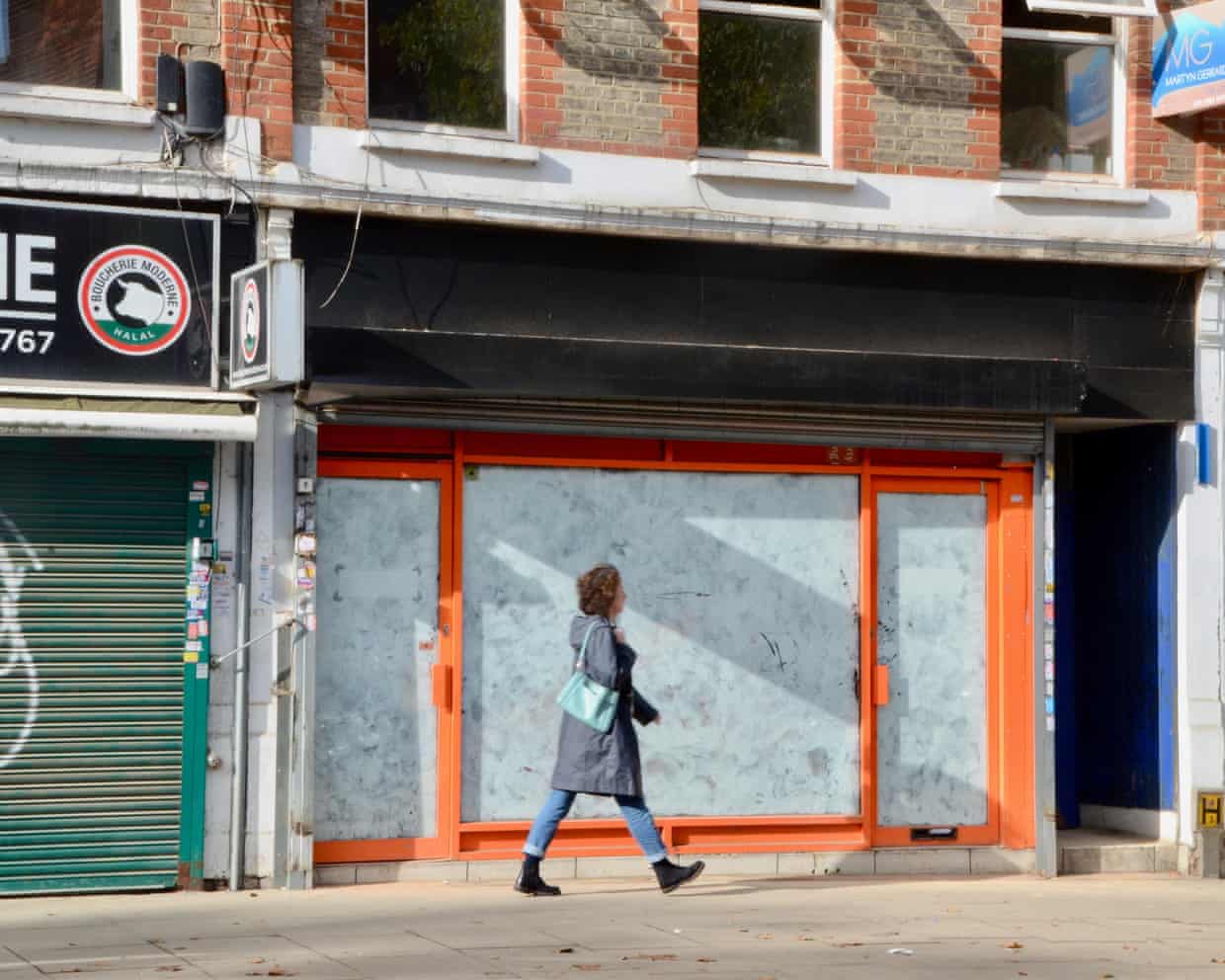
High streets have been changing throughout my lifetime (I’m 82 and had a high-street business for more than 20 years) and they have somehow survived with precious little government help (Labour risks election wipeout unless it improves Britain’s high streets, study finds, 28 February). In my postwar rural Essex village, we had three butchers, two newsagents, two bakers, two ironmongers, three general stores (one a dairy) plus a potpourri of haberdashery, hair stylists, two sweet shops and an electrical shop that had every plug and wire known to man.There was consternation when the dairy went self-service, but soon everyone was shopping with a basket. Then came the grocery chains – the butchers and bakers disappeared, and the main haberdasher closed. But the village adjusted and other enterprises appeared

Support new mothers with mental ill health | Letter
Every day, many new mothers continue to suffer in silence, as highlighted in your article (Seven out of 10 UK mothers feel overloaded, research reveals, 28 January). The Royal College of Psychiatrists revealed postnatal depression harmed up to 85,000 new mums in England last year.Maternal suicide is one of the leading causes of death among women between six weeks and a year after birth. Perinatal mental illness accounts for 34% of all deaths in this group during this period. Untreated prenatal and antenatal mental illness also affects unborn infants, potentially putting them at risk of premature birth and low birth weight
NHS patients put at risk by ‘sham investigations’, says ex-CEO of hospital
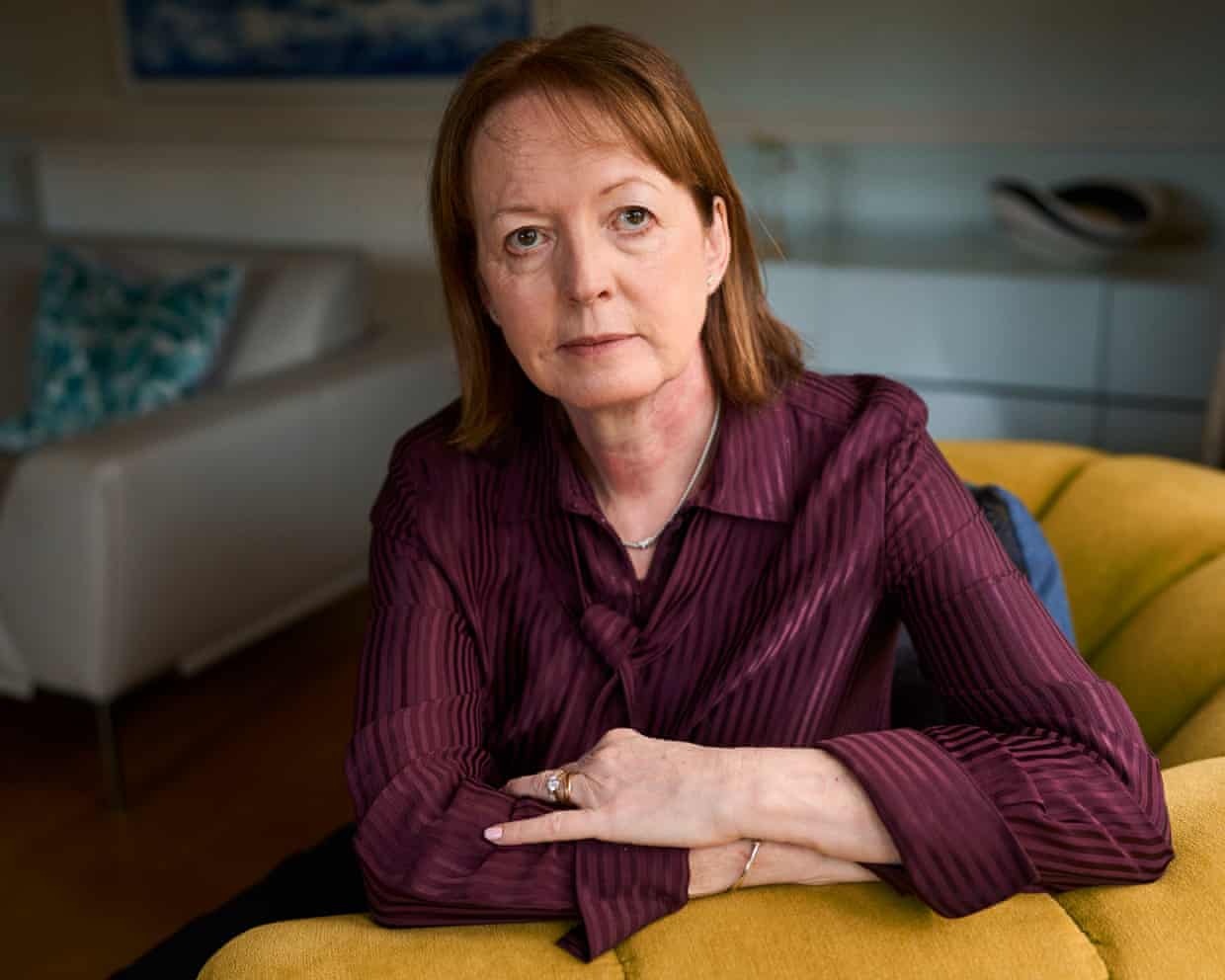
Patients are being put at risk by NHS bosses launching “sham investigations” into whistleblowers to shut down concerns, a former hospital chief executive who won a £1.4m bullying claim has said.Dr Susan Gilby took over as chief executive at the Countess of Chester hospital in 2018 after it was rocked by the Lucy Letby case. She was awarded the payout – one of the biggest in NHS history – last month after a tribunal ruled she had been unfairly dismissed after raising concerns about alleged bullying and harassment by the chair of the hospital board.An employment judge found that board members of the hospital conspired to unfairly exclude her and deleted documents when she launched legal action
Disastrous start for US TikTok as users cry censorship

‘Deepfakes spreading and more AI companions’: seven takeaways from the latest artificial intelligence safety report

Palantir beats Wall Street expectations amid Trump immigration crackdown

‘A mixed blessing’: crowdfunding has changed the way we give, but is it fair and effective?

‘Marketplace for predators’: Meta faces jury trial over child exploitation claims

Viral AI personal assistant seen as step change – but experts warn of risks