England’s MCG triumph is a genuine coup – and a picture of what might have been | Barney Ronay
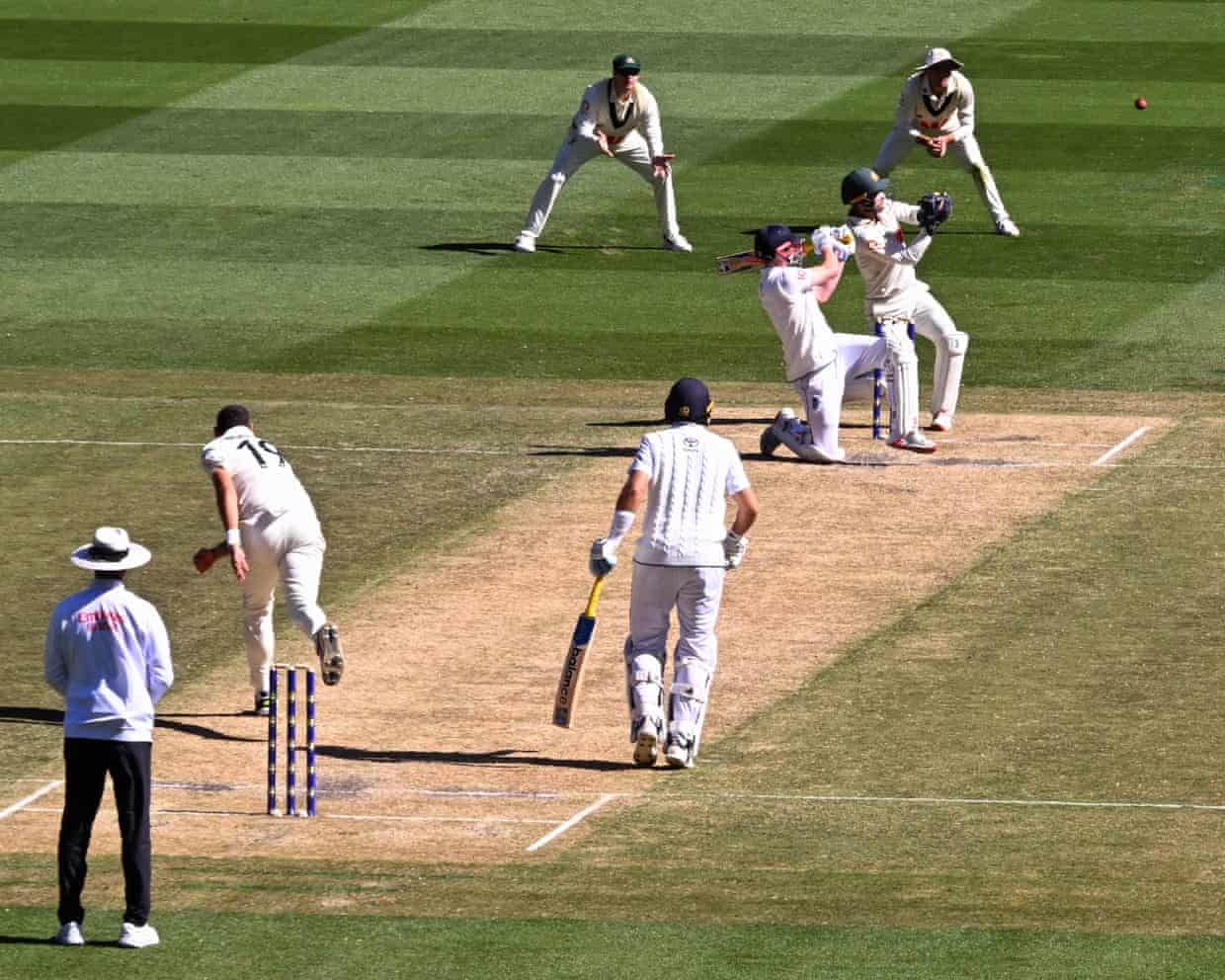
Na-na na-na na-na na na na, Duckett’s on the piss.On the piss.Duckett’s on the piss.Don’t take me home, please don’t take me home.And while we’re here, stand up, stand up, please do stand up if you love a two-day Test on a pitch as green and ridged as an under-ripe roasting potato.
For an hour in mid-afternoon on day two at the MCG England’s top order finally did the thing.The clocks stopped.Dogs miaowed.Birds flew backwards across the sky.And Test cricket turned into darts.
This was probably always coming in some form.The universe tends toward entropy.In England all things are, in the end, shirtless men singing Sweet Caroline.As England’s openers set off in pursuit of 175 to win this fourth Test at the midway point of a strange, restless day of fast-forward cricket, junk cricket, cricket off its meds, there was a sense of barriers dissolving, of a top order intent not just on playing the old favourites, but playing them all at the same time.Ben Duckett kicked things off with three fresh-air swipes in his first five balls.
He crunched Mitchell Starc off his pads.He whirled his bat like a club.He was almost bowled, almost caught and almost caught-and-bowled.Absurd walking ramps were essayed.A forward defensive drew vast pantomime roars from the banks of English fans.
Zak Crawley stood still and hit Michael Neser’s seventh ball high over long-off for six, a beautifully crisp moment of clarity in the middle of all that heat and noise.The opening partnership reached fifty off 6.5 overs.Duckett walked off shortly after with 34 off 26, yorked playing a kind of cave-ball defensive bunt, but having also produced surely one of the strangest active top-order Test innings in the history of this ground.And there was more too, as Brydon Carse walked out at No 3 with more than a hundred runs still required for victory.
Ideally Carse at this point would have raised his left elbow to the skies and ground his way to 27 off 117 balls, thereby genuinely sticking it to the man, freaking out the squares and subverting the dominant paradigm.He didn’t do this.Instead he played every conceivable cricket shot, pure movement, unchoreographed shapes, free-flowing physical ballet, en route to a horrible six.There was a vague sense of desecration about all this.Australia venerates Test cricket.
This matters here.It speaks to the land, the culture, the triumphant separation from the colonial past.In Adelaide they agonise about letting you in through the media entrance without a collar.In Melbourne the G at Christmas is a secular cathedral, a temple of chino and blue twill shirt, a fixed cultural point.Except, now Duckett is out there playing meth-ball.
Carse has gone out to bat in chaps.Brendon McCullum is lounging back so far in his chair, feet up, he’s in danger of disappearing into a ball of pure human insolence.And as England walked off at tea, 77 for two and going along at six and a half an over, the ghost of something long since pronounced dead on the table, the Bazball that dare not speak its name, had never felt so horribly alive.Albeit, only alive in in a desiccated way, leathery and Botoxed, pumped full of meds, telling everyone it’s never felt so young.This was not a vindication of anything.
But it was a note of grace, a tick in the box for all that.England’s approach to batting made perfect sense here.A successful chase and a four-wicket win was a reminder of the basic logic of playing this way on a pitch that just kept on seaming.And right now there are two things worth saying about it.First, any England team winning a Test in Australia is a real thing.
On day two here, England bowled Australia out for 132 a bowler down, then smashed an excellent attack around the park on a tough pitch.In doing so they completed a first Test win since Sydney in 2011.This has been a place of annihilation, collapse, trauma, careers in turnaround.Whatever the state of the series, this is a genuine achievement, and a tick for the regime.But let us be clear also: it is by no means a vindication of another losing tour, or of a failing executive tier.
In fact, this is the opposite.What winning in Melbourne says is: here is what you could have had.Here is evidence that Australia were vulnerable, and for good reason too.They came into this game with three all-time bowlers missing.Mitch Starc has had to play every Test.
The batting isn’t really there.This team was vulnerable.Yet England just weren’t ready to press their fingers into those tender points.They kicked off in Perth playing jet-lag cricket, eyes wide, still trying to work out what day it was.A properly prepped, balanced and weaponised team might be doing more than simply taking a dead rubber on a wonky pitch.
Instead a talented, biddable, slightly raw group of players has been betrayed at times, by short cuts and poor planning.A backroom energy that was initially inspiring, and whose spirit flickered here again in that chase, hasn’t known how to transform an idea and a set of slogans into a winning machine.Or at least, not yet, anyway.Victory here will stand on its own.But it must also serve as a reprimand, a note of internal frustration about complacency, slackness and how easy it is to miss these opportunities.
England will now have a fair chance of winning in Sydney too, and of chasing this series right to its hypothetical finish line.They turned cricket into darts here.They did the thing, finally, that they always promised to do.But who knows how the southern summer might look now if they’d started running a little earlier.
‘Undermines free speech’: Labour MP hits back at US government over visa ban on UK campaigners
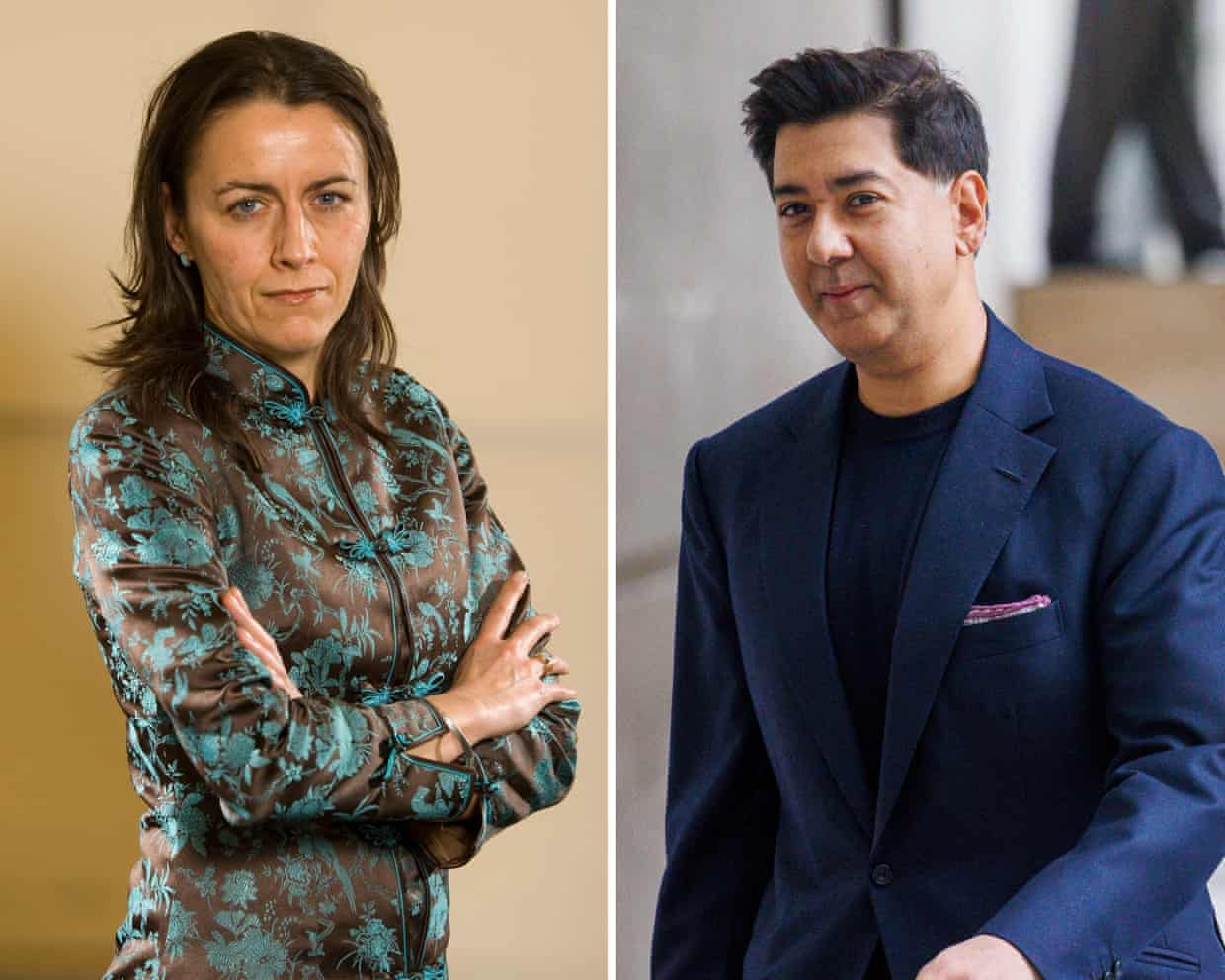
A senior Labour MP has accused the Trump administration of undermining free speech after Marco Rubio, the US secretary of state, announced sanctions against two British anti-disinformation campaigners.Chi Onwurah, the chair of parliament’s technology select committee, criticised the US government hours after it announced “visa-related” sanctions against five Europeans, including Imran Ahmed and Clare Melford.Ahmed leads the Center for Countering Digital Hate (CCDH), while Melford is chief executive of the Global Disinformation Index (GDI), both of which have clashed directly with Elon Musk, the owner of X and a former adviser to the US president.Onwurah said on Wednesday: “Banning people because you disagree with what they say undermines the free speech the administration claims to seek.“We desperately need a wide ranging debate on whether and how social media should be regulated in the interests of the people
Visa ban for European critics of online harm is first shot in US free speech war
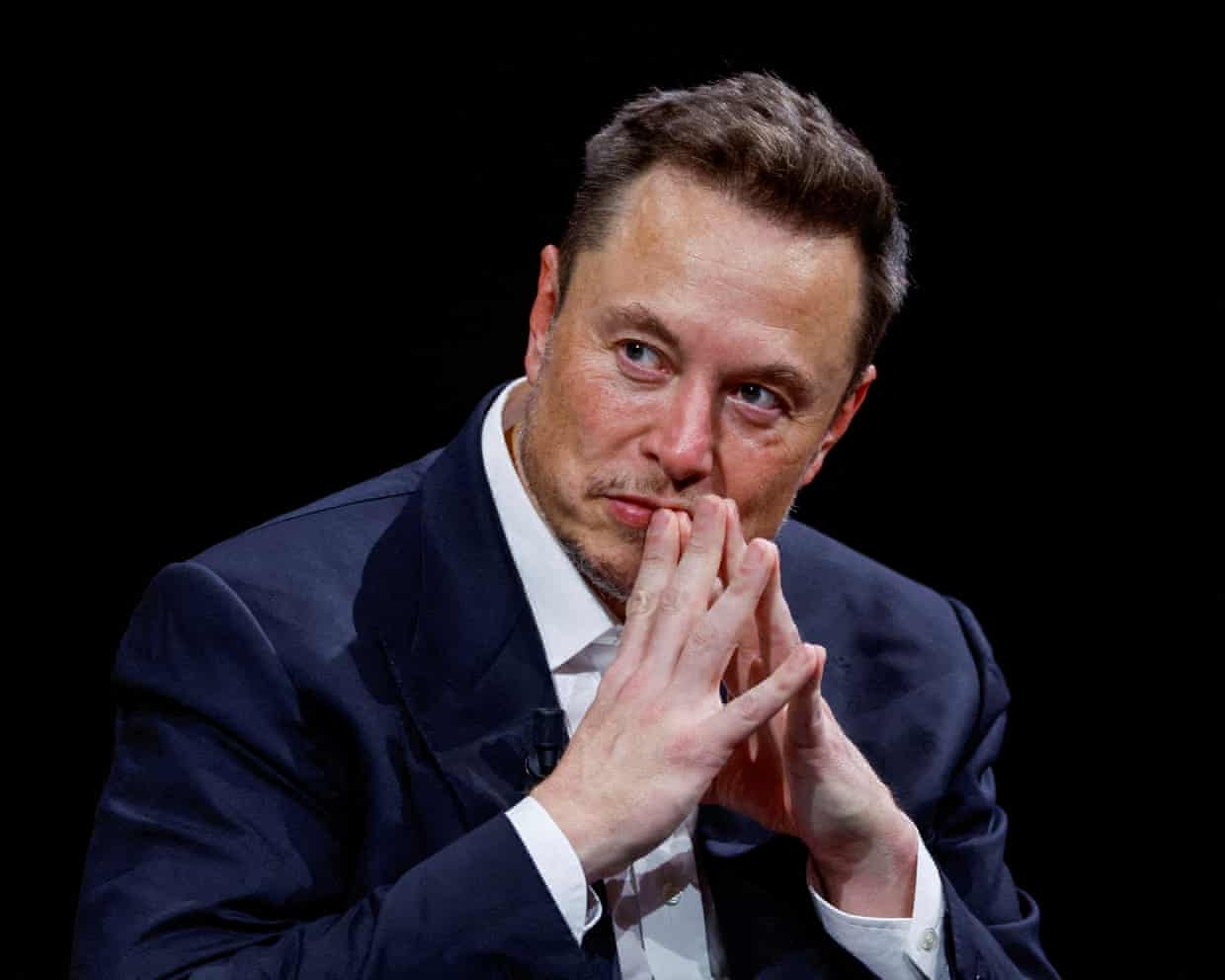
For Maga politicians, European tech regulation hits hard in two areas: at the economic interests of Silicon Valley and at their view of free speech.The action against five Europeans who are taking on harmful content and the platforms that host it has had an inevitable feel to it, given the increasingly vociferous reactions to the EU’s Digital Services Act (DSA) and the UK’s Online Safety Act (OSA). Both pieces of legislation require social media firms to protect users or face the threat of sizeable fines. Indeed, Elon Musk’s X has been fined €120m (£105m) this month for breaching the DSA.These acts are prime examples of what US Republicans see as an anti-free speech culture on the other side of the Atlantic
European leaders condemn US visa bans as row over ‘censorship’ escalates
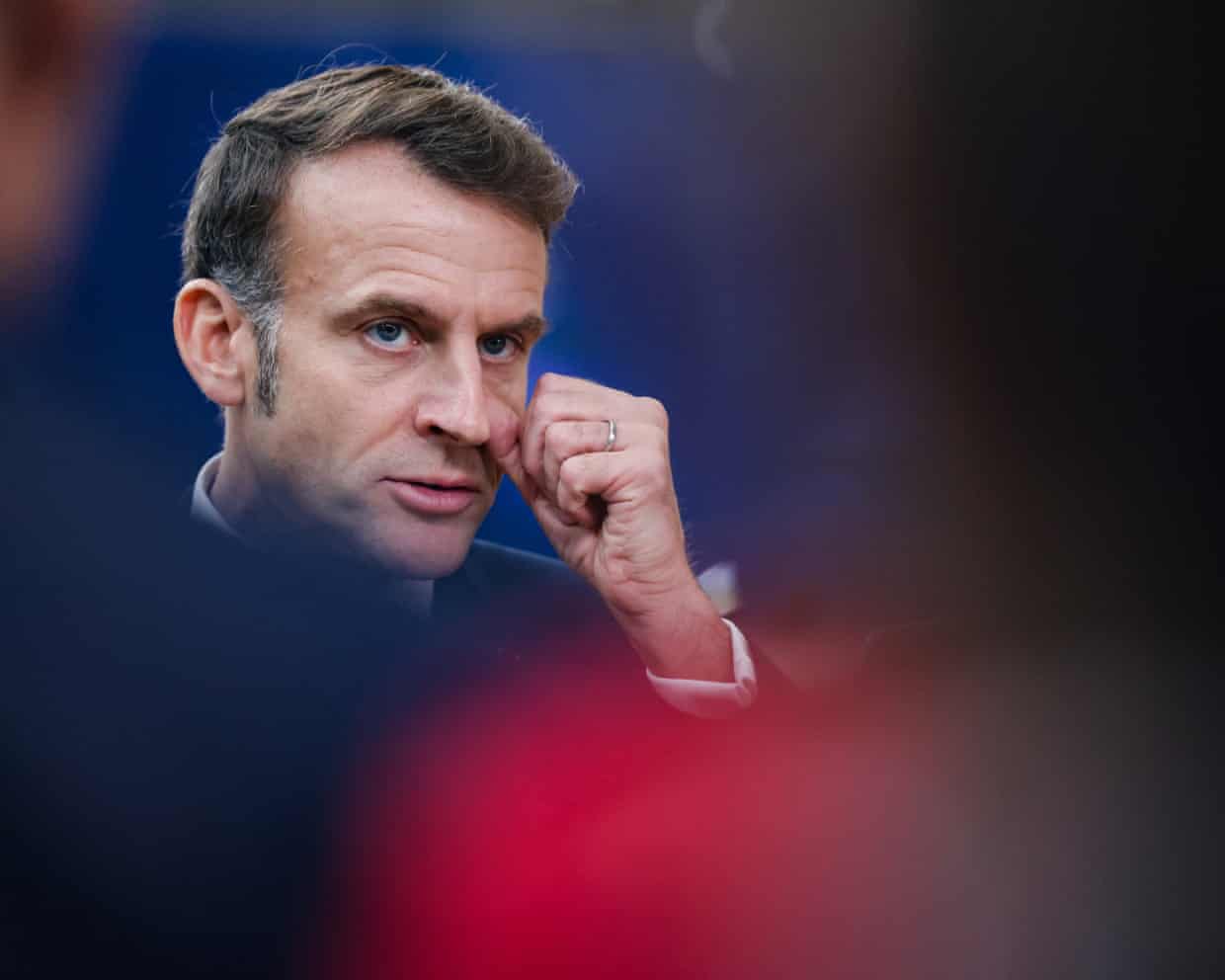
European leaders including Emmanuel Macron have accused Washington of “coercion and intimidation”, after the US imposed a visa ban on five prominent European figures who have been at heart of the campaign to introduce laws regulating American tech companies.The visa bans were imposed on Tuesday on Thierry Breton, the former EU commissioner and one of the architects of the bloc’s Digital Services Act (DSA), and four anti-disinformation campaigners, including two in Germany and two in the UK.The other individuals targeted were Imran Ahmed, the British chief executive of the US-based Center for Countering Digital Hate; Anna-Lena von Hodenberg and Josephine Ballon of the German non-profit HateAid; and Clare Melford, co-founder of the Global Disinformation Index.Justifying the visa bans, the US secretary of state, Marco Rubio, wrote on X: “For far too long, ideologues in Europe have led organised efforts to coerce American platforms to punish American viewpoints they oppose. The Trump administration will no longer tolerate these egregious acts of extraterritorial censorship

‘A gamechanger’: 200,000 UK small businesses sign up to TikTok Shop
It is better known for its viral dances and for making hits out of forgotten songs, but the social media site TikTok is becoming a force to be reckoned with as a shopping platform.Major retailers such as Marks & Spencer, Samsung, QVC, Clarks, and Sainsbury’s are now selling their wares on the site’s e-commerce service, TikTok Shop, alongside more than 200,000 UK small and medium businesses.Launched in Britain in 2021, TikTok Shop recorded its biggest sales day in the UK on Black Friday, with 27 items sold every second. Across the Black Friday and Cyber Monday period, sales were up by 50% on last year.The service works by letting brands sell directly inside TikTok through videos and livestreams with embedded links to items for sale, as well as through a separate shop tab on their profiles

Former EU commissioner and activists barred from US in attack on European tech regulators
The state department has barred five Europeans from the US, accusing them of leading efforts to pressure tech firms to censor or suppress American viewpoints, in the latest attack on European regulations that target hate speech and misinformation.Secretary of state Marco Rubio said the five people targeted with visa bans – who include former European Commissioner Thierry Breton – have led “organized efforts to coerce American platforms to censor, demonetize, and suppress American viewpoints they oppose.”“These radical activists and weaponized NGOs have advanced censorship crackdowns by foreign states – in each case targeting American speakers and American companies,” Rubio said in an announcement.In recent months, Trump officials have ordered US diplomats to build opposition to the European Union’s landmark Digital Services Act (DSA), which is intended to combat hateful speech, misinformation and disinformation, but which Washington says stifles free speech and imposes costs on US tech companies.Late on Tuesday night, Breton posted on social media: “Is McCarthy’s witch hunt back?”Tuesday’s move is part of a Trump administration campaign against foreign influence over online speech, using immigration law rather than platform regulations or sanctions
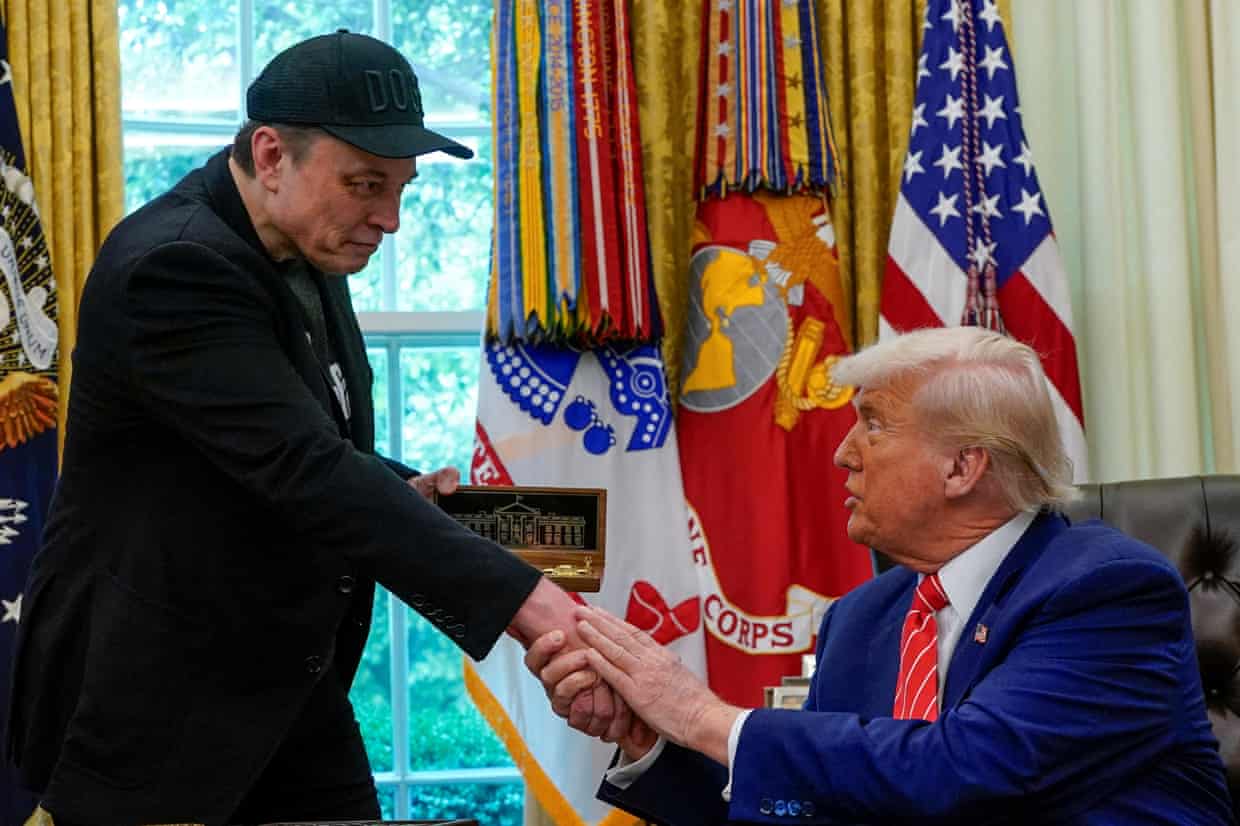
Elon Musk, AI and the antichrist: the biggest tech stories of 2025
Hello, and welcome to TechScape. I’m your host, Blake Montgomery, wishing you a happy and healthy end of the year. I myself have a cold.Today, we are looking back at the biggest stories in tech of 2025 – Elon Musk’s political rise, burst and fall; artificial intelligence’s subsumption of the global economy, all other technology, and even the Earth’s topography; Australia’s remarkable social media ban; the tech industry’s new Trumpian politics; and, as a treat, a glimpse of the apocalypse offered by one of Silicon Valley’s savviest and strangest billionaires.At the close of 2024, I wrote that Elon Musk’s support of Donald Trump had made him the world’s most powerful unelected man

Shoppers shun UK high streets despite lure of Boxing Day sales
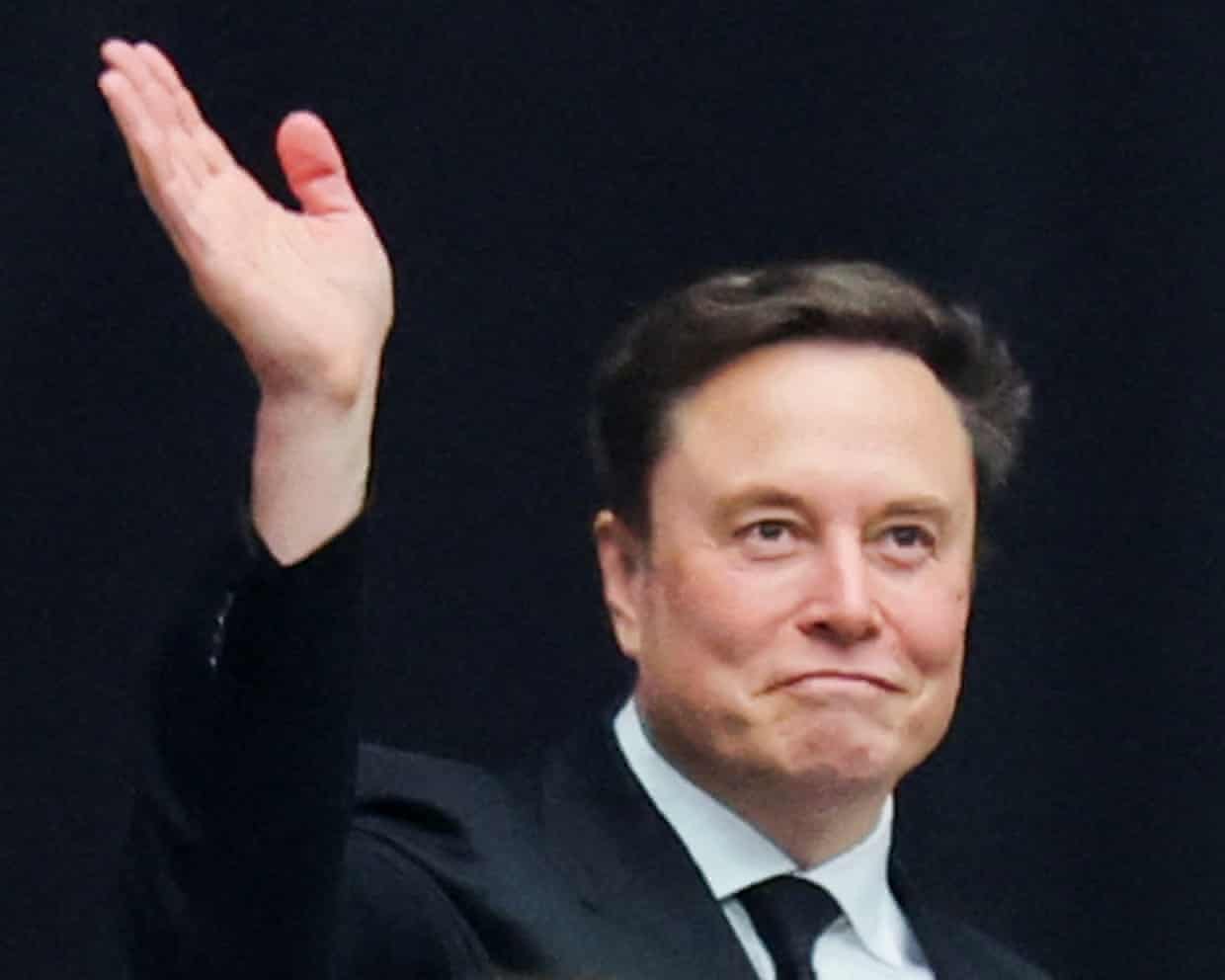
AI boom adds more than half a trillion dollars to wealth of US tech barons in 2025

How Las Vegas police ended up with a fleet of free Tesla Cybertrucks
Apple seeks to appeal against £1.5bn ruling it overcharged UK customers

Bowen and Curtis bag famous home win in Welsh National with Haiti Couleurs
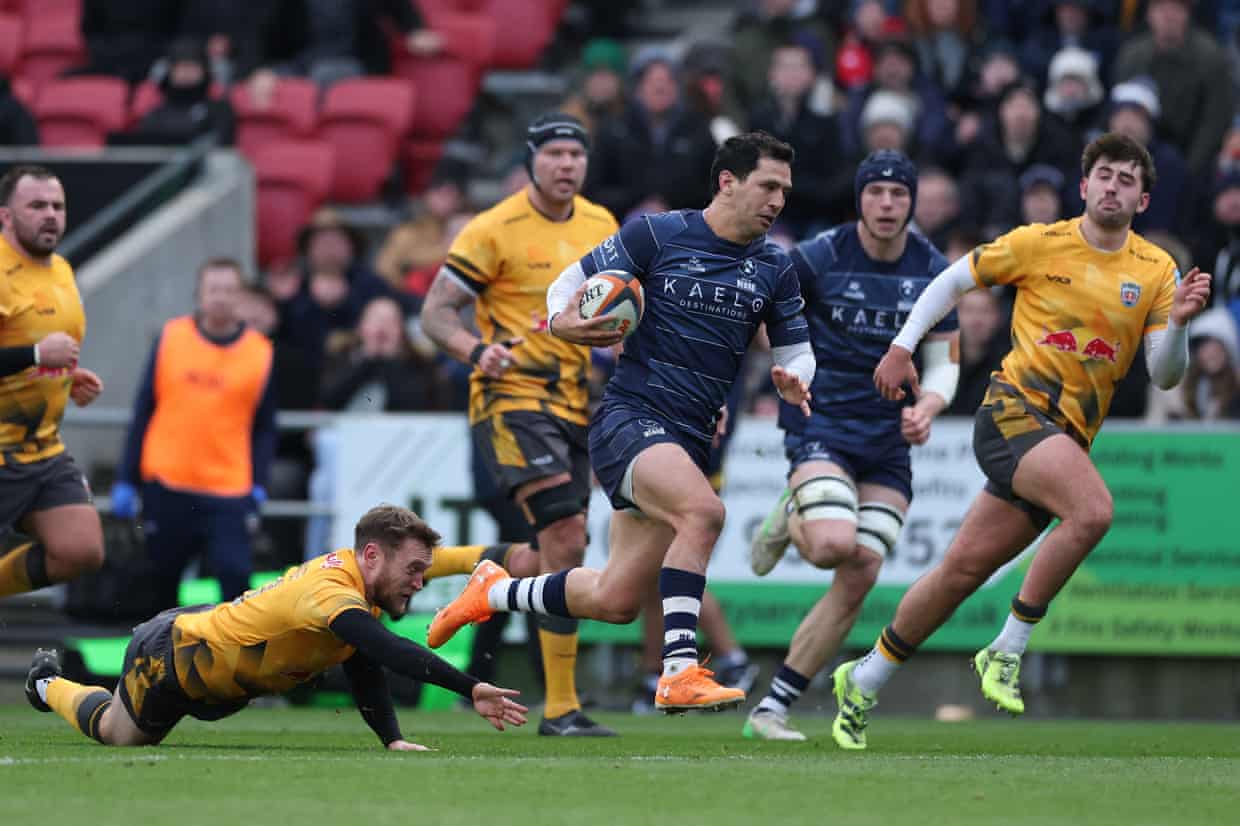
Bristol survive scare but Newcastle off the mark in Prem as Spencer seals bonus