In the pink? Cricket bosses and players still not seeing benefit of day-night Tests | Simon Burnton
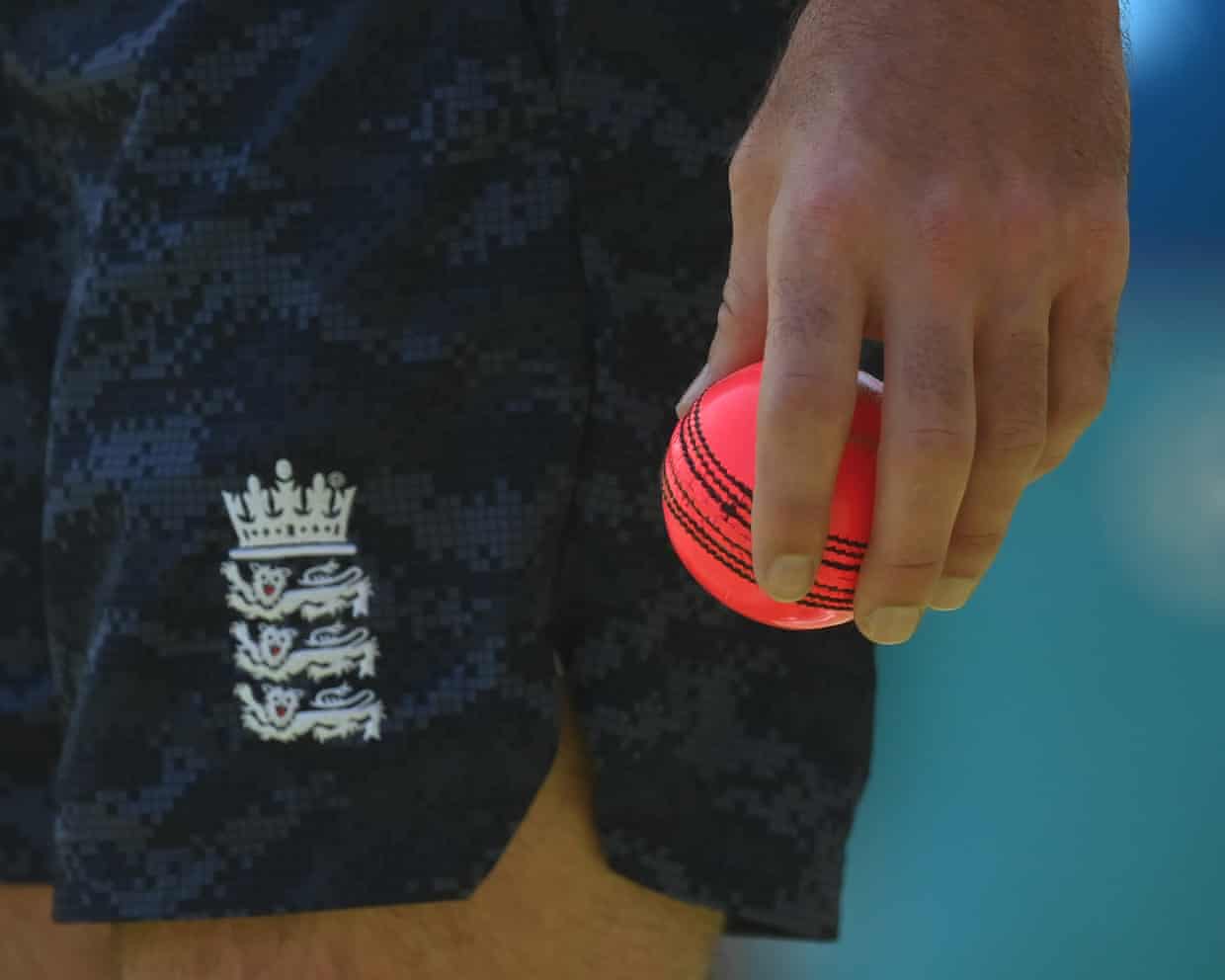
In October 2012, the International Cricket Council formally green-lit the idea of day-night Tests, offering a new, potentially lucrative spin on the oldest format.“This is all about new audiences and doing all we could to make the game more accessible at every level,” said the England and Wales Cricket Board’s then chief executive, Tom Harrison, when he announced his side’s first pink-ball game a few years later.James Sutherland, Cricket Australia’s chief executive, welcomed the change from a status quo in which “Test cricket is played at times when most people are at work or school.We limit ourselves by staging cricket’s premium format at times when fans often can not watch.”Since that decision 24 of 554 Tests have been day-night games.
Outside Australia, their most enthusiastic adopters, there have been 11, out of a possible 486.Instead of turning on a new demographic to the joys of Test cricket, the idea has been a turn-off: England have only staged one, in 2017; South Africa’s only attempt came a few months later; West Indies, Pakistan and New Zealand have held two each and India three.This week’s second Test at the Gabba will be Australia’s 14th.For Cricket Australia the benefit of these matches can be measured in two metrics: TV viewing figures and cash.It gives them a second Test – after the one in Perth, where the time difference is helpful – with play during peak viewing hours on the east coast, home to about 80% of the population.
From the first day of the first pink-ball Test, against New Zealand in 2015, viewers have tuned in in large numbers: that game was watched by an average of 1.46m in the five major cities, 27% up on that year’s Perth Test.Their day-night game against South Africa in 2016 again saw a 27% bump.In 2017, 42% of the country’s metropolitan population watched at least some of the first Ashes day-nighter and so on to last year’s match against India, when every session but one brought in more than a million viewers.More viewers means more money: CA’s A$45m-a-year broadcast deal became A$100m in 2013, A$197m in 2018 and A$216m in 2023.
Fans also enjoy an improved, or at least a different, experience with Adelaide – which has hosted eight of their day-nighters – getting it down to a fine art.“What they’ve done with the pink ball Test is pretty awesome, how they’ve made it an event, how it all kind of fits together,” says Marnus Labuschagne.The numbers have not added up everywhere and when the West Indies hosted, inevitably, Australia in a day-night game in July it was the third outside Australia this decade.They were bowled out for 27 in their second innings and are unlikely to be wildly keen on a repeat.Indeed, every country but one, and for a variety of reasons, has more or less dropped the idea.
India held three, but they all ended inside three days (the one involving England didn’t make it past day two) so any commercial benefit from the timing was outweighed by the losses caused by the early finishes.“Spectators lose money, broadcasters lose money,” said Jay Shah, former secretary of the Board of Control for Cricket in India and now chair of the ICC.This was not the idea.Pakistan were initially keen, inviting Sri Lanka to take part in what would have been the first day-night Test in 2013 (they said no).Eventually, a couple of touring teams agreed to games, West Indies in 2016 and a now-willing Sri Lanka the following year, both held in Dubai.
“In principle, the PCB is supportive of and inclined towards accepting and trying out innovative ideas and new technologies,” said the Pakistan Cricket Board’s chief executive, Subhan Ahmed.Sadly, their Emirates-based fanbase was not so supportive of innovative ideas and a combination of miserable attendances and heavy dewfall curtailed the experiment.New Zealand hosted their first day-night game in 2018, but two days were rained off, attendances were disappointing, and it took them five years to have a second, and to date final, go.There is a small, but important difference here between most associations and many players: most associations can’t see the benefit of pink-ball games, many players can’t see the pink ball.Before they were first used, manufacturers tested a variety of colours, including yellow and orange.
The PCB held a T20 tournament in 2016 with an orange ball, but it did not go down well – unless you were trying to catch it, in which case it went down very easily indeed.“It was a horrible experience for the fielders,” said Misbah-ul-Haq.“Some catches even fell on their heads, they just couldn’t see it.” Yellow balls appeared blurry on television, so that was them out.Sign up to The SpinSubscribe to our cricket newsletter for our writers' thoughts on the biggest stories and a review of the week’s actionafter newsletter promotionKookaburra tested 16 different shades of pink and three colours of stitching before settling on their favourite combination though after player feedback the seam was quickly changed from white and green to black.
“It’s easier than the white seam,” Joe Root said this week,“That was a nightmare,”But there is an inherent problem with a pink ball: around sunset the higher-frequency wavelengths of light become scattered and for a short time red light becomes dominant,This is why the sun, having appeared yellow all day, often looks orange or red as it sets,A number of academic studies have identified a change in the pink ball’s contrast polarity – the relationship between an object and its background – during this period.
With all the red light around it becomes harder to see.The pink Kookaburra also swings more than their red version while new, so put a fresh one in the hands of a skilled seamer at the right time of day and havoc can ensue – particularly at the Gabba, where Brisbane’s humidity already helps swing bowlers.Worried about the risk of injury, players were so reluctant to take part in that first day-night Test in 2015 that Cricket Australia had to increase the prize money for the series by A$1m before they signed up.If those fears have eased over the past decade England were still being warned about “wickets falling in clumps” at twilight.Players could improve the situation by wearing glasses with coloured lenses during the most troublesome period, but this has not caught on.
Once the sun sets completely, and floodlights take over, that troublesome contrast polarity resets.But this week Travis Head, who has played 15% of his Test innings in day-night games and scored 30% of his centuries in them, played down the impact of the blush ball.“If you win you think it’s great and if you lose maybe not.” (Australia have won 14 of their 15 day-nighters and Head nine of his 10.)“I think it’s great.
It still works the same way, still five days, it’s just with a slightly different colour ball.Pink ball, white ball, red ball, who really cares?”

HSBC has a new chair but the succession process should have been slicker
It turns out that Sir Mark Tucker, 67, retired as chair of HSBC in September to make way for an older man. Say hello to Brendan Nelson, 76, a former KPMG partner, who has been doing the job on an interim basis for a couple of months but was regarded as a rank outsider to get the gig permanently.Just how permanent remains to be seen because the HSBC chief executive, Georges Elhedery, clearly unaware that Nelson had thrown his hat into the ring, appeared to rule him out when speaking at an FT conference only on Monday. He said Nelson didn’t wish to do a full term of six to nine years, a remark that didn’t feel controversial at the time. After all, while US presidents may go on into their 80s these days, chairs of globally important banks tend not to

UK using more wood to make electricity than ever, Drax figures show
Britain’s reliance on burning wood to generate electricity has reached record highs, even as the government moves to curb the controversial use of biomass power.The latest figures supplied by the owner of the huge Drax biomass plant in North Yorkshire have revealed that power generated from burning biomass wood pellets provided 9% of the UK’s electricity in July, its largest ever monthly share.Weeks later, biomass provided almost a fifth (17%) of the UK’s electricity for the first time during one morning in September when renewable energy resources were particularly low.Britain’s record reliance on biomass generation has reached new heights as the government set out its plans to dramatically reduce the controversial energy source under a new subsidy agreement with the FTSE 250 owner of the Drax power plant.Under the deal, Drax will continue to earn more than £1m a day from energy bills in exchange for burning wood pellets at its power plant
Thames Water profits surge on higher bills; Prada buys Versace for $1.4bn – as it happened
Time to wrap up…Thames Water reported its first half earnings this morning, warning that crisis talks to secure its future with lenders are taking “longer than expected” and will drag into 2026 as it faces the prospect of a collapse into government control.Britain’s biggest water company on Wednesday said it had swung to a profit of £414m for the six months to September helped by bills rising by nearly a third, after losing £149m in the same period in 2024.Despite the jump in reported profits, the company said there was “material uncertainty which may cast significant doubt” on its status as a going concern. A collapse into government control under a special administration regime (SAR) – a form of temporary nationalisation – “could occur in the very near term” if it is unable to agree the terms of a formal takeover by its controlling lenders.HSBC has appointed the former KPMG partner Brendan Nelson as its chair after a prolonged search process that left one of the world’s biggest banks without a permanent executive in the top role for months

Design boss behind new Jaguar leaves JLR weeks after change of CEO
The Jaguar Land Rover design boss behind the Range Rover and the polarising Jaguar relaunch has abruptly departed the business just four months after its new chief executive took charge.Gerry McGovern left the role of chief creative officer on Monday after 20 years at the business in which he oversaw the design of some of the company’s most successful cars as well as the launch of a new-look, pink electric Jaguar that drew the ire of Donald Trump.Britain’s largest carmaker appointed PB Balaji as chief executive in August. Balaji, an Indian national, was previously the chief financial officer of Tata Motors, the Indian owner of JLR.Balaji was due to take over the reins of a business that was performing well, generating nearly three years of consecutive quarterly profits
HSBC appoints interim chair Brendan Nelson to permanent role
HSBC has appointed the former KPMG partner Brendan Nelson as its chair after a prolonged search process that left one of the world’s biggest banks without a permanent executive in the top role for months.The decision to appoint Nelson, who has been serving as interim chair, came as a surprise, after a protracted hunt for a permanent successor for Mark Tucker which involved courting external candidates including the former chancellor George Osborne and the head of Goldman Sachs’s Asia-Pacific division, Kevin Sneader.HSBC failed to find a permanent chair before Tucker left at the end of September, raising questions about the succession planning and the board’s effectiveness, with Tucker having first announced his decision to leave in May.Tucker, a former trainee professional footballer, left after eight years, outlasting three chief executives, to join the Hong Kong-based insurer AIA. The role of HSBC chair has become increasingly politicised, with Tucker navigating simmering tensions between the west and Beijing

Thames Water faces collapse as crisis talks take ‘longer than expected’
Thames Water has said crisis talks to secure its future with lenders are taking “longer than expected” and will drag into 2026 as it faces the prospect of a collapse into government control.Britain’s biggest water company on Wednesday said it had swung to a profit of £414m for the six months to September helped by bills rising by nearly a third, after losing £149m in the same period in 2024.Despite the jump in reported profits, the company said there was “material uncertainty which may cast significant doubt” on its status as a going concern. A collapse into government control under a special administration regime (SAR) – a form of temporary nationalisation – “could occur in the very near term” if it is unable to agree the terms of a formal takeover by its controlling lenders.Those creditors have asked the regulator, Ofwat, and the government for Thames to be let off future fines for pollution, arguing the prospect of hundreds of millions of pounds of extra costs is making a turnaround impossible

Advertising giant WPP relegated from FTSE 100 after nearly 30 years

Post Office avoids fine over leak of wrongfully convicted operators’ names

Doom, gloom … and Belle Gibson? The top Google searches in Australia in 2025
Amazon and the tightening grip of capitalism | Letters

Maro Itoje eyes World Cup glory after England dodge big guns in 2027 draw

Cummins conundrum is key as Australia try not to overthink tactics