Wegovy users have five times greater risk of sudden sight loss than Ozempic users, study finds
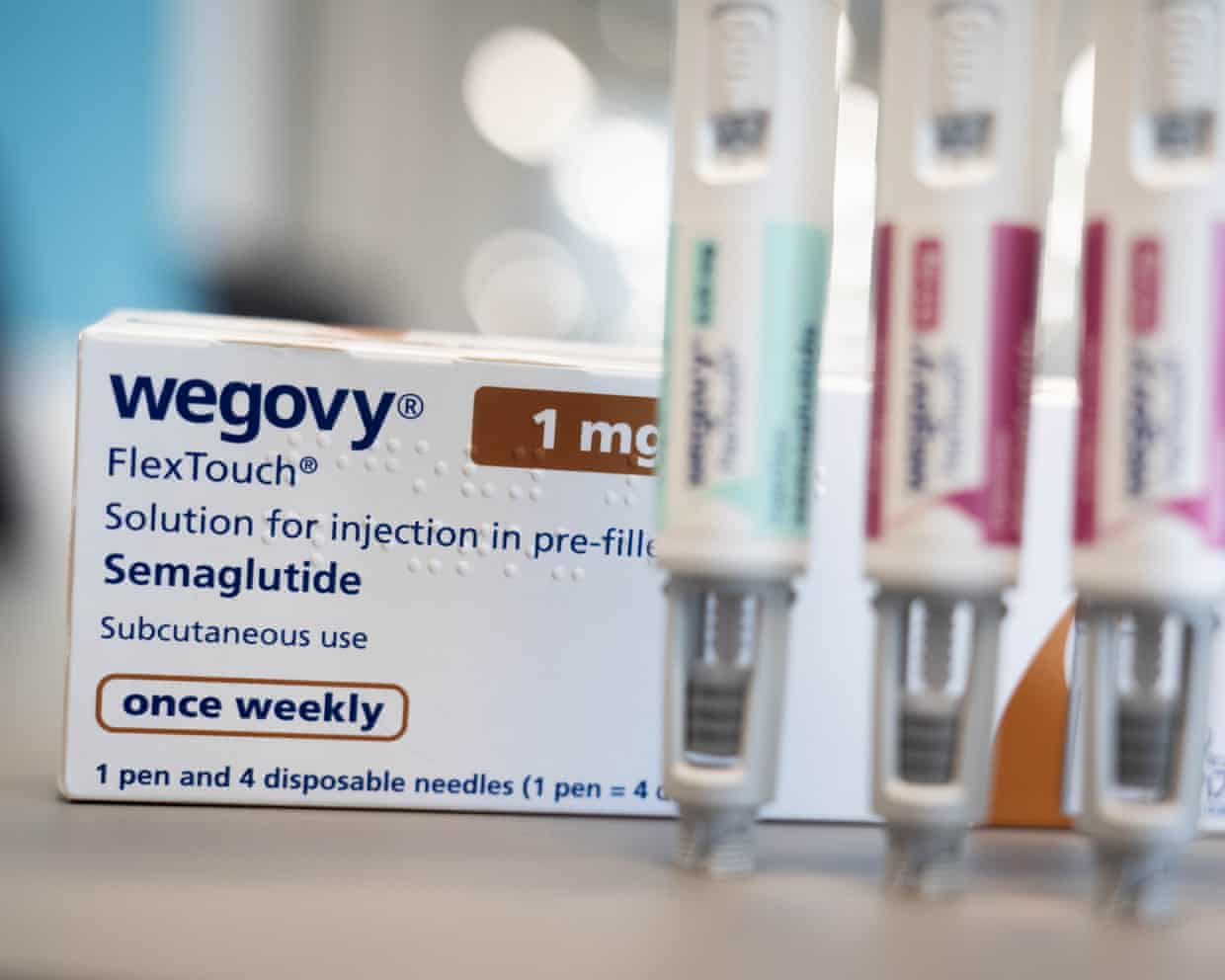
Patients taking Wegovy have nearly five times the risk of sudden sight loss of those on Ozempic, a large-scale study has found.Glucagon-like peptide-1 receptor agonist (GLP-1 RA) medicines such as semaglutide (sold as Wegovy, Ozempic and Rybelsus) and tirzepetide (sold as Mounjaro) help reduce blood sugar levels, slow digestion and reduce appetite, and have been linked to reduced risks of heart attack, fewer drug overdoses and other health benefits.But a study, published in the British Journal of Ophthalmology, found that patients taking Wegovy for weight loss had a fivefold greater chance of developing non-arteritic anterior ischemic optic neuropathy (Naion) than the diabetes drug Ozempic, while men had a three times greater risk than women.These “eye strokes” cause sudden and usually permanent vision loss (pdf) due to reduced blood flow to the optic nerve.Although rare, affecting around one in 10,000 people who take semaglutide, there was “a potential dose-dependent safety concern” for the drug, the study found.
Wegovy, Ozempic and Rybelsus – made by Novo Nordisk – all contain semaglutide, but have different dosages and formulations.Dr Edward Margolin, from the department of ophthalmology at the University of Toronto and one of the authors of the research, said Naion was likely to be “a real side-effect” of semaglutide, and faster, quicker or more aggressive weight loss would be likely to “increase the risk” of Naion.The study examined reports of side-effects submitted to the US medicines regulator, the Food and Drug Administration, through its adverse event reporting system between December 2017 and December 2024.Canadian researchers compared any reports of Naion associated with up to 2mg of weekly injectable Ozempic for type 2 diabetes; up to 2.4mg of weekly injectable Wegovy for obesity – the highest approved dose – and a daily Rybelsus tablet for type 2 diabetes.
They also examined reported side-effects from tirzepatide (Mounjaro).The study found that Wegovy had the strongest association with sudden vision loss.In contrast, the authors found no increased risk with Rybelsus tablets or tirzepatide.The authors said that the high doses of Wegovy and the fact injections were faster-acting could explain why the association was higher.In contrast, the limited absorption and slower uptake of Rybelsus tablets probably explained the absence of a detectable link, they said.
The findings came after the UK Medicines and Healthcare products Regulatory Agency issued a drug safety update in February, warning about the risk of Naion.It followed similar warnings by the European medicines regulator.Dr Alison Cave, the MHRA chief safety officer, said: “The risk of Naion in patients prescribed semaglutide is extremely low.However, as with all medicines, patients and prescribers need to be aware of the symptoms of potential side-effects, even if the risk is very small, to ensure patients receive the appropriate treatment promptly should they occur.”Samantha Mann, a consultant ophthalmologist and diabetic eye screening lead at the Royal College of Ophthalmologists, said: “This study relied on reported side-effects and so cannot prove causation or determine how common this problem truly is.
An increase in this form of optic nerve ‘stroke’ has however not been widely observed in routine clinical practice at St Thomas’ in London, where I work.Further studies are therefore needed to clarify if this increased risk is indeed real.”A spokesperson for Novo Nordisk said: “Patient safety is our top priority, and we take any reports about adverse events from the use of our medicines very seriously.We work closely with authorities and regulatory bodies from around the world to continuously monitor the safety profile of our products.”The EU patient leaflets for Wegovy, Ozempic and Rybelsus had been updated to include Naion, they added, but “based on the totality of evidence, we concluded that the data did not suggest a reasonable possibility of a causal relationship between semaglutide and Naion and Novo Nordisk believes that the benefit-risk profile of semaglutide remains favourable”.

Amazon is determined to use AI for everything – even when it slows down work
When Dina, a software developer based in New York, joined Amazon two years ago, her job was to write code. Now, it’s mostly fixing what artificial intelligence breaks.The internal AI tool she’s expected to use, called Kiro, frequently hallucinates and generates flawed code, she says. Then she has to dig through and correct the sloppy code it creates, or just revert all changes and start again. She says it feels like “trying to AI my way out of a problem that AI caused”

Apple iPad Air M4 review: still the premium tablet to beat
The latest iPad Air is faster in almost all facets, packing not just a processor upgrade but improvements to most of the internal bits that make the tablet work, providing laptop-grade power in a skinny, adaptable touchscreen device.The Guardian’s journalism is independent. We will earn a commission if you buy something through an affiliate link. Learn more.The new iPad Air M4 costs from the same £599 (€649/$599/A$999) as the outgoing M3 model from last year and again comes in two sizes

Musk’s xAI wins permit for datacenter’s makeshift power plant despite backlash
Elon Musk’s artificial intelligence company xAI won approval on Tuesday to run 41 methane gas turbines at its “Colossus 2” datacenter in northern Mississippi. That’s nearly double the amount it has been operating.The turbines will help power xAI’s massive datacenters, which house the company’s “AI supercomputers”, or giant arrays of advanced chips, which in turn power the controversial AI tool Grok, the company’s most recognizable product.The decision, made by the Mississippi department of environmental quality, MDEQ, comes amid major public opposition to the datacenter, which demands enormous amounts of electricity. Community members and environmental advocates say the cluster of gas generators will contribute to hazardous air pollution in Southaven, Mississippi

UK Society of Authors launches logo to identify books written by humans not AI
The Society of Authors (SoA) has launched a scheme to help identify works written by humans in a market increasingly flooded by AI-generated books.The scheme is the first of its kind launched by a UK trade association, and allows authors to register their books and download a “Human Authored” logo to display on their back cover.The SoA said the absence of any government measure to compel tech companies to label AI-generated output meant readers were struggling to distinguish between books written by a human, and machine-generated work based on AI models trained on copyrighted work without permission or payment.It mirrors a similar scheme launched by the Authors Guild in the US at the beginning of 2025.Mary Beard, the classicist, is one of several high-profile authors who have backed the scheme and plan to register their works on the Human Authored website

Datacenters are becoming a target in warfare for the first time
Hello, and welcome to TechScape. I’m your host, Blake Montgomery. If you enjoy reading this newsletter, please forward it to someone you think would as well.Iran is bombing datacenters in the Persian Gulf to blow up symbols of the Gulf states’ technological alliance with the United States. Added bonus: they will be extremely costly to rebuild, being among the most expensive buildings in history

‘I wish I could push ChatGPT off a cliff’: professors scramble to save critical thinking in an age of AI
Lea Pao, a professor of literature at Stanford University, has been experimenting with ways to get her students to learn offline. She has them memorize poems, perform at recitation events, look at art in the real world.It’s an effort to reconnect them to the bodily experience of learning, she said, and to keep them from turning to artificial intelligence to do the work for them. “There’s no AI-proof anything,” Pao said. “Rather than policing it, I hope that their overall experiences in this class will show them that there’s a way out

Will releasing millions of barrels of oil stockpiles really bring down fuel costs?

Lloyd’s of London stresses it is still insuring shipping in strait of Hormuz
Meta disables more than 150,000 accounts in crackdown on south-east Asian scam networks

‘Happy (and safe) shooting!’: chatbots helped researchers plot deadly attacks

Trust at 100km/h: how Bluetooth bond helps skier Neil Simpson see his way to glory

Kit clash farce looms as France set to wear special pale blue shirt against England