‘I wish I could push ChatGPT off a cliff’: professors scramble to save critical thinking in an age of AI

Lea Pao, a professor of literature at Stanford University, has been experimenting with ways to get her students to learn offline,She has them memorize poems, perform at recitation events, look at art in the real world,It’s an effort to reconnect them to the bodily experience of learning, she said, and to keep them from turning to artificial intelligence to do the work for them,“There’s no AI-proof anything,” Pao said,“Rather than policing it, I hope that their overall experiences in this class will show them that there’s a way out.
”It doesn’t always work.Recently, she asked students to visit a local museum, look at a painting for 10 minutes, and then write a few paragraphs describing the experience.It was a purposefully personal assignment, yet one student responded with a sophisticated but drab reflection – “too perfect, without saying anything”, Pao said.She later learned the student had tried to visit the museum on a Monday, when it was closed, and then turned to AI.As artificial intelligence has upended the way in which students read, learn and write, professors like Pao have been left to their own devices to figure out how to teach in a transformed landscape.
Many faculty members in the hard sciences and social sciences have pointed to the “productivity boost” AI can offer, and the research potential unlocked by its ability to process and analyze vast amounts of data.AI’s most enthusiastic proponents have boasted that the technology may help cure cancer and “accelerate” climate action.But in fields most explicitly associated with the production of critical thought – what is collectively referred to as the “humanities” – most scholars see AI as a unique threat, one that extends far beyond cheating on homework and casts doubt on the future of higher education itself in a fast-approaching machine-dominated future.American degrees often cost up to hundreds of thousands of dollars and result in decades of debt, and recent years have seen a freefall in public confidence in US higher education.With the potential for AI to increasingly substitute independent thought, a pressing question becomes even more urgent: what exactly is a university education for?The Guardian spoke with more than a dozen professors – almost all of them in the humanities or adjacent fields – about how they are adapting at a time of dizzying technological advancement with few standards and little guidance.
By and large, they expressed the view that reliance on artificial intelligence is fundamentally antithetical to the development of human intelligence they are tasked with guiding.They described desperately trying to prevent students from turning to AI as a replacement for thought, at a time when the technology is threatening to upend not only their education, but everything from the stock market to social relations to war.Most professors described the experience of contending with the technology in despairing terms.“It’s driving so many of us up the wall,” one said.“Generative AI is the bane of my existence,” another wrote in an email.
“I wish I could push ChatGPT (and Claude, Microsoft Copilot, etc) off a cliff,”“I now talk about AI with my students not under the framework of cheating or academic honesty but in terms that are frankly existential,” said Dora Zhang, a literature professor at the University of California, Berkeley,“What is it doing to us as a species?”AI criticism – or “doomerism”, as the technology’s proponents view it – has been mounting across sectors,But when it comes to its impact on students, early studies point to potentially catastrophic effects on cognitive abilities and critical thinking skills,Michael Clune, a literature professor and novelist, said that, already, many students have been left “incapable of reading and analyzing, synthesizing data, all kinds of skills”.
In a recent essay, he warned that colleges and universities rushing to embrace the technology were preparing to “self-lobotomize”.Ohio State University, where he teaches, has begun requiring every freshman to take a class in generative AI and pitched itself as the first “AI fluent” university, pledging to embed AI “across every major”.“No one knows what that means,” Clune said of the plan.“In my case, as a literature professor, these tools actually seem to mitigate against the educational goals I have for my students.”That’s the crux of what many professors in the humanities fear: that technology that may well be a cutting-edge tool in other fields could spell the end of their own.
Alex Karp, the Palantir co-founder and CEO, stoked those anxieties when he said in a recent interview that AI will “destroy humanities jobs”.On the other hand, Daniela Amodei, Anthropic’s president and co-founder – who was a literature major – said the opposite: that “studying the humanities is going to be more important than ever”.A number of tech and finance companies have recently said that they are looking to hire humanities majors for their creativity and critical thinking skills.Indeed, enrollment data at some universities suggests that the long-struggling humanities might have begun to see a resurgence in the age of AI, with early signs pointing to a reversal in decades-long decline in English majors in favor of Stem ones.Some caution that the humanities will survive – but as a province of the few.
When he predicted the end of the humanities, Karp assured that there would be “more than enough jobs” for those with vocational training,Indeed, several professors spoke about concerns that AI will exacerbate a widening divide in US higher education and that small numbers of elite students will have access to a more traditional, largely tech-free liberal arts education, while everyone else has a “degraded, soulless form of vocational training administered by AI instructors”, said Zhang,“I fully expect that we will start seeing a kind of bifurcation in education,” said Matt Seybold, a professor at Elmira College in New York, who has written critically about “technofeudalism”,Many professors talked about keeping the technology out of the classroom as a battle already lost,As many as 92% of students have reported resorting to the technology in their school work, recent surveys show, and the numbers are rapidly increasing even as growing numbers express concerns about the technology’s accuracy and the integrity of using it.
Reliance on AI among faculty is also on the rise, with observers pointing to the dystopian possibility that the college experience may soon be reduced to AI systems grading AI-generated homework – “a conversation between two robots”.Some universities have adopted AI detection software to catch artificially generated work; others prohibit faculty from directly accusing students of having used AI – as they can often be wrong.Professors said they resorted to oral interrogations, handwritten notebooks and class participation for grading purposes.Some require students to submit transparency statements describing their work process.Others have reportedly injected random words like “broccoli” and “Dua Lipa” into assignments to confuse learning models – exposing students who did not even read the prompts before pasting them into AI.
Many professors spoke of their frustration at having to sift through students’ artificially generated homework.“It creates hours of additional labor,” echoed Danica Savonick, an English professor at the State University of New York Cortland.“And makes me feel like a cop.”Some allow students to use AI for research – to a point.Karl Steel, an English professor at Brooklyn College, said that AI has helped make students’ presentations richer and more interesting – but that while they may use it to prepare, he has them speak from minimal notes and stand in front of a photo of a text they annotated by hand.
He also assigns written responses to texts only after the class has discussed them.“I suppose they could use their phones to record the conversation, feed a transcript into a chatbot and produce a paper that way,” he said.“But that is more trouble, I think, than most students would take.”Many universities’ administrations are embracing AI for instruction, research and evaluation.In some cases, AI has guided decisions about which programs to cut at times of austerity in the education sector.
More than a dozen universities have partnered with OpenAI on a $50m initiative that the company has said will “accelerate research progress and catalyze a new generation of institutions equipped to harness the transformative power of AI”,California State University has joined several of the world’s largest tech companies to “create an AI-powered higher education system”, as the university put it,Multiple universities have introduced AI majors and masters,The plans are lofty but offer little guidance on what professors are supposed to do with students who can’t read more than a couple paragraphs at a time or turn in essays generated in seconds by a machine,Left largely to themselves, some are trying to articulate clearer lines around AI use, and organize a more coordinated effort against its encroaching dominance.
Last year, the American Association of University Professors, which represents 55,000 faculty members nationwide, published a report warning that universities were adopting the technology “uncritically” and with little transparency.Some university unions have begun incorporating protections against AI in their contracts to establish oversight mechanisms and give faculty greater input – and to protect their intellectual property from feeding machines that may soon take their jobs.But much organizing against AI remains informal and via word of mouth, with faculty-led initiatives like the website Against AI, which offers resources to those trying to shield students from the intellectual ravages of outsourcing elements of their education to a machine.“Materials here are intended as solidarity solace for educators who might find themselves inventing wheels alone while their administrators, trustees and bosses unrelentingly hype AI,” reads the website, which offers a list of assignment ideas to mitigate AI use – from oral exams, to requirements students submit photographic evidence of their notes, to analog journals.Many of the professors interviewed by the Guardian said they ban AI in their classrooms altogether – but recognize their hardline approach is discipline-specific.
Megan McNamara, who teaches sociology at the University of California, Santa Cruz and created a guide for faculty across disciplines to deal with AI-related academic misconduct, noted that “cultural” differences in the humanities versus Stem disciplines, or in qualitative social sciences versus quantitative ones, tend to shape faculty members’ responses to students’ use of AI.“I think that’s just a function of one’s individual relationship with writing/reading/critical analysis,” she wrote in an email.Several professors spoke of using the issue as an opportunity to get students to think critically about technology.When she suspects someone has used AI, McNamara talks to them about it, treating the incident as an “opportunity for growth, restorative justice and enhanced authenticity in student-instructor relationships”, she said.Eric Hayot, a comparative literature professor at Penn State University, said he tries to convince his students that tech companies are trying to make them “helpless” without their product.
“These companies are giving these technological tools away partly because they’re hoping to addict a generation of students,” Hayot told the Guardian.“This is part of every single class I teach now, talking to students about why I’m not using AI, why they shouldn’t use AI.”Several professors noted that they have also begun to see mounting discomfort from students against the technology – and technology’s dominance in their lives overall.Clune, the Ohio State professor, said students have become more curious about his flip phone, which he started using after realizing his smartphone was “destroying” his attention.“I think the current crop of gen Z students are seeing that they are the guinea pigs in this giant social experiment,” said Zhang, the Berkeley professor.
“There’s a broader and increasing sense from students that something is being stolen from them,” echoed Seybold, the Elmira College professor,Seybold pointed to students’ mounting disillusion with tech more broadly,Those who are rejecting AI, he added, are often driven by environmental concerns, and suspicion of companies they view as partly responsible for shrinking democracies and a more violent world,In Michigan, for instance, that has spurred activism,The University of Michigan recently announced plans to contribute $850m toward a datacenter to provide AI infrastructure in collaboration with the Los Alamos National Laboratory – at a time when it is cutting funds for arts and humanities research and on the heels of anti-war protests on campus.
A spokesperson for the university said that the planned facility would be smaller and consume less energy than a “typical datacenter”.As pushback grows, so does an emphasis on those intrinsically human qualities that differentiate people from machines – the very qualities a humanistic education seeks to nurture.“There’s kind of defeatism, this idea that there’s no stopping technology and resistance is futile, everything will be crushed in its path,” said Clune, the Ohio State professor.“That needs to change … We can decide that we want to be human.”That idea has also been key to Pao’s approach to teaching in the age of AI.
“You plant seeds and you hope,” Pao said, of efforts that at times feel like tilting at windmills.“You hope that in the long term you’re helping them become happy human beings, who are able to take a walk, and experience things, and describe things for themselves.”

Cheltenham festival 2026: Il Etait Temps blows field away in Champion Chase – as it happened
Here is Greg Wood’s report from Wednesday’s racing, with Il Etait Temps winning the feature race and a spat between jockeys grabbing the headlines. Join us again tomorrow.Some more reaction from Cheltenham, and Rachael Blackmore, on the success of Ladies Day this year.Guy Lavender, chief executive of Cheltenham Racecourse, said: “When we decided last year to bring Ladies Day back for 2026 we were determined to really engage with female racegoers and women who had either been before, but not for a while, or had never joined us at Cheltenham in the past.“The team, working with Rachael Blackmore, have worked really hard to spread the word
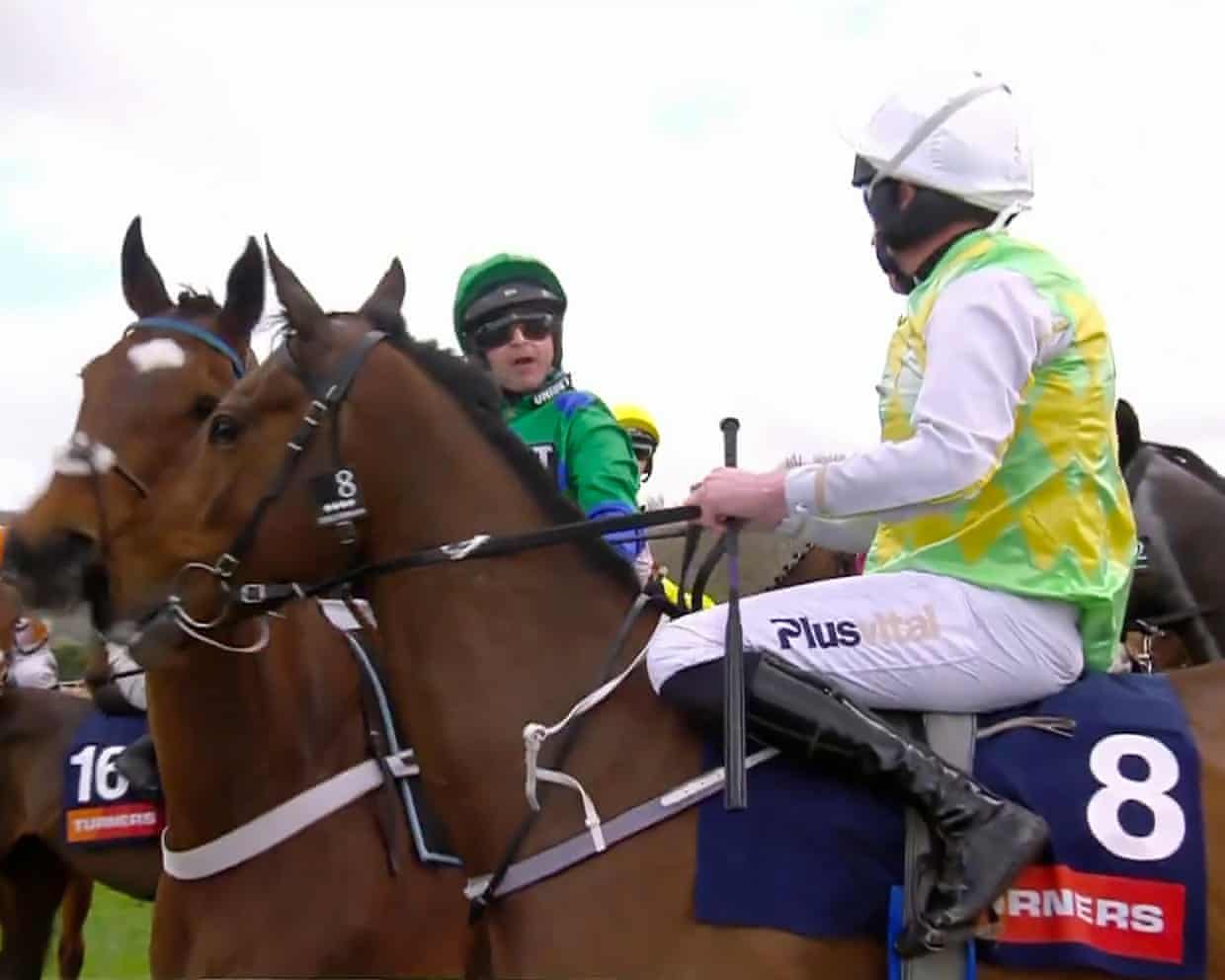
Racism row at Cheltenham as Irish rider Queally accuses De Boinville of abuse
The Cheltenham festival was mired in controversy over alleged racial abuse on Wednesday evening after Declan Queally, an Irish amateur jockey, claimed the leading British rider Nico de Boinville had subjected him to a series of verbal attacks before the start of the Turners Novices’ Hurdle.Queally and De Boinville could be seen exchanging words on ITV Racing’s coverage as 21 runners and riders jostled for position before the start of the opening race.De Boinville, who was riding the well-backed Act Of Innocence, appeared to tell Queally, who is the trainer and rider of I’ll Sort That, to “get back”, before turning his own mount to take a spot against the rail where I’ll Sort That had been standing.Queally later told the Racing Post he had been subjected to verbal abuse by De Boinville, some of which was racially based. “I was boxing for my position down the inside and there was a lot of general bunching going on,” he said

The Hundred 2026: Devine and Mooney top bidding in the inaugural women’s auction – as it happened
Birmingham PhoenixAlice Capsey, £130,000 Ellyse Perry, £100,000 Linsey Smith, £100,000 Lauren Filer, £95,000 Tammy Beaumont, £70,000 Davina Perrin, £50,000 Alana King, £37,500 Jemima Spence, £37,500 Lucy Hamilton £35,000 Eva Gray, £30,000 Cordelia Griffith, £27,500 Emma Lamb, £27,500 Phoebe Brett, £27,500 Esmae MacGregor, £16,000London SpiritNadine de Klerk, £170,000 Marizanne Kapp, £130,000 Charlie Dean, £85,000 Charis Pavely, £85,000 Mahika Gaur, £75,000 Grace Harris, £70,000 Amy Jones, £70,000 Deandra Dottin, £37,500 Sterre Kalis, £27,500 Marie Kelly, £20,000 Phoebe Turner, £20,000 Seren Smale, £15,000 Lucy Higham, £15,000 Josephine Groves, £15,000Manchester Super GiantsPaige Scholfield, £115,000 Sophie Ecclestone, £110,000 Meg Lanning, £95,000 Smriti Mandhana, £90,000 Ryana MacDonald-Gay, £75,000 Kathryn Bryce, £65,000 Richa Ghosh, £50,000 Mady Villiers, £45,000 Grace Ballinger, £42,500 Maitlan Brown, £40,000 Grace Scrivens, £40,000 Jo Gardner, £17,000 Natasha Wraith, £15,000 Rebecca Tyson, £15,000MI LondonHayley Matthews, £120,000 Danni Wyatt-Hodge, £110,000 Nic Carey, £95,000 Melie Kerr, £80,000 Kira Chathli, £80,000 Chinelle Henry, £70,000 Kirstie Gordon, £55,000 Hollie Armitage, £45,000 Alexa Stonehouse, £42,500 Tara Norris, £35,000 Alice Davidson-Richards, £30,000 Alice Monaghan, £27,500 Ellie Threlkeld, £15,000Southern BraveLauren Bell, £140,000 Issy Wong, £130,000 Tilly Corteen-Coleman, £105,000 Maia Bouchier, £85,000 Laura Wolvaardt, £75,000 Sarah Glenn, £75,000 Jemimah Rodrigues, £60,000 Sophie Molineux, £47,500 Jodi Grewcock, £30,000 Lizelle Lee, £27,500 Rebecca Odgers, £15,000 Phoebe Franklin, £15,000 Daisy Gibb, £15,000Sunrisers LeedsDanielle Gibson, £190,000 Annabel Sutherland, £130,000 Phoebe Litchfield, £120,000 Jess Jonassen, £110,000 Cassidy McCarthy, £65,000 Kate Cross £50,000 Deepti Sharma, £27,500 Bryony Smith, £27,500 Lauren Winfield-Hill, £27,500 Hannah Baker, £18,000Trent RocketsBeth Mooney, £210,000 Nat Sciver-Brunt, £140,000 Ash Gardner, £100,000 Sophia Dunkley, £78,000 Kim Garth, £42,000 Emma Jones, £35,000 Bess Heath, £32,500 Katie Levick, £32,500 Ailsa Lister, £30,000 Millicent Taylor, £27,500 Georgia Elwiss, £27,500Welsh FireSophie Devine, £210,000 Freya Kemp, £120,000 Em Arlott, £110,000 Georgia Wareham, £100,000 Georgia Voll, £80,000 Ella McCaughan, £30,000 Heather Graham, £27,500 Sarah Bryce, £25,000 Abi Norgrove, £21,000 Fi Morris, £20,000 Sophia Smale, £20,000 Grace Thompson, £20,000 Grace Potts, £15,000And with that, time to call it a day.If there is something tawdry, even dull, about a player auction, the tectonic plates shifted today. Six female players sold for more than £140,000 each – and the big earners weren’t necessarily the ones you would have guessed beforehand.The elephant in the room was how few women were in the room, so let’s work on that for next year. Neither of the Pakistan players, Sadia Iqbal and Fatima Sana were picked up and this will be a thread to pick up on Thursday

Jim Ratcliffe gives up Ineos Grenadiers naming rights in €100m rebrand deal
Jim Ratcliffe’s Ineos Grenadiers cycling team will be renamed and rebranded with a new lead sponsor and kit before the start of this year’s Tour de France in Barcelona on 4 July.The Guardian understands that while Ratcliffe and the Ineos head of sport, Dave Brailsford, will retain ownership and management of the British team, the new title sponsor will be the Danish IT supplier Netcompany.It is believed that the Copenhagen-based company will, over five years, invest about €100m (£86m) in the team, who are enjoying renewed success this spring under the stewardship of Brailsford and Geraint Thomas, the 2018 Tour de France winner who retired last year.However, Ineos and fellow sponsor TotalEnergies will also continue to support the team. The additional investment will mean Ineos relinquishes naming rights, but it will allow Ratcliffe’s team to compete more effectively at the highest level in Europe’s grand tours

Cheltenham festival day three: Shantou can star in the Stayers’
The Stayers’ Hurdle has lost its “feature race” slot as the fifth event on the third day at Cheltenham to the Ryanair Chase, but it is likely to be the bigger hit of the two with punters as the 11-runner field is rich with possibilities.Teahupoo and Bob Olinger, the past two winners of the race, represent the old guard in three-mile hurdling, while Kabral Du Mathan, Honesty Policy and Ma Shantou are all young, progressive stayers with their best years ahead of them.Teahupoo has been a solid favourite for Thursday’s race since December, when he beat Bob Olinger by seven lengths in the Grade One Christmas Hurdle at Leopardstown, but neither horse has much in hand of their younger rivals on ratings and this could be the year for a handing-over of the baton.Kabral Du Mathan was a ready winner of the two-and-a-half-mile Relkeel Hurdle on New Year’s Day but his stamina is unproven over three and Ma Shantou (3.20), a dual winner over track and trip, makes more appeal

Ukraine accuses IPC of ‘systemic pressure’ and pro-Russian bias at Winter Paralympics
Team Ukraine have launched a stinging attack on the International Paralympic Committee and Winter Paralympics organisers, claiming they have been under “systemic pressure” to reduce their presence at the Milano Cortina Games.The Ukraine National Paralympic Committee has made four specific allegations against the IPC and the Milano Cortina organisers, alleging mistreatment of its athletes and a “systematic” attempt to remove flags from the team base and spectators.It alleges that representatives of the Games organising committee, the OCOG, forced the removal of the Ukrainian national flag from inside the Paralympic village. It claims that the gold medallist in the para biathlon, Oleksandra Kononova, was told to remove earrings bearing the flag and the message “Stop War” as she prepared to stand on the medal podium. It also claims that the family of the cross-country skier Taras Rad had Ukrainian flags taken from them as they watched him compete

Billionaire Zara founder Amancio Ortega to receive €3.23bn dividend

Sir Ronnie Hampel obituary
Atlassian lays off 1,600 workers ahead of AI push

Binance sues Wall Street Journal over reporting on Iranian sanctions

Rory McIlroy hopes to defend Players Championship despite back injury
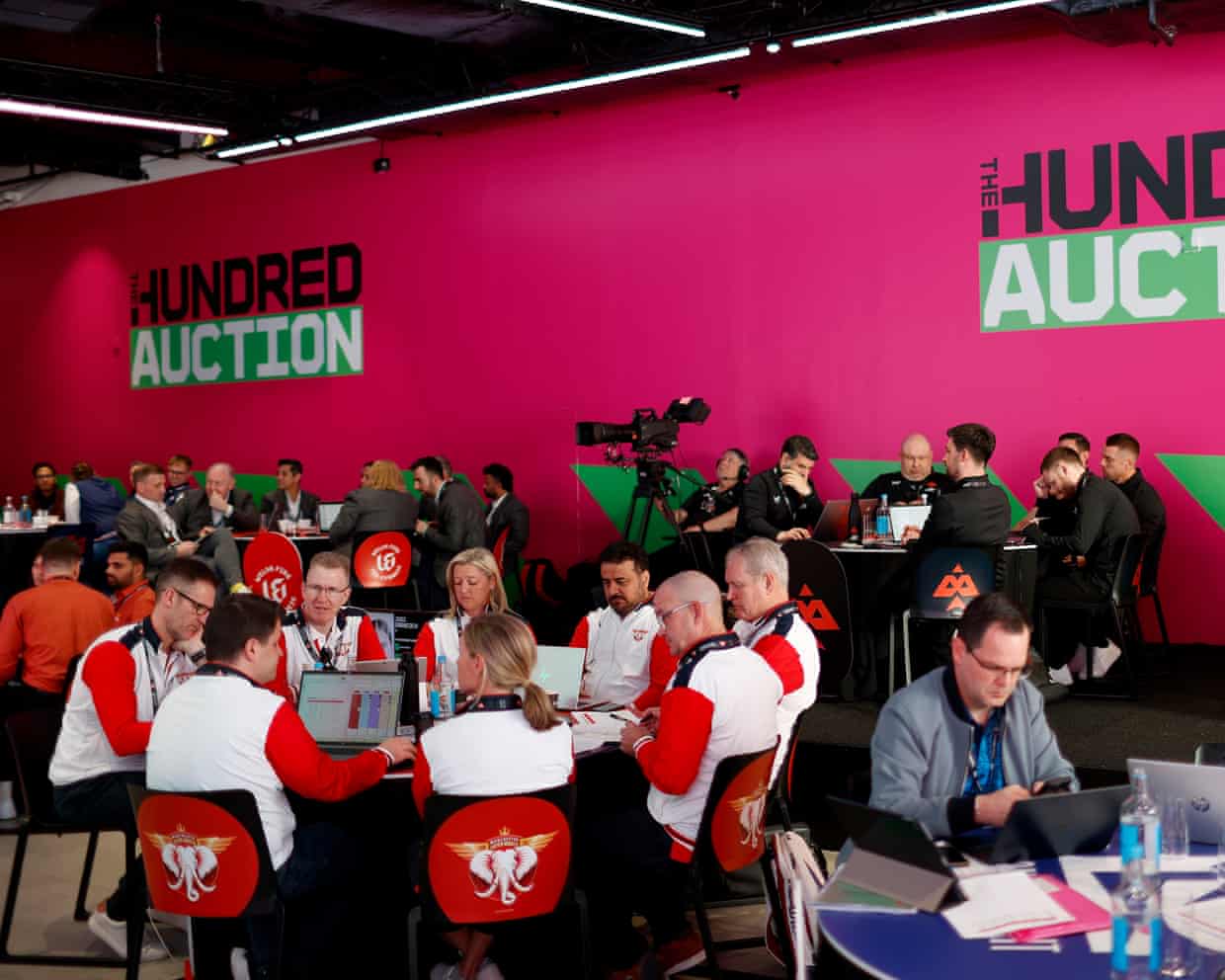
A historic day at Hundred auction but barely any women were there to see it