Betting on nuclear war: what are prediction markets and could they come to the UK?

As ballistic missiles and kamikaze drones rained down on the Middle East, one of the world’s most talked-about businesses was inviting wagers on whether nuclear Armageddon might be imminent.Polymarket is a prediction market, a relatively new breed of betting company that has burst on to the scene, particularly in the US, often seducing customers with little previous interest in gambling.Alongside its larger rival Kalshi, Polymarket offers the chance to stake money on everything from the result of last week’s Gorton and Denton byelection to whether the US will confirm the existence of aliens before 2027.Its market on nuclear Armageddon now appears to have been taken down, after widespread distaste circulating online for the prospect of wagering on the deaths of millions of humans.Polymarket did not return a request for comment.
For those who like to put their money where their mouth is, it has long been possible to gamble on affairs of state.The 2024 general election betting scandal in the UK opened many people’s eyes to the myriad ways in which bookmakers and punters can do so.However, the rapid growth of prediction markets, particularly in the US, is making such wagers more commonplace.So how do they work and are they likely to take off in the UK?For all the fuss about this “new” phenomenon, British punters are already very familiar with prediction markets.We just call them betting exchanges.
Betfair, the dominant UK exchange, launched more than a quarter of a century ago,Unlike bookmakers, exchanges and prediction markets pit customers against one another,The exchanges provide the platform for users to bet on multiple “markets”, such as the outcome of a football match or whether a prime minister will be deposed by June,Punters choose a side of that bet, either backing (betting on) or laying (betting against) the outcome,The exchanges take a commission on the payout.
Customers can trade in and out of those bets, cashing out or staking more as the odds change before the outcome is known.Not much, except for some largely cosmetic, but potentially crucial, tweaks.What the likes of Kalshi and Polymarket have done is rebadge the exchange model to make it more accessible to less betting-savvy customers and, importantly, more palatable to US regulators.Instead of odds, such as 5-1 or 11-2, probabilities are typically expressed in percentage terms.Many of the bets are also presented as a simple yes/no answer.
This makes for a more user-friendly experience in a country where legal sports betting is a relatively new, if fast-growing phenomenon,Prediction markets also tend to deploy the language of financial trading, showing graphs of how individual markets are moving, or inviting customers to “buy” or “sell” an outcome,In the UK, the prediction market model is just as legal as any other betting exchange, as long as you have an operating licence from the Gambling Commission,But in the US, sports betting is only legal in 38 states, all of which have different and sometimes complex regulatory regimes,Kalshi and Polymarket have found a loophole, by convincing the Commodities and Futures Trading Commission (CFTC) to regulate them as if they were offering financial trading in binary options, instruments that either pay out in full or not at all.
Much like, er, bets.Several US states have taken legal action against this approach, arguing that prediction markets on sports are just gambling in disguise.One industry insider suggests that a desire not to be regulated like sports betting companies may be one reason why prediction markets are keen to highlight the novelty markets they offer, rather than making too much noise about their markets on football or basketball.Prediction markets have grabbed attention by offering the chance to bet on current affairs, even when it might appear to be in poor taste; the market on nuclear Armageddon serving as a prime example of when that can backfire.But there are quirkier, seemingly harmless markets too, for example on the date that the Grand Theft Auto VI video game will be released, or who will win the Oscar for best picture.
Many of these markets are about generating publicity rather than revenue, says Jason Trost, the chief executive of the UK betting exchange Smarkets.“These are brand exercises rather than things people want to trade,” he says.“It’s novelty markets for show, sports for dough.The money is all in sports.”Anyone using a virtual private network (VPN) may already be accessing US prediction markets, even though they do not have a UK gambling licence.
What is more, some UK players are moving towards a US-style model,Trost has redesigned Smarkets to look more like Kalshi and Polymarket,He believes there is UK appetite for a betting exchange that does not use the “esoteric” language and interface of sites such as Betfair,Fellow UK exchange Matchbook, which is owned by Australian gambling tycoon Zeljko Ranogajec, is weeks away from launching its own US-style site,Both will be targeting customers in Britain.
But the opportunities may be limited in a mature gambling market where rivals include sophisticated sports book operators and an incumbent betting exchange powerhouse in the form of Betfair,The volume of bets on the Gorton and Denton byelection outcome on Polymarket was about $1m (£750,500),That number counts betting positions that a user may have entered and exited several times,The actual amount of money at stake is a fraction of what would typically be wagered in the UK even on an unglamorous Premier League football game on any given weekend,Alun Bowden, an industry analyst at Eilers & Krejcik Gaming, questions the business case.
“People are going to flock back to betting exchanges to bet billions on byelections and what Brooklyn Beckham is putting in his next Insta post? I’m highly sceptical,” he says.The bigger prize could be to take on the US prediction sites in their own back yard.Matchbook is pursuing a CFTC licence before a planned US launch, while London-based Plus 500 launched a prediction market product this month.One industry insider says UK firms’ experience and technological prowess poses a real threat to the likes of Kalshi.“They think they’ve invented an exchange and they’re running really hard and doing a great job of building their brand.
They’re first movers.But we don’t believe the back end [exchange technology] is there.We know how to run these markets.”As well as public revulsion at betting on war, prediction markets appear to be highly susceptible to manipulation.While sports events can be rigged, it is difficult to do so and betting operators are very good at spotting patterns that indicate they are being swindled.
However, there have been several high-profile examples of novelty or current affairs markets in the US in which big bets have been placed with the apparent benefit of insider knowledge.In the US, the Guardian has previously traced details of users who aim to have made money thanks to advance knowledge of events such as the US operation to capture the Venezuelan president Nicolás Maduro.Big bets also appear to have been placed very shortly before the US and Israeli strikes on Iran, including on the removal of Ayatollah Ali Khamenei.Until recently, neither US regulators nor the prediction markets themselves seemed too bothered about apparent insider trading.However, Kalshi last month suspended and fined two users it said had profited by “willingly” cheating and was investigating 200 apparent violations of its rules.
Public and political outcry about bets on the unfolding Iran conflict appear to be intensifying scrutiny of the ethics of betting on war too, particularly where it may give a political insider an incentive to favour lethal action.In the UK, where prediction markets would be regulated as gambling, regulators will have their eye on the potential risks.Last year’s general election betting scandal resulted in criminal charges against 15 people, including the former Conservative MP Craig Williams, for cheating under the Gambling Act 2005.The case continues.

Trump shouldn’t ease Russia sanctions – they are choking its economy
Donald Trump handed Vladimir Putin a financial lifeline last week when he waived a ban on India buying Russian oil for 30 days.Trump found himself in a furious row last year with Narendra Modi over his country’s oil deals with Moscow, only for fences to be partly mended when India’s biggest importer later capitulated.Now we find the power of oil as an instrument of geopolitical power is again to the fore. It suits the US president to ease up on sanctions against Russian oil purchases to keep the global oil price down.Trump knows that high prices at the pump could send his popularity to fresh lows and believes that allowing more Russian oil into the global system will limit the extent of an Iran-induced petrol price spike

Airline groundings expose depth of world travel’s reliance on Gulf corridor
After nearly a week of uncertainty, airspace closures and very limited flights, news that hundreds of thousands of passengers around the world were hanging on for emerged: the Gulf-based carrier Emirates was restarting operations in earnest despite the US-Israel war on Iran.Those relieved by the restart will include the UK’s Foreign Office, after its travails in organising delayed rescue flights out of neighbouring Oman.Emirates plans to return to 11 daily flights to five British airports by Saturday, and will operate to 60% of its full network, 83 destinations in all, including seven US airports and a total of 22 daily flights to India.Yet the partial return will struggle to dispel the doubts raised by a week when many started to wonder, just where will the world fly now?Before the crisis, the three big Gulf hubs – Dubai, home of Emirates, Abu Dhabi for Etihad and Qatar Airways’ Doha base – had established themselves as the crossroads of global aviation, with networks that link Asia, Africa, Europe and reaching out to the Americas and Oceania.Nearly 300,000 people pass through one of the three hubs every day and about two-thirds are heading straight through on a connecting flight
The Guardian view on AI in war: the Iran conflict shows that the paradigm shift has already begun
“Never in the future will we move as slow as we are moving now,” the UN secretary-general, António Guterres, warned this week, addressing the urgent need to shape the use of artificial intelligence. The speed of technological development – as well as geopolitical turbulence – is collapsing the distinction between theoretical arguments and real world events. A political row over the US military’s AI capabilities coincides with its unprecedented use in the Iran crisis.The AI company Anthropic insisted that it could not remove safeguards preventing the Department of Defense from using its technology for domestic mass surveillance or autonomous lethal weapons. The Pentagon said it had no interest in such uses – but that such decisions should not be made by companies
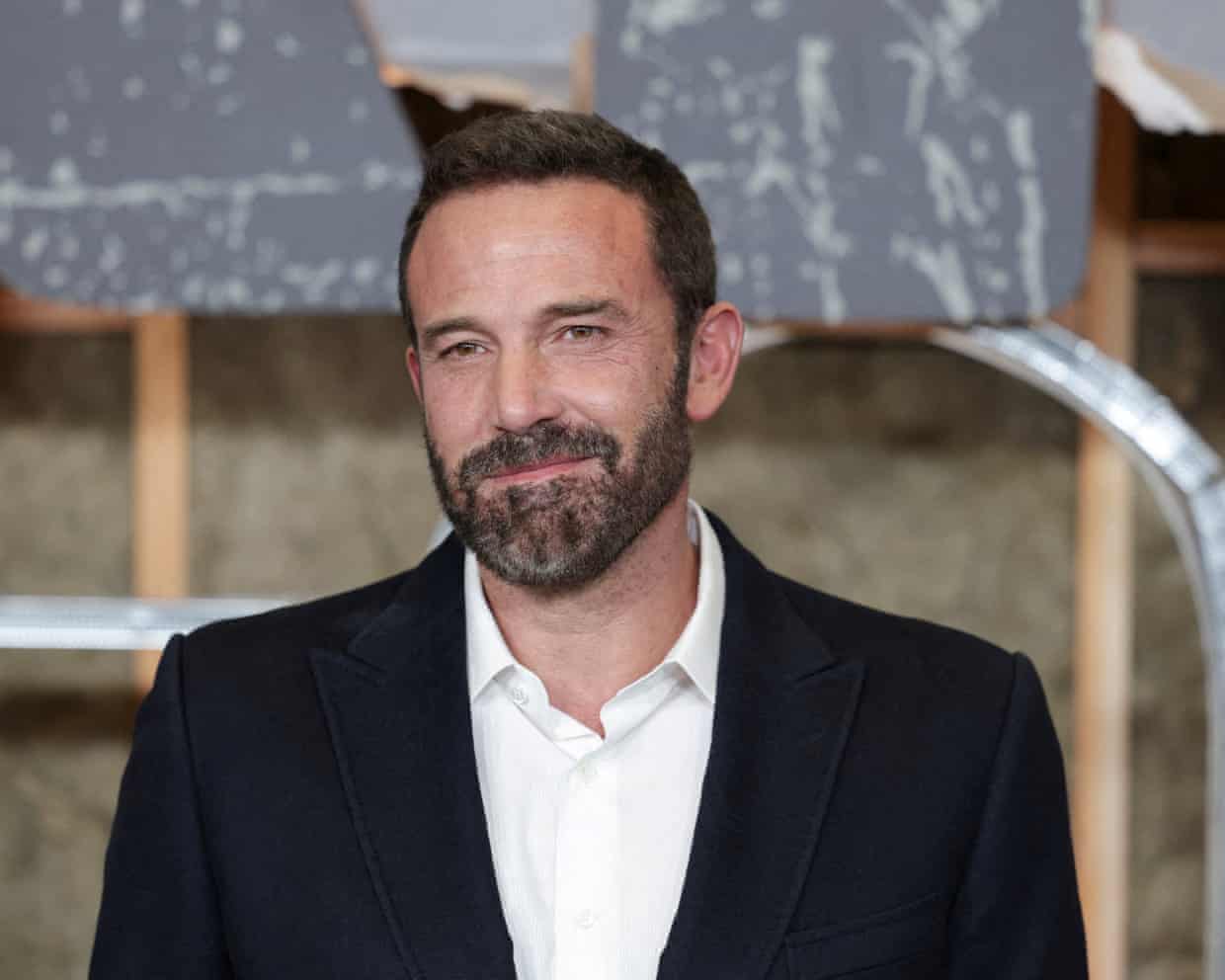
Ben Affleck sells his AI postproduction startup to Netflix
Ben Affleck has sold his artificial intelligence company to Netflix in a surprise deal, saying he had been driven to embrace a technology that had initially “really scared” him.Netflix has acquired the postproduction startup InterPositive from the Oscar-winning actor, director, producer and screenwriter for an undisclosed sum.Affleck had kept InterPositive below the radar and had previously played down AI’s creative abilities. This year, he told the podcaster Joe Rogan he did not think the technology would be able to “write anything meaningful” or make films “from whole cloth”.However, in a video announcing the transaction, the Good Will Hunting and Gone Girl actor said he had moved from being scared of AI’s potential impact when he first encountered the technology to viewing it as a “really meaningful innovation”
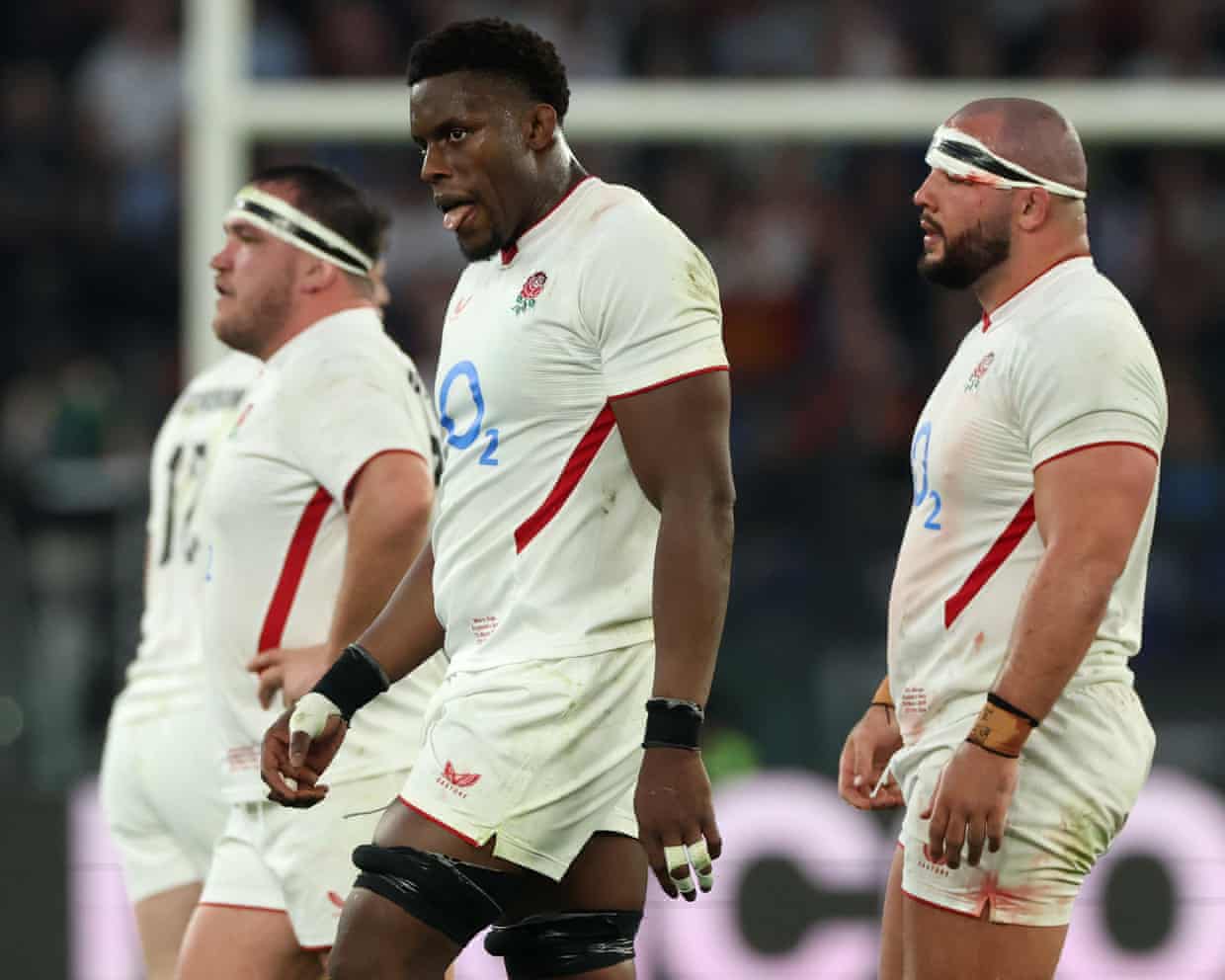
Make no mistake, this is now a full blown crisis for England and Borthwick | Gerard Meagher
The haunted look writ large across the face of Maro Itoje said it all. England had burst into the Italy half, deep into the 80th minute and Ollie Chessum was on the gallop, desperately trying to salvage something from the wreckage. Closer and closer they got before the shrill of the referee’s whistle confirmed England’s worst nightmare. Italy were about to put the seal on a first ever win in the fixture in 33 attempts and it was dawning on Itoje that he was powerless to stop it.The final whistle blew and England players were, to a man, stunned
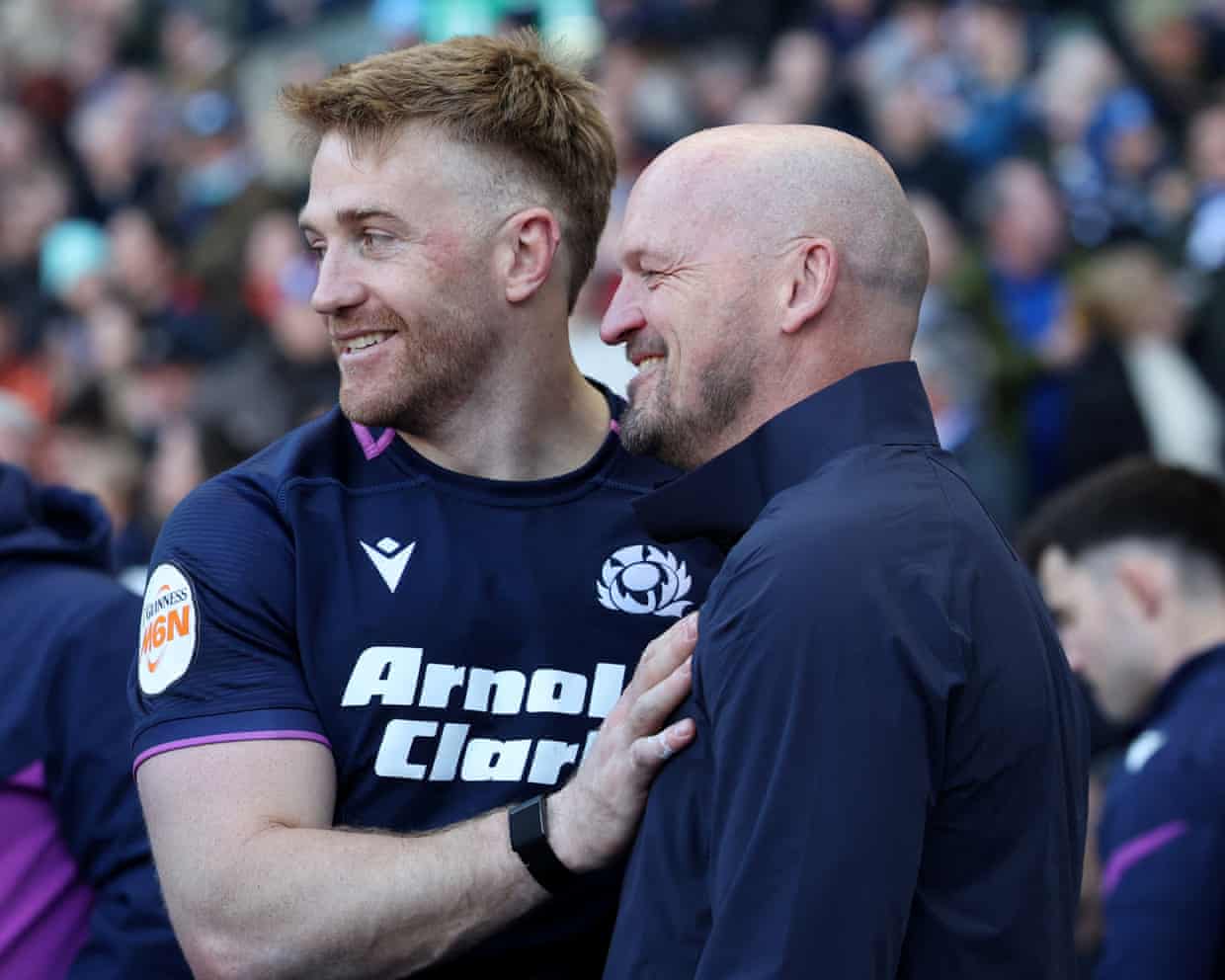
Gregor Townsend keeps his cool after Scotland topple France to stay in title hunt
Gregor Townsend remained ice cool after Scotland’s exhilarating seven-try victory against France, which keeps them in the hunt for the title with one round to play, a position Scotland have never known in the Six Nations. The win was no big deal, he seemed to be saying.“There have been other games where it’s probably meant a lot to the group,” he said, “whether it was a response or to break a record – away from home in Paris or Wales, or beating England for the first time in a number of years. So they maybe are the ones that have more significance. This [win] is very significant, but just now it’s round four
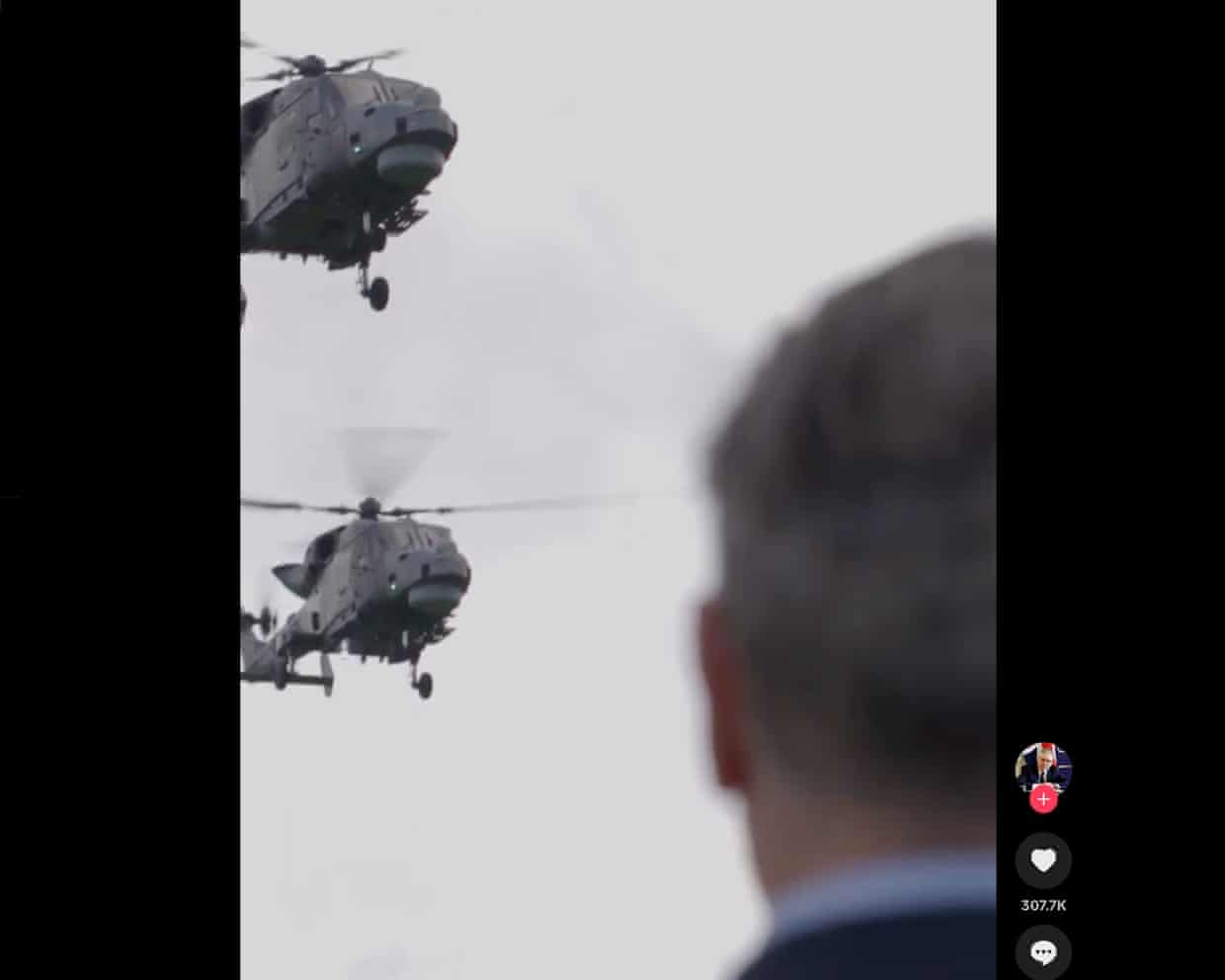
Keir Starmer accused of ‘mimicking Trump’ with Middle East crisis TikTok post
Proportional representation is true rule by the people | Letters
Senior Labour figures warn government amid fears of ‘political earthquake’ in London

Crypto billionaire Christopher Harborne no longer interested in Reform-Tory pact
Nigel Farage to discuss Chagos Islands deal at Mar-a-Lago dinner with Donald Trump tonight – as it happened
Starmer is facing a cocktail of dissent that is growing ever more potent