The UK scandal of women handcuffed while in labour: ‘I was so shocked when the restraints weren’t removed’
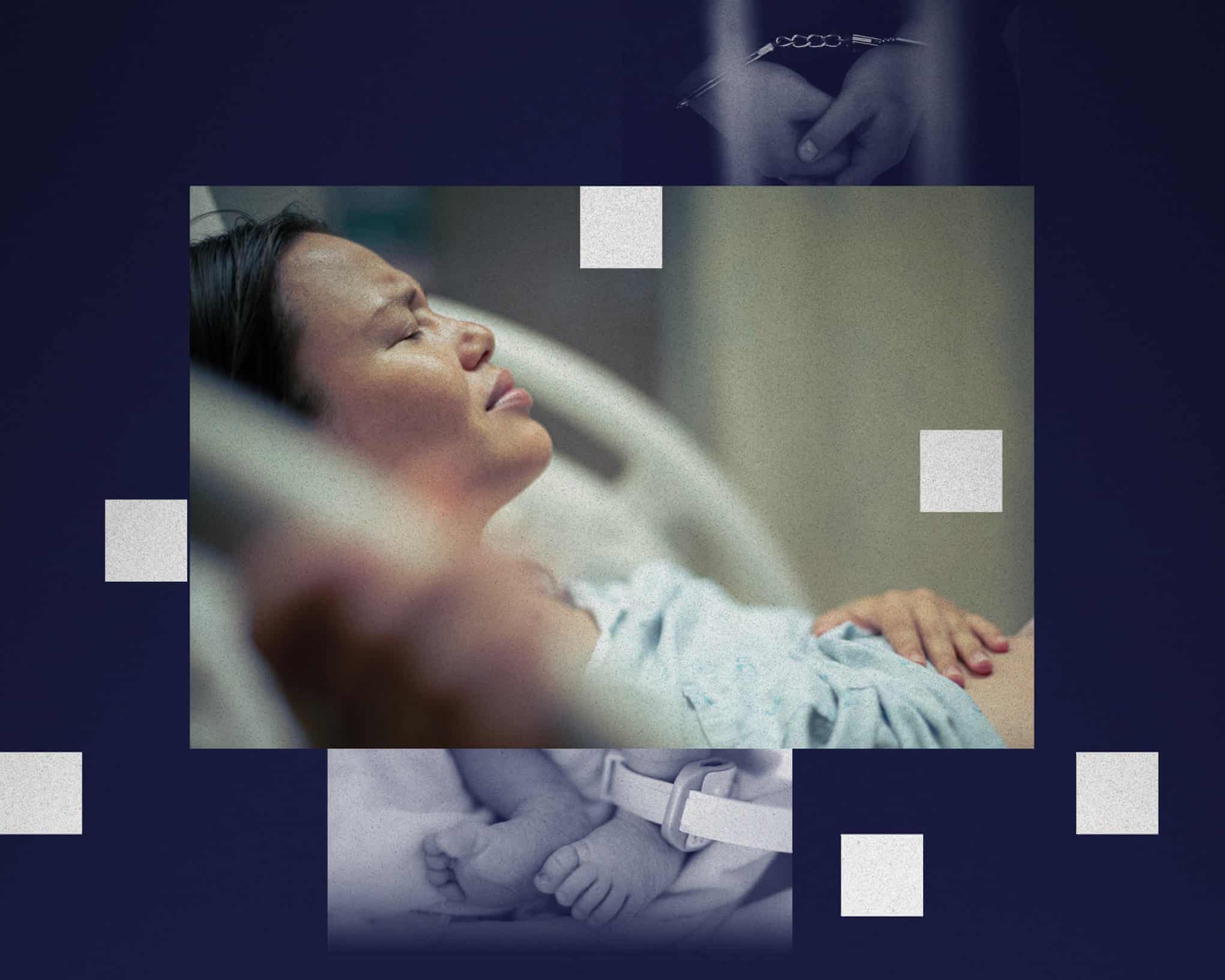
Pregnant women prisoners in England are being handcuffed to prison officers – often male – during intimate vaginal examinations and long, agonising births.Will this dehumanising treatment be stopped?The worst moment of Joanna’s labour was an internal examination.She was handcuffed with her legs splayed apart and a female prison officer at the foot of the hospital bed saw everything.She had prepared for the arrival of her first baby as carefully as she could.But she understood that birth can be unpredictable – and this was complicated by the fact that, during the latter part of her pregnancy, she was serving a jail sentence.
Joanna was a model prisoner who followed the rules.She had been convicted for a non-violent drugs offence and was not deemed to be at high risk of escape, particularly not in the throes of an agonising labour.She hoped to use hypnobirthing, breathing and relaxation techniques to make the birth calmer and more comfortable.Thanks to information provided by the charity Birth Companions she knew it was her right not to be handcuffed during labour.She had highlighted the handcuffing points in the booklet.
When Joanna went into labour on 30 December 2022, she was taken to hospital, handcuffed and chained to a prison officer.She remained so for the 36 hours of a long, difficult birth.Any thoughts of hypnobirthing went out of the window.“I was crying so much that my nose was too blocked to use any of the breathing techniques,” Joanna says.“I’m the kind of person who is good at researching my rights.
So many people had told me during my pregnancy that I wouldn’t have to give birth in handcuffs.I was taken to hospital chained to an officer with handcuffs but assumed they would be removed at the entrance to the hospital.“I was so shocked when the cuffs weren’t removed.When I told the prison guards who had brought me to hospital about what the Birth Companions booklet said, they replied: ‘We don’t know what that book is, we’re not going to abide by it.’ I felt so scared.
It was my first baby, I didn’t know what to expect from birth and I wasn’t a risk to anyone.”Joanna gave an anonymous interview to Channel 4 News in 2025 about her ordeal.The prisons minister, Lord Timpson, subsequently announced last June that an independent investigation would be commissioned and carried out by the prisons and probation ombudsman (PPO) into the practice in England of handcuffing pregnant prisoners during antenatal appointments, intimate examinations and labour.Timpson said reports of pregnant women being handcuffed during labour were “deeply concerning”.However, information on the number of prisoners handcuffed during labour and birth is not routinely collected by officials.
The Royal College of Midwives and the Royal College of Obstetricians and Gynaecologists have called for an investigation into the use of restraints on pregnant prisoners.While lawyers, campaigners and female prisoners and ex-prisoners welcome the fact that an investigation into the practice is now taking place, they have concerns.Jane Ryan, a partner at solicitors Bhatt Murphy, is representing six female prisoners who were handcuffed in these circumstances, including to male officers.She says they were subjected to “appalling mistreatment”.“This barbaric practice should never have happened on one occasion, let alone across multiple prisons,” Ryan says.
“The use of restraints happened repeatedly, lasted for days, and directly interfered with women’s experience of pregnancy and birth.Restraints took place during the extreme physical pain of labour, including during contractions and the most intimate vaginal examinations.”Ryan believes that from 2021 to 2025, the period to be covered by the investigation, about 500 pregnant women were imprisoned and that about half may have given birth while incarcerated.She says the investigation does not comply with human rights standards and is calling for state funding for legal representation to ensure a level playing field and public hearings where evidence can be tested and witnesses – including prison officers and private contractors – held to account and victims’ voices are heard.The firm has sent a “pre-action” letter to the justice secretary, David Lammy, arguing that the investigation must be independent, allow oral evidence and legal representation, and include appropriate scrutiny of systemic policy failures and individual misconduct.
“We fear the Ministry of Justice will water down the investigation into a tick-box exercise,” says Ryan.“An investigation that does not listen to the women who were shackled is not an investigation – it is a whitewash.We are calling on the secretary of state for justice to confirm my clients will be able to ask questions, consider all documents and ensure that the investigation respects the victims’ rights.”When the Guardian approached the Ministry of Justice for comment we were referred to the PPO.However, a PPO spokesperson said: “The question of legal funding is a matter for the Ministry of Justice and is not a decision for the PPO.
The PPO will be engaging with women who have been restrained on hospital escort during the investigation.The PPO has agreed in principle to carry out an independent investigation at the request of Lord Timpson, but we have not yet been formally commissioned and the terms of reference are still to be finalised.We anticipate this will happen shortly.”Timpson has said that the Prison Service has already conducted a “deep dive” and identified that greater clarity is required about what constitutes “exceptional circumstances” relating to the restraint of pregnant women, along with recording the sex of staff undertaking these escorts, which is not a current policy requirement.Laura, a Latin American woman living in the UK, was jailed for a non-violent drugs offence and didn’t know that she was pregnant when she was arrested.
A routine urine test confirmed the early stages pregnancy.Like Joanna, she was a model prisoner who followed the rules and was not deemed to be high risk.Like Joanna, too, she was handcuffed for an extended period – well over 48 hours after being taken to hospital to give birth, including for 12 hours after the birth was induced when she was enduring extremely painful contractions.She was taken to hospital to give birth on 6 February 2023 and her baby was not born until 8 February.Both women had difficult and protracted labours.
Joanna had a postpartum haemorrhage and had bruising and soreness to her left wrist as a result of being handcuffed for many hours.Laura also had a postpartum haemorrhage and lost a lot of blood.It was classified as a “critical incident”.“I was handcuffed for antenatal appointments and intimate examinations when I was pregnant,” says Laura.“But the worst part was being handcuffed during labour.
When I tried to sleep, took a shower or went to the toilet, I was handcuffed to an officer by a long chain.Being induced was so painful and the handcuff was also really hurting me.Giving birth is such a delicate moment – I was so vulnerable and it really messed with my head.The indifference and lack of empathy from the guards made my labour and my stay in hospital very stressful and traumatic.”Both women are bringing a legal action for assault, battery and human rights breaches.
Both had male and female prison officers present during labour and had previously experienced violence at the hands of men, so were particularly fearful of being guarded by male prison officers at a time when they were so vulnerable and exposed.“I felt like I was being mentally tortured during my labour,” says Joanna.“I kept saying to the prison guards ‘please can you take the handcuffs off’.But they were just laughing and joking about the next holiday they were going to go on.I was showering handcuffed while I was in labour and felt so degraded I couldn’t stop sobbing.
I felt being handcuffed could increase the risk of me slipping and falling.In the end I gave up begging them to remove the handcuffs because I was so exhausted by the time I had to push my baby out.”Joanna recalls: “At one point I was trying to sleep.The room was darkened and I was handcuffed to a male officer.I was scared that he might assault me.
Even after the birth I felt exposed trying to breastfeed my baby in front of them.“After my daughter, Daisy, was born, I asked them to take photos of her.But they didn’t allow me to be in them.In all the photos an officer’s hands leaning on the crib are included.I felt so dehumanised by having the prison guards involved.
I felt like they took my first birth away from me.”“It is outrageous that the practice of shackling imprisoned women in hospital is still happening,” says Naomi Delap, CEO of Birth Companions.“This is a symptom of a broken system, unable to provide safe and decent care, unable to acknowledge medical risk, and unable to show basic compassion.This is also a closed and secretive system.For years we have argued for women to be helped to understand their rights in custody, and to know about the policies that determine their care.
The fact that they don’t allows harmful treatment to continue unchecked.”Joanna says that although she has now left prison far behind and knew as soon as she got pregnant that she would not get involved in crime again, she continues to fight for fundamental changes to a prison system that handcuffs and chains female prisoners while they give birth.“The Prison Service needs to be held accountable,” she says.“Even though we are prisoners, we are human.I just want to stop what happened to me from happening to other women.
”Laura, who has left the UK, says: “I’m back in my home country now but I decided to get involved in this legal action because this treatment of pregnant women prisoners needs to end.It is inhumane, and dangerous for mothers and babies.I was lucky that I was able to deliver my baby, but if action is not taken many other women and their babies will be at risk.”Some names have been changed
The UK scandal of women handcuffed while in labour: ‘I was so shocked when the restraints weren’t removed’
Pregnant women prisoners in England are being handcuffed to prison officers – often male – during intimate vaginal examinations and long, agonising births. Will this dehumanising treatment be stopped?The worst moment of Joanna’s labour was an internal examination. She was handcuffed with her legs splayed apart and a female prison officer at the foot of the hospital bed saw everything. She had prepared for the arrival of her first baby as carefully as she could. But she understood that birth can be unpredictable – and this was complicated by the fact that, during the latter part of her pregnancy, she was serving a jail sentence

More than 220m children will be obese by 2040 without drastic action, report warns
Without drastic action more than 220 million children could have obesity by 2040, an international report has warned.Globally, in 2025 about 180 million children were obese. But new figures from the World Obesity Federation suggest that by 2040, about 227 million of all five- to 19-year-olds will have obesity and more than half a billion will be overweight.According to the federation’s 2026 world obesity atlas, that would mean that at least 120 million school-age children would have early signs of chronic disease caused by their high body mass index (BMI).Someone is classed as obese if their BMI is 30 or above, and overweight if it is above 25
Unemployment set to hit 5.3% this year amid ‘worrying’ rise in young jobless
Unemployment in the UK is set to peak this year at a higher rate than previously estimated, with a “worrying” increase in young people being out of work, the government’s official forecaster has said.The Office for Budget Responsibility (OBR) said unemployment will peak at 5.3% this year, up from its previous forecast in November of 4.9%.The figure would be the highest unemployment level since the final quarter of 2020, when the UK was in lockdown during the Covid pandemic
Recruiting nurses overseas must work for all | Letter
Your report on the 93% fall in overseas nurses (Drop in overseas workers is ‘car crash’ for UK hospitals and care homes, say experts, 26 February) lays bare how dependent the UK has become on international recruitment. When visa policy shifts can trigger warnings of an “impending car crash”, it shows a workforce model built on fragility, not resilience.For years, the UK – like other high-income countries – has relied on internationally educated nurses to fill domestic shortages. That may have eased immediate pressures, but it masked chronic underinvestment in training, pay and retention at home. Tightening migration without first building self-sufficiency simply exposes that failure
Councils’ temporary housing costs to more than double by 2029-30, says LGA
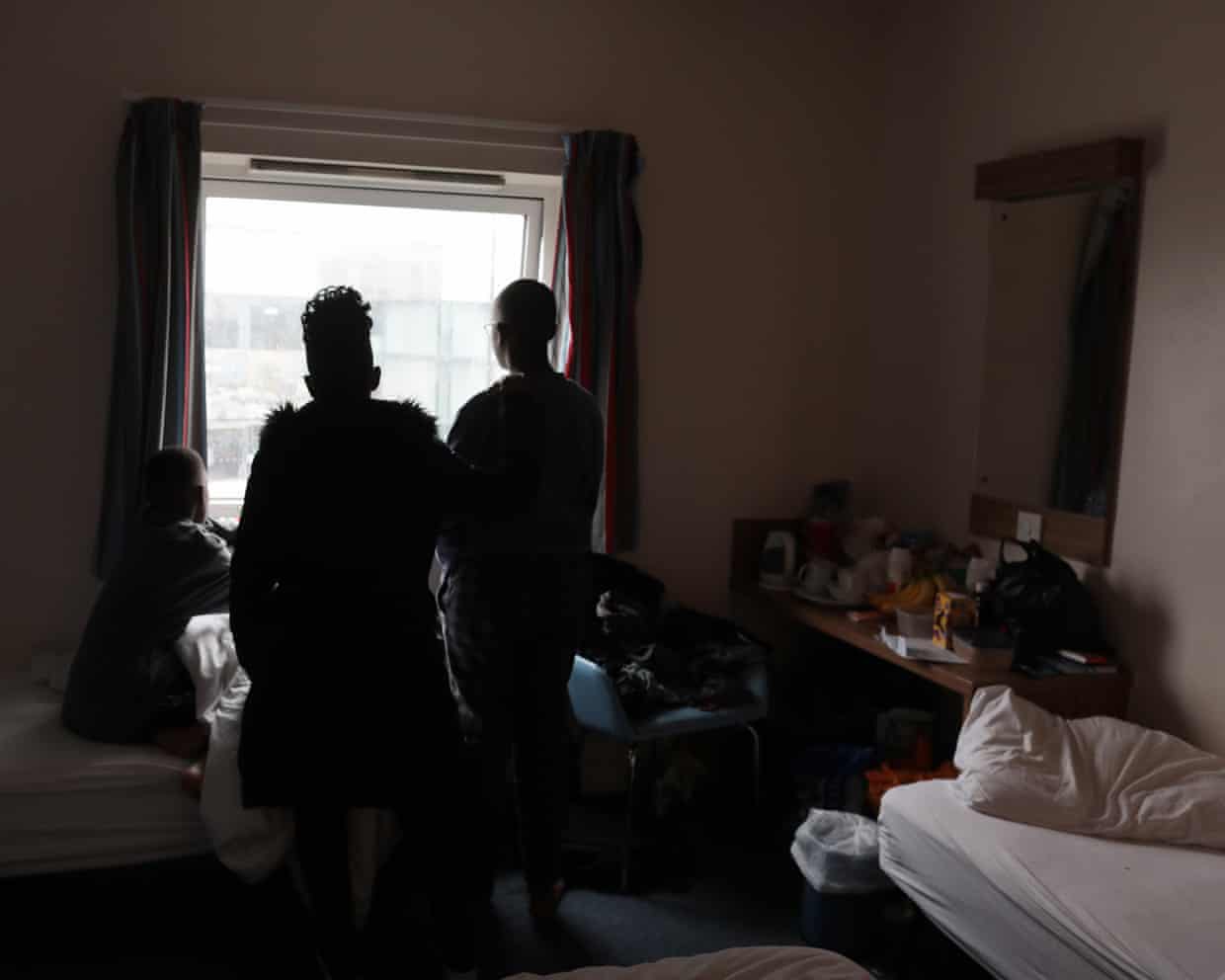
The cost to councils of providing temporary accommodation for homeless people in England is projected to more than double to almost £4bn by 2029–30, the Local Government Association (LGA) has said.The national membership body for councils found that since 2017-18, local authorities across England had spent almost £1.5bn more on temporary accommodation (TA) than had been reimbursed in housing benefit from the government.Without intervention, this figure is set to balloon to £3.9bn in the next four years, the LGA said as it urged the government to take action to help councils facing soaring demand and funding pressures
Quarter of healthy years lost to breast cancer are due to lifestyle factors, research finds
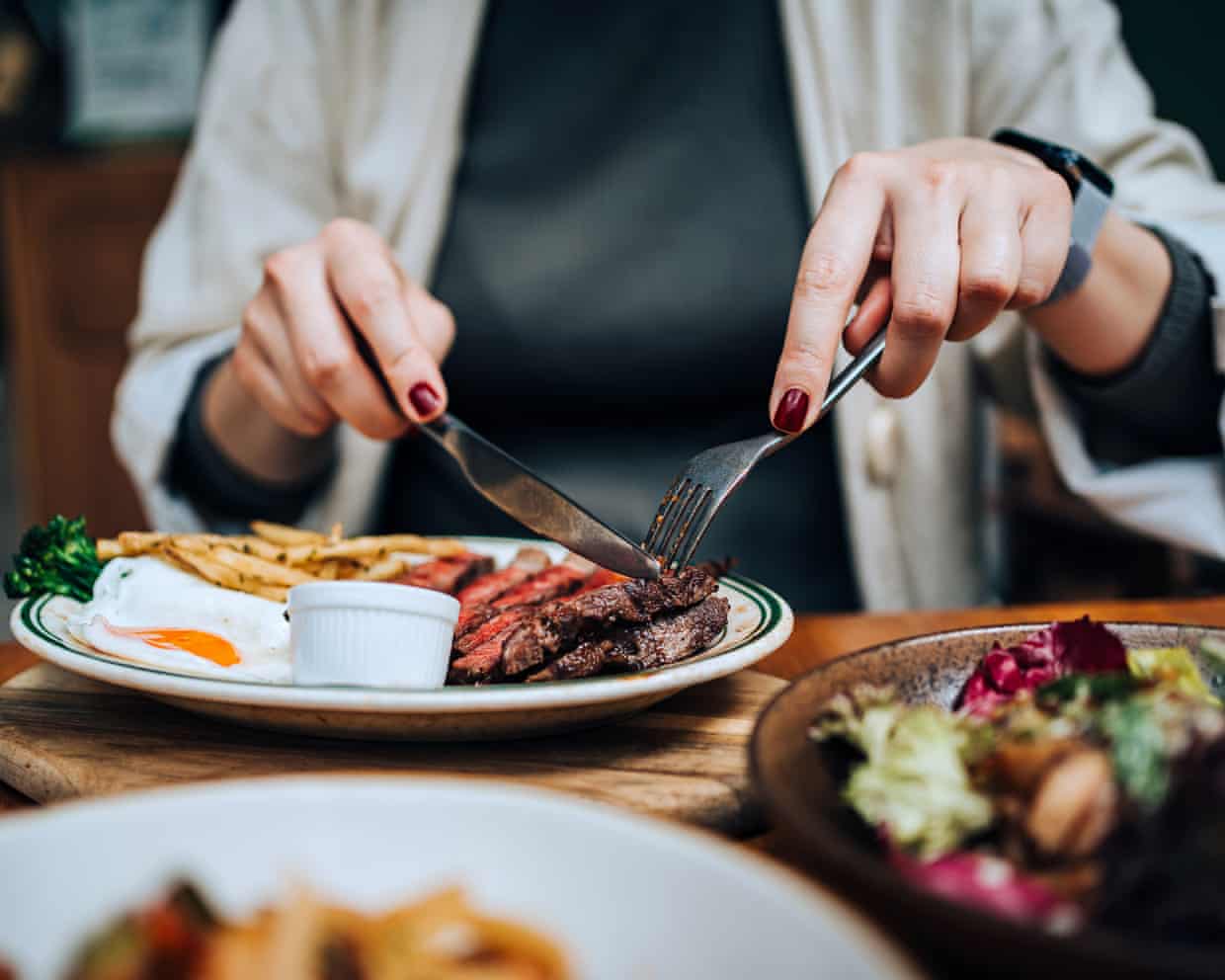
More than a quarter of healthy years lost to breast cancer are due to lifestyle factors such as red meat intake and smoking, according to the largest study of its kind.The study, published in the Lancet Oncology, used data from population-based cancer registries to produce a comprehensive analysis of breast cancer and its risk factors.The data used, spanning from 1990 to 2023 from more than 200 countries, was also used to produce forecasts of trends regarding breast cancer up to 2050. In the UK, about one in seven women will develop the disease in their lifetime.New breast cancer cases in women are predicted to rise by a third globally, from 2

New Zealand demolish South Africa to reach T20 World Cup cricket final – as it happened

Finn Allen’s record ton blasts New Zealand past South Africa into T20 World Cup final

Formula One 2026: team-by-team guide to the cars and drivers

Why Norway beats us hollow at sport | Letters

Scotland hoping to party like it’s 1999 and thwart France’s title ambitions
Harry Brook backs ‘awesome’ England to find a way past India into T20 World Cup final