Hey, teacher, leave them ‘six-seven’ kids alone | Letters

I respectfully disagree with the suggestion that the use of “six-seven” represents a decline in logic or understanding among pupils (Letters, 29 December),From a developmental perspective, this kind of behaviour is a normal and even healthy part of growing up,Children and young people often adopt shared phrases, jokes or nonsensical trends as a way of belonging to a group,The meaning is not always the point; participation is,As a teacher, understanding and acknowledging this behaviour helps me connect with pupils’ lived realities.
When students feel seen and understood – rather than dismissed for engaging in harmless trends – trust is built.That sense of connection plays a crucial role in the learning process: pupils are more likely to engage, take risks and respond positively to guidance when they feel their world is recognised within the classroom.Being part of a group – even one built around something as trivial as repeatedly saying “six-seven” – supports social development, identity formation and emotional wellbeing.Not everything children do needs to be logical, purposeful or productive.Playfulness and shared silliness are essential parts of human interaction and growth.
While it remains important to teach critical thinking and to help pupils reflect on why they do things, this should sit alongside an understanding that harmless humour does not indicate a lack of intelligence.Hope in schools is fostered not only through kindness and honesty, but also through laughter, shared experiences and relationships built on mutual respect.Allowing space for these moments strengthens learning rather than undermining it.Alexsandro PinzonMitcham, London “Six-seven” may well be, as Marlon Minty says, “the embracement of idiocy”, but I think that the “promotion of logic and understanding” is not best served by calling primary schoolchildren “students” – the kind of language inflation which has moved the term from clearly meaning those in further or higher education, to meaning anyone in secondary school, to now apparently meaning any school attender over five years old.Can play-group “scholars” be far behind?Mike HineKingston upon Thames, London I read Marlon Minty’s letter on how saying “six-seven” is embracing idiocy with some sadness.
I personally think Doctor Who put it best when the 14th Doctor asked Donna why Mrs Bean is funny – some things just are, to some people.In the same way Dick and Dom yelling “bogeys” at ever louder volumes was funny to a younger generation, or how my younger sister could be brought to hysterics by merely saying the word “pants” to her as a child.If it’s not grounded in something harmful such as racism or sexism, I don’t think it does kids any disservice to enjoy the nonsensical.They find it funny; for us grownups, ours is merely to wonder why.When we pooh-pooh it from on high, or demand it makes sense, all we’re really doing is telling children that the things they find funny or enjoy are wrong, and with it we steal a little bit of their childhoods in a way that is unkind.
We don’t have to understand it for them to enjoy it.It all boils down to a short sentence: let people have nice things.Like any fad, it will fade in time.Let them have the joy it brings for now.Torran TurnerLittleborough, Greater Manchester I must disagree with Marlon Minty about the “six-seven” craze when he says: “When we do stupid things without any understanding of what or why we are doing it, we reduce ourselves to idiots.
” However, as Coco Khan says, it’s “deployed at random to annoy adults”.That is one point to it.I remember as a child in the 1960s doing very similar thingsFor example, the whole class would spread their fingers on their heads when a teacher entered the room – no idea why.More to the point, embracing the illogical and nonsensical is a hallmark of surreal and absurd comedy, of the dadaism kind.Even though the kids may not invoke dada, it is the same illogical, surreal nonsense as “performance art”.
Ted WatsonBrighton Have an opinion on anything you’ve read in the Guardian today? Please email us your letter and it will be considered for publication in our letters section.
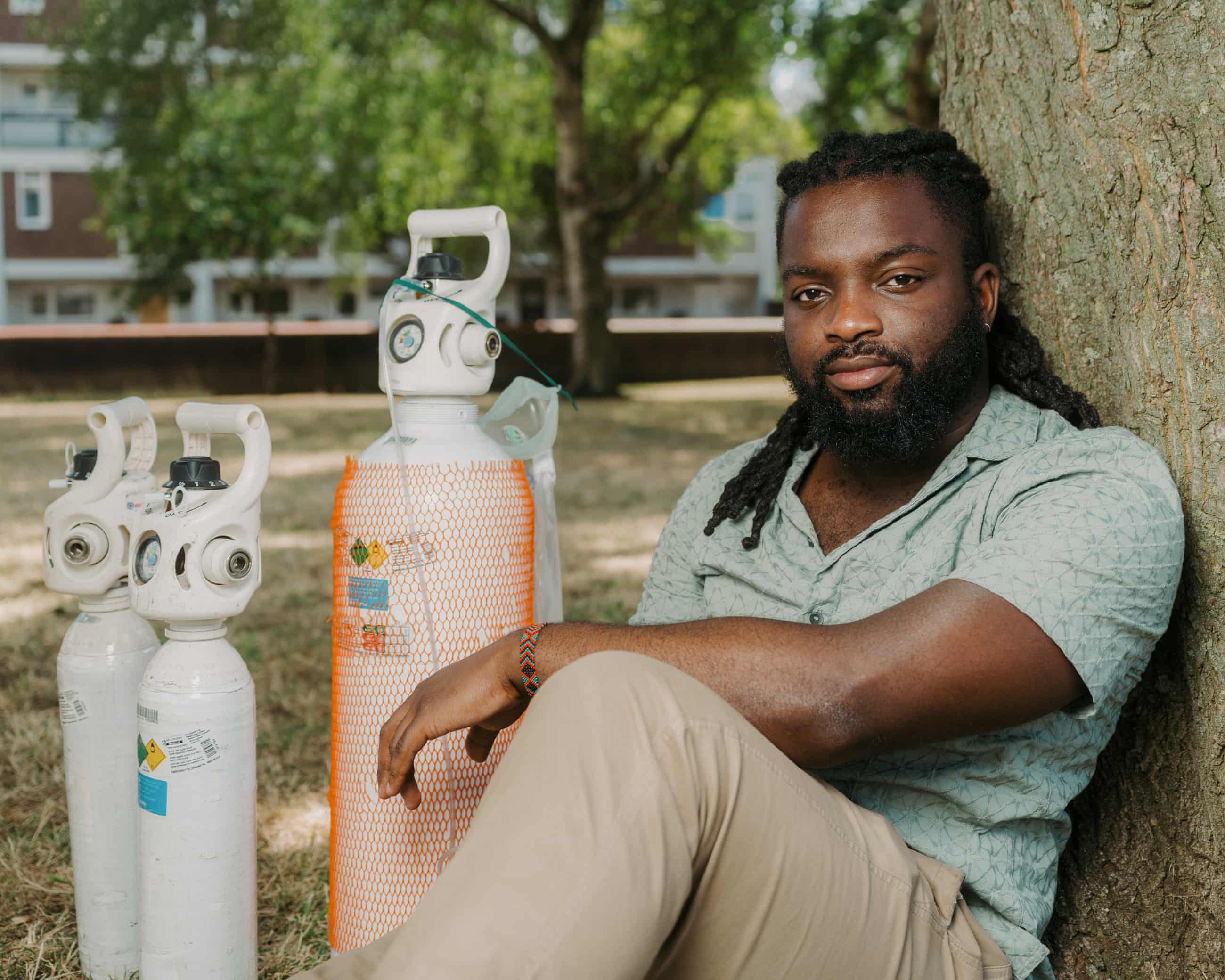
Full-blown agony: my battle against the mysterious pain of cluster headaches
They can hurt more than broken bones or pancreatitis. But with the right drugs and therapies, relief is possible from this debilitating and often misunderstood conditionIt was a dreary Monday morning in September 2016, and I was working as a teacher, trying to settle a new year 7 class, when a sharp pain bloomed behind my right eye. It was followed by quick jolts, like electric shocks. As each class came and went, the pain eased and then returned with greater intensity. Four times that day I left a teaching assistant with worksheets and ran to the school bathroom to douse my face with cold water

Brain injuries linked to cognitive issues in domestic violence survivors, Australian study finds
An Australian-first study has strengthened evidence that intimate partner violence can cause lasting brain injuries, leading to memory loss, learning changes and other long-term cognitive problems.A Monash University study published in the Journal of Neurotrauma found that survivors of domestic violence who experienced repeated head impacts or non-fatal strangulation were more likely to show behavioural and cognitive changes, including impaired memory.The impact of brain injuries has become widely recognised in professional sport, where repeated concussions have been linked to chronic traumatic encephalopathy (CTE) and other neurodegenerative conditions. Guardian Australia has extensively reported on concussion in sport, coverage that contributed to a Senate inquiry and an AFL class action.Researchers and advocates said the study highlights a need for greater awareness of brain injury when screening and supporting survivors of intimate partner violence, so they can receive appropriate treatment

Starmer urged to scrap ‘outdated’ law limiting power to stop new gambling premises
Keir Starmer has been urged to abolish an “outdated” rule that limits the power of communities to prevent bookmakers and 24-hour slot machine shops from opening on high streets.In a letter to the prime minister, nearly 300 politicians and campaigners called for an end to the “aim to permit” policy, introduced when Tony Blair’s Labour government liberalised gambling laws in 2005.The rule places a legal obligation on licensing authorities such as councils or the Gambling Commission to err on the side of allowing new gambling premises.“Our high streets are being hollowed out by a surge of betting shops and 24/7 slot-machine venues, while local people are left powerless,” said the Labour MP Dawn Butler, who coordinated the letter.She said the aim to permit rule had left councils powerless to refuse licence applications, even in the face of local opposition

Guardian Hope appeal raises more than £800,000 for charities tackling division
Donations to the Guardian’s Hope appeal have passed the £800,000 mark as generous readers continue to support inspirational grassroots charities that promote tolerance and tackle division, racism and hatred.The 2025 Guardian appeal is raising funds for five charities: Citizens UK, the Linking Network, Locality, Hope Unlimited Charitable Trust and Who is Your Neighbour?The Hope appeal, which is entering its final few days, supports charities offering positivity and common purpose against an backdrop of extremist violence and harassment, anti-migrant rhetoric, and the re-emergence of “1970s-style racism”.One donor told us by email: “I support all efforts to rebuild community links and cohesion. With lived experience of racism (current and past), I never want it to stain our country again.“Hate and division are making our communities less safe for all of us

US to slash routine vaccine recommendations for children in major change experts say creates doubt
The Trump administration will slash routine vaccine recommendations during childhood from 17 to 11 jabs – the biggest change to vaccines yet under the purview of longtime vaccine critic Robert F Kennedy Jr.The changes, which US health officials announced on Monday afternoon and are effective immediately, will erode trust and reduce access to vaccines while allowing infectious diseases to spread, experts said.“The goal of this administration is to basically make vaccines optional,” said Paul Offit, an infectious diseases physician at Children’s Hospital of Philadelphia and a former member of the advisory committee on vaccines for the US Food and Drug Administration (FDA). “And we’re paying the price.”The CDC will now recommend one dose of the HPV vaccine instead of two

Shortage of NHS stroke specialists resulting in thousands dead or disabled, say doctors
Thousands of people who have had a stroke are ending up severely disabled or dying because the NHS has too few specialists to treat them quickly enough, senior doctors are warning.A chronic shortage of stroke consultants across the NHS means that patients are suffering horrendous consequences because of delays in getting clot-busting drugs and surgery, they said.“People are either dying or living with disability unnecessarily because they’re not getting the correct evaluation and treatment by the right expert at the right time,” Prof David Werring, the past president of the British and Irish Association of Stroke Physicians (BIASP), told the Guardian.Many hospitals cannot urgently diagnose stroke patients and give them time-critical treatment to maximise their chances of a full recovery “because we haven’t got enough consultants”, Werring said. “The shortage means that when people have an acute stroke, they cannot be sure of receiving an expert consultant opinion to get the right diagnosis and the right treatment at the right time

Oil prices fall after Trump says Venezuela will send up to 50m barrels to US

Australia Post apologises for losing Aboriginal artist’s painting worth $4,000

AI consciousness is a red herring in the safety debate | Letters

Wave of Grok AI fake images of women and girls appalling, says UK minister

Jacob Bethell plays starring role in Ashes Wars Episode 5: A New Hope | Barney Ronay

Bethell’s elegant first Test century presses pause on Australia’s Ashes party