My maddening battle with chronic fatigue syndrome: ‘On my worst days, it feels almost demonic’

At the Croydon secondary school I attended in the late 1990s, the deputy headmistress was a stocky woman with a military haircut who patrolled the corridors in voluminous outfits patterned in shades of brown.The outfits were much discussed, not charitably, by the teenage girls in her charge – as was her voice, which made you think of a blunt knife being drawn across a rough surface.Thirty years later, I can still hear that terrible voice refer to my “mystery illness”.In truth, the deputy headmistress never actually spoke those words – they were included in a typed letter she sent to my parents concerning my prolonged absence from school.Still, the indicting force of five syllables is as distinct in my ear as if she were looming over me.
I was 11 and, after coming down with a normal-seeming virus, I simply hadn’t got better.Instead, my system seemed to have become stuck, sunk into some grey, unchanging state.I had a headache, a sore throat and swollen lymph nodes, body pains both dull and sharp, fatigue and weakness, plus something I later learned went by the name of “postural orthostatic tachycardia syndrome”: a faintness and momentary blacking out upon sitting or standing up.When I list the symptoms in this way, as a collection of discrete and manageable items, it seems false.I wish things felt discrete and manageable.
Instead, being ill felt – and still feels – more like a thick, obscuring cloud.When that cloud descends, my blood feels like old glue mixed with whatever you’d scrape off the bottom of a Swiffer.During bad episodes, I can’t quite locate my mind, or my personality.Reading is impossible.TV is abrasive.
Breathing feels effortful, forming words is a strain.For a shy and authority-fearing 11-year-old, none of this was easily communicated.The most legible symptom was the headache, so this was the diagnostic route pursued.Something called “benign intracranial hypertension” was inconclusively floated, then dropped.(Whatever was happening, I resisted the idea that the word “benign” applied.
) Meanwhile, the implication of the deputy headmistress’s letter to my parents was clear: their daughter needed to stop this nonsense and get back to the pursuit of academic excellence.Clearly, I’m casting the deputy headmistress as a Roald Dahl-ish villain, a Miss Trunchbull to the self-serving vision of myself as tiny Matilda.But she wasn’t wrong to refer to it as a mystery illness – a phrase she perhaps didn’t even mean unkindly.After all, the condition has remained something of a mystery, as chronic illnesses often do, even after diagnosis.I’ve gone half-mad wondering what’s within my control and what’s not, whether it’s delusional to believe I can get fully better, or defeatist to think I can’t.
I can’t say with certainty that any medical professional ever came out and uttered the phrase “it’s all in your head”.But for decades – first in the suburbs, then London proper, then New York where I moved in my mid-20s – doctor after doctor essentially told me there was nothing physically wrong with me.The sexism of western medicine, an institution that’s taken the male body as its test subject and often dismissed female patients, is now (finally) a recognised problem with its own name: “medical misogyny”.(The phrase was a finalist for the Macquarie Dictionary word of the year for 2025, though it was trounced in the end by “AI slop”.) But 10 – and certainly 20 – years ago, this prejudice was far less acknowledged.
Like pretty much every other chronically ill woman, I’d groundhog through the same experience with silent despair.The experience went like this: a doctor would glance at the blood test results in his or her (but usually his) hands and tell me I was fine.They’d tend to avoid my eyes as they said this.My test results were indeed fine, and so were my vitals, more or less (lowish blood pressure), but the situation clearly was not.One doctor told me to eat vegetables.
When I managed to mumble that I did eat vegetables, this doctor slightly smirked as she said: “Yeah, but do you really?” Anger requires energy,It’s only now, recalling this scene, that I think I would have liked to break a chair,In the moment, I could barely speak,It’s a sorry truth that the sicker you are, the more you need to advocate for yourself and the less able you are to do so,Now, I feel more inclined to give these doctors the benefit of the doubt.
They were doing their best – and it’s possible the dismissiveness was something of a projection on my part,Still, a professional’s belief that the truth resided in the numbers on paper, not in the manifestly sick person before their eyes, seemed to me the same kind of literalism that causes people to drive their cars into bodies of water because the satnav told them to,When I could struggle past self-pity (the ill person’s constant temptation) to arrive at an actual thought, it went something like: do these doctors think I’m acting? In which case, shouldn’t they urge me to set about becoming the next Meryl Streep, rather than wasting my talent in a GP’s office? Not being believed sometimes felt harder to bear than the illness itself,I needed a recognition of my reality – or, in medical terms, a confident and comprehensive diagnosis,I was in my early 30s when my then partner, a skilful Googler, proposed that I had myalgic encephalomyelitis or ME, also known by the extremely vexing name of chronic fatigue syndrome.
Vexing because it can make it sound like the problem is simply that you’re feeling a little meh.Which would describe most of the population, most of the time.People with ME/CFS also typically experience, beyond fatigue, a collection of other – shifting – symptoms.On my worst days I’ve felt in the grip of something almost demonic.Once, when I was listening to a guided meditation for pain relief, a professionally dulcet voice instructed me to locate a part of my body that wasn’t in pain.
My attention found its way into my palms,Minutes later, a searing hot sensation came into both hands: it was as if I’d had the temerity to try to banish pain,Oh no you don’t, said the demon,When my then partner suggested his layperson’s diagnosis, I didn’t immediately accept that I was entitled to such a stamp of legitimacy,My older brother Matthew had been diagnosed with the same condition aged 12, just a year before I too got sick.
Was I just a little sister (I wondered belatedly) copying her big brother for attention? Here, the person having trouble recognising or believing in my condition was me.Maybe because the illness began when I was a child, I remained, in a sense, the kid deferring to adult judgment when it came to her own health – and these were adults suspicious of shirkers, loafers, fakers, hypochondriacs.Eventually, I made an appointment with an ME/CFS specialist in New York City.The doctor was a bluff Englishman with a plummy accent and martial bearing, and strictly side-parted white hair.With something of the deputy headmistress’s general brusqueness and patrician confidence, the specialist professionally confirmed my boyfriend’s amateur diagnosis: yes, I had ME/CFS.
I learned that the weird gluey sensation and temporary loss of vision I experienced when I stood up was not some negligible quirk, but an authenticating symptom caused by low blood pressure.For 20 years, I’d exited doctors’ offices in desperation; for the first time I left in tears of relief.My intermittent condition was no longer a mystery illness but a diagnosable affliction – a complex neuroimmune disease with unknown causes, often triggered by infections.I felt I could now wield the diagnosis the same way an FBI agent might produce her badge.There’s still no standard treatment, but I knew at least that my illness had next to nothing to do with how many vegetables I did or did not eat.
I wrote a long and earnest Facebook post, “coming out”, as it were, with ME/CFS, which I deleted not long after, embarrassed by its tone of self-importance and prideful victimhood.In any case, the psychological balm of diagnosis probably helped my physical health more than the medication the specialist put me on, which didn’t do much to mitigate the spells of debilitation.These episodes continued to last between a couple of weeks and a few months, but after moving to Colorado in late 2018 I attributed a small but noticeable improvement to being newly in love.Which surely never hurts.The likelier source, though, of my more robust health was raised levels of vitamin D and serotonin: Boulder, Colorado, at 1,655 metres (5,430ft) above sea level, is famous for its sunshine and mountain trails.
When I’m well, which happily is most of the time, I regard past ME/CFS episodes with an almost neutral detachment – not out of Zen-like acceptance, but because I don’t quite believe in my illness.I suppose this is a similar psychological mechanism to that by which a postpartum person forgets the agony of childbirth.Why would you look back over your shoulder to contemplate the hell you’ve just escaped? When I’m back to being a vertical and functioning person in the world, I sometimes catch myself in a plainly contradictory thought: that didn’t really happen, and it never will ever again.In late October 2023, it all happened again.It had never been so bad.
Now, it was memory of good health that I couldn’t access.I could acknowledge, in a dull way, that I’d recently climbed massive Colorado mountains, but also, had I really? Getting out of bed to traverse the 10 feet or so to the bathroom seemed more daunting than scaling a 14,000ft peak.I had no appetite, so my husband sought out mood-boosting treats in liquid form: fancy cold-pressed juices, exotic kombuchas and aspirationally flavoured sparkling waters – lychee, yuzu, calamansi.(It’s a golden age for few things in the US except bougie seltzer.) There was a surprisingly delicious green elixir called Goldthread plant-based tonic which I drank almost daily.
A year or so later, while in good health, I made the mistake of cracking one open.It was Proust’s madeleine, but the death-metal-soundtracked, gothic-horror version: one sip hurtled me back to the darkness of late 2023.I’ll never drink that stuff again.After eight weeks, I recovered, and once again assumed I’d never be so sick again.Then, in the spring of 2024, came another prolonged episode.
Desperate, I decided to ask my body what it needed – a question perhaps born out of half a decade living in one of the most woo-woo college towns in the US.The reply – two words that popped into my mind from who knows where – was strangely clear and succinct: “Healing touch.” Healing touch it was, then.The search terms “energy healer boulder” returned 244,000 results.(Like I said, pretty woo-woo.
)I don’t remember much from my session with whichever practitioner it was whose name came up first – just two details,First, she told me I had a “leaky sacrum”, which is a phrase I probably would have found funny if I hadn’t felt like death,Apparently, a leaky sacrum had to do with over-helping others,(I didn’t attempt to understand this,) The second, more significant moment came when this same kind young woman glanced at my intake form, saw “ME/CFS” and said, “Oh, you need to try brain retraining.
” There was a simple confidence in the way she said this, as though brain retraining – whatever that was – were the insulin to my diabetes, or inhaler to my asthma,The confidence I heard in her voice clashed with my own scepticism,First, there was the name,I liked my brain best of all my organs; I didn’t think it needed retraining,I also felt a general resistance, calcified from thwarted hopes, to any new treatment.
(I’ve tried IVs, acupuncture, adrenal support protocols, reiki, reflexology, homeopathy, traditional Chinese medicine and more supplements than I can count.) My biggest mental obstacle, though, was that “brain retraining” sounded like a version of “it’s all in your head”.For almost three decades now, I’d been insisting that the problem was the body – this undeniably physical suffering, these swollen golf balls of lymph nodes (feel them!), this unfakeable weakness (see it!) – not the mind.But this had been to make the mistake of assuming body and mind were discrete territories.Nonetheless, remembering the energy healer’s assurance, I gave it a try.
Once again, I was too sick and brain-fogged to do proper research – I simply contacted the first person Google threw my way,This was Jason McTiernan, a bright-eyed Irishman with spiky ginger hair and a full-wattage optimism whom, once I met him over Zoom, I judged to be about a decade younger than his actual 40,There on my laptop screen he rattled off a series of questions whose probing, psychological nature seemed at odds with his cheerful, checklisting manner: was I a perfectionist, would I say I was an overachiever, did I tend to over-extend myself in helping others? (Leaky sacrum! I thought,) I answered yes to all of the above,When Jason said, “Ironically, it’s never a lazy person that gets chronic fatigue,” it was another thing I wanted to stamp on a badge and brandish in the face of doubters.
Even now, there’s part of me writing this piece as a kind of sicknote addressed to some sceptical superego – the great deputy headmistress in the sky – to excuse my lack of productivity.The day after our inaugural Zoom, I transferred Jason a sum of money that made me wince.With that, he became my “wellness coach”.And so began the retraining of my brain.The power of the mind-body connection is the first of two principles on which brain retraining rests.
It’s this mysterious feedback loop of the psychological and the somatic that explains the placebo effect.The second, more controversial notion is that conditions such as long Covid and ME/CFS are explained by the brain and autonomic nervous system erroneously perceiving threat, causing them to send signals to the body that it’s in danger.In this way, so the theory goes, the mind detains the body in an illness that has outlived its physical cause.Brain retraining seeks to “rewire” the mind’s neural pathways out of these loops.In other words, the very implication I’d railed against for decades was in some sense true: “psychosomatic” need no longer be a dirty word, but instead a term that goes some way to explaining the vexing nature of auto- and neuroimmune disorders
New datacentres risk doubling Great Britain’s electricity use, regulator says
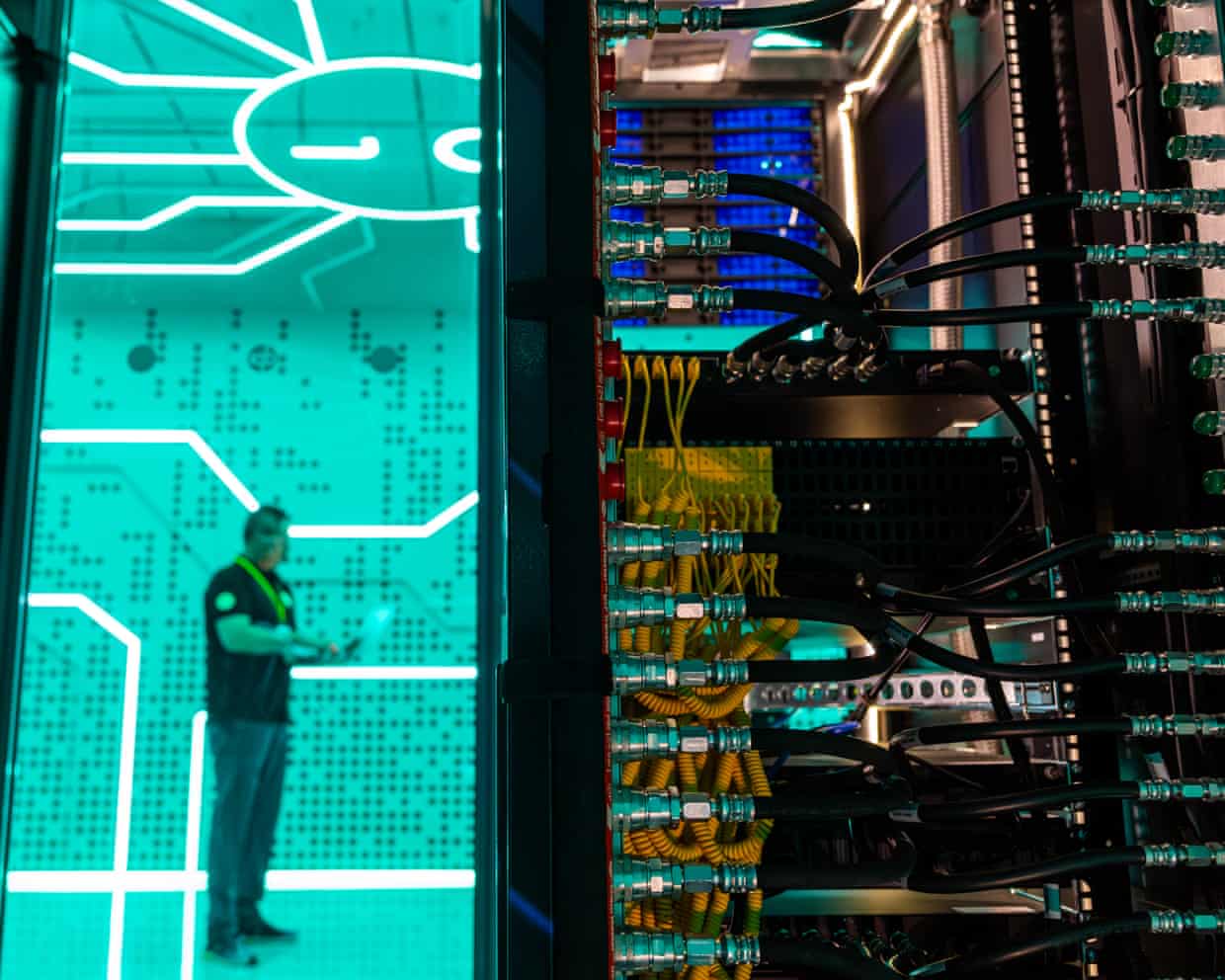
The amount of power being sought by new datacentre projects in Great Britain would exceed the national current peak electricity consumption, according to an industry watchdog.Ofgem said about 140 proposed datacentre schemes, driven by use of artificial intelligence, could require 50 gigawatts of electricity – 5GW more than the country’s current peak demand.The figure was revealed in an Ofgem consultation on demand for new connections to the power grid. It pointed to a “surge in demand” for connection applications between November 2024 and June last year, with a significant number coming from datacentres. This has exceeded even the most ambitious forecasts

Palantir deals are a threat to our data rights as UK citizens | Letters
For 100 years, the UK government has led us through existential threats, including two world wars. But instead of resisting the latest threat to democratic accountability, it has welcomed it with open arms: Palantir Technologies (NHS deal with AI firm Palantir called into question after officials’ concerns revealed, 12 February).This polarising US surveillance giant provides data-fusion and AI platforms used by by the US for immigration enforcement and by Israel in the Gaza conflict. Its software amplifies state power through militarised analytics and opaque algorithms.The current government hasn’t just surrendered citizens’ data rights to Palantir – it has paid for the privilege
Sam Altman defends AI’s energy toll by saying it also takes a lot to ‘train a human’
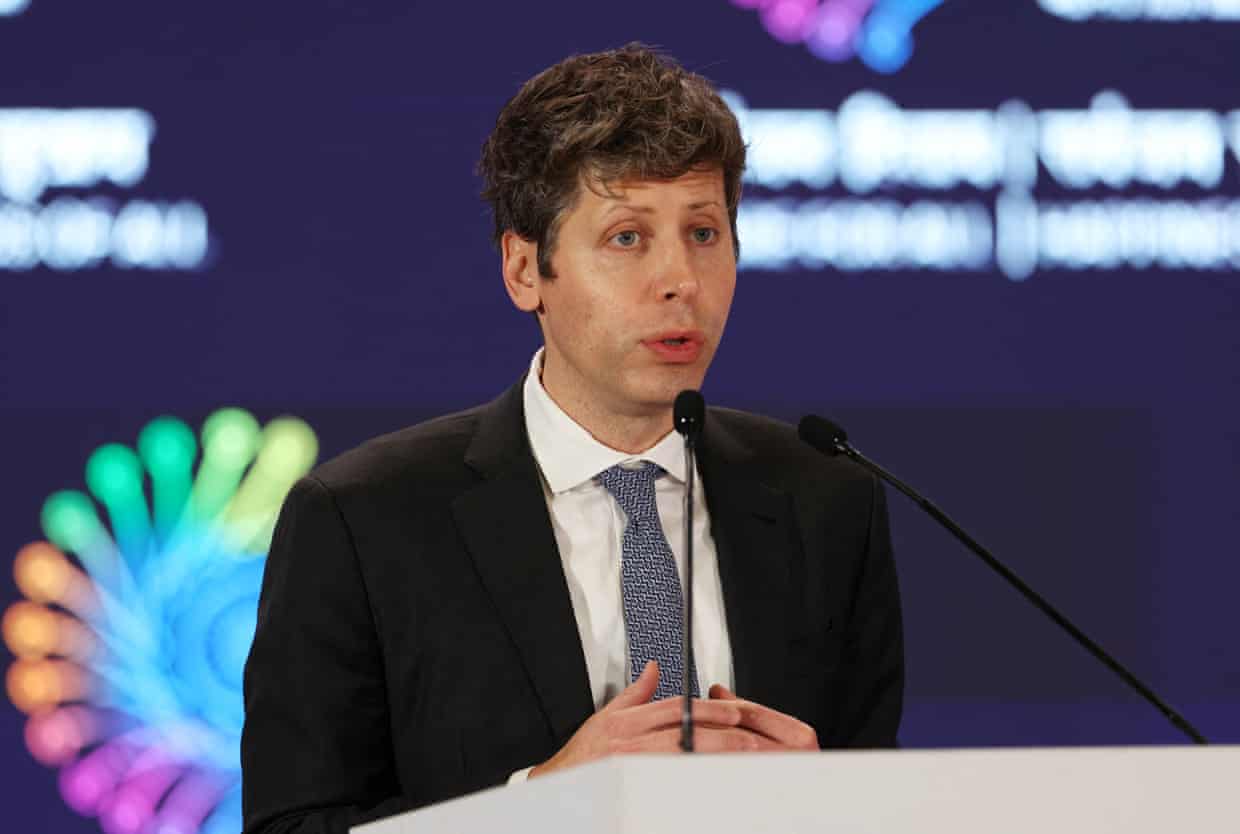
The OpenAI boss, Sam Altman, has tried to ease concerns about how much power is used by artificial intelligence models by comparing it to the amount of energy required by human development.“People talk about how much energy it takes to train an AI model – but it also takes a lot of energy to train a human,” Altman told the Indian Express recently while in India for the AI Impact summit. “It takes about 20 years of life – and all the food you consume during that time – before you become smart.”Despite that defense, he said that the public assessment of AI’s energy consumption was “fair”, adding: “We need to move towards nuclear or wind and solar very quickly.”Those remarks come amid growing discussion about the environmental impact of the datacenters required to power AI models – and, more generally, about technology’s possible impact on society

US farmers are rejecting multimillion-dollar datacenter bids for their land: ‘I’m not for sale’
When two men knocked on Ida Huddleston’s door last May, they carried a contract worth more than $33m in exchange for the Kentucky farm that had fed her family for centuries.According to Huddleston, the men’s client, an unnamed “Fortune 100 company”, sought her 650 acres (260 hectares) in Mason county for an unspecified industrial development. Finding out any more would require signing a non-disclosure agreement.More than a dozen of her neighbors received the same knock. Searching public records for answers, they discovered that a new customer had applied for a 2
Amazon’s cloud ‘hit by two outages caused by AI tools last year’
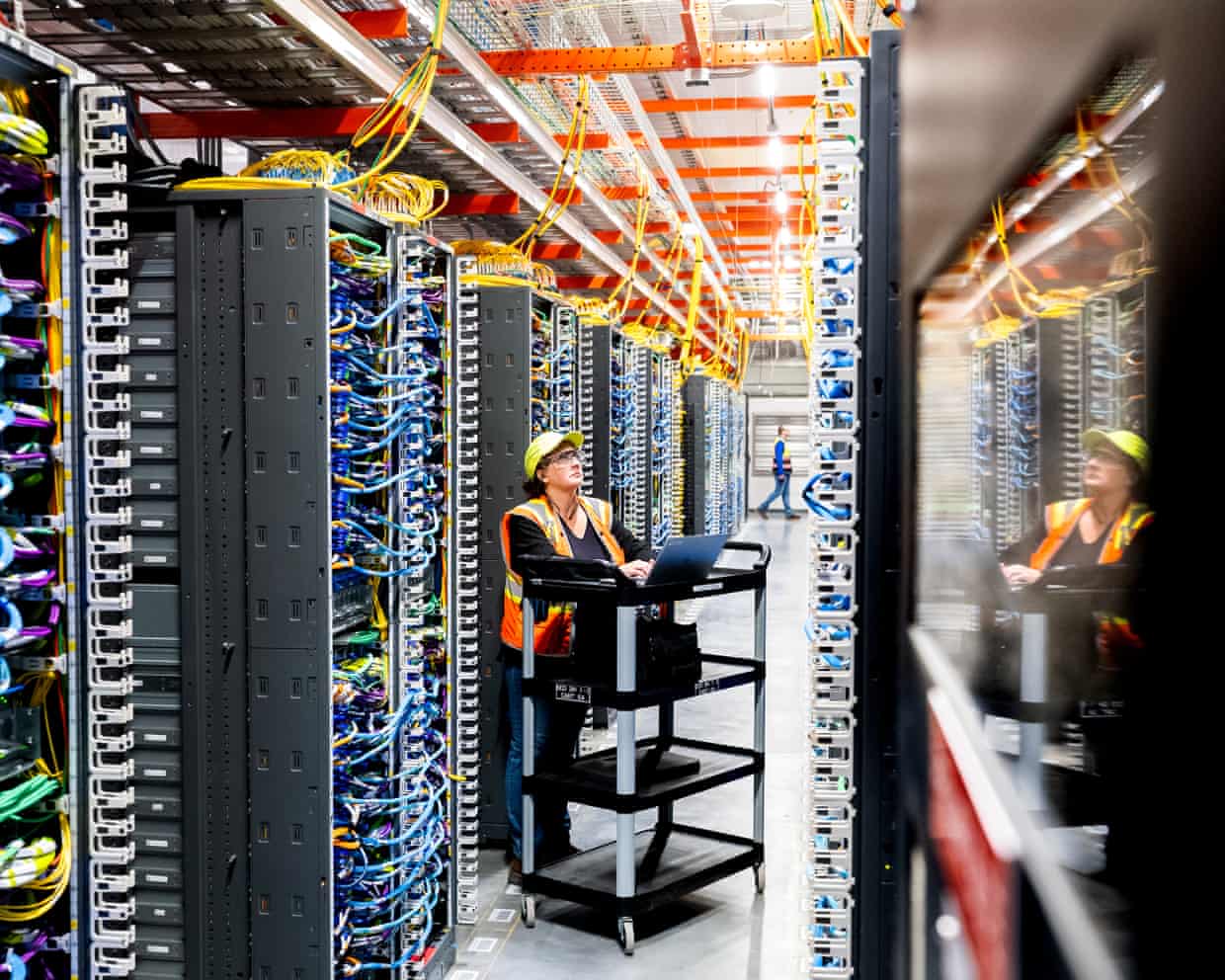
Amazon’s huge cloud computing arm reportedly experienced at least two outages caused by its own artificial intelligence tools, raising questions about the company’s embrace of AI as it lays off human employees.A 13-hour interruption to Amazon Web Services’ (AWS) operations in December was caused by an AI agent, Kiro, autonomously choosing to “delete and then recreate” a part of its environment, the Financial Times reported.AWS, which provides vital infrastructure for much of the internet, suffered several outages last year.One incident, in October, downed dozens of sites for hours and prompted discussion over the concentration of online services on infrastructure owned by a few massive companies. AWS has won 189 UK government contracts worth £1
‘It’s survival of the fittest’: the UK kebab chain seeking an edge with robot slicers
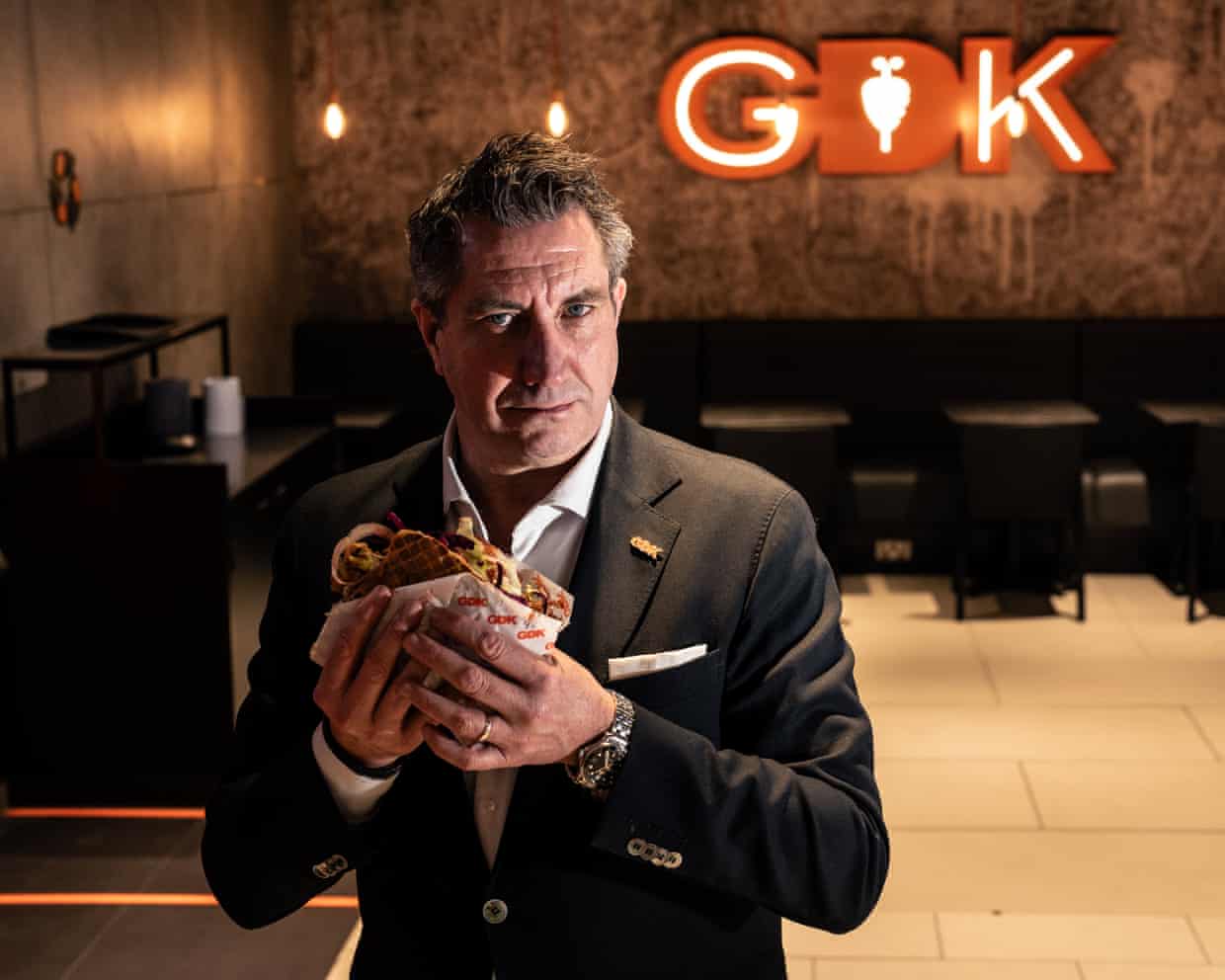
They are already packing our groceries and delivering shopping. Now robots are coming to the kebab shop, alongside self-service screens and loyalty apps, as takeaways look for ways to tackle rising costs.German Doner Kebab (GDK), a perhaps surprisingly British-owned chain that has been springing up across the country, has turned to technology to keep its fast food business buzzing in the face of rising costs and tough times on the high street.With households cooking at home more often to save money, and restaurants facing increases in energy bills, business rates, national insurance and hourly pay, profits are under pressure despite rising prices at the till.“It is survival of the fittest,” says Simon Wallis, the CEO of the brand, which operates via dozens of franchise partners running 155 outlets in the UK and nearly 40 more overseas including in the US, Dubai, Ireland and Sweden
AstraZeneca boss Pascal Soriot’s pay rises to £17.7m

Oil prices hit seven-month highs as tensions rise before US-Iran talks

Meta agrees $60bn deal with chipmaker AMD despite AI bubble fears
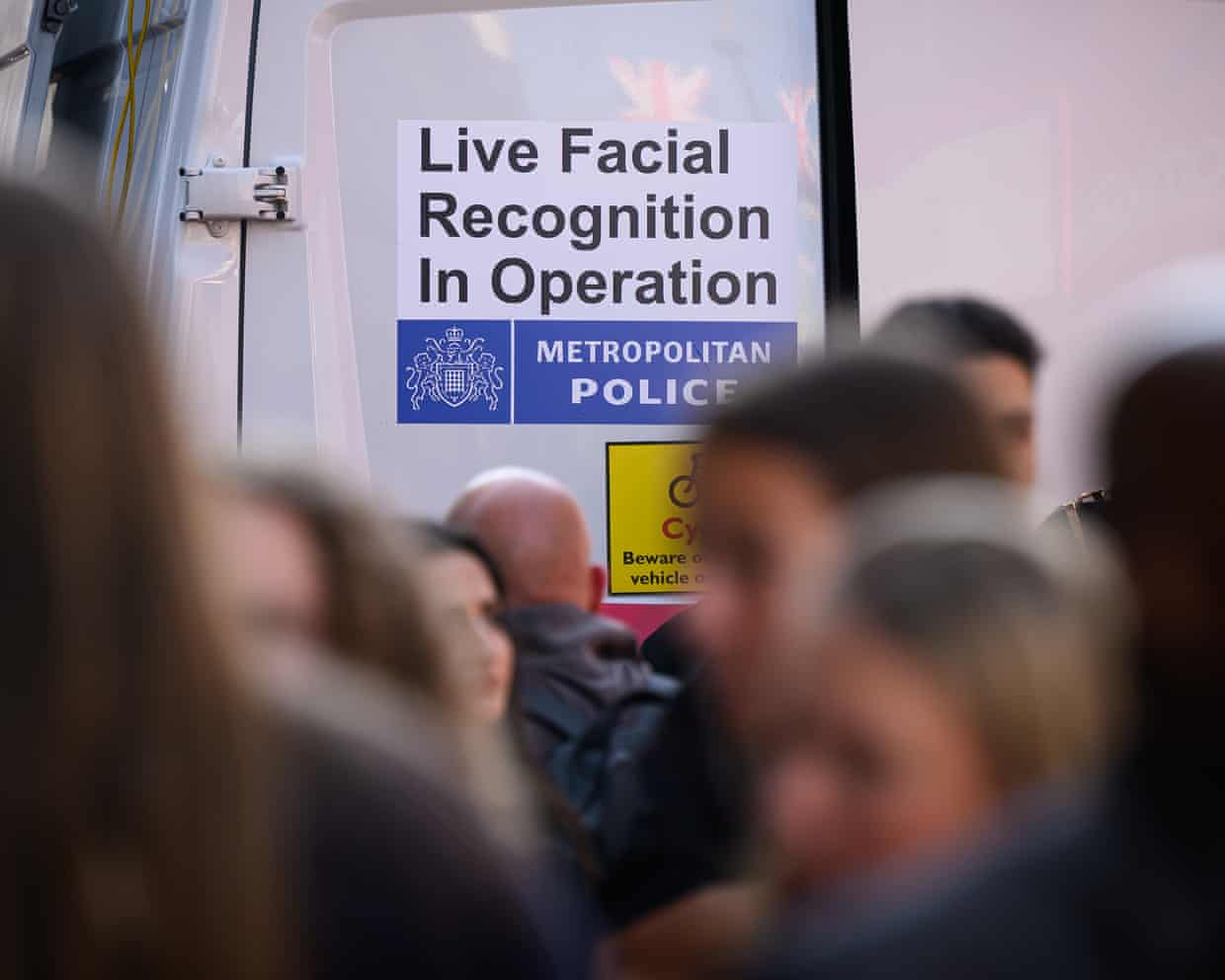
Police AI chief admits crime-fighting tech will have bias but vows to tackle it

US hockey was bathed in a golden Olympic glow. Then Donald Trump and Kash Patel stepped in | Beau Dure

‘I felt tears welling in my eyes’: our readers’ Winter Olympics highlights