Health unions call 3.3% pay rise for 1.4m NHS staff in England ‘an insult’

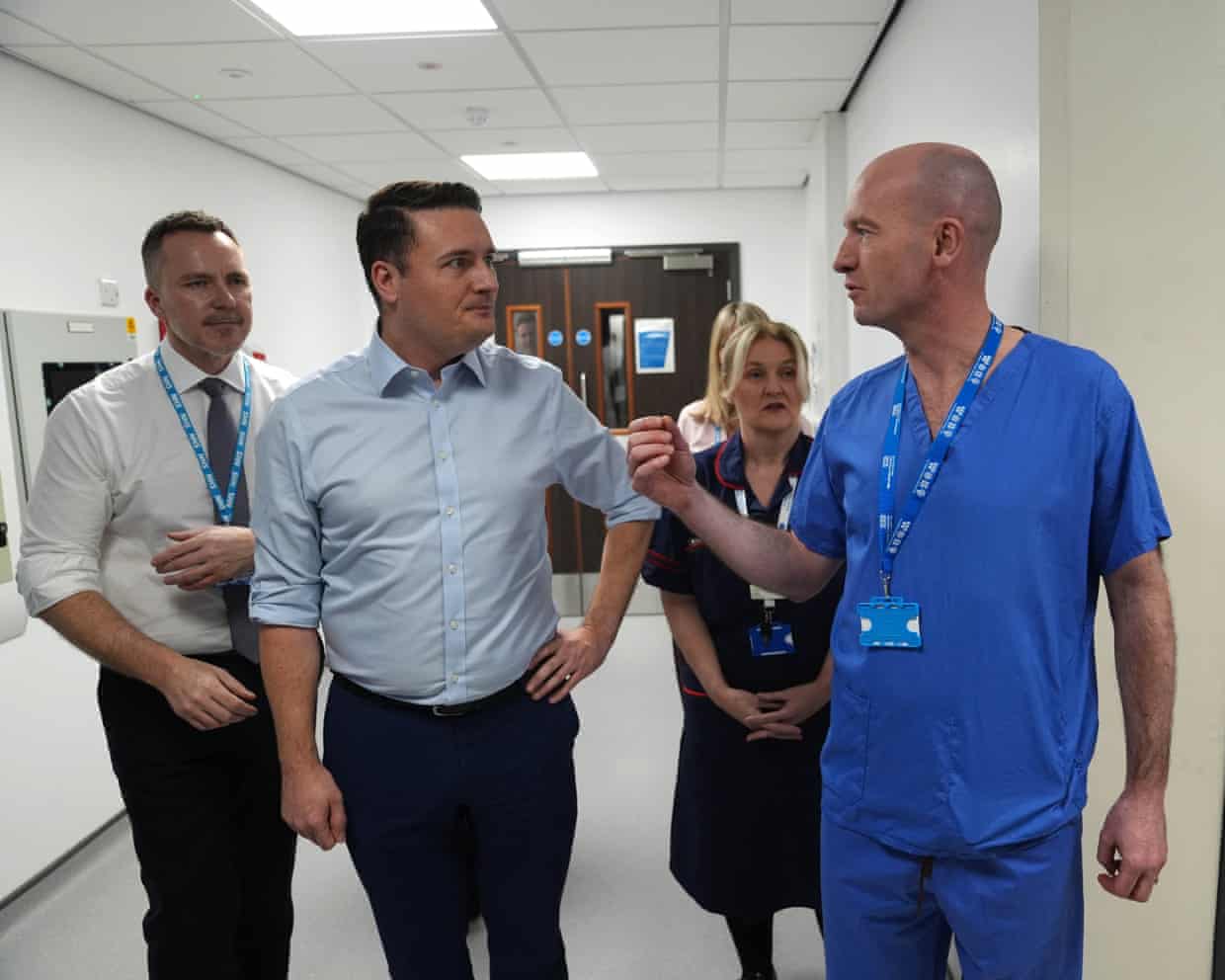
Health unions have criticised the 3.3% pay rise imposed on 1.4 million NHS staff in England as “an insult”, with one threatening to strike over the below-inflation award.They described the increase announced by Wes Streeting, the health secretary, as a “betrayal” of the frontline workers – including nurses, midwives and porters – who will receive it for 2026-27.The 3.
3% is less than inflation, which stood at 3,4% last month, but above the rate of inflation that is expected during the next financial year,In a written statement to MPs Streeting stressed that the 3,3% was higher than the Office for Budgetary Responsibility’s forecast that inflation would rise by 2,2% in 2026-27.
Unions responded angrily and said the award would not help NHS staff recover from below-inflation pay rises in recent years having led to a fall in the real-terms value of their salaries,They accused the government of acting in bad faith for not fulfilling a promise of direct talks about the size of next year’s salary increase and instead deciding to impose the 3,3%,The Royal College of Nursing (RCN) and Royal College of Midwives (RCM) called the 3,3% “an insult” because it did not keep pace with the true cost of rising prices.
“Unless inflation falls, the government is forcing a very real pay cut on its NHS workers.This knife-edge gameplaying is no way to treat people who prop up a system in crisis,” said Prof Nicola Ranger, the RCN’s general secretary and chief executive.The RCN will wait to see what pay awards other NHS staff and groups of public sector workers get for next year before deciding what action, if any, to take.“Nursing staff will not tolerate the disrespect of other years, when we were bottom of the pile,” she added.Gill Walton, the RCM’s general secretary, said: “This real-terms pay cut is an insult to midwives who work 100,000 unpaid hours every week just to keep maternity services running.
Our members are sick and tired of these broken promises to sort out pay and staffing and their anger is justified,”Unite was the only union to explicitly threaten to strike over an award it described as “an act of political cowardice and financial betrayal of NHS workers”,“It beggars belief that a Labour government should seek to ride roughshod over the health unions when deciding on NHS pay,For too long NHS workers have been overworked, underpaid and undervalued,” said Sharon Graham, its general secretary,Richard Munn, Unite’s national officer for health, said the union would consult its members once fuller details of the deal were available.
Ministers would need to use forthcoming talks with unions on long-promised structural reforms to NHS pay to address a series of grievances “or else members will be left with little option other than industrial action”, Munn said.Streeting told MPs the 3.3% was higher than the 2.5% rise that the government told the NHS pay review body last autumn was the most it could afford for 2025-26.The success of NHS trusts and integrated care boards in staying within budget this year, as a result of implementing savings programmes, had freed up money that represented “the foundations of the government’s ability to fund this within the [NHS’s] existing settlement”, he added.

Criminals exploit ‘stigma and embarrassment’ to sell fake erectile dysfunction drugs
Men have been warned against buying illegal erectile dysfunction pills online after nearly 20m pills – enough to fill two doubledecker buses – were seized in the last five years.The “stigma and embarrassment” of erectile dysfunction is being “exploited by criminals”, according to the Medicines and Healthcare products Regulatory Agency (MHRA).Between 2021 and 2025, the MHRA’s criminal enforcement unit, working closely with Border Force to intercept shipments, seized about 19.5m doses of erectile dysfunction medicines, equivalent to a single dose for three in every four adult men in the UK. Many of the pills seized contained no active ingredient, the wrong dose, hidden drugs or toxic ingredients, the MHRA said
NHS deal with AI firm Palantir called into question after officials’ concerns revealed
Health officials fear Palantir’s reputation will hinder the delivery of a “vital” £330m NHS contract, according to briefings seen by the Guardian, sparking fresh calls for the deal to be scrapped.In 2023, ministers selected Palantir, a US surveillance technology company that also works for the Israeli military and Donald Trump’s ICE operation, to build an AI-enabled data platform to connect disparate health information across the NHS.Now it has emerged that after Keir Starmer demanded faster deployment, Whitehall officials privately warned that the public perception of Palantir would limit its rollout, meaning the contract would not offer value for money.By last summer fewer than half of health authorities in England had started using the technology amid opposition from the public and doctors. The British Medical Association (BMA) has said its members could refuse to use parts of the system citing Palantir’s role in targeting ICE raids in the US
Health unions call 3.3% pay rise for 1.4m NHS staff in England ‘an insult’
Health unions have criticised the 3.3% pay rise imposed on 1.4 million NHS staff in England as “an insult”, with one threatening to strike over the below-inflation award.They described the increase announced by Wes Streeting, the health secretary, as a “betrayal” of the frontline workers – including nurses, midwives and porters – who will receive it for 2026-27. The 3

‘Deeply illogical’: this man’s life work could end homelessness – and Trump is doing all he can to stop it
Now in his fourth decade of spreading the word across most of the world’s continents about “Housing First”, an approach to helping homeless people that has convinced governments and non-profits alike to see housing as a human right, Sam Tsemberis experienced a first.He was censored by the US government.In the 1990s, Tsemberis began developing a simple idea: people living on the street want, and should have, safe housing with no strings attached. When you add accessible mental health and addiction services and caring, consistent case management, most stay housed. His research would bear out the idea, showing that Housing First results in at least 85% of people staying housed 12 or 24 months later, depending on the study

Children’s vocabulary shrinking as reading loses out to screen time, says Susie Dent
Children’s vocabulary is shrinking as reading loses out to screen time, according to the lexicographer Susie Dent, who is urging families to read, talk and play word games to boost language development.The Countdown star’s warning comes as the government prepares to issue its first advice to parents on how to manage screen use in under-fives, amid concerns that excessive screen time is damaging children’s language development.“So many children are now falling behind,” Dent said. “The vocabulary gap is getting bigger and there is a real perception that vocabulary development is suffering and that impacts on learning.”Citing a 2023 Oxford University Press report that found that two in five pupils had fallen behind in vocabulary development, she said: “There is a huge perception that screen time is having a negative impact on vocabulary, and I think that’s because it is taking away from reading time

Youth work ‘black holes’ in half of all council areas in England, study finds
Almost half of all council areas in England have youth work “black holes” with few or no services despite high levels of deprivation and antisocial behaviour, analysis shows.The first mapping in decades of youth centres across the country has revealed a nationwide crisis in youth support and significant inequality. Poorer areas in the north of England are shown to have been the worst affected by cuts to youth services since 2010.The research, produced by the charity funder Social Investment Business (SIB) and the University of Leeds, plotted youth services against the needs of the local population for the first time and found “a consistent picture of youth work black holes” across the country.Bethia McNeil, the director of quality and impact at the YMCA, the country’s largest youth charity, said: “Having this data is critical – we haven’t had anything like this in a very long time, probably since 2010, and youth provision has changed dramatically since then

History hangs heavy over Calcutta Cup but England’s young side can turn tartan tide

From vertigo to Van Gogh: 10 things you may have missed at the Winter Olympics

Patriots’ Stefon Diggs pleads not guilty to assault, strangulation charges

Winter Olympics thrills, FA Cup magic and the Six Nations – follow with us

Skating body defends Olympic judging after French duo’s ice dance gold

Ukrainian athlete’s appeal for Winter Olympics reinstatement dismissed by Cas