Campaigners challenge Scottish policy on transgender inmates in female prisons
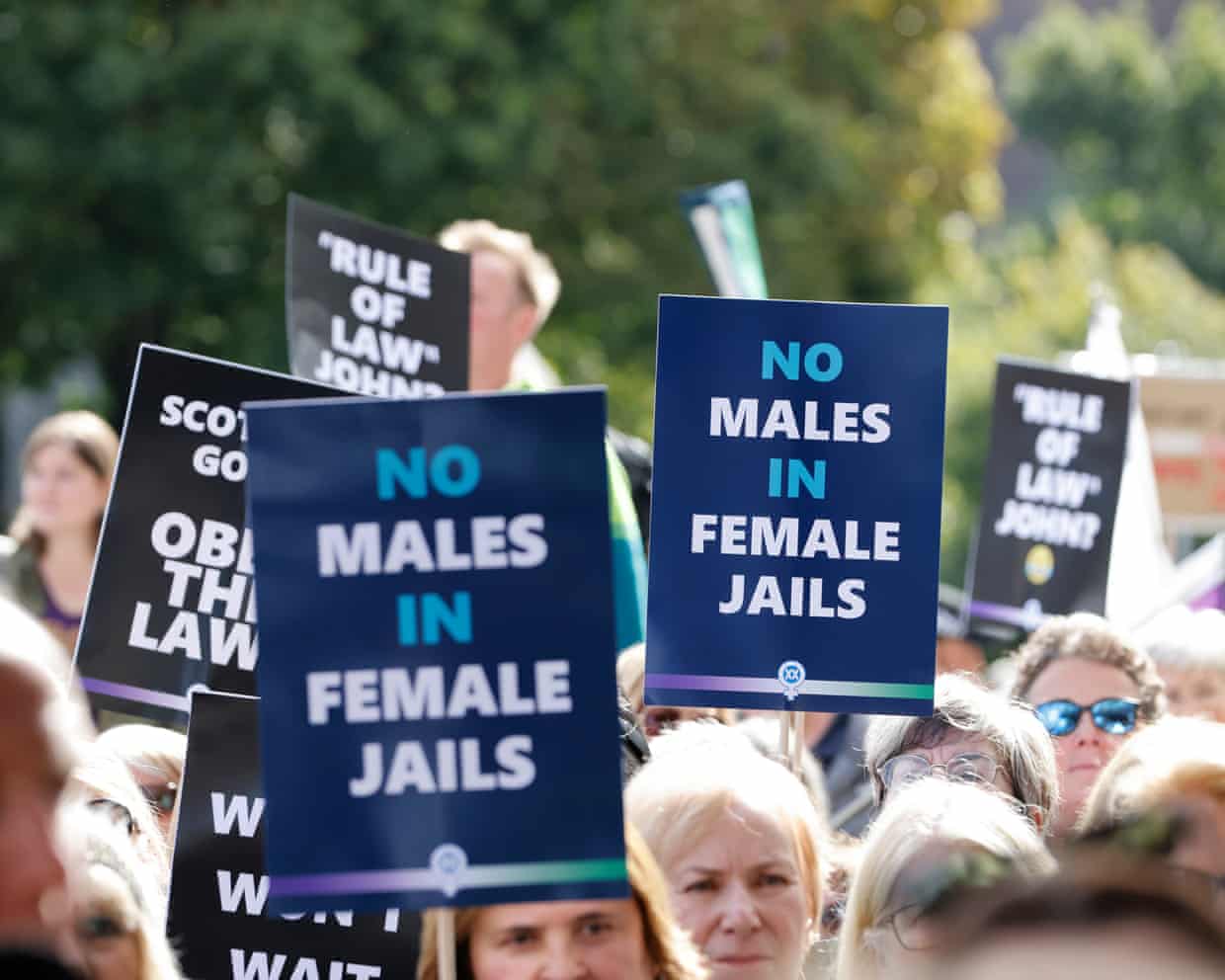
Female prisoners are paying the price for an “Orwellian” Scottish government policy that allows some transgender inmates to be housed in female prisons, Scotland’s highest civil court has heard.The campaign group For Women Scotland is challenging guidance that says trans prisoners should be housed according to individual risk assessment, which the group argues is contrary to the supreme court’s ruling on women-only spaces.For Women Scotland brought the original challenge that resulted in last April’s landmark ruling that the definition of a woman in equalities law refers to biological sex alone.The UK government is still considering new guidance on how public bodies and businesses should apply the ruling to the exclusion or inclusion of transgender women in women-only spaces.Speaking on the first day of a judicial review at the court of session in Edinburgh, Aidan O’Neill KC challenged the Scottish government’s position that having a “blanket rule” for where prisoners are housed could contravene obligation under the European convention on human rights.
“There is no case law from Strasbourg which says that trans-identifying male prisoners have to be accommodated within the women’s prison estate,” he said,“What the Scottish ministers are asking the court to do is to go beyond where the European court of human rights has reached on this point”,At the hearing before Lady Ross, O’Neill suggested that Scottish ministers were motivated by “political calculation”, saying: “What is happening here is that women in prison are being treated and used by the Scottish government in this case to be traded as pawns for political gain,”The Scottish Prison Service (SPS) has confirmed that as of June 2025 there were 19 transgender inmates and that 80% of those were accommodated in prisons that aligned with their biological sex,O’Neill said the policy meant that biological men convicted of serious violent offences, including murder, were being placed in jail alongside female prisoners, whom he described as “an ultra-vulnerable population”.
“It’s a policy which is based on institutional neglect of and contempt for women’s rights.It’s almost – if I can use Orwellian terms for it – Animal Farm-like.Women good.But men identifying as women better.”He asked why the SPS, which was experienced in handling men who are deemed vulnerable for various reasons, did not have “special facilities” for trans prisoners.
“It’s women who are paying the price again,” he said.The Scottish Labour leader, Anas Sarwar, pledged before the hearing that he would act to ban transgender prisoners from women’s jails “within days” if he became first minister in May’s Scottish parliament elections.The first minister and SNP leader, John Swinney, has previously said he acknowledged the strength of feeling on the issue, including among his own MSPs, but that it was his government’s responsibility to ensure policy was compatible with convention obligations.The Scottish Prison Service adopted the current policy after public outcry over the case of a newly convicted transgender woman, Isla Bryson, who committed two rapes while living as a man, Adam Graham, and was initially sent to the women-only prison Cornton Vale for assessment.
Council and community could join up on housing | Letters
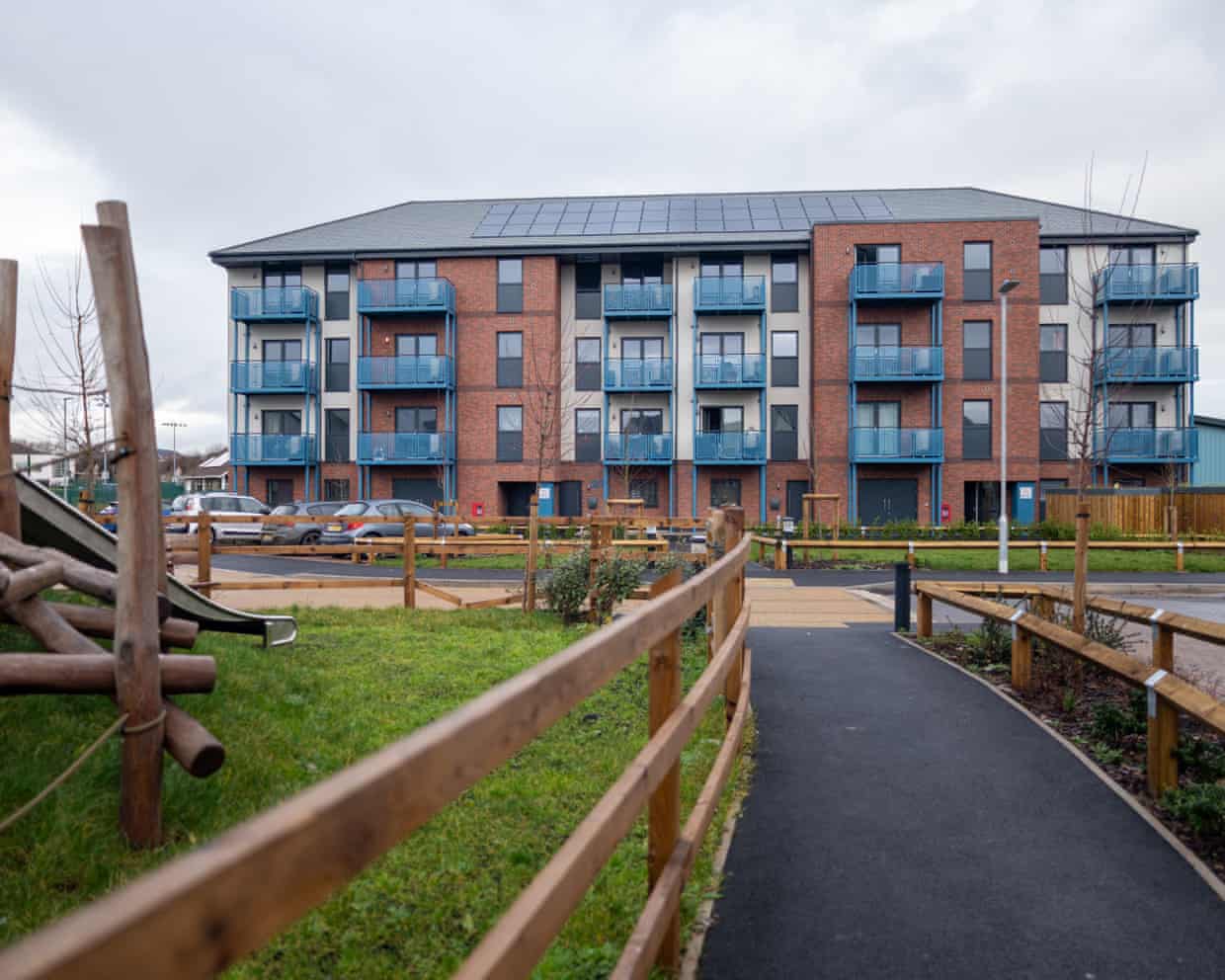
John Harris is absolutely right to draw attention to the tragic lack of council housing provision in the UK, and his visit to the new homes at Rainbow Way in Minehead, Somerset, is a welcome reminder that building genuinely affordable, secure homes is both possible and transformational for people’s lives (In Somerset, I found glorious proof that England can build great council houses. So what is holding us back?, 25 January). The emotional testimony from residents who now have stability and dignity in their housing reinforces how urgently we need similar projects across the country.However, my own experience working on the East Quay project in the adjacent town of Watchet reinforced another uncomfortable truth: local authorities do not always have the will or imagination to take the initiative and improve things for their residents.In Watchet, it was not the local council that led progressive change, but a remarkable community group, the Onion Collective
Campaigners challenge Scottish policy on transgender inmates in female prisons
Female prisoners are paying the price for an “Orwellian” Scottish government policy that allows some transgender inmates to be housed in female prisons, Scotland’s highest civil court has heard.The campaign group For Women Scotland is challenging guidance that says trans prisoners should be housed according to individual risk assessment, which the group argues is contrary to the supreme court’s ruling on women-only spaces.For Women Scotland brought the original challenge that resulted in last April’s landmark ruling that the definition of a woman in equalities law refers to biological sex alone. The UK government is still considering new guidance on how public bodies and businesses should apply the ruling to the exclusion or inclusion of transgender women in women-only spaces.Speaking on the first day of a judicial review at the court of session in Edinburgh, Aidan O’Neill KC challenged the Scottish government’s position that having a “blanket rule” for where prisoners are housed could contravene obligation under the European convention on human rights

Emergency pneumonia cases surge to half a million a year in England
The number of people requiring emergency care for pneumonia has risen by a quarter over two years to reach more than half a million cases, new figures show, amid warnings that preventable cases are adding pressure on overstretched A&E departments.Analysis of the most recent NHS England data from between April 2024 and March 2025 found that there were 579,475 cases of pneumonia requiring emergency hospitalisation, and this was likely to have risen further since, according to the charity Asthma + Lung UK. There were 461,995 cases between April 2022 and March 2023.Pneumonia is the single biggest cause of emergency admissions and is responsible for more than double the number of cases of the next biggest. It can also be deadly: between April 2022 to March 2025 more than 97,000 people died of pneumonia after ending up in hospital
Resident doctors in England vote to continue industrial action for another six months
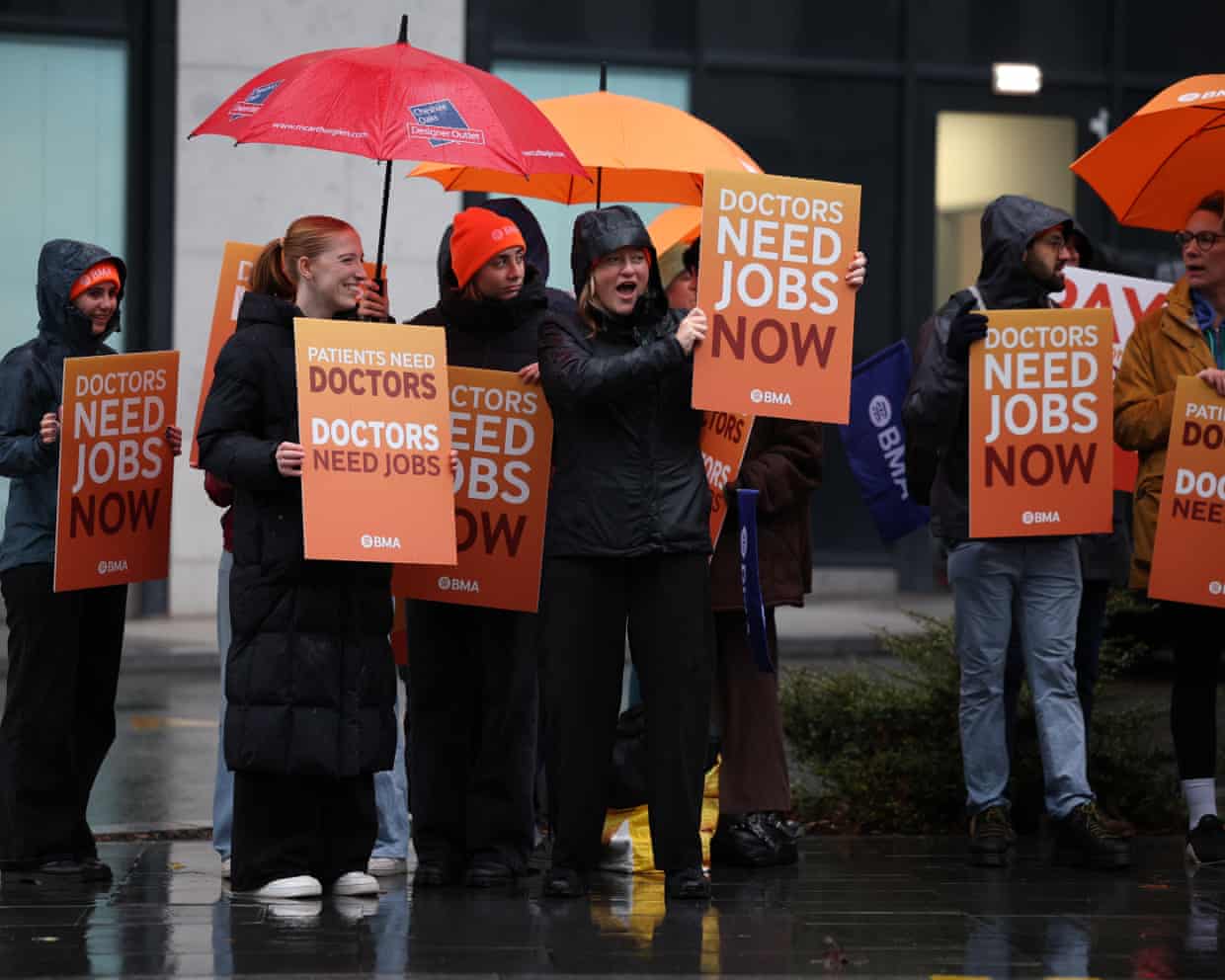
Resident doctors in England have voted to strike for another six months in their long-running jobs and pay dispute with the government.Their decision means that, unless an agreement emerges, the campaign of strikes by resident – formerly junior – doctors will enter its fourth year, as the industrial action began in March 2023.The British Medical Association (BMA) said 93% of the resident doctors who voted in their latest strike ballot endorsed holding a further series of stoppages. In all, 26,696 of the 28,598 resident doctors who took part backed continuing industrial action – a 53% turnout.The Department of Health and Social Care (DHSC) highlighted that this was the lowest turnout yet seen in the five strike ballots held as part of the action

Lack of mental health beds contributed to UK teenager’s death, inquest finds
A shortage of mental health beds and poor communication between agencies contributed to the death of a teenage girl on hospital grounds, an inquest has found.Ellame Ford-Dunn, 16, who had a history of self-harm, died in March 2022 after absconding from an acute children’s ward where she had been put because of a dearth of appropriate mental health beds.Her family and campaigners say Ellame’s death exposed a mental health system “crumbling at the seams”.The inquest jury at West Sussex coroner’s court was told that Ellame absconded “multiple times” during her stay at Worthing hospital’s Bluefin ward, which was not a specialist mental health unit.Jurors concluded the decision to place Ellame there was “inappropriate” and “more than minimally” contributed to her death
Here’s how we can save Britain’s high streets | Letters
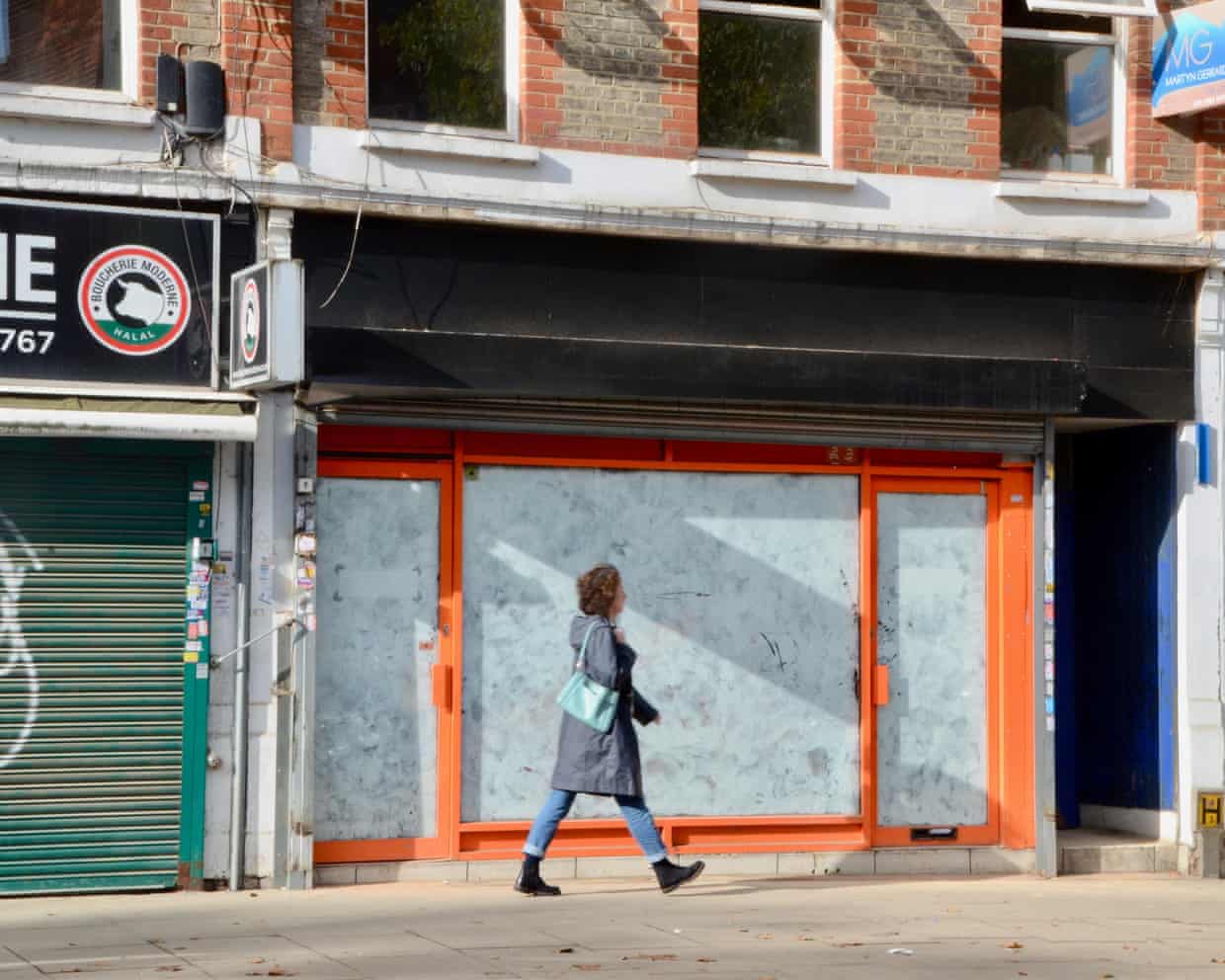
High streets have been changing throughout my lifetime (I’m 82 and had a high-street business for more than 20 years) and they have somehow survived with precious little government help (Labour risks election wipeout unless it improves Britain’s high streets, study finds, 28 February). In my postwar rural Essex village, we had three butchers, two newsagents, two bakers, two ironmongers, three general stores (one a dairy) plus a potpourri of haberdashery, hair stylists, two sweet shops and an electrical shop that had every plug and wire known to man.There was consternation when the dairy went self-service, but soon everyone was shopping with a basket. Then came the grocery chains – the butchers and bakers disappeared, and the main haberdasher closed. But the village adjusted and other enterprises appeared

Women in tech and finance at higher risk from AI job losses, report says

Elon Musk is taking SpaceX’s minority shareholders for a ride | Nils Pratley

From ‘nerdy’ Gemini to ‘edgy’ Grok: how developers are shaping AI behaviours

UK privacy watchdog opens inquiry into X over Grok AI sexual deepfakes

‘Swagger’ and mindset change is key for England in Six Nations glory chase

England beat Sri Lanka by 12 runs in third T20 to seal 3-0 series win – as it happened