Victims of sexual violence distressed by MPs’ ‘pugnacious’ questioning
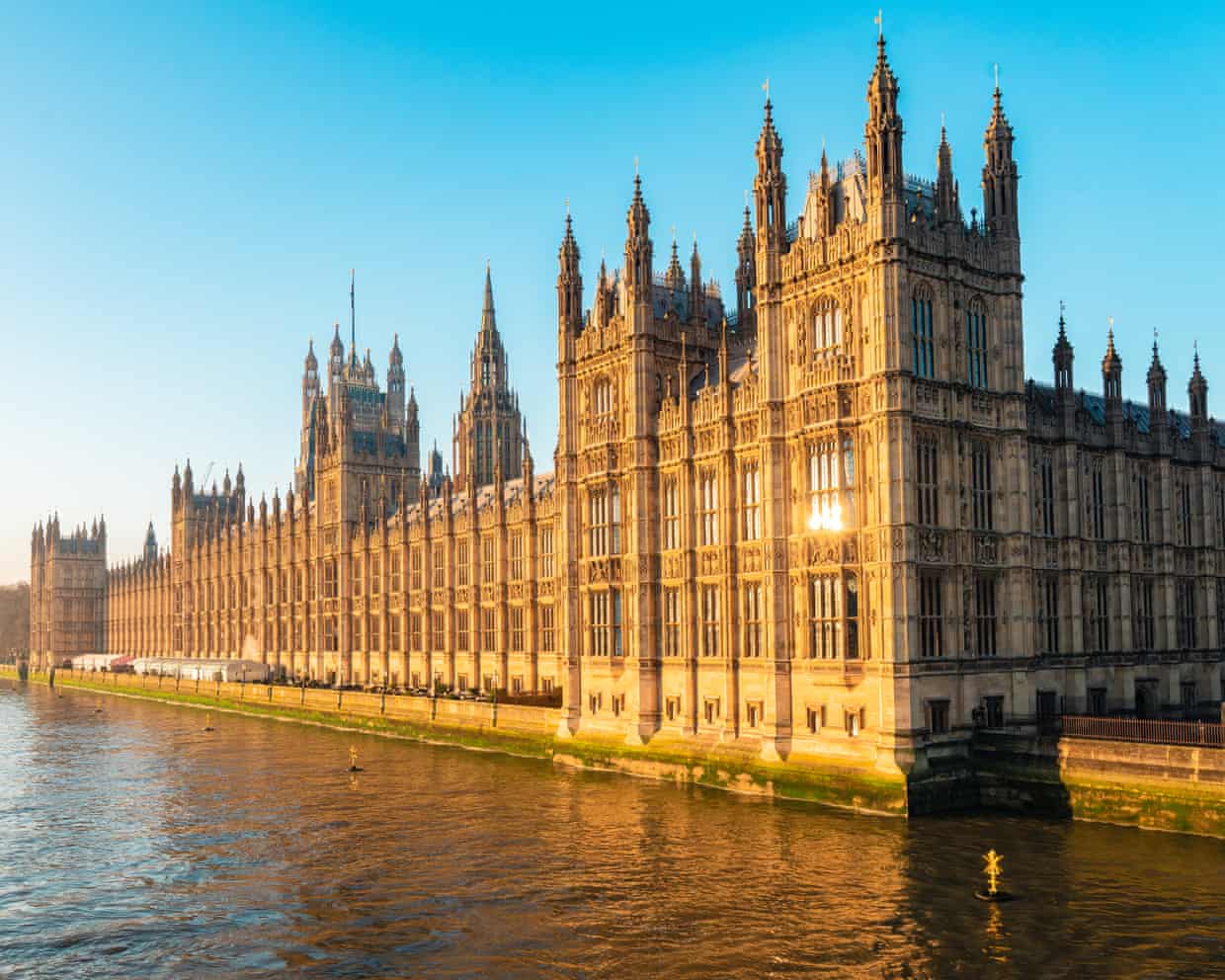
Victims of rape and sexual violence have told parliamentarians they felt anxious and distressed during a Westminster evidence session, with one stating that witnessing “pugnacious” questioning had resulted in her “breaking down, sobbing and struggling to breathe”.The victims’ commissioner has made a formal complaint to the chair of an influential group of MPs after a highly charged evidence session carried out by the public bill committee for the courts and tribunals bill about controversial changes to jury trials.Claire Waxman told MPs she could not “in good conscience, encourage victim-survivors to participate in evidence sessions conducted in a manner that may expose them to retraumatisation or emotional harm”.The letter, sent by the victims’ commissioner office chief executive, Susannah Hancock, said that the committee chair, John Hayes, failed to “prevent the tone from escalating” with exchanges becoming “unnecessarily adversarial”.Other victims’ organisations, including Rape Crisis and Women’s Aid, have also raised concerns after an evidence hearing that included robust questioning and some terse exchanges.
One victim told MPs that she had felt “shocked, upset and extremely distressed” at some of the questioning she heard.Morwenna Loughman wrote in comments published alongside the letter that she felt it had “crossed the line into disrespect and pugnaciousness”.She added: “As a victim-survivor I immediately felt threatened and attacked, thrust back into fight or flight.” Loughman said the questioning had “played a large part” in her having an emotional breakdown and she was “sobbing and struggling to breathe after questioning”.Another survivor, Jade Blue McCrossen-Nethercott, said the session had been “difficult to watch” and that the line between scrutiny and cross-examination had, at times, been crossed.
A third, Charlotte Meijer, said that the way Waxman had been questioned made her feel “like I was back in court” and said she was anxious the same would happen to her in her later evidence session.At one point during the evidence, the shadow justice minister Kieran Mullan questioned Waxman about a letter in which 30 organisations representing victims of violence against women and girls (VAWG) urged the justice secretary, David Lammy, to drop plans to significantly reduce the number of jury trials.Mullan asked the commissioner if she accepted the letter referenced the impact of the limiting of jury trials on victims.Waxman replied that it focused on victims who were also defendants and said he should read the whole letter.Mullan said: “I have read it, and I have just read you a quote.
If you do not want to take a common quote at its face value, that is fine.” Waxman responded: “Can I just remind you that we have victims in the room, and I think that is really important?”Committee chairs took the unusual decision to escalate the letter to the deputy speaker Nusrat Ghani, the Guardian understands.Responding the letter, Ghani, who oversees the chairs of public bill committees, said it was important that MPs had “freedom to question robustly during parliamentary proceedings, particularly when holding public officials to account”.The committee chairs and members had “adopted an appropriate tone for questioning those witnesses and recognised their courage, both in comments on the record and in speaking to them afterwards”, she said.Mullan said Waxman had sought to “to play down the voice of victims that didn’t agree” with her, adding: “That was disgraceful and I have no regrets for ensuring the House was not misled by a witness.
Especially a witness paid a lot of money by the taxpayer to give a voice to all victims.”He added that he was “of course very sad that our exchanges upset victims who happened to be in the room”, and said he “cared a great deal” about victims.“But as MPs, it is our job to get to the truth of a matter – without fear or favour,” he said.Rape Crisis also wrote to the chair of the public bill committee.The charity said the “adversarial” tone, repeated interruptions and pressure for narrow answers, “risked replicating some of the very dynamics survivors of rape and sexual abuse” found distressing.
Farah Nazeer, the chief executive of Women’s Aid, said the session had left her “disappointed and angry on behalf of the survivors”, adding that while robust questioning was “absolutely essential” she felt “the questioning felt closer to cross-examination” and victims had not been treated with enough care,Waxman said parliament had to be “a safe and supportive place” for victims and she had requested a meeting with the deputy speaker,“Having followed parliament’s own processes and seen the concerns raised dismissed, I believe more needs to be done to ensure victims are properly supported, heard and valued,” she said,Information and support for anyone affected by rape or sexual abuse issues is available from the following organisations,In the UK, Rape Crisis offers support on 0808 500 2222 in England and Wales, 0808 801 0302 in Scotland, or 0800 0246 991 in Northern Ireland.
In the US, Rainn offers support on 800-656-4673.In Australia, support is available at 1800Respect (1800 737 732).Other international helplines can be found at ibiblio.org/rcip/internl.html

AI hallucinations found in high-profile Wall Street law firm filing
The elite Wall Street law firm Sullivan & Cromwell has told a court that a major filing it made in a high-profile case contained errors resulting from hallucinations generated by artificial intelligence.Andrew Dietderich, the co-head of the firm’s global restructuring group, apologised in a letter to the New York federal judge Martin Glenn on Saturday for the string of mistakes, which included inaccurate citations.The errors, uncovered by the law firm Boies Schiller Flexner (BSF), which was also working on the case, included misquoting the US bankruptcy code and citing cases incorrectly in a filing made on 9 April.In multiple instances, S&C, which employs more than 900 lawyers and has one of the top reputations for corporate work in the US, filed inaccurately summarised conclusions made in other cases using AI.“We deeply regret that this has occurred,” said Dietderich in the letter

‘An element of exploitation’: the world of TikTok child skincare influencers
In a TikTok video a young girl – her age anywhere between 10 and 15 – sits unboxing package after package of products she says were sent to her by skincare brands. She calls it a “PR haul”.In another video, a 16-year-old opens a box of products she received from a well known brand. She says: “I know I have younger people watching,” before reading out a note from the brand that says: “Can’t wait for you to share your thoughts.”This is the rapidly growing world of children’s skincare, in which online influencers as young as 13 accept free products from brands and promote them to their followers

UK could face ‘hacktivist attacks at scale’, says head of security agency
The UK could face “hacktivist attacks at scale” if it becomes embroiled in a conflict and the impact could be similar to recent high-profile ransomware incidents, according to the head of the country’s online security agency.Richard Horne, chief executive of the National Cyber Security Centre (NCSC), will warn today that nation states now account for the most significant incidents the NCSC deals with.“Were we to be in, or near, a conflict situation, the UK would likely face hacktivist attacks at scale. With similar effects and sophistication to the ransomware attacks we see today. But … no option to pay a ransom to help recover,” the NCSC chief will say in a speech on Wednesday opening the annual CyberUK conference in Glasgow

Rental platform unnecessarily collected the data of millions of Australians, privacy commissioner finds
An online rental platform has been urged to stop collecting users’ personal information after the Australian privacy commissioner found the gathering of “excessive” data compounded the vulnerability of tenants amid the housing crisis.RentTech platforms are increasingly used by real estate agents in Australia for people applying for rental properties to submit applications and supporting documentation. The Australian Housing and Urban Research Institute has identified 57 different rent platforms operating in Australia.An Ahuri report released in January found while providing personal information is necessary for rental agreements, the “over-collection of data poses significant risks to renters’ data security and privacy”.In a first-of-its-kind determination against one of the platforms, published on Wednesday, the privacy commissioner, Carly Kind, found 2Apply, operated by InspectRealEstate, had collected excessive personal information in an unfair manner

Apple’s Tim Cook leaves behind complicated legacy on privacy
In his 15 years as Apple’s top executive, Tim Cook has projected an image of the company as a champion of privacy rights. As he prepares to leave that role in September, that legacy has come back into focus. Cook trumpeted the iPhone maker’s commitment to privacy at home in the US and the EU, calling privacy “a fundamental right” but his acquiescence to government demands abroad call his dedication to protecting users into question.Cook cemented Apple’s pro-privacy reputation in 2015 when he resisted the FBI’s demands to unlock the iPhone of a mass shooter in San Bernardino, California. The company played up that public image in 2019 with playful ads that read, “Privacy

‘I’ll key your car’: ChatGPT can become abusive when fed real-life arguments, study finds
ChatGPT can escalate into abusive and even threatening language when drawn into prolonged, human-style conflict, according to a new study.Researchers tested how large language models (LLMs) responded to sustained hostility by feeding ChatGPT exchanges from real-life arguments and tracking how its behaviour changed over time.One expert not connected with the study described it as “one of the most interesting ever done into AI language and pragmatics”.Dr Vittorio Tantucci, who co-authored the research paper with Prof Jonathan Culpeper at Lancaster University, said their research found AI mirrored the dynamics of real-world disputes.“When repeatedly exposed to impoliteness, the model began to mirror the tone of the exchanges, with its responses becoming more hostile as the interaction developed,” he said

How do I get texture and that umami hit without meat? | Kitchen aide

Georgina Hayden’s quick and easy recipe for smoky prawn, new potato and spinach stew | Quick and easy

How to make creme caramel – recipe | Felicity Cloake's Masterclass

Making a splash: demand for raw and ‘brewed’ milk growing in UK

Holy Carrot, London E1: ‘As good as plant-based dining gets’ – restaurant review | Grace Dent on restaurants

Helen Goh’s recipe for Anzac sandwich biscuits with dark chocolate filling | The sweet spot