‘It’s heartbreaking’: resident doctors in England face halt on new training posts

After almost two years on the NHS frontline as a resident doctor, Heather Gunn says she is bracing herself for unemployment,Like many of her colleagues, she was desperate to secure one of the up to 4,500 additional training posts the government agreed to introduce in England over three years to help doctors progress into more specialised fields,The posts were promised in negotiations between the doctors’ union, the British Medical Association (BMA), and the government in a long-running dispute over resident doctors’ pay and job security,Last week, with disagreements on pay still unresolved, the first 1,000 of these posts were withdrawn,Talks between the parties had broken down again and the union had refused to call off its 15th strike since 2023, which is scheduled to begin on Tuesday morning and last six days.
The health secretary, Wes Streeting, told the BMA in a letter shared on his social media that it would not be “operationally or financially possible” to make the posts available while NHS providers grappled with the financial fallout from industrial action,Gunn, 27, had hoped to secure a post in paediatrics or emergency medicine,Resident doctors, formerly known as junior doctors, are in the first years of their career, with many on fixed-term contracts,The withdrawal of the new roles means Gunn will have no job to go to when hers ends in August,Yet she remains supportive of the strikes and says she “absolutely” plans to take part.
“I was quite appalled that the government felt they could basically gamble with patient safety and care,” says Gunn, who lives in Oxford.“At the end of the day, it is them that suffer.Me not getting into training means there is one less doctor who is able to see these patients.“When families are worried that their kids are unwell and they can’t see a doctor, when patients are waiting 12-plus hours in A&E, I’m at home because I’m not able to be there, I’m not able to work and see these patients.I’m disgusted the government thinks it’s a bargaining chip they can play around with.
”The government said a move to permanent contracts was on the table before the talks collapsed.“It was exactly these sort of reforms that the offer proposed to deliver, in the absence of disruptive strike action,” one source familiar with the negotiations said.However, pay remains the main sticking point.The government argues that resident doctors would in effect have had a 35% pay rise over the last four years if the BMA had accepted the latest deal on offer.This year, most doctors have been offered a 3.
5% increase, higher than the 3.3% being offered to some other NHS workers.Streeting said in his letter to the BMA that the lowest-paid resident doctors had been offered a pay rise of as much as 7.1%.Yet the BMA wants the government to work towards restoring pay to 2008 levels, which would mean a further 26% rise after inflation is taken into account.
Gunn and her colleagues feel this is more pressing than ever, given the pressure on the global economy amid the war in Iran.For its part, the government has taken issue with the fact that the BMA calculates its pay erosion claims on the basis of the retail prices index, saying it is out of date and inaccurate.The BMA says it uses this method because it is also used to calculate interest on student loans.The union adds that as well as a real-terms cut in pay, doctors have experienced a deterioration in working conditions.It has warned that more doctors could leave the UK if the situation is not resolved.
Gunn says: “Every time the government says they don’t have enough money for pay restoration, [NHS trusts] are spending millions of pounds getting locums at enhanced rates for people to cover the strikes, so there is money there.People felt they did have money to put into those extra 1,000 places.For them to turn around at the last minute and say the money is not there any more – it’s a poor excuse.”Another government source said officials were struggling to understand why talks had collapsed at the 11th hour.“It felt like we were getting somewhere, and at the last minute it all fell apart, and we’re not sure why,” they said.
Streeting has argued that resident doctors have been offered the highest pay rise in the public sector.This means there is disquiet among leaders of trade unions representing others NHS staff, as the Guardian reported on Saturday, especially when some have been offered a lower pay-increase deal.“The deals we have been able to present to our members are becoming a much tougher sell,” one said.The second government source added that the training places were “far more something the BMA asked for than something the NHS pressingly needs”.They said: “Obviously, it’s good to have more doctors in the workforce and give them these progression opportunities, but it’s not like the NHS is going to fall apart because these 1,000 places don’t exist.
” The government said in a statement that it was “grossly misleading” to suggest patient safety would be affected by the withdrawal of the training places.Most of the public does not back the strikes.A poll of almost 7,000 people conducted by YouGov last month showed that 53% were opposed to the latest round of industrial action, with 31% saying they were strongly against it.During the strikes, some elective and non-urgent care is postponed, meaning patients can face a longer wait for treatment, although the NHS says it works to minimise disruption.“It’s incredibly frustrating when things like elective work are cancelled,” Gunn admits.
“However, I think that when the public understands that the government is holding jobs to ransom [and] it’s gambling with their care, the hope is the public can see why we are striking; it’s in their best interests.We want to be experts in our fields so we can give them top-quality care.”A health department spokesperson said: “The BMA chose to press ahead with damaging strike action rather than support a credible offer that would have drastically improved the pay, working lives and career opportunities of its members, and failed to present any counterproposal.We urge the BMA to reconsider and work with us to reach an agreement that delivers for their members and for patients.”With both sides seemingly unwilling to give ground, the future of Gunn and many of her colleagues is uncertain.
Whether support for continued strikes holds up remains to be seen.Turnout in BMA ballots over resident doctors’ pay has declined significantly since the first strikes in early 2023.“I’ve spent many years at university to study to be a doctor; I have three degrees; I am committed to medicine,” Gunn says.“Come August I will be unemployed, when there are thousands of patients coming into the hospital every day, waiting to be seen.It’s heartbreaking, with all of the sacrifices I’ve made in my personal life, not to get into training.
”
‘It’s heartbreaking’: resident doctors in England face halt on new training posts
After almost two years on the NHS frontline as a resident doctor, Heather Gunn says she is bracing herself for unemployment. Like many of her colleagues, she was desperate to secure one of the up to 4,500 additional training posts the government agreed to introduce in England over three years to help doctors progress into more specialised fields.The posts were promised in negotiations between the doctors’ union, the British Medical Association (BMA), and the government in a long-running dispute over resident doctors’ pay and job security.Last week, with disagreements on pay still unresolved, the first 1,000 of these posts were withdrawn. Talks between the parties had broken down again and the union had refused to call off its 15th strike since 2023, which is scheduled to begin on Tuesday morning and last six days
Key stroke treatment still not available around the clock across England
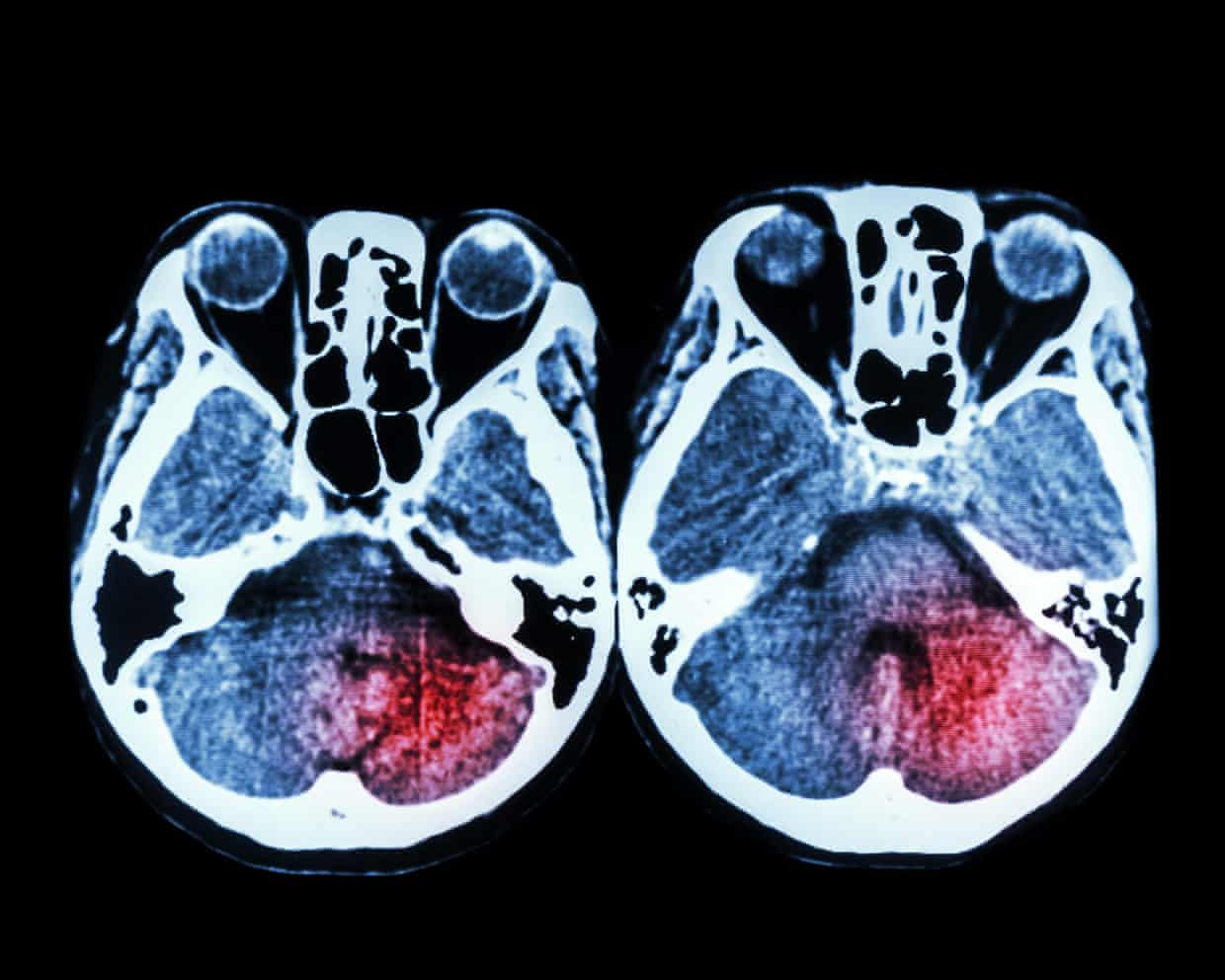
The NHS has not made a “life-changing” treatment for stroke available around the clock across England despite ministers repeatedly promising that it would.The health service was expected to improve stroke care by making a clot removal technique called mechanical thrombectomy available everywhere in the country 24/7 from 1 April.Doctors describe it as a gamechanging intervention that, if done quickly, can help someone who has had a severe stroke avoid ending up with a serious disability as a result.However, seven of England’s 24 regional stroke centres are still not providing thrombectomy on an all-hours basis, mainly because they do not have enough doctors and other staff to do so.Experts fear the NHS’s failure to deliver universal 24/7 access to the treatment could mean patients who have a stroke overnight, in the evening or at weekends in underserved areas may become avoidably severely disabled, or may even die, because they could not have the procedure

‘Deeply distressing for all of us’: families react to Girlguiding’s trans exclusion
Angela has two daughters, aged 13 and 10, who both attend their local Girlguiding group in the UK. Like many girls their age, they enthusiastically collect their badges, make new friends and attend the organisation’s large summer jamboree every year.But as of September, Angela’s youngest daughter will have to leave Girlguiding because she is transgender.Last week, Girlguiding announced that in the wake of the supreme court ruling, all trans girls, and young trans women who volunteer, will have to have to hand in their membership.“It’s deeply distressing for all of us

People living with incontinence face shortage of sanitary pads as NHS limits supplies
Millions of people across the UK living with incontinence are facing shortages of sanitary products due to supplies being rationed by NHS trusts, according to a coalition of charities.The shortages are leading to a “pad gap” where people are having to pay for incontinence products themselves, according to an open letter from organisations including the Royal College of Nursing, Prostate Cancer UK, and Bowel and Bladder UK.Around 14 million people across the UK experience incontinence. Healthcare workers in the NHS expect to fit up to five pads a day for patients who experience incontinence, according to research, but freedom of information data from 110 NHS trusts show that more than half (53%) have a cap on the availability of products.Of these trusts, 34% have a cap of three products a day, while the remaining 66% have a cap of four products a day, which is lower than the expected need
NHS urges patients not to put off care as doctors in England prepare for strike
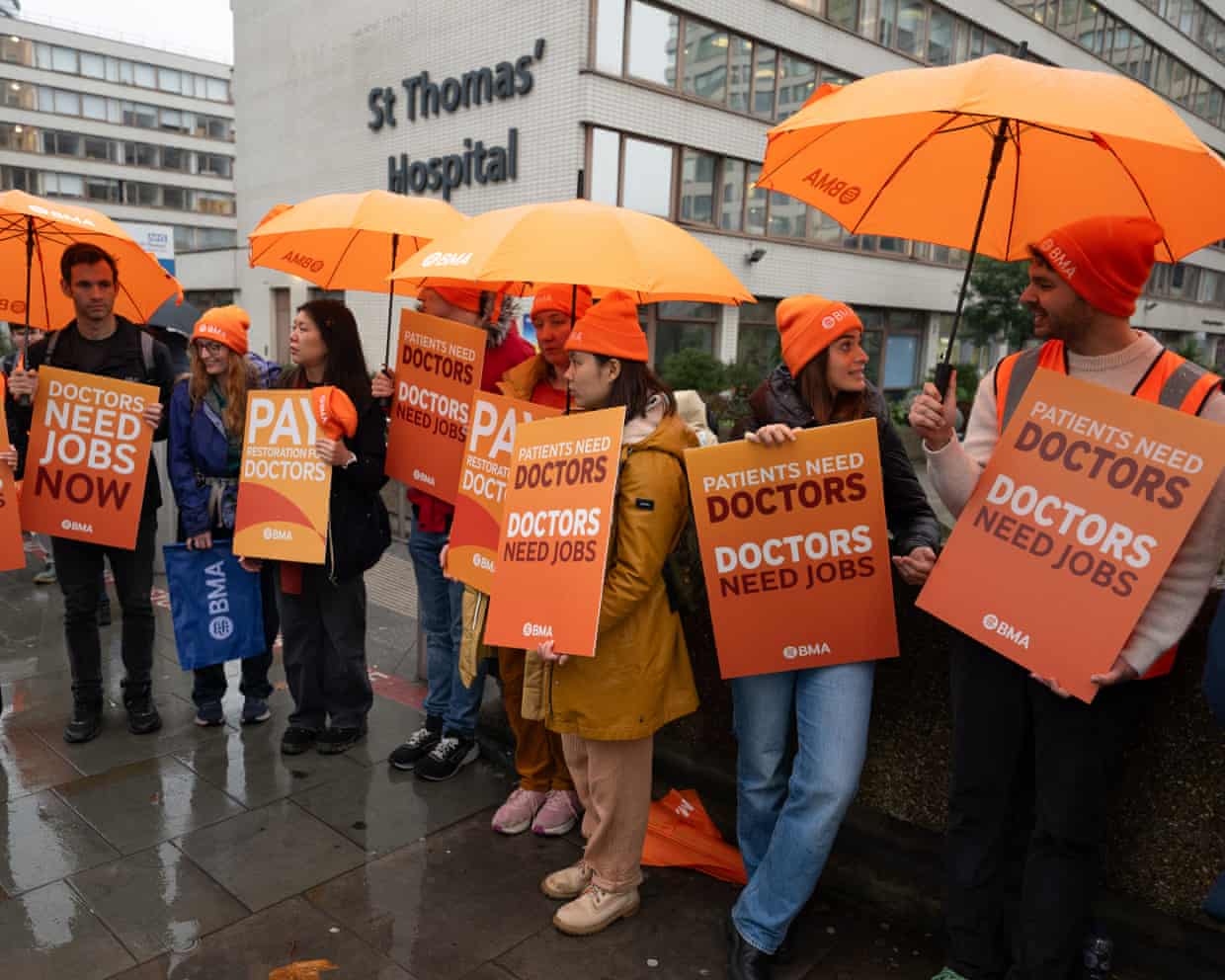
The NHS is urging patients not to put off seeking the care they need when resident doctors press ahead with strike action from Tuesday, a stoppage that the health secretary has called “disappointing”.Tens of thousands of resident doctors in England are to stage a six-day strike after the government took a key part of its offer off the table.The Department of Health and Social Care said last week that an offer of 1,000 extra training places would no longer be “financially or operationally” possible.NHS England said hospital teams across the country would be working to minimise disruption for patients during the stoppage, which is “expected to be particularly challenging” because of a shorter notice period.Patients have been advised to attend planned appointments unless they have been contacted to reschedule, and those with life-threatening emergencies should still call 999 or attend A&E

Say it right! The trouble with unfamiliar names | Letters
Priti Ubhayakar’s article resonated with me because of my non-English surname (A moment that changed me: for the first time in my life, a stranger pronounced my name correctly, 1 April). I grew up in the 1950s on a very English council estate. Most other kids were a Brown, Smith, Jones, etc, but I was an Uszkurat. My lineage is complex on my dad’s side, with a Lithuanian grandfather whose original name was changed to Uszkurat by, I think, German authorities. My dad was born in a part of Europe that was German until the Treaty of Versailles made it part of the new Poland

Universal Music, home to Taylor Swift and Drake, receives €55bn takeover offer

Oil back above $110 in volatile markets as Trump deadline looms for Iran to reopen strait – as it happened

An AI company with an arsenal of spacecraft: what exactly is SpaceX?

Porn, dog poo and social media snaps: the ‘taskers’ scraping the internet for Meta-owned AI firm
Sale believe Courtney Lawes can regain England place after veteran signs one-year deal

Drone racing to drone strikes: have war and sport become indistinguishable?