What to know when the ban on most US hemp products goes into effect
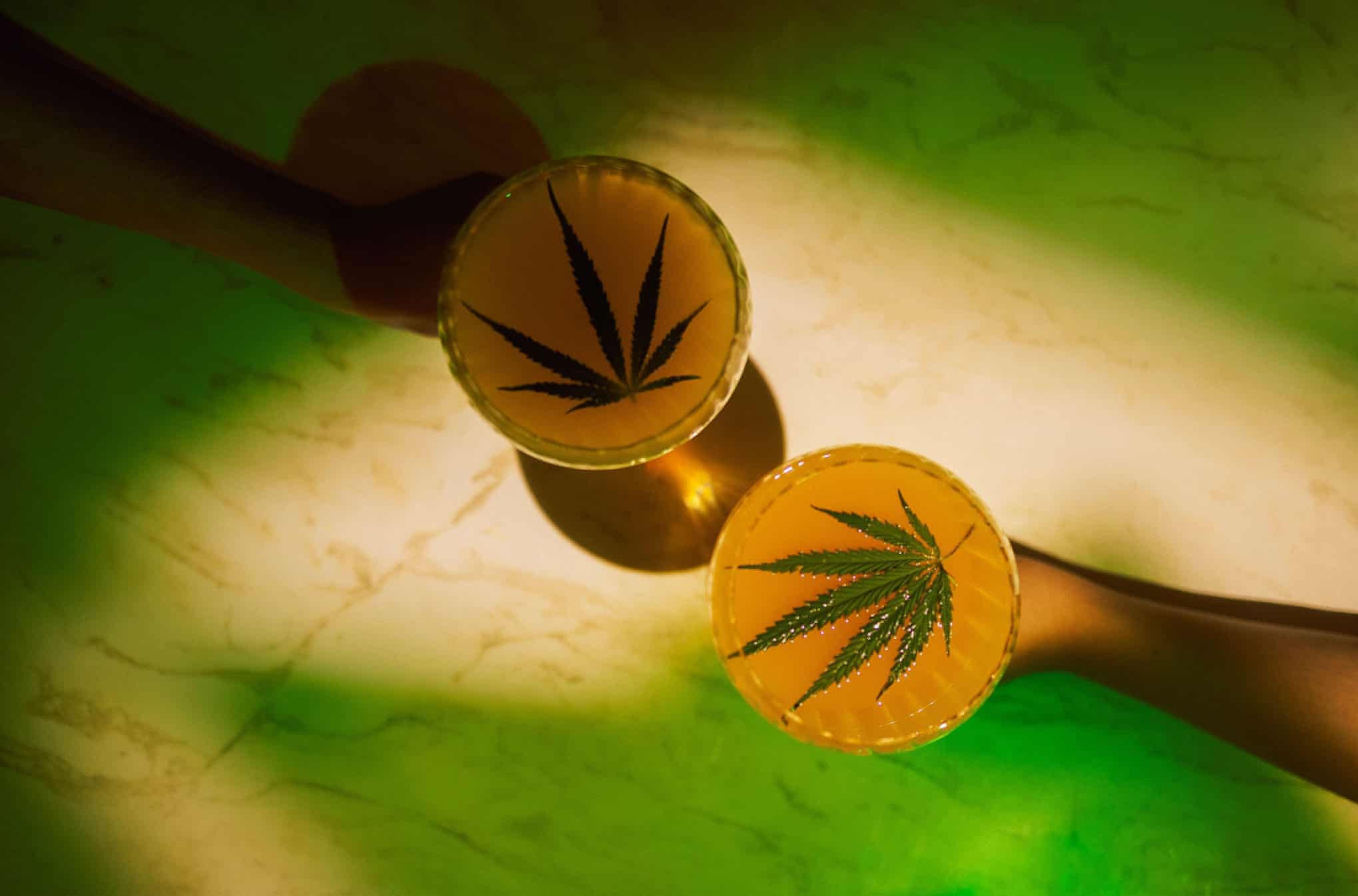
Ban set to be enforced in November 2026 will change pricing, availability and composition of productsCongress voted to ban most hemp-derived products last month in a last-minute addition to the spending bill that ended the government shutdown.The ban, set to be enforced in November 2026, will change the pricing, availability and composition of some of the most popular hemp-derived products on the market, like CBD tinctures and balms and THC drinks.Here’s what you need to know.It depends on what state you live in.Jonathan Miller, general counsel for US Hemp Roundtable, says that states that have passed laws to allow regulated, legal hemp, the market will probably continue to operate similarly to state-level recreational and medical cannabis markets.
“States have got marijuana programs that are federally illegal and they still sell products,So that will continue,” he said,As the law stands now, hemp is defined as any product derived from plants containing less than 0,3% delta 9 THC, while recreational and medical cannabis products that are exclusively available in state licensed dispensaries can contain any amount of delta 9 THC,If the ban goes into effect as written, legal hemp products will be redefined so that they can contain only 0.
4 mg of any kind of THC per package – a trace amount that is found in most hemp-derived products, including those whose main component is CBD.For states that have passed their own hemp regulations, like Minnesota, Kentucky and Louisiana, Maine, Pennsylvania, Indiana, Iowa, New Mexico, Tennessee, New York and Illinois, Miller believes those markets will continue to exist but in a much more limited form.“The problem is there’ll be no more interstate commerce,” Miller said, meaning it will no longer be possible to ship hemp products from one state to another, and online sales will be much more restricted.Products sold in state-legal cannabis dispensaries tend to have much higher price tags than retailers of legal hemp-derived products, because they are subject to more regulations.When the federal hemp ban goes into effect, retailers of hemp products will see their product become more expensive in state-legal markets because they will also be subject to some of those same restrictions.
The most draconian comes from section 280-E of the tax code, which makes it illegal for businesses to deduct expenses related to illicit substances.If hemp products are subject to 280-E, producers will be forced to pay more in taxes and pass those prices on to the consumer.Since hemp markets will also have to shrink to the state level, the cost to manufacture each product is likely to also go up.“There’s economies of scale.If you’re only able to sell within that state, it becomes a lot more expensive for the individual product,” Miller said.
In states where there is no legal hemp framework, hemp companies might have no choice but to try to get their products into state legal cannabis dispensaries,Josh Kesselman, CEO of Raw, which sells rolling papers made from hemp, said the price of CBD products specifically will rise astronomically,He compares the ban to the current situation in Canada, where he now lives,“It’s incredibly expensive and difficult for me to get a CBD balm because the Canadian government considers it to be a cannabis product, and therefore you have to buy it from a licensed dispensary,” Kesselman said,The same thing could happen in the US, where he predicts CBD products that now cost $10 would sell for about $80 in a licensed dispensary.
“So your access goes down,” he added.THC drinks have soared in popularity in recent years, and may be under the biggest threat if the hemp ban goes through.Major alcohol distributors are responsible for getting THC drinks into liquor stores and without the profit that comes with interstate commerce, “there’s a lot of concern that a lot of distributors would just simply drop the products,” Miller said.Sign up to First ThingOur US morning briefing breaks down the key stories of the day, telling you what’s happening and why it mattersafter newsletter promotionThis change will come at a time when THC drinks are just getting established as a beverage category.For example, Nielsen recently added a THC seltzer category to their ranking system.
“It was really exciting when Nielsen entered the category, because it legitimized us in the grocery space,” said David Reich, CEO of Crescent Canna, which Nielsen ranked No 1 in THC seltzer sales.“In 12 months, if nothing changes, unless we become a different kind of company, we won’t exist.”If alcohol distributors stop carrying THC products, they might also lose some of their safety and consistency.While federal and state regulators don’t always manage to stop contaminants and other problems in products, Reich said “distributors have extremely high standards.They’re not going to jeopardize their businesses, to release less than the highest-quality products to their partners.
”If small amounts of THC are no longer allowed in CBD products, it will drastically change their effectiveness, says Kesselman.“The only one that really works are the full-spectrum CBD balms,” Kesselman.“Full spectrum” means that rather than just containing CBD isolate, they include THC and other cannabinoids and terpenes from the raw plant.Studies have shown that CBD is more effective in tandem with these other components, a phenomenon known as the “entourage effect”.If the ban does go through, there are ways to adapt.
Other plants also contain terpenes that could enhance the effect with CBD.“We’ll use mango terpenes, all these things we’ll try,” he said.“Everyone will do everything we can, but it won’t be the same as just having a natural plant.”Jasmine Johnson, CEO of the hemp company GŪD Essence, was more optimistic about the possibilities that other plants offer.“Many of the effects consumers love are not solely tied to cannabinoids – they’re tied to terpene expression,” Johnson said.
“Plants like lavender, chamomile, lemon balm, kanna, holy basil, cacao and even certain mushroom blends offer functional support for calm, focus and mood.We’re already researching these pathways through our formulation team and academic partners.”

Women’s prisons report finds 97 deaths in decade as self-harm hits record high
Over the past decade 97 women have died in prisons in England and Wales and incidents of self-harm among female prisoners have reached the highest level on record, a report has found.Inquest, the charity that produced the report, collated Ministry of Justice (MoJ) figures since 2015 to arrive at a total number of deaths. It said the numbers were evidence for its case that all women’s prisons should be closed.The deaths analysed by the report include those of Saria Hart, 26, who passed officers two suicide notes before taking her own life; Louisa Boultbee, 49, who had epilepsy and was found unresponsive in her cell after an apparent seizure, with two mandatory checks having been missed; and Aisha Cleary, a newborn baby whose 18-year-old mother gave birth alone in her cell despite pressing her cell bell twice.Inquest’s director, Deborah Coles, said: “The only certainty is that more deaths will follow unless the government radically changes direction

Leaked report reveals culture of bullying and harassment at scandal-hit NHS hospital
A culture of systemic bullying and harassment has been allowed to flourish among staff at one England’s most scandal-hit hospitals, a damning leaked report reveals.The safety of patients at Blackpool Victoria hospital was affected as a result of the failings, the report by the Royal College of Physicians (RCP) found.The report was provided to leaders at the Blackpool teaching hospitals NHS trust in January but its findings were not shared widely with staff until 10 months later, prompting concerns that employees’ ability to take urgent action on its 19 recommendations was compromised.Staff who spoke to the RCP inquiry team said that excessive workloads were handed to inexperienced doctors, leaving them fatigued and stressed while treating patients. They described a “keeping your head down culture” where their concerns were inadequately addressed

Having a dog can boost teenagers’ mental health, say scientists
Having a dog in the home could help boost teenagers’ mental health, research suggests, with scientists adding this could in part be down to the sharing of microbes.Prof Takefumi Kikusui, of Azabu University in Japan, who led the work, said being with dogs could reduce owners’ stress and stimulate the release of the bonding hormone oxytocin.But the research suggests there could be other reasons pooches may have a positive influence.“Several studies have reported the mental health benefits of dog ownership, and we have demonstrated that the microbiome may be one mechanism involved,” Kikusui said.Writing in the journal iScience, Kikusui and colleagues report how they analysed survey results from 343 mentally and physically healthy adolescents who participated in the Tokyo Teenager Cohort Study, of whom 96 were dog owners
Labour proposed in opposition how to introduce assisted dying via private member’s bill
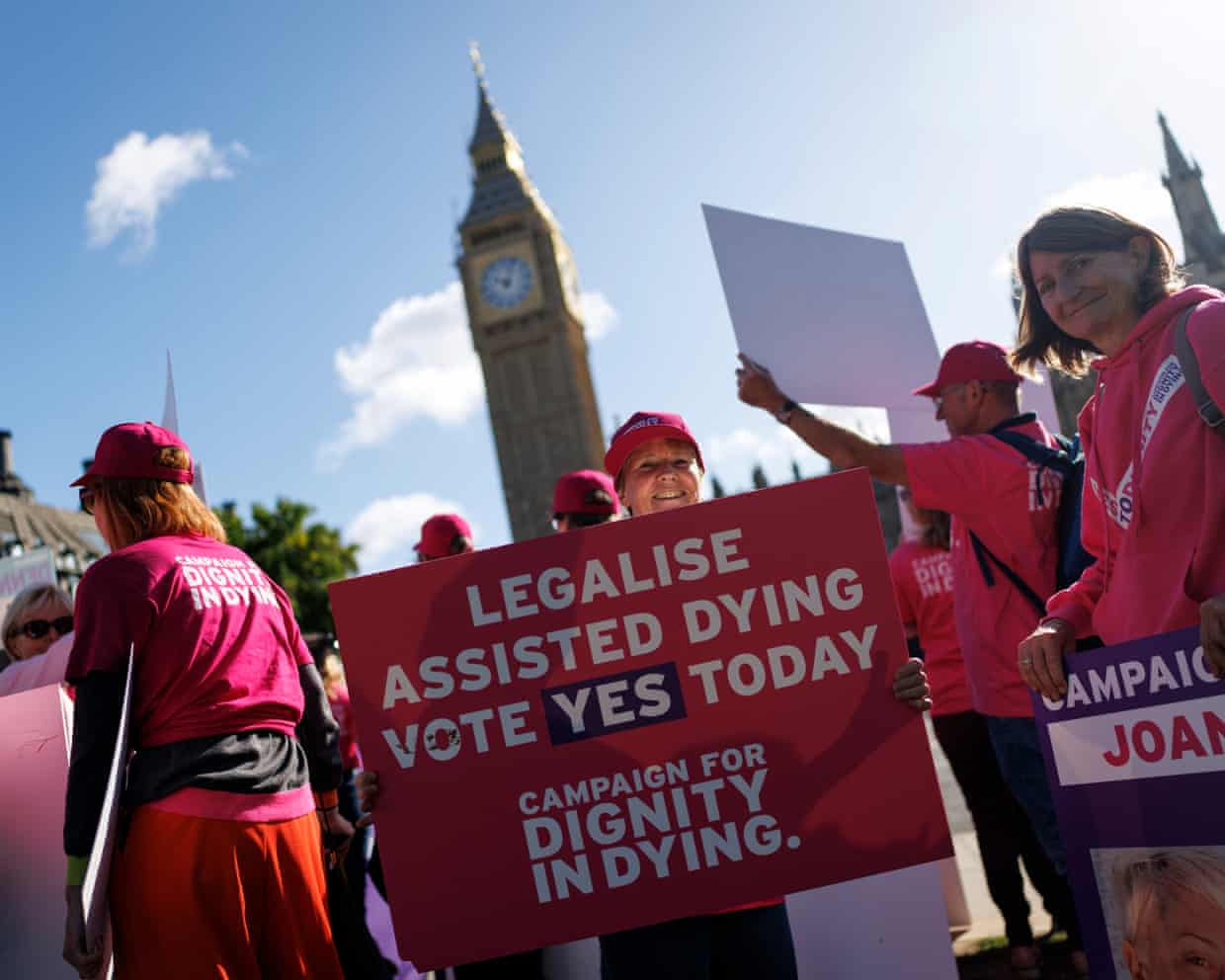
Labour proposed while in opposition how to introduce assisted dying via a private member’s bill, suggesting that would still allow “heavy influence” for the government in the process, a leaked document has revealed.The document, seen by the Guardian, proposed a change strikingly similar to the private member’s bill put forward eventually by the Labour MP Kim Leadbeater – to limit the change in the law to those who are “mentally competent, terminally ill and have a prognosis of less than six months left to live”.The leak will raise fresh questions over how much government control there has been behind Leadbeater’s bill and comes ahead of a major battle in the House of Lords continuing this Friday, where many opposing peers have tabled hundreds of amendments for debate, which has been seen by some as an effort to filibuster the bill.Because of the number of amendments, ten more sitting days have been assigned to debate but those on the pro-side still fear it will run out of time in the parliamentary session and have been holding private talks in an effort to persuade peers not to tie up the bill using parliamentary tactics.A Labour source opposed to the bill said the leak exposed “a shadow policymaking process, outside of the Labour manifesto, and with no consultation with MPs, unions or members, that sought to evade scrutiny on an issue of huge importance”
What to know when the ban on most US hemp products goes into effect
Ban set to be enforced in November 2026 will change pricing, availability and composition of productsCongress voted to ban most hemp-derived products last month in a last-minute addition to the spending bill that ended the government shutdown. The ban, set to be enforced in November 2026, will change the pricing, availability and composition of some of the most popular hemp-derived products on the market, like CBD tinctures and balms and THC drinks.Here’s what you need to know.It depends on what state you live in. Jonathan Miller, general counsel for US Hemp Roundtable, says that states that have passed laws to allow regulated, legal hemp, the market will probably continue to operate similarly to state-level recreational and medical cannabis markets

Scott Galloway on the masculinity crisis: ‘I worry we are evolving a new breed of asexual, asocial males’
When his book Notes on Being a Man was released last month, it raced to the top of the bestseller lists. The US author, tech entrepreneur and podcaster explains his theories on dating, crying – and the rise of Donald TrumpIt takes balls to title your book Notes on Being a Man. And, superficially, Scott Galloway could easily be lumped in with a dozen other manosphere-friendly alpha-bros promising to teach young men how to find their inner wolf. He is, after all, a wealthy, healthy, white, heterosexual, shaven-headed, 61-year-old Californian who made his name and fortune as a successful investor and podcaster.But in reality, he is almost the opposite: liberal, left-leaning and surprisingly sensitive

HSBC has a new chair but the succession process should have been slicker

UK using more wood to make electricity than ever, Drax figures show

Thames Water profits surge on higher bills; Prada buys Versace for $1.4bn – as it happened

Design boss behind new Jaguar leaves JLR weeks after change of CEO
HSBC appoints interim chair Brendan Nelson to permanent role

Thames Water faces collapse as crisis talks take ‘longer than expected’