Palantir’s UK boss criticises ‘ideological’ groups as ministers move to scrap NHS contract
Palantir’s UK boss has urged the government not to give in to “ideologically motivated campaigners” as government ministers explore a way out of a £330m NHS contract with the tech company.Ministers have sought advice on triggering a break clause in Palantir’s deal to deliver the Federated Data Platform (FDP), amid questions over the company’s presence in the public sector.The FDP is an AI-enabled data platform designed to connect disparate health information across the NHS, while Palantir also has contracts with the Ministry of Defence, several police forces and the UK’s financial watchdog.Louis Mosley, the executive vice-chair of Palantir in the UK, told the Times the government should resist calls to eject the company from NHS England’s data systems.“Having a review clause in a contract is good and normal practice.
However, what some ideologically motivated campaigners are suggesting should happen would harm patient care and prevent some of the biggest challenges facing the NHS from being tackled,” Mosley said.“That would be a mistake.The clear evidence of the past two years of delivery is that our software is helping.It is forecast to deliver £150m in benefits by the end of the decade, representing a £5 return for every pound spent.”The Financial Times reported on Sunday that ministers had taken soundings on triggering a break clause in the FDP contract when it becomes active next year.
Government officials have argued that it is feasible to transfer the running of the FDP, which Palantir is building, to another provider, the FT reported.Palantir, which takes its name from the all-seeing orbs in JRR Tolkien’s The Lord of the Rings, is a US data analytics company that also works for the Israeli and US militaries and Donald Trump’s ICE operation.The BMA, which represents NHS doctors, has said it has “long opposed the involvement of Palantir in the delivery of care and the use of patient data in our NHS”.Health officials have expressed fears that Palantir’s reputation will affect delivery of the FDP contract.While the government is at pains not to feed speculation about the trigger clause, sources said there was a growing recognition that the issue of Palantir and potential reputation risk had moved beyond the Labour left and Greens, who have led criticism in the past.
A Department of Health and Social Care spokesperson told the Guardian: “The NHS Federated Data Platform is helping to join up patient care, increase productivity, speed up cancer diagnosis and ensure thousands of additional patients can be treated each month – with strict requirements in place about data security and confidentiality.“Every hospital trust and integrated care board has their own instance of the IT platform, with complete control over who has access.”Sources close to the health secretary, Wes Streeting, point to comments he made to the Guardian Politics Weekly podcast, in which he was asked about ethical issues with engaging Palantir.Asked if he recognised that people were worried about the deal with Palantir, given his history and the fact that it was founded by Peter Thiel, an influential figure on the American right, he said: “Yes … When you look at some of the things Palantir’s leaders have said in the States, when you look at their political views and their outlook … If you were to put [Thiel] and some of those Palantir bosses on the political spectrum in the UK, they would be well off to the right of even Kemi Badenoch’s Conservative party.”However, he added that Palantir did not see the patient data handled by its systems.
“The platform they have given to us to improve our systems our performances, intelligence and tackling health inequalities, all of that is run by us, Palantir don’t see our patient data.Now I am in government I am in an even better position to assure myself and the public that that remains the case.One of the challenges remains.”The number of NHS organisations using Palantir technology has increased since June from 118 to 151, still short of the target of 240 by the end of this year.One prominent backbench Labour MP told the Guardian that Palantir was also starting to come up on the doorstep with voters.
Clive Lewis, who represents Norwich South, said: “It’s not something like the NHS itself, or the economy, it’s a second-order issue, but it is noticeable that people are aware and have mentioned it.”Palantir had become a byword for the anxiety many voters felt in relation to worries about AI and technological change, he said.“I would also imagine that there is a dawning realisation in Whitehall about how uniquely exposed Britain is in so many ways, whether that is food security or data, so there will be people who are reviewing issues such as whether it is the right thing to embed a company like Palantir in our infrastructure.“It’s obvious in the case of defence, but that also percolates down to healthcare data.What was unthinkable 18 months to a year ago in terms of our relationship with the US and US companies is now very much on people’s minds.
”
Marmite maker Unilever agrees $44.8bn deal to combine food arm with McCormick
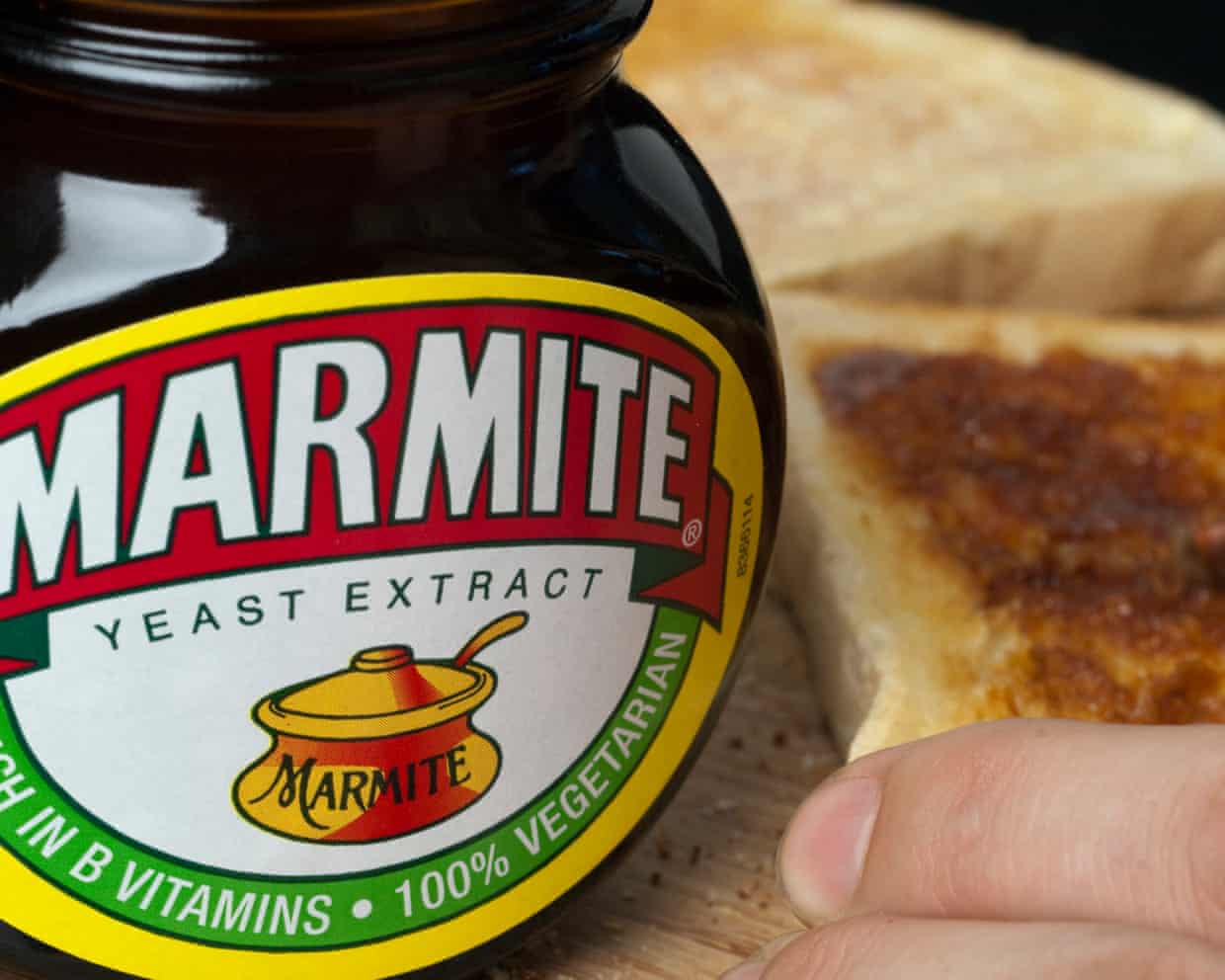
Unilever has agreed to combine its food business with US-based McCormick in a $44.8bn deal that will give the Marmite-to-Hellmann’s mayonnaise owner majority control of a food empire.The Anglo-Dutch company will control 65% of the new spin-off, which will combine brands such as Knorr and Pot Noodle with McCormick’s condiments and spices including French’s mustard, Old Bay seasoning and Cholula hot sauce.However, the combined company will be called McCormick and led by its executives, with senior management representation from the ranks of Unilever’s food business.Under the agreement, McCormick will pay London-listed Unilever $15

Centuries-old pottery firm Denby set to call in administrators
Denby has called in administrators, putting the 217-year-old Derbyshire pottery at risk of closure with the loss of almost 600 jobs.The company, which was rescued from administration in 2009 by the restructuring experts Hilco and also owns the Burleigh brand, produced by Burgess and Leigh based in Stoke-on-Trent, is understood to have struggled with the surging cost of gas, higher labour costs, tighter financial markets and softening consumer demand for its premium homeware.Earlier this month, Sebastian Lazell, the chief executive of Denby, told BBC News he was “trying to move heaven and earth” to save the business.A #SaveDenby campaign was launched in an attempt to encourage people to buy more products and to lobby the government to provide support.Denby Group said on Tuesday that “the outpouring of support” in response to the campaign had been “overwhelming and deeply moving” but it had been unable to secure “strategic investment partners” to help the business continue

Oil price jumps to $118 a barrel after Trump comments; cost of filling up family car with diesel passes £100 – as it happened
Time to wrap up…Brent crude, the international benchmark for oil prices, rose by as much as 5% to $118.43 a barrel after Donald Trump told allies to buy US jet fuel or “take it” from the strait of Hormuz.The US president wrote on his social media platform Truth Social:I have a suggestion for you: Number 1, buy from the U.S., we have plenty, and Number 2, build up some delayed courage, go to the Strait, and just TAKE IT
Steel bosses warn ‘back door’ loophole in UK trade rules could lead to job cuts and closures
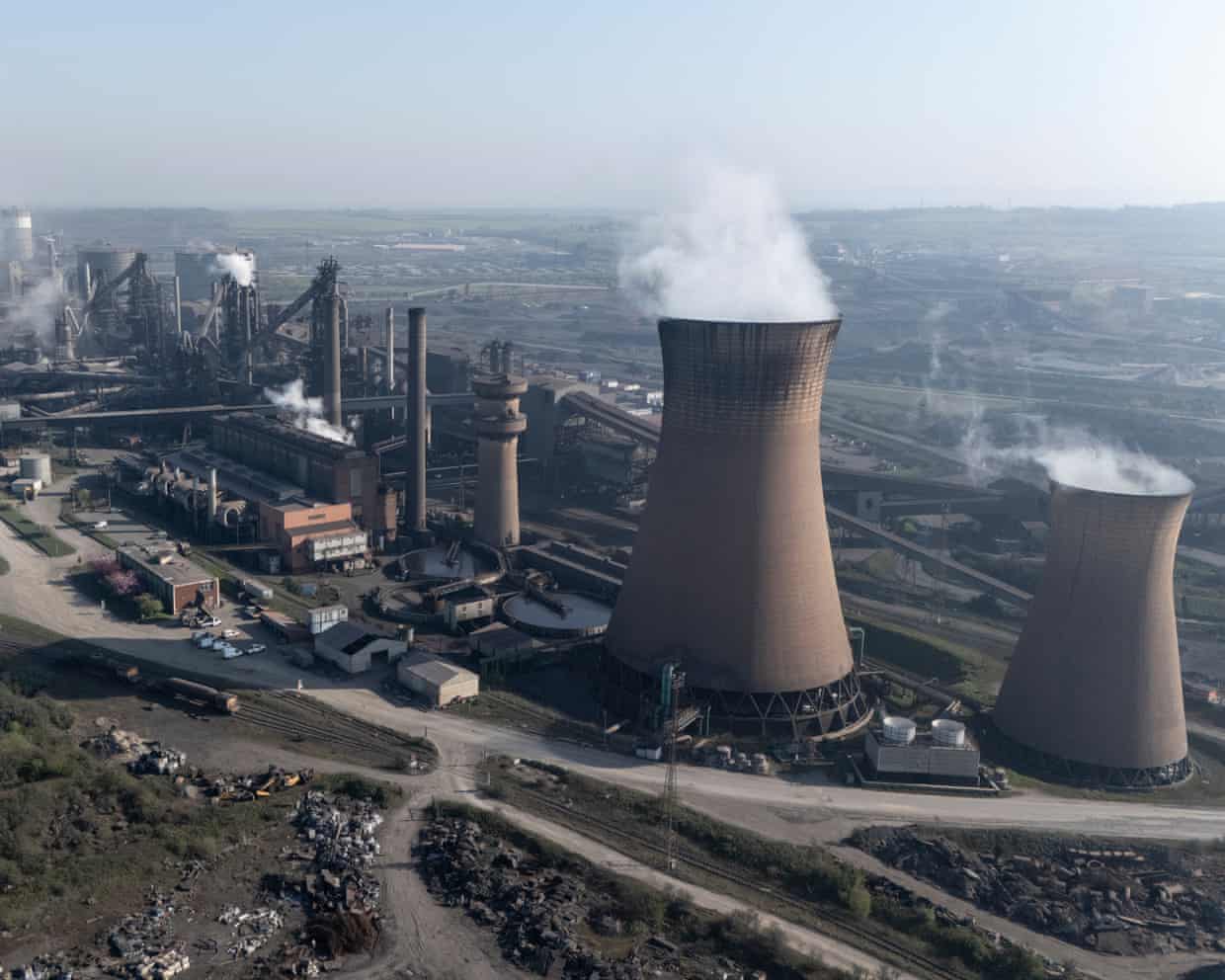
Steel bosses have warned ministers that a “back door” in new trade rules could hit British manufacturers and lead to job cuts and factory closures by allowing a vast array of foreign products to still enter the UK tax-free.The loophole means pre-made steel parts ranging from bridge sections, columns and door frames, all the way to smaller rods and tubes used in buildings, will escape recently announced import tariffs, the Guardian understands.Earlier in March, ministers said they would double tariffs on imported steel and cut the amount that can be bought from abroad in an attempt to protect Britain’s struggling steelmakers from a flood of cheap imports from China.But industry bosses say the measures overwhelmingly target imports of the metal straight from the furnace – protecting the likes of Tata and British Steel – but leave products that have already been drilled and cut into shape untouched.The rules allow foreign pre-made steel in via a “back door”, said Simon Boyd, the managing director of Reidsteel, a maker of structural building parts that employs about 130 people

Food price rises unlikely before summer, says boss of Sainsbury’s
Shoppers will not see food prices rise until at least the summer and Easter will be unaffected by conflict in the Middle East, the boss of Sainsbury’s has said, despite fears of an inflation spike.Simon Roberts said it was “too early” to say whether and when food price inflation related to higher commodity costs would hit supermarket shelves and that the UK’s second-largest supermarket had long-term agreements with suppliers to help protect shoppers.“We have a lot of the tools to make sure we’ll do everything possible to contain the impact on inflation,” he said. “Obviously we are watching and monitoring events closely.“We’re not looking at immediate consequences or near-term consequences that we don’t think we’ve got a plan to navigate

UK house prices rose sharply in March but Iran war expected to cause slowdown
UK house prices increased at the fastest rate in almost 18 months in March, although surging mortgage rates amid the Iran war are likely to lead to a market slowdown, according to Nationwide.The UK’s biggest building society said the price of a typical UK home increased by 0.9% month on month in March, the largest increase since December 2024.The increase, which compares with a 0.3% rise recorded in February and is ahead of economists’ expectations of 0
Nigel Farage to snub US conservative conference brought to UK by Liz Truss

Zack Polanski meets unions in attempt to get them to switch party funding to Greens

Kemi the attention seeker somehow always makes two plus two equal five | John Crace
Zack Polanski tells NEU teachers’ union that Greens would abolish ‘toxic’ Ofsted – as it happened

Starmer pledges to tackle new cost of living crisis at May elections campaign launch
MPs wary of move against Starmer while war is raging