Original Bramley apple tree ‘at risk’ after site where it grows put up for sale
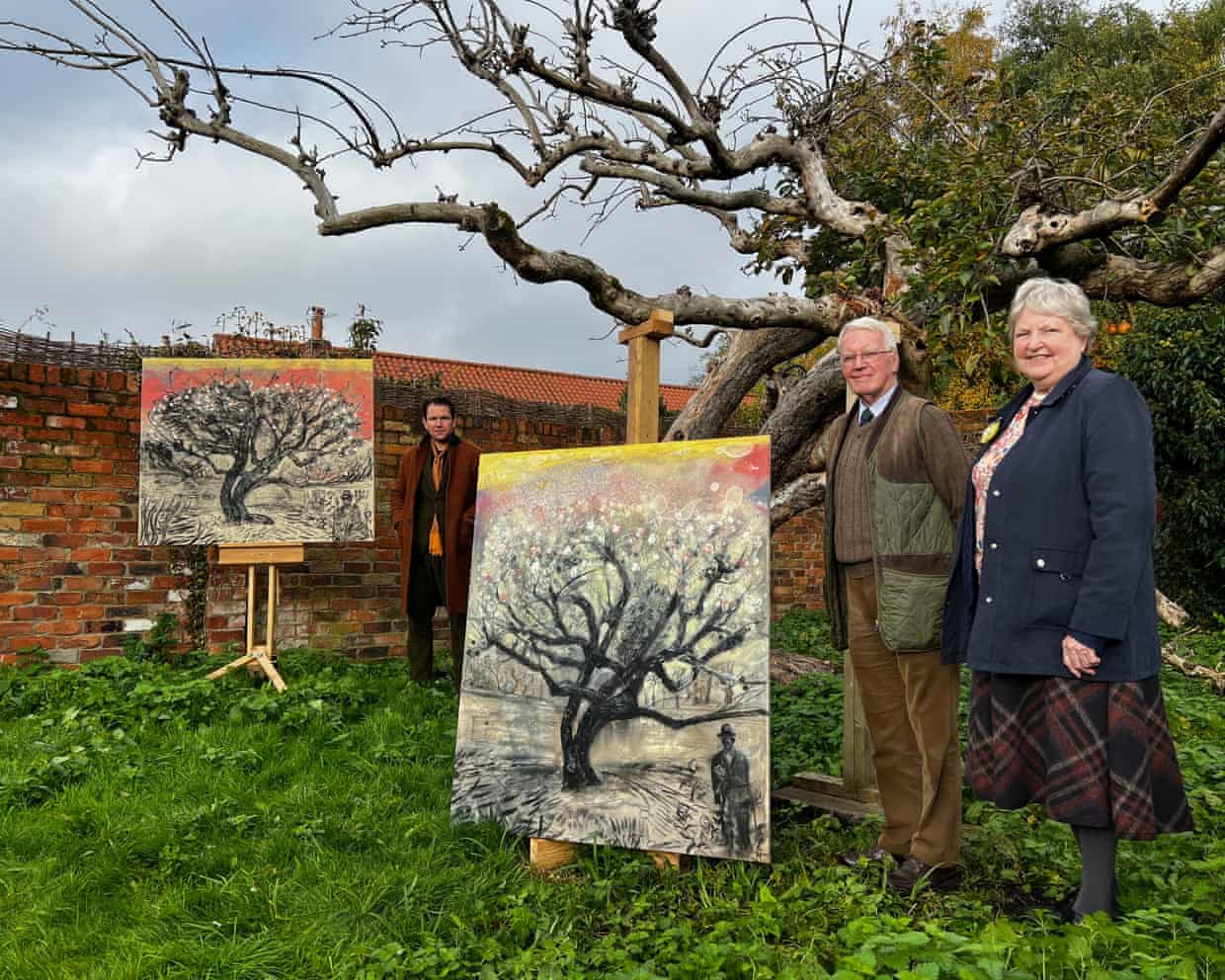
The future of the original Bramley apple tree, which is responsible for one of the world’s most popular cooking apples, is at risk now that the site where it grows has been put up for sale, campaigners have warned.The tree is situated in the back garden of a row of cottages in Southwell, Nottinghamshire, which has been owned by Nottingham Trent University since 2018 and has been used as student accommodation.The university said the site was for sale due to the “age and configuration” of the cottages, which made them no longer suitable for accommodation.The great granddaughter of the man who first introduced the Bramley apple commercially said she was “very concerned” for the future of the tree and it needed to be protected.“It’s a very famous tree.
It’s a very well-loved tree and it means a lot,” Celia Steven, 85, said,“Sadly people are a bit prone to cut down trees and think about it later so I find it very disturbing,”The more than 220-year-old tree was grown from a pip planted by Mary Anne Brailsford between 1809 and 1815,Its apples were discovered nearly 50 years later by local gardener Henry Merryweather in a garden owned by Matthew Bramley,Merryweather was given permission to take cuttings from the Bramley seedling as long as the apples he sold bore Bramley’s name.
Steven said her great-grandfather, Merryweather, “believed in that apple, he commercialised it, he marketed it, he promoted it … he called it the ‘King of Covent Garden’”.Since then, it has become one of Britain’s best-loved cooking apples.Despite the historic nature of the tree, it has never been granted a tree preservation order, which would protect it under law and prevent it from being chopped down.It has, however, been recognised by the royal family.In 2002, the queen’s golden jubilee cited the Bramley as one of the 50 “great British trees” and two decades later it was recognised as part of a selection of 70 ancient trees dedicated to the queen for the platinum jubilee.
Steven said: “Our ancient trees are not protected in the way they should be.They’re not revered in the way they should be.They’re very special to this country and when we have got such things we do need to look after them and protect them for the future.”Dan Llywelyn Hall, the founder of the Mother Bramley legacy fund, said such heritage trees should never be at risk like this.The 45-year-old artist, who is hoping to fundraise £400,000 with the Merryweather family to buy the site, said the tree had been “in a state of neglect” since the university bought the cottages.
Despite this, and the fact the Bramley was diagnosed with an incurable honey fungus, it is still alive and producing apples, he said.“It can’t be understated, it’s the most important, most famous apple tree in the world.It’s produced a million-in-one apple which is highly regarded in the culinary world.The fact we have the original still alive is quite an extraordinary thing,” he said.“It brings a bigger national discussion up here as to why we are terrible in this country at looking after our heritage trees,” he said.
A Nottingham Trent University spokesperson said: “NTU is proud to have been the latest custodian of the Bramley apple tree and to have played a part in helping to safeguard and celebrate its legacy.“When the university became custodian it was well known that the tree had outlived its natural lifespan by quite some time.We have worked hard using our academic expertise to maintain it in the most careful and appropriate way for a tree of this age and condition and been delighted to provide access to members of the public and for annual events such as the Bramley apple festival and Heritage Open Days.Without the dedication and hard work of our colleagues, we believe it would have deteriorated significantly further.“We were visited by an independent tree specialist last year who paid tribute to the work we have done to both maintain and celebrate it.
We also reached out individually to people in Southwell with a special connection to the tree before the cottages were listed for sale and, again, people expressed support for the work we have undertaken.“The university aims to ensure that the tree will remain in the care of a responsible custodian.We will also continue to provide expert guidance and support to them on how to care for the tree.”
NHS deal with AI firm Palantir called into question after officials’ concerns revealed
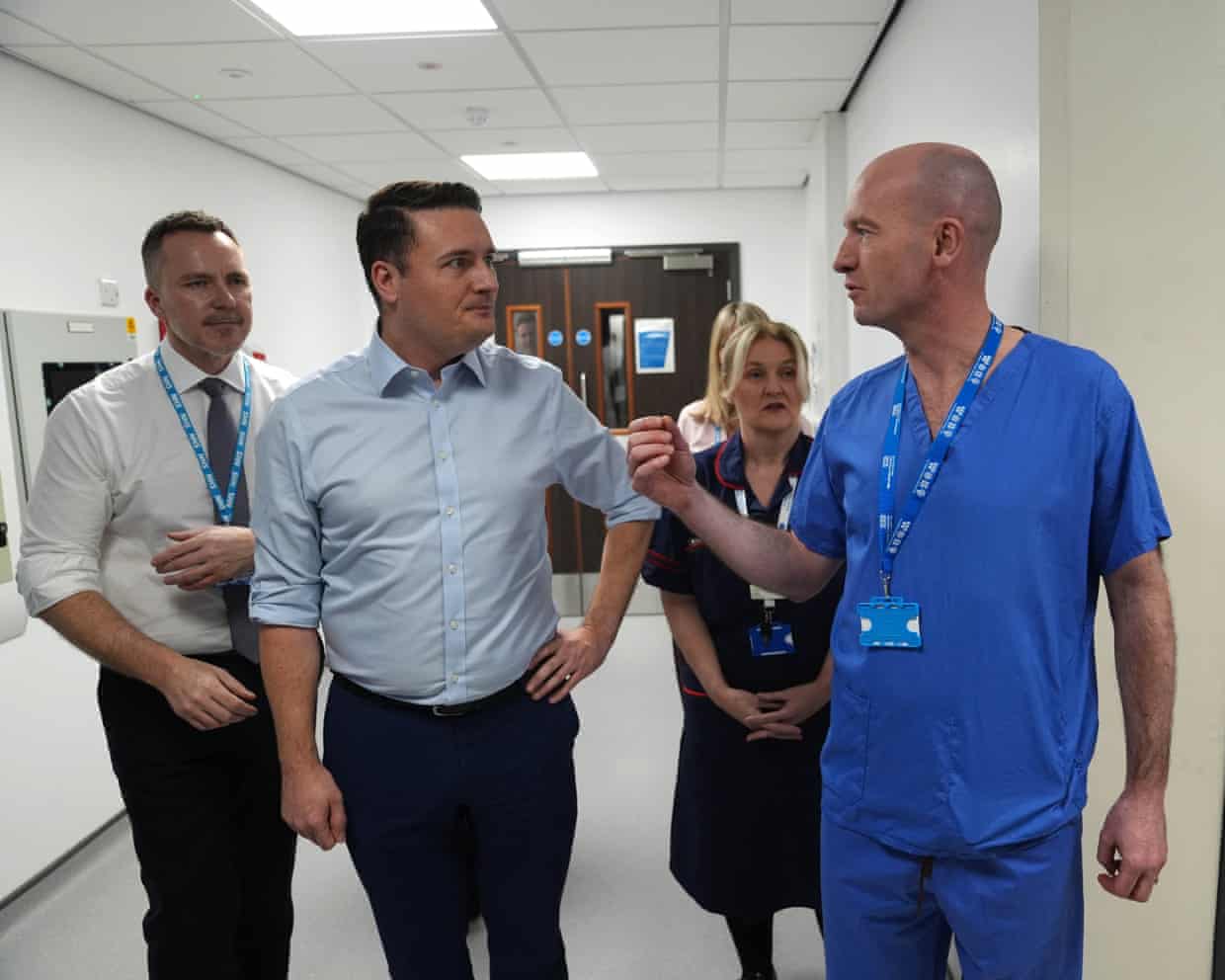
Health officials fear Palantir’s reputation will hinder the delivery of a “vital” £330m NHS contract, according to briefings seen by the Guardian, sparking fresh calls for the deal to be scrapped.In 2023, ministers selected Palantir, a US surveillance technology company that also works for the Israeli military and Donald Trump’s ICE operation, to build an AI-enabled data platform to connect disparate health information across the NHS.Now it has emerged that after Keir Starmer demanded faster deployment, Whitehall officials privately warned that the public perception of Palantir would limit its rollout, meaning the contract would not offer value for money.By last summer fewer than half of health authorities in England had started using the technology amid opposition from the public and doctors. The British Medical Association (BMA) has said its members could refuse to use parts of the system citing Palantir’s role in targeting ICE raids in the US
Health unions call 3.3% pay rise for 1.4m NHS staff in England ‘an insult’
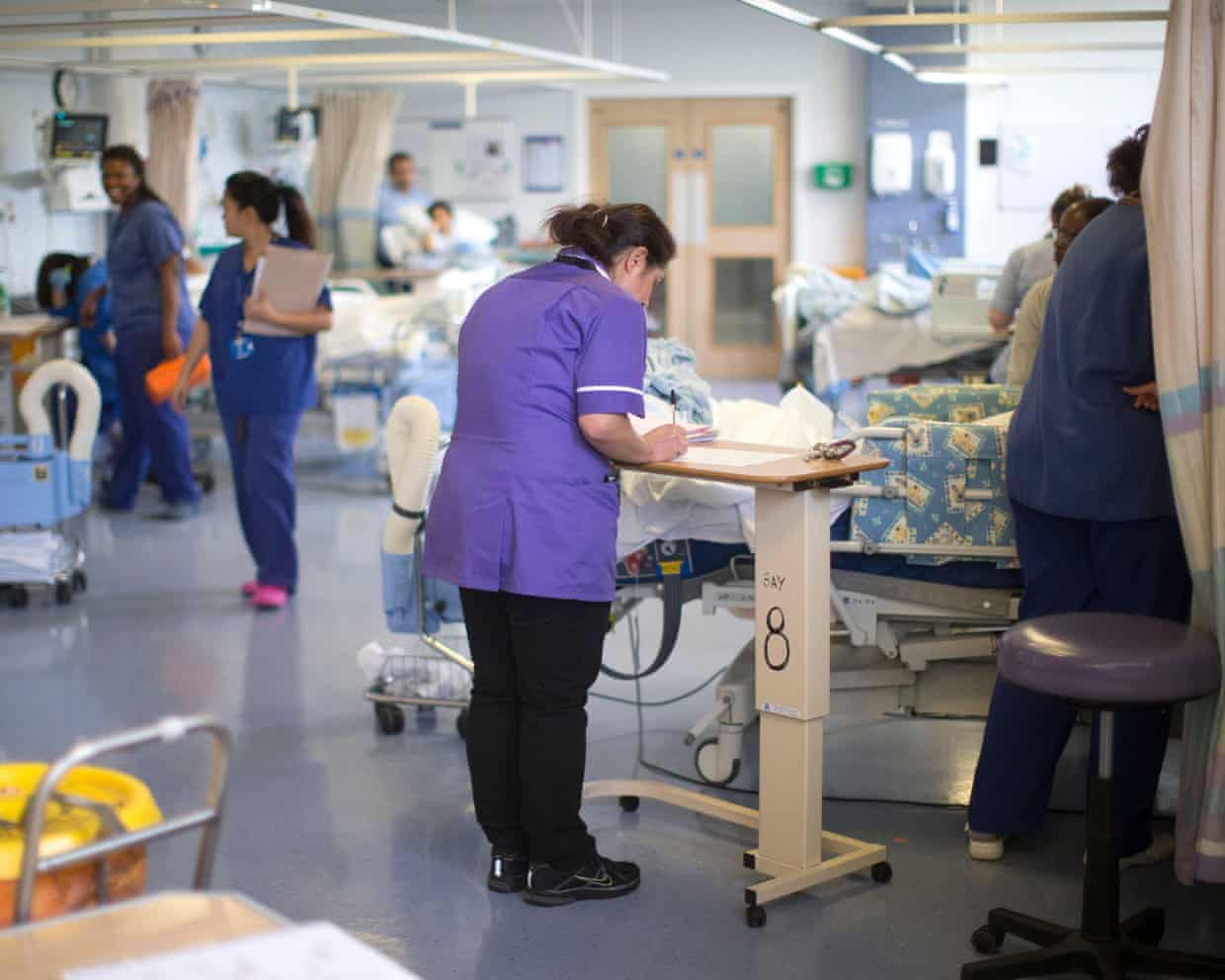
Health unions have criticised the 3.3% pay rise imposed on 1.4 million NHS staff in England as “an insult”, with one threatening to strike over the below-inflation award.They described the increase announced by Wes Streeting, the health secretary, as a “betrayal” of the frontline workers – including nurses, midwives and porters – who will receive it for 2026-27. The 3
Children’s vocabulary shrinking as reading loses out to screen time, says Susie Dent
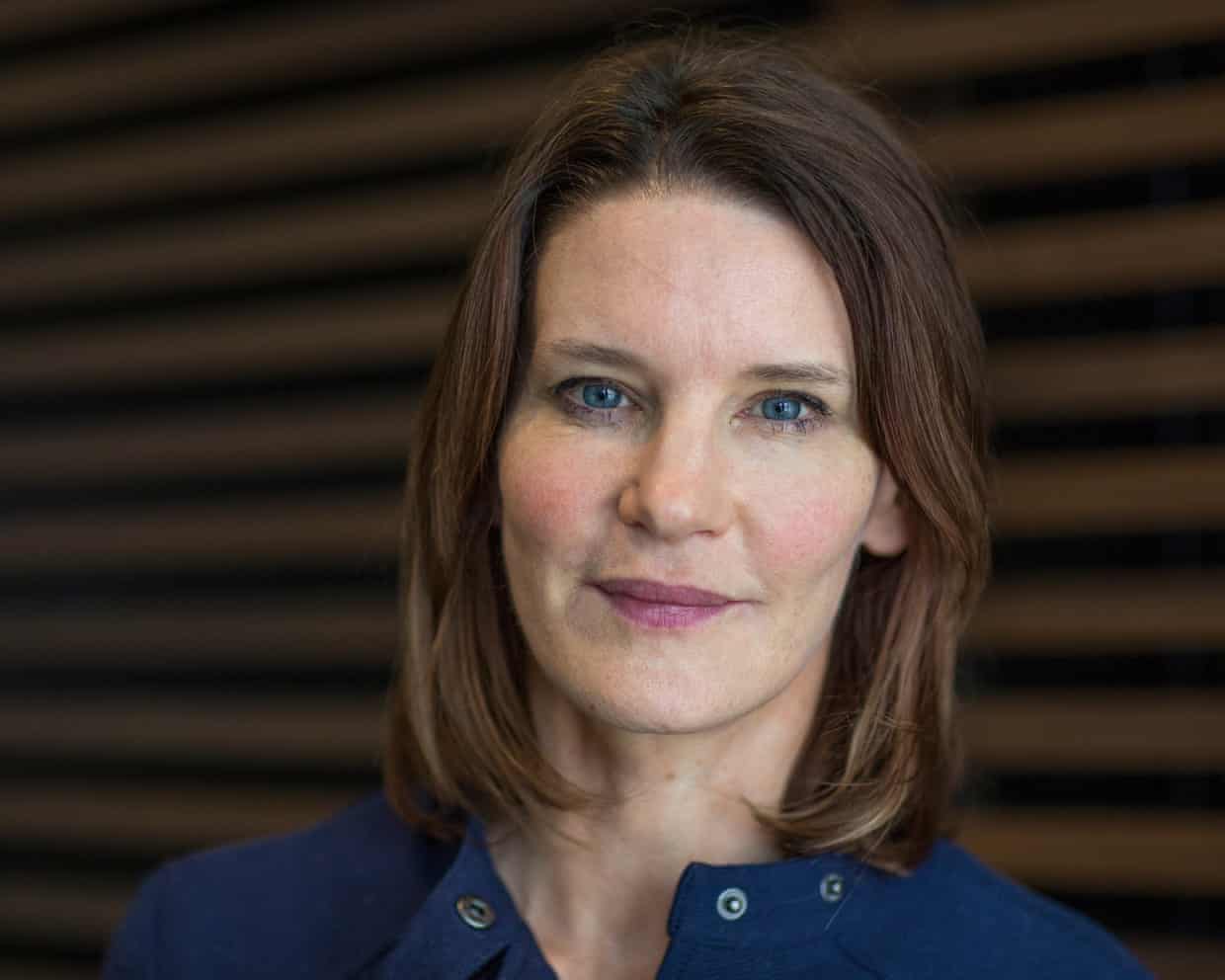
Children’s vocabulary is shrinking as reading loses out to screen time, according to the lexicographer Susie Dent, who is urging families to read, talk and play word games to boost language development.The Countdown star’s warning comes as the government prepares to issue its first advice to parents on how to manage screen use in under-fives, amid concerns that excessive screen time is damaging children’s language development.“So many children are now falling behind,” Dent said. “The vocabulary gap is getting bigger and there is a real perception that vocabulary development is suffering and that impacts on learning.”Citing a 2023 Oxford University Press report that found that two in five pupils had fallen behind in vocabulary development, she said: “There is a huge perception that screen time is having a negative impact on vocabulary, and I think that’s because it is taking away from reading time

Youth work ‘black holes’ in half of all council areas in England, study finds
Almost half of all council areas in England have youth work “black holes” with few or no services despite high levels of deprivation and antisocial behaviour, analysis shows.The first mapping in decades of youth centres across the country has revealed a nationwide crisis in youth support and significant inequality. Poorer areas in the north of England are shown to have been the worst affected by cuts to youth services since 2010.The research, produced by the charity funder Social Investment Business (SIB) and the University of Leeds, plotted youth services against the needs of the local population for the first time and found “a consistent picture of youth work black holes” across the country.Bethia McNeil, the director of quality and impact at the YMCA, the country’s largest youth charity, said: “Having this data is critical – we haven’t had anything like this in a very long time, probably since 2010, and youth provision has changed dramatically since then
One in 14 children who die in England have closely related parents, study finds
One in 14 children who died in England in a four-year period had parents who were close relatives, according to “stark” figures revealed by the first study of its kind.The figures, published by the National Child Mortality Database (NCMD), based at the University of Bristol, analysed all 13,045 child deaths in England between 2019 and 2023. Of these, 926 (7%) were found to be of children born to consanguineous parents, meaning the mother and father are close blood relatives, such as first cousins.Although the exact number of children with consanguineous parents across England is unclear, the data clearly shows their overrepresentation within mortality statistics and requires “urgent action”, according to researchers.The largest geographical estimate of consanguinity currently available is from a large study following the lives of 13,000 babies born in Bradford

Reading and writing can lower dementia risk by almost 40%, study suggests
Reading, writing and learning a language or two can lower your risk of dementia by almost 40%, according to a study that suggests millions of people could prevent or delay the condition.Dementia is one of the world’s biggest health threats. The number of people living with the condition is forecast to triple to more than 150 million globally by 2050, and experts say it presents a big and rapidly growing threat to future health and social care systems in every community, country and continent.US researchers found that engaging in intellectually stimulating activities throughout life, such as reading, writing or learning a new language, was associated with a lower risk of Alzheimer’s disease, the most common form of dementia, and slower cognitive decline.The study author Andrea Zammit, of Rush University Medical Center in Chicago, said the discovery suggested cognitive health in later life was “strongly influenced” by lifelong exposure to intellectually stimulating environments

Anthropic raises $30bn in latest round, valuing Claude bot maker at $380bn

How to deal with the “Claude crash”: Relx should keep buying back shares, then buy more | Nils Pratley
Share values of property services firms tumble over fears of AI disruption

Elon Musk posted about race almost every day in January
The big AI job swap: why white-collar workers are ditching their careers

Is it possible to develop AI without the US?