Is it possible to develop AI without the US?

Hello, and welcome to TechScape.Today in tech, we’re discussing the Persian Gulf countries making a play for sovereignty over their own artificial intelligence in response to an unstable United States.That, and US tech giants’ plans to spend more than $600bn this year alone.I spent most of last week in Doha at the Web Summit Qatar, the Gulf’s new version of the popular annual tech conference.One theme stood out among the speeches I watched and the conversations I had: sovereignty.
The conference’s founder set the Summit’s tone on opening night: “Three years ago [when Web Summit Qatar began], people were talking about entering a multipolar world.We are now living in a multipolar world,” said Paddy Cosgrave.As evidence, he referenced the fiery rebuke of Donald Trump given by the Canadian prime minister, Mark Carney, at Davos a few weeks prior.He pointed to the act that had preceded him on stage: dancing robots built by a Chinese company, which he called the most advanced in the world.Cosgrave also brought on two speakers who would act out the dynamics he had mentioned.
First was the Qatari prime minister, who announced a series of billion-dollar moves meant to foster startups in the country.Then came the Palestinian-Jordanian founder of UpScrolled, an insurgent TikTok competitor whose founder announced on stage that the app had crossed 2.5 million users amid the confused backlash to the new US entity of TikTok.As the US becomes a more unstable place to immigrate to and start a company, all three major Gulf powers are making a show of their multibillion-dollar push into AI.It’s not just Qatar that is spending big.
Last year, the UAE signed a deal with the US for advanced chips that will fill one of the largest datacenters in the world to be constructed outside Abu Dhabi.Saudi Arabia’s state-owned AI firm, Humain, has inked billions of dollars in deals to create a “full-stack AI ecosystem”, which is to say the kingdom wants its own datacenters, training data, cloud services and AI models, perhaps even its own chips.The aim of sovereign AI – artificial intelligence under the control of its home country from tip to tail – is explicit.The move towards greater AI capabilities in the Gulf does not entail an end to cooperation with the US, though.While I was there, a newspaper owned by members of Qatar’s ruling al-Thani family trumpeted a deal between Jared Kushner’s AI company, Brain Co, and Qatar’s ministry of municipality to automate construction permitting.
The first line in the story gives an idea of the message: “Qatar is gaining prominence as a key player in practical artificial intelligence employment, leveraging partnerships that combine Silicon Valley expertise with local knowledge,”Will the Gulf’s push for its own AI succeed? That was the second question on everyone’s lips,(The first, of course, was: “Is AI a bubble?”) Multiple major factors are stacked against the region’s development of sovereign AI,Regional access to semiconductor chips is limited, though growing by hook or by crook,There is not enough homegrown engineering talent in the region to power an AI industry, but Doha offers India’s wellspring of engineers a much more attractive time zone for connecting with family than San Francisco does, as well as a price tag that’s lower than Trump’s $100,000 per visa.
For the construction of AI models, there is far less Arabic textual content online than English.Tech’s financiers, venture capitalists, are debating where to invest money amid the upheaval.The participants in one of the panels I moderated had competing visions.A French venture capitalist argued for backing startups across Europe and the Middle East.He and a German VC on another panel said that investing in the US had become more difficult in recent years due to huge valuations, which entail less percentage ownership for investors.
A partner at a venture capital fund that invests only in San Francisco firms argued that Silicon Valley’s companies possess a genuine moat that will fend off challengers and ergo are still the best bets to place.The Gulf is not alone in doing its best to build its own tech ecosystem.Europe is in the throes of similar angst over sovereignty, spurred on by Trump’s antagonism towards the region.But the bloc has crucial challenges to resolve.The EU’s relatively strict tech regulation has led to world-leading privacy protections for its citizens, but the continent’s tech sector is relatively weak in comparison with the laissez-faire US.
Will the EU’s parliament sacrifice the privacy guaranteed by the proposed AI Act in favor of the deregulation companies say they need?Europe’s governments are investing far less than the cash-rich petrostates in the Gulf.Can the EU’s companies and governments replicate all the tools they need without a significant influx of funding? France recently dumped Zoom, Microsoft Teams and Google Meet in favor of an application called Visio, which, coincidentally, is already the name of a Microsoft diagramming software.Belgium and the Netherlands are still essential for the global semiconductor supply chain, though only part of it.Elon Musk’s Starlink looms large over the continent as it attempts to boost the homegrown alternative Eutelsat, which has quite a long way to go to catch up to its American counterpart.One notable exception to Europe’s lagging at the Web Summit: the London startup ElevenLabs, seen as the developer at the forefront of generating voices and music with AI.
The company’s Polish founder announced on the first day that his company had closed a $500m fundraising round, led by blue-chip American firms, including the Maga-allied Andreessen Horowitz, which tripled ElevenLabs’ valuation.Bitcoin loses half its value in three months amid crypto crunchHow cryptocurrency’s second-largest coin missed out on the industry’s boomFiles cast light on Jeffrey Epstein’s ties to cryptocurrencyThroughout the past two weeks of quarterly earnings calls, Alphabet/Google, Amazon, Microsoft and Meta informed Wall Street that they would collectively spend more than $600bn in the coming year, mostly on the infrastructure that underpins AI.The amount of money dwarfs what many governments around the world spend to operate entire countries.Each company’s capital expenditure – money spent on fixed, physical assets (in this case the land, buildings and chips for datacenters) – equals or surpasses that of the past two years combined.Last year’s total for the four was $359bn, and 2024’s was $217bn, per Bloomberg.
Alphabet told Wall Street it would spend between $175bn and $185bn in the same time period, almost doubling from last year.Meta reported between $115bn and $125bn.Microsoft is slated to spend some $105bn, Bloomberg reports.Amazon stands out among the four for informing investors that its capital expenditure would increase the most, jumping from $125bn last year to $200bn in 2026.The day before Amazon’s earnings, Jeff Bezos’s Washington Post laid off a third of its staff.
The two are not directly linked corporations, but the contrast is stark.Bezos bought the Post in 2013 for 0.125% of what Amazon will spend this year alone, $250m.Even Tesla, an AI company in a more oblique sense than the others, revised its capital expenditure upward to $20bn, far more than analysts expected – or frankly wanted, given the company’s declining revenue.The figures are astronomical in scale, but there is reason to believe they will grow larger yet.
Take a look at the number of ads for AI products in the Super Bowl, which did their best to convince Americans that they actually like AI.The market for these products has not settled or matured into a sector with unseatable incumbents.AI is still a land grab, and the tech giants want to grab as much as they can.Why has Elon Musk merged his rocket company with his AI startup?Hail our new robot overlords! Amazon warehouse tour offers glimpse of futureSocial media companies are being sued for harming their users’ mental health – but are the platforms addictive?Anthropic’s launch of AI legal tool hits shares in European data companies

Declines in health and education in poor countries ‘harming earning potential’
Deteriorating health, education and training in many developing countries is dramatically depressing the future earnings of children born today, the World Bank has said.In a report, the World Bank urges policymakers to focus on improving outcomes in three settings: homes, neighbourhoods and workplaces.The report, Building Human Capital Where it Matters, finds that in 86 of 129 low- and middle-income countries health, education, or workplace learning declined between 2010 and 2025.Analysing the links with earnings, the World Bank says children born today in low- and middle-income countries could earn 51% more through their lifetime if their country’s human capital matched that of the best-performing nations at similar income levels.Mamta Murthi, its vice-president for people, said: “The prosperity of low- and middle-income countries depends on their ability to build and protect human capital

UK GDP: Chancellor Rachel Reeves predicts ‘stronger growth this year’ after UK economy ends 2025 ‘in the slow lane’ – business live
Reaction to the news that the UK grew by just 0.1% in the final quarter of 2025 (see earlier post) is rolling in, and City experts aren’t impressed.Lindsay James, investment strategist at wealth managers Quilter, warns that the picture is ‘rather bleak at the moment’.“A long list of data revisions from the ONS has revealed the UK economy barely kept its head above water in the final quarter of last year, with GDP growth coming in at just 0.1% after downward revisions to the previous two data prints
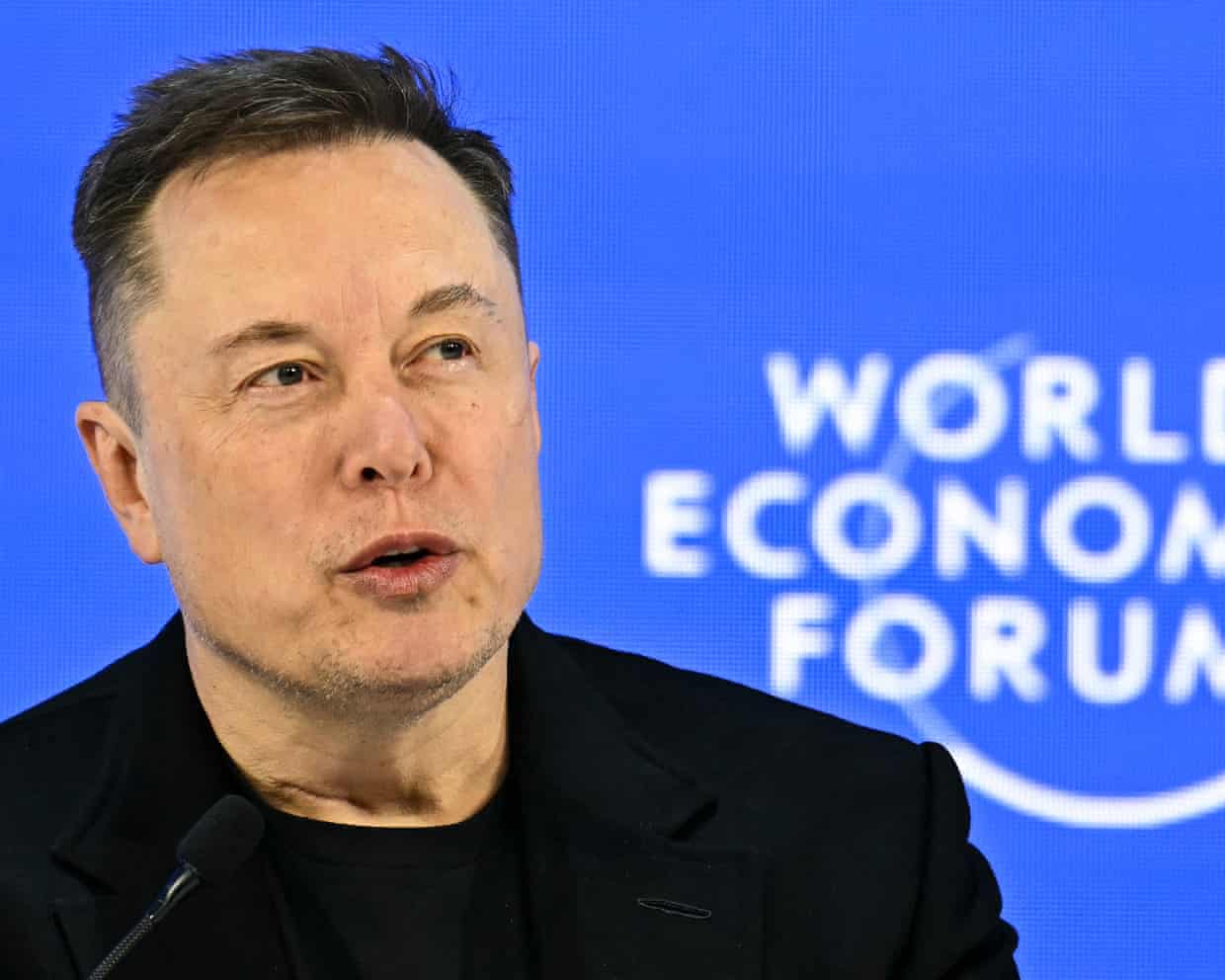
Elon Musk posted about race almost every day in January
Elon Musk’s longtime fixation on a white racial majority is intensifying. The richest man in the world posted about how the white race was under threat, made allusions to race science or promoted anti-immigrant conspiracy content on 26 out of 31 days in January, according to the Guardian’s analysis of his social media output. The posts, made on his platform X, reflect a renewed embrace of what extremism experts describe as white supremacist material.“Whites are a rapidly dying minority,” Musk said on 22 January, a short time before taking the stage at the World Economic Forum in Davos, while reposting an Irish anti-immigrant influencer’s video about demographic change.Musk’s posts included him repeatedly claiming white people face systemic discrimination, endorsing the conspiracy that there is an ongoing genocide against white people in countries around the world and promoting a claim that white people would be “slaughtered” by non-whites if they become a demographic minority
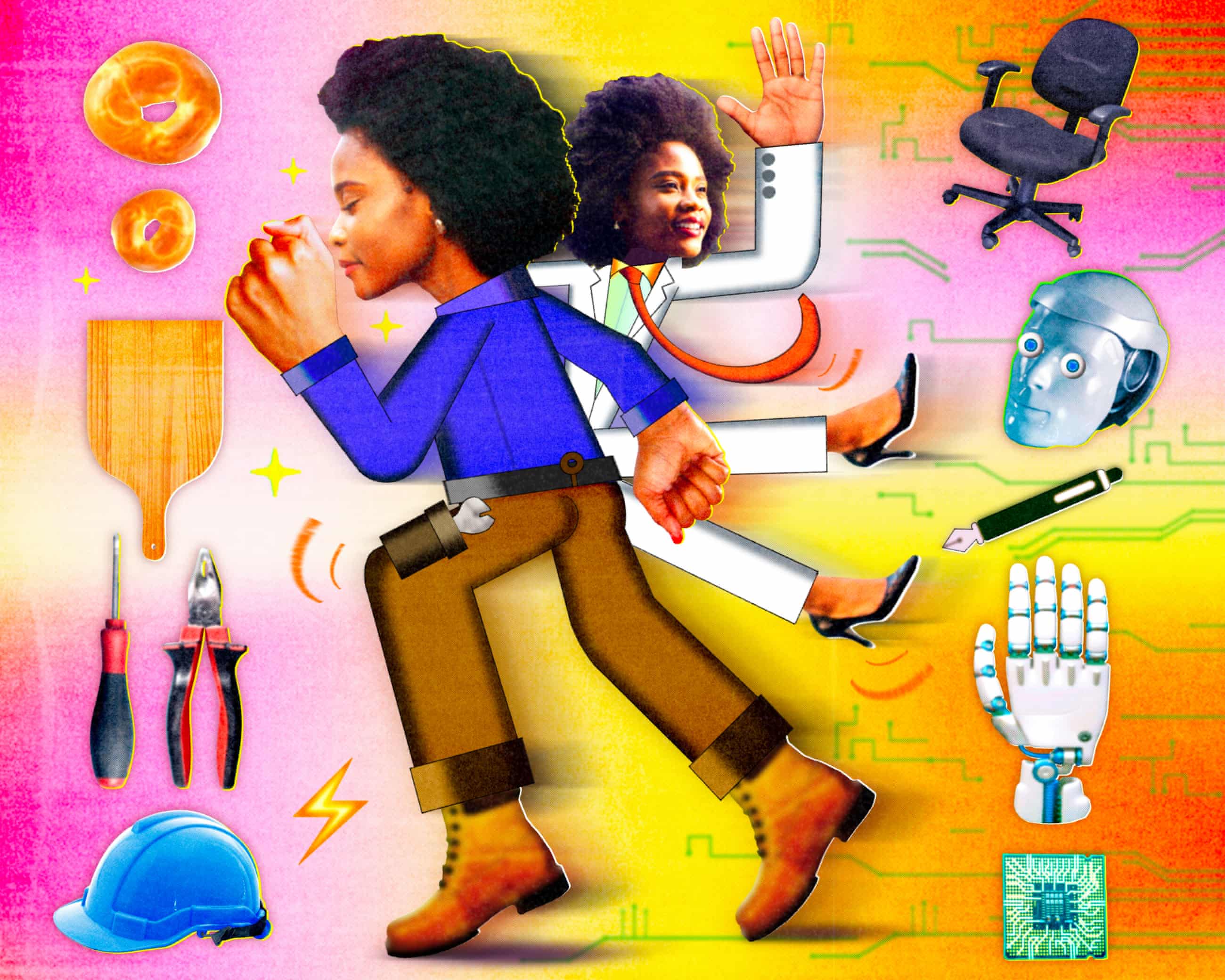
The big AI job swap: why white-collar workers are ditching their careers
As AI job losses rise in the professional sector, many are switching to more traditional trades. But how do they feel about accepting lower pay – and, in some cases, giving up their vocation?California-based Jacqueline Bowman had been dead set on becoming a writer since she was a child. At 14 she got her first internship at her local newspaper, and later she studied journalism at university. Though she hadn’t been able to make a full-time living from her favourite pastime – fiction writing – post-university, she consistently got writing work (mostly content marketing, some journalism) and went freelance full-time when she was 26. Sure, content marketing wasn’t exactly the dream, but she was writing every day, and it was paying the bills – she was happy enough

The scandals clouding ‘sinister’ French ice dancers who beat Chock and Bates for gold
The American duo of Madison Chock and Evan Bates, the reigning three-time world champions contentiously missed out on Olympic ice dance gold on Wednesday despite a flawless skate. But the controversy surrounding the event is not merely a debate over artistic and technical merits.Gold went by a narrow margin to the French duo of Laurence Fournier Beaudry and Guillaume Cizeron. It was a stunning achievement for a partnership that is less than a year old. But the union was forged after the fallout from sexual assault allegations levelled at Fournier Beaudry’s boyfriend and former ice dance partner, while Cizeron is the subject of allegations of abusive conduct from his erstwhile skating partner
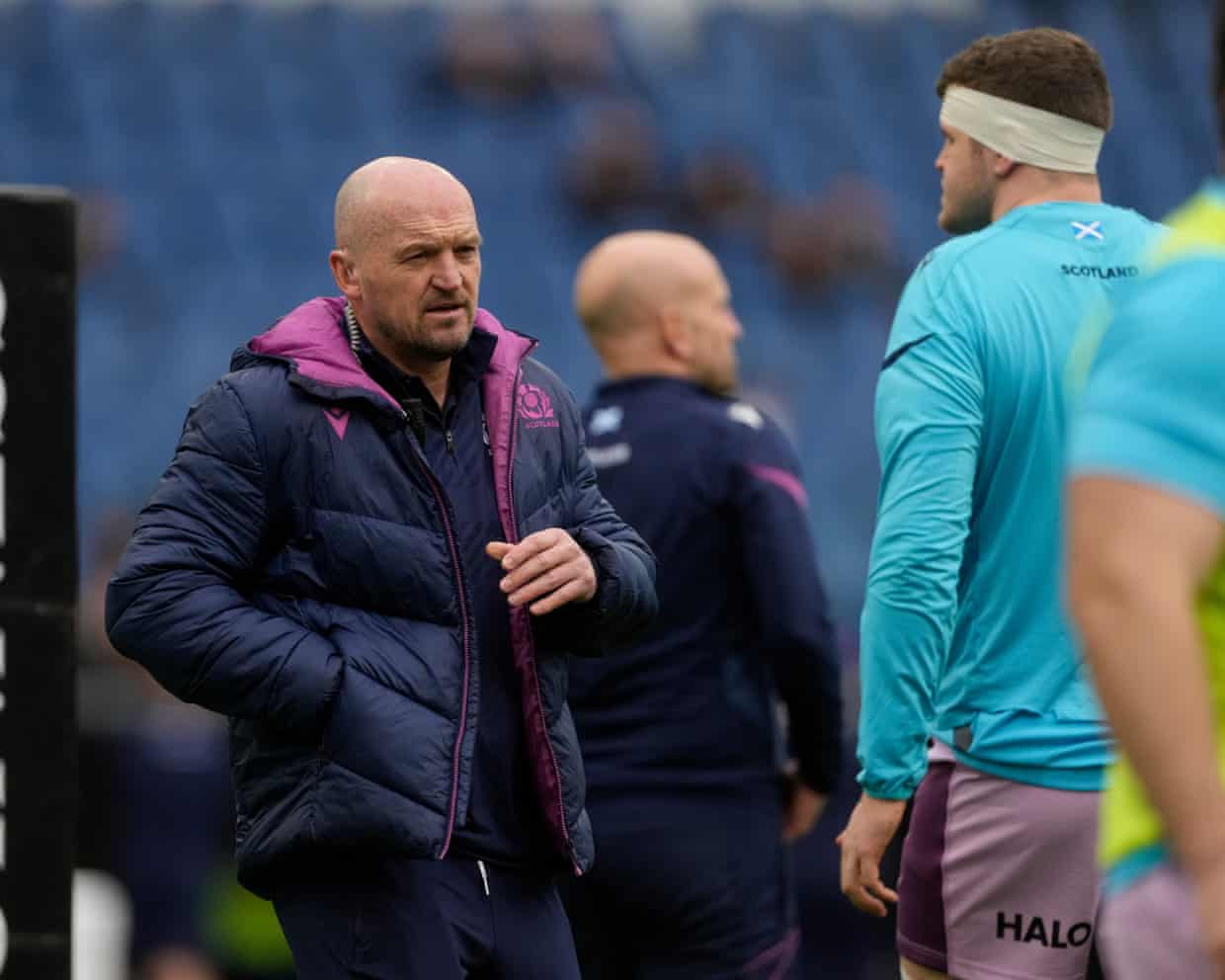
Gregor Townsend warns England not to underestimate wounded Scotland
Gregor Townsend has warned England against underestimating his Scotland team and believes the hosts can maintain their fine recent Calcutta Cup record in Edinburgh on Saturday. The visitors have only won two of the last eight fixtures between the two countries and Townsend wants his players to feed off the feelgood memories of previous English losses.While last weekend’s deeply disappointing loss to Italy in Rome has generated plenty of external criticism, England have won only once at Murrayfield since 2017. Townsend is expecting his players to bounce back from their Italian setback and says they will be inspired by past successes. “I would hope they don’t fade into irrelevance because our players have evidence that they’ve won in this fixture,” stressed the head coach

Cocktails and crepes in bed? Ravinder Bhogal’s recipes for Valentine’s Day breakfast

‘Boy kibble’: why are young men turning to dog food for meal inspiration?

Frothing over: the coffee foams and ‘indulgent’ drinks keeping Australian cafes afloat

What is fibremaxxing – and how much is too much? | Kitchen aide

Moroccan lamb filo pie and rhubarb panna cotta: Thomasina Miers’ Sunday best recipes

Georgina Hayden’s quick and easy recipe for creamy chicken and mustard fricassee | Quick and easy