Why is the FBI buying people’s location data and how is it using the information?
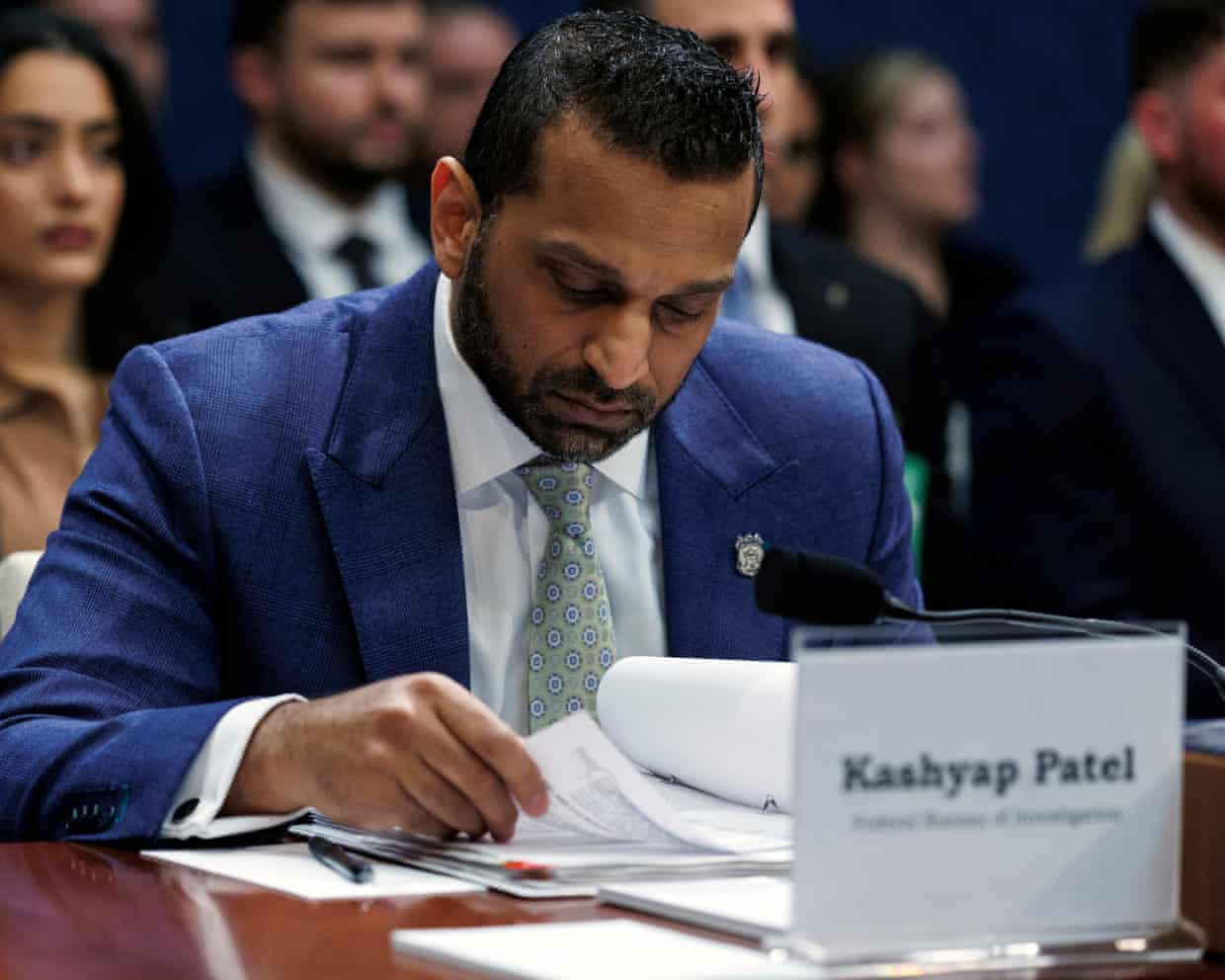
Kash Patel’s disclosure Wednesday that the FBI has resumed buying location data on Americans has many people, including members of Congress, wondering: how does private information get into the hands of the US government in the first place – and how can federal law enforcement use that information to track peoples’ whereabouts?Federal law enforcement agencies generally must obtain a warrant, which requires establishing probable cause in the eyes of a judge, to gather historical or real-time cell phone location data.The US supreme court has ruled that the fourth amendment to the US constitution, which protects against “unreasonable search and seizure”, prohibits the warrantless collection of individuals’ location histories.Buying such information, usually en masse, can circumvent this requirement, leading many privacy advocates to label the practice unconstitutional.The FBI director’s admission came in response to a question from Ron Wyden, a Democratic senator of Oregon and a longtime opponent of the warrantless surveillance of Americans.Wyden told Patel that his predecessor, Christopher Wray, testified in 2023 that the FBI did not at that time purchase location data derived from internet advertising, although he acknowledged that it had done so in the past.
“Is that the case still?” Wyden asked.“And if so, can you commit this morning to not buying Americans’ location data?”“We do purchase commercially available information that’s consistent with the constitution and the laws under the Electronic Communications Privacy Act, and it has led to some valuable intelligence for us,” Patel responded.“So you’re saying that the agency will buy Americans’ location data,” Wyden said.“I believe that that’s what you’ve said in kind of intelligence lingo.And I just want to say as we start this debate, doing that without a warrant is an outrageous end run around the fourth amendment.
It’s particularly dangerous given the use of artificial intelligence to comb through massive amounts of private information.”It starts, in most cases, with our phones.Mobile applications can track our movement precisely and often to make services like mapping apps useful.There’s a hidden cost, though, to using what otherwise may seem like an innocuous way to check the weather or plan a journey.“This is one way that apps that appear to be free or low cost to us are actually making money off of us – by making our very detailed location history the product,” said Nathan Freed Wessler, deputy director with ACLU’s Speech, Privacy, and Technology Project.
Government agencies, companies and even nefarious actors can buy and use location data to learn intimate details about you,“It’s incredibly revealing knowing where your phone goes over time,” Wessler said,“This level of detail shows your patterns of life,” This could be everything from where you go after work, where you sleep – as well as who you do those things with,Since it’s possible to track what phones are near each other, that can shed light on who you’re spending time with – even who you’re sleeping with – and what kind of gatherings you attend, whether it’s a psychiatrists’ appointment or a political rally,” Wessler said.
Data brokers, which are companies that buy, collect and sell a vast array of data points on Americans with almost no oversight, have been able to cash in on large volumes of granular location data about people’s phones.These companies collect location data, often buying large amounts of it from app developers, and sometimes information about name, gender, health, political preferences and home ownership.It’s become a lucrative industry, worth billions of dollars.“When you give an app permission to see your location, you’re also giving the other companies whose software is embedded in that app access to your location as well,” said Lena Cohen, staff technologist at the Electronic Frontier Foundation (EFF).Privacy experts note that once companies have your location, it’s hard to know – let alone control – what they do with it.
It’s even difficult to figure out which particular apps sell users’ location data, although a few examples have been reported on.For example, one data broker bought location data from Muslim prayer and dating apps before that information ended up with the US military, according to Vice.EFF explains in a June 2022 blog post that data brokers can incentivize app developers to sell user data by paying per user for direct access to their device, which can allow the data broker to obtain location data when the app is open, or, in other cases, whenever the phone is on, even if the app is closed.Targeted advertising can also be a source of location data.Real-time bidding allows websites and apps to auction off ad space.
EFF explains that all participants get data about people who would see their ad.“As a result, anyone posing as an ad buyer can access a stream of sensitive data about billions of individuals a day,” EFF notes in a blog post.“Data brokers have taken advantage of this vulnerability to harvest data at a staggering scale.”Data brokers also often maintain portals that allow government agencies to run queries about which phones were in an area at any given time, Wessler says.Federal agencies, including the FBI and the Department of Homeland Security, previously purchased location data for investigations.
The Wall Street Journal reported in 2020 that the DHS used the information to find “undocumented immigrants and others who may be entering the US unlawfully” and “look for cellphone activity in unusual places, such as remote stretches of desert that straddle the Mexican border”.404 Media reported earlier this month that an internal US Customs and Border Protection document showed the agency used location data from the online advertising industry to track phone locations.Congressional democrats called, on 3 March, for an investigation of warrantless purchases of Americans’ location data by ICE and the DHS.They cited a 2023 report from the DHS inspector general that found ICE’s data purchases were illegal, which had caused the program to shut down in 2023.Many privacy advocates argue that funnelling of information from data brokers to government agencies is already illegal.
They say it violates the fourth amendment by allowing the government to bypass requirements that it obtain a court warrant if it wants specific location data about a specific person.Some lawmakers are trying to close what they see as a loophole.Leading the pack in Congress is Wyden, who introduced a sweeping surveillance reform bill that includes a measure to stop the federal government from buying location information from data brokers without a warrant.In the absence of strong federal privacy laws, people still have some agency.EFF details steps people can take in a 5 March blog post.
They can disable location ID and review the apps they have granted location permissions to.“If you can’t disable location access completely for an app, limit it to only when you have the app open or only approximate location instead of precise location,” EFF notes.EFF also suggests disable mobile advertising ID, noting that this identifier helps location data brokers “stitch together the information they collect about you from different apps”.Still, Americans are worried about how much of their data is already exposed.Some may not know or encounter these tips.
“Not everyone’s going to have the savvy to do that,” says Wessler.“So the real answer is that Congress needs to step in.”

Prolonged high oil prices could ‘crimp’ AI boom, WTO warns
An extended period of high oil prices as a result of war in the Middle East could “crimp” the AI boom, the World Trade Organization’s chief economist has warned.The war and its impact on energy and fertiliser costs is the main risk to the global economy identified in the WTO’s latest Global Trade Outlook.But the Geneva-based body also raised a question mark about the continued strength of AI investment, which in 2025 helped to offset the hit to global trade from Donald Trump’s tariffs.“There is an interesting possible interaction between the Middle East conflict and the AI boom, in part because the boom is very energy-intensive,” said the WTO’s chief economist, Robert Staiger. “If the price of energy continues to be elevated for the whole year, that could put a crimp on the AI boom

Europe’s biggest airlines say fuel price spike caused by Iran war will drive up fares
Europe’s biggest airlines have said the rise in fuel prices caused by the war in the Middle East will drive up fares and are advising passengers to book early.While carriers have partly hedged the price of jet fuel, bosses said they could not avoid passing on additional costs to passengers for long.Long-haul airlines such as Air France-KLM and Lufthansa said they would be adding more flights via Asia with Gulf carriers’ hubs either shut or operating at a reduced level since the US-Israeli attack on Iran.EasyJet dismissed any fears of imminent fuel shortages affecting flights in Europe despite concerns about supplies in parts of Asia, with Vietnamese airlines this week warning that they may reduce schedules.Kenton Jarvis, the airline’s chief executive, said it was “not seeing any issues” with its fuel supply

BoE delivers message Britons don’t want to hear as inflation – and rates – look set to rise
The US-Israel attack on Iran has already driven prices higher and not just at the petrol pumps, the Bank of England said on Thursday in a gloomy assessment of the UK’s economic outlook.An inflation rate that was on track to fall from 3% to the Bank’s 2% target in the coming months is now expected to rise to 3.5%. That is one probable impact of the US and Israel’s war on Iran.Higher transport and energy costs can quickly flow through to higher food prices, ratcheting up the consumer prices index when the previous trajectory was down

Bank of England holds interest rates at 3.75% and signals rise is possible within months
The Bank of England has kept interest rates on hold and signalled it could be forced to increase borrowing costs in the coming months as the US-Israel war on Iran threatens to drive inflation in the UK above 3%.The Bank’s rate-setting monetary policy committee (MPC) voted unanimously to keep its base rate at 3.75% amid growing concern over the surge in energy prices triggered by the conflict.The pound strengthened against the US dollar after the decision, while UK government borrowing costs rose and the FTSE 100 fell as City traders bet that the Bank would be forced to raise interest rates twice this year.In a development that would add to the pressure on household finances already battered by a cost of living crisis, financial markets anticipate a quarter-point increase from as early as June, followed by a further rise to 4

PwC partners who fail to embrace AI have no future at firm, US CEO warns
The US boss of PricewaterhouseCoopers has warned that partners who do not get to grips with AI have no future at the consulting firm.Paul Griggs said senior staff who were not “paranoid about being AI-first” would probably be replaced by others who were ready to embrace the technology. “I don’t think anyone gets a free pass here. Anyone,” Griggs told the Financial Times.An employee who thinks they have the “opportunity to opt out” of AI is “not going to be here that long”, Griggs added

BP to sell German oil refinery as part of $20bn cost-cutting plan
BP has agreed to sell its giant German oil refinery site in Gelsenkirchen to the investment firm Klesch Group as part of the British oil company’s plan to sell off $20bn (£15bn) worth of assets and cut its costs.The value of the sale was not disclosed but BP said it would save the oil company about $1bn of underlying operating expenditure at the complex, which processes about 12m tonnes of crude oil every year, mainly as fuel for cars and aircraft.The sale has also enabled BP to raise its cost-cutting target to between $6.5bn and $7.5bn by 2027, or almost a third of its cost baseline in 2023

Rachel Roddy’s recipe for spaghetti with mushrooms, soft cheese and herbs | A kitchen in Rome

How to turn puff pastry offcuts into a brilliant cheesy snack – recipe | Waste not

Tips for downsizing recipes | Kitchen aide

Loaded crisps: four recipes for the ‘perfect finger food’ – ranked from best to worst

José Pizarro’s recipe for chicken and white bean stew

Peter Smith obituary