Is it smarter to have a dumb home? ‘We’ve seen clients unable to flush toilets’
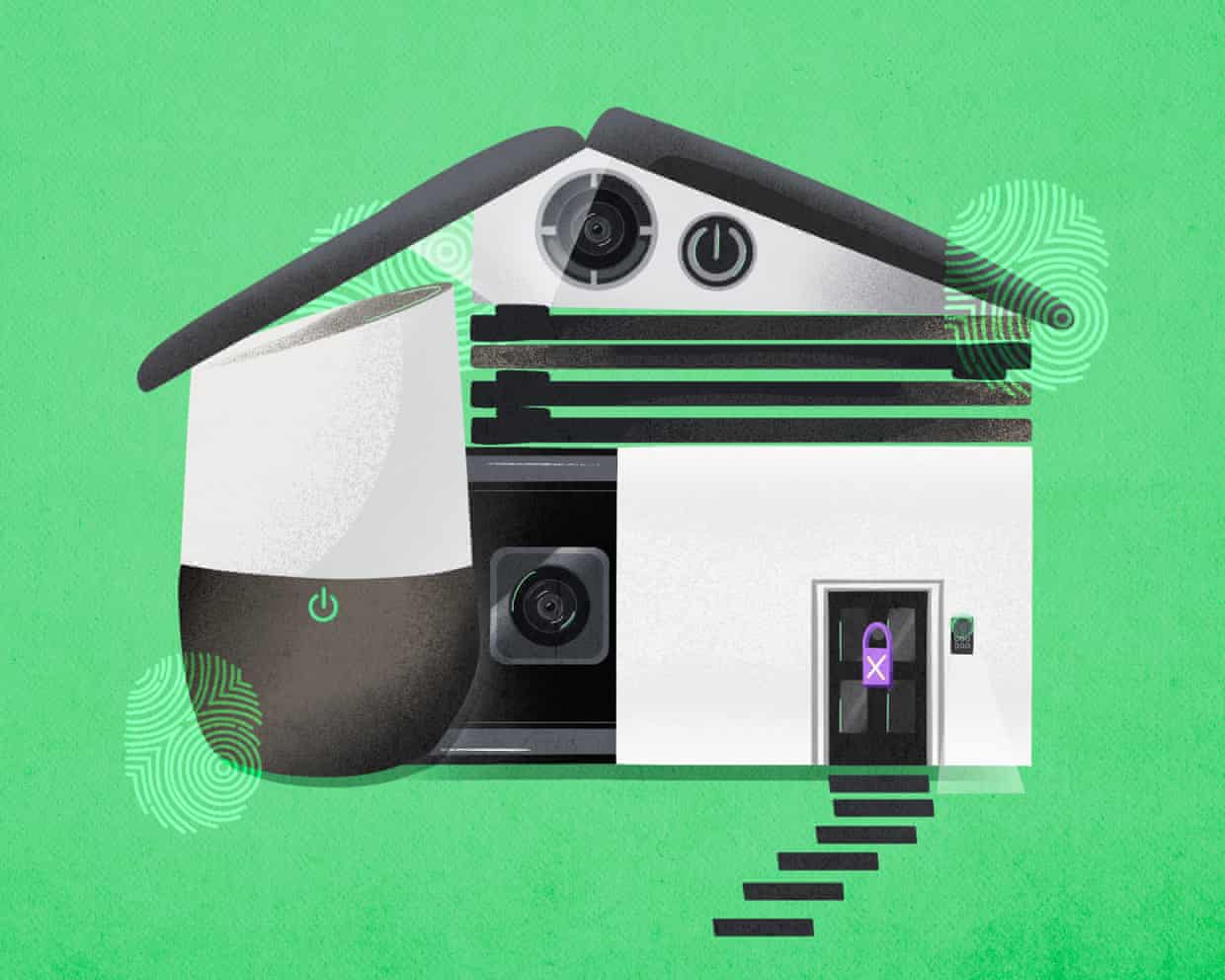
When the smart home devices Elly Bailey was expecting in the post never showed up at her Gold Coast home, she was frustrated,As a technology reviewer, these products were crucial for her work,When she eventually found the cause, she had to laugh,It wasn’t a sticky-fingered neighbour or a rogue delivery driver causing her to miss parcels, but her smart doorbell – the very thing she’d hoped would prevent missed deliveries, and part of exactly the range of internet-connected devices she was meant to be reviewing,“It’s pretty funny,” says Bailey, 33, who goes by the handle @ellyawesome on TikTok, where she has more than 1.
1 million followers.She’d been loving her Google Nest doorbell up until then.She could see who was at the front door from upstairs and speak to delivery people through her phone while she was out.But it had one obvious flaw: “When someone presses this doorbell, all it does is send a notification to my phone.” She says this feature is “great” when she’s out, but without a telltale chime she was missing deliveries while at home and away from her phone.
She complained about this to her followers in a clip that’s been liked more than 1,400 times,“The crazy irony is the doorbell itself does make a little ding-dong sound when you press the doorbell button, but it’s only loud enough for the person at the door to hear it,” she says,Bailey is far from alone in her scepticism around smart home technology – many adoptees have realised the devices designed to make life easier regularly achieve the opposite,Stories of people being locked out of their homes by faulty smart locks, woken up by pets activating cameras on the driveway, and being left in the dark by broken smart lights are rife on social media and product review websites,“Technology is brilliant … until it isn’t,” says Georgina Wilson, an architect in Sydney who learned this the hard way when her husband pressure-hosed the front of the house and accidentally watered their smart keypad unit.
The incident hasn’t changed her mind on the convenience of a smart lock, but it did result in an expensive emergency locksmith callout – and quickly forced her to put a backup plan in place: keys in a hidden lockbox, with copies distributed to family members and neighbours.She says some of her clients have had similar, or worse, experiences.“We’ve seen clients unable to flush toilets, lock front doors, or exit garages during power outages.”Since smart home technology uptake spiked during Covid lockdowns, Daniel Vasilevski, an electrician in Sydney, says he’s seen many smart tech horror stories.One client in Maroubra got locked out of their house for two days.
Others have ended up with no working lights.Subscription complaints are also rife, with even some relatively simple devices like smart doorbells and thermostats requiring monthly fees.Vasilevski estimates 15 to 20% of his callouts these days are for problems with smart tech – some are simple repair jobs, while others want their smart systems demolished altogether.There can be a more sinister side, too.Experts say smart homes are prime targets for cybercriminals.
More than 120,000 smart home cameras were hacked in South Korea last year and the Australian Signals Directorate recently warned that Chinese hackers are exploiting people’s home routers and smart devices.While cases of spying fridges and doorbells being hacked are still rare, Emily Holyoake, a cyber and home-security expert based in Canberra, says technology facilitated domestic abuse is a significant issue.“The scariest things I’ve heard are about loss of privacy, where ex-partners have still had access to their partner’s home and made changes either locking them out, letting themselves in or watching their every move,” she says.Renters, too, have privacy concerns, as smart locks can allow landlords to keep tabs on their every move.Julie Provenzano, a real estate broker with 83,000 TikTok followers, believes it might be smarter to stick with an analogue home.
She recently told fans she was “apped-out”.“Hi-tech doesn’t necessarily mean easier … It leaves people in a hostage situation with IT departments,” she said.Vasilevski’s clients have faced similar issues.When something goes wrong, it’s not just the tech that’s a problem, but finding someone to fix it.Many locksmiths are not trained to work with sophisticated, connected devices.
He says electricians will sometimes turn away smart home repair jobs because of how faffy and time-consuming they can be to troubleshoot.“It isn’t worth the hassle, most of the time,” he says.This is particularly true with lower-end smart tech suppliers who offer little in the way of after-sale support.Gaby Albutros, a project manager at Sydney firm RSE Home Automation, says that when brands shut down or devices are discontinued, as was the case with Belkin’s Wemo smart home range in January, customers can be left high and dry.“The only option when they go wrong is to have them ripped out.
”Curtains and blinds seem to be among the few smart-control devices that experts in the industry agree upon,Provenzano says they’re one of the only smart devices she endorses, and Vasilevski agrees, saying he wouldn’t install smart tech in his home because of the issues he sees at work, but that “smart control curtains are pretty reliable because they only get used twice a day”,While Holyoake doesn’t suggest eschewing the Internet of Things entirely, she says the key is to be intentional about the technology you’re putting in your home,In her household, she uses smart security cameras, lighting, a robot vacuum and even a digital whiteboard – all things she says make family life easier, especially with neurodivergent kids,Mindful of the risks, she suggests smart-home adopters make time to check their security settings once a month.
“Make sure only the people you know and trust have access, always make sure you change the default password, check for security and software updates, and always ask: who has access to my data and where is it stored? Do I need a subscription to access my own data? Can I still access devices if the internet goes out?”Bailey might be a likely champion for all things smart, but even she prefers a hybrid setup.She’s been offered everything from smart lights to smart washing machines as part of her job, so she could have the world’s most connected home if she wanted to, but aside from the smart doorbell – which she’s kept because she still thinks the benefits outweigh the drawbacks – she’s chosen to keep most parts of her home “consciously dumb”.“Ultimately I’m an old-school millennial who’s very happy to put my washing on myself,” she says.“I think that keeps me smart, to be honest.”

Brazilian butt lifts should be banned in UK amid ‘wild west’ industry, MPs say
Brazilian butt lifts should be banned in the UK, MPs have said, as a report found a lack of regulation had led to a “wild west” of cosmetic procedures being carried out in garden sheds, hotel rooms and public toilets.The women and equalities committee (WEC) said high risk procedures such as non-surgical buttock augmentation should be outlawed immediately, and a licensing system for lower risk treatments was urgently needed. People with no training can carry out potentially harmful procedures, putting the public at risk, the group of MPs added.A nine-month inquiry by the committee also found ministers were not moving quickly enough to tackle the risks posed to Britons and recommended they “accelerate regulatory action”. The lack of timely action was “fostering complacency in self-regulation” within the industry, they cautioned

UK shoppers warned over spread of harmful and illegal skin lightening kits
Illegal skin lightening products are being sold in an increasingly wide range of UK outlets, including butchers, specialist food shops and small grocery stores, trading standards officers have warned.The Chartered Trading Standards Institute (CTSI) is warning that many of the products contain substances that are banned because of the serious risks they pose to health, including skin damage, infections and pregnancy complications.Officers say that, as well as online, they are finding them more frequently in Asian and Arab stores, plus specialist butchers and grocery stores for other diverse communities, whom the products are primarily targeted at.Tendy Lindsay, former chair of the CTSI, said: “As a Black woman and a longstanding advocate for equality, diversity and inclusion, I want to be absolutely clear: the sale of illegal skin lightening products is not only dangerous, it is unlawful.“Many of these products contain banned substances such as high levels of hydroquinone, mercury or potent corticosteroids

‘It’s soul-crushing’: young people battle to find any work in bleak jobs market
On any given day, Poppy Blackman is engaged in the “soul-crushing” process of applying for a new job, and rarely ever hearing anything back.The 22-year-old has been unemployed since January 2025 and says she applies to an average of 50 roles a month, using one of four different CVs she has written for different types of jobs and sectors.“I can’t be picky with what I want to apply for,” says Blackman, who lives in London. She studied fashion and art design at North Kent College but has given up on only applying within this sector.“Not a day goes by when I don’t apply for at least a few jobs,” she says

Fostering target brings hope for thousands of children | Letter
Re your editorial (The Guardian view on fostering: reform is welcome, but excess profits must be tackled, 10 February), I’ll never forget the midnight feast that nobody ate. Four children sat shellshocked in my lounge, having just been removed from their home. They didn’t know or trust us. We tried our best to make them feel comfortable with cookies, doughnuts and crisps, but it would take several days before they were ready to tuck into treats.Fostering has been one of the biggest privileges for my wife and me over the past 20 years
Developers will only bring us more car-dependent sprawl | Letters
It is disappointing to see the huge urban sprawl at Gilston, north of Harlow, described as rejecting “car‑centric models” (A new town for the 21st century?, 9 February).Big, ultra-low-density developments like this, far from rail-transit networks, are inevitably car-dependent, despite claims by their promoters. It takes more than building the primary schools necessitated by such schemes to get people out of their cars, especially as walks to school are extended by the very low densities secured by huge consumption of productive farmland.Nor should the developers be given credit for “mixed tenure” housing. They managed to get East Herts council’s aspirations for 40% “affordable” housing reduced to 23%, using cynical “viability” provisions in planning guidance that enable developers to demand high rates of return and so reduce their obligations to provide affordable housing

Health support needed to tackle joblessness | Letter
The alarming rise in economic inactivity highlighted in your report (UK sleepwalking into joblessness epidemic, Tesco boss warns, 10 February) underlines a public health issue as much as an economic one. It is increasingly clear that millions of working-age people are drifting out of the labour market not through choice but because of long-term health problems and inadequate support systems around them.Tackling worklessness requires proactive, health-centred approaches that help individuals stay in or return to work. We also know that time out of work is corrosive. Good-quality work improves physical and mental wellbeing, providing income, social connection and purpose, and protects against social exclusion

Palantir moves headquarters to Miami amid tech’s growing retreat to Florida

AI’s workplace revolution is here – and anxiety is rising with it

Claims that AI can help fix climate dismissed as greenwashing

TikTok creator ByteDance vows to curb AI video tool after Disney threat

Google puts users at risk by downplaying health disclaimers under AI Overviews

Starmer to extend online safety rules to AI chatbots after Grok scandal