UK must seize initiative on AI or be left at its mercy, Liz Kendall says

Britain must seize the initiative on artificial intelligence or be left at the “mercy and whim” of a future shaped by the technology, Liz Kendall has said,The technology secretary said the country must have greater control over the industry as she highlighted big tech’s grip on its development, with 70% of the world’s AI computing power provided by US companies,In a speech on the UK’s ability to develop its own capabilities, Kendall said: “The choice isn’t between a world that has AI and one that does not,It is a choice between a world where we shape our AI future, based on our own interests and values, or where we are left at its mercy and whim,”Kendall highlighted the launch this month of a state AI investment fund as evidence of Labour’s support for domestic firms, and revealed the government was drawing up a plan to become more influential in designing and manufacturing the chips that power AI systems.
The MP for Leicester West spoke amid concerns the UK was struggling to make its own way with the technology, despite producing a stream of academic talent and being the base for companies such as the UK-founded Google DeepMind.Last week Nick Clegg, the former deputy prime minister and, until recently, a senior Silicon Valley executive, said the UK was “without a single steam engine” in the AI revolution owing to factors such as high energy costs and an unresolved row over copyright.OpenAI, the US startup behind ChatGPT, has paused a multi-billion dollar datacentre project in the UK, citing high energy costs and regulation.The Guardian revealed recently that many of the deals to “mainline AI into the veins” of the British economy were “phantom investments”, and a supercomputer scheduled to go live in 2026 was still a scaffolding yard in Essex.Kendall singled out datacentres as an example of concentration in the AI market, with five US companies – Amazon, Google, Meta, Microsoft, and Oracle – controlling 70% of global AI computing, up from 60% a year ago.
“Control of this incredibly powerful technology is becoming increasingly concentrated,” she said, adding that the UK “must shape this technology, not just be shaped by it”.However, Kendall said a push for AI sovereignty should not be seen as “weakening our deep, close and enduring relationship with the US”, the home of leading AI companies such as OpenAI and Anthropic.Kendall said calls to pause AI development would be a “betrayal of British talent and British interests”.In December, MPs at a Westminster Hall debate were urged to consider calls by the campaign group PauseAI for a hiatus in developing powerful AI systems.“It would send a message that Britain is closed to new ideas and new opportunities; that a country so rich in talent, innovation and enterprise has put an ‘out of office’ sign on its front door,” said Kendall.
“If we retreat from progress we retreat from the world, leaving this powerful technology to be exploited by other nations to their advantage and our disadvantage.”

Singing activists disrupt NatWest meeting over ‘climate backtracking’
The chair of NatWest was forced to defend the bank against accusations of “climate backtracking” at a chaotic annual shareholder meeting, which was temporarily suspended owing to singing protesters.Not long after the meeting began in Edinburgh, it was adjourned for about half an hour after a protester interrupted Rick Haythornthwaite’s opening speech.Protesters in the audience, wearing black T-shirts emblazoned with “No more big oil” and “No bombs”, then sang a song to the tune of Frère Jacques, with a chorus of “No more bombs, no more oil”. They appear to represent the campaign group Extinction Rebellion’s XR Money Rebellion, which has targeted NatWest and other banks for financing fossil fuel projects.When the meeting resumed, it was dominated by questions from shareholders about NatWest’s climate policies, as well as staff wages compared with bumper executive pay packets
UAE quits Opec in ‘pivotal moment’ for oil producing group – as it happened
Newsflash: The United Arab Emirates has announced it is quitting the Opec group of oil producers.In an unexpected move, the UAE is leaving Opec and Opec+ (which includes allies such as Russia) from 1 May, a move which could allow it – in theory – to produce more oil and gas.The UAE’s energy ministry says in a statement that the decision “reflects the UAE’s long-term strategic and economic vision and evolving energy profile”, and follows a “comprehensive review” of its production policy, and its current and future capacity.Opec, created back in 1960, agrees and sets production quotes for members in an attempt to control the oil price. The UAE is a long-standing member, having joined in 1967

Europe’s smaller airports ‘under threat’ if fuel shortages cause many cancellations
Europe’s smaller airports may not survive if jet fuel shortages triggered by the Middle East crisis lead to widespread route cancellations, the industry’s trade body has warned.Although airlines insist there are currently no supply problems within the normal four- to six-week horizon, the US-Israel war on Iran and the effective closure of the strait of Hormuz have doubled the price of jet fuel, prompting some carriers to cancel flights.The Airports Council of Europe said regional airports were the most exposed and faced an “existential threat” if airlines cut capacity and raised fares, as demand on their routes was generally more price-sensitive – demonstrated when Lufthansa axed 20,000 summer flights operated by its regional subsidiary, CityLine.Olivier Jankovec, the director general of ACI Europe, said that smaller regional airports had still not recovered since the Covid pandemic, with traffic still 30% below 2019 levels, while larger ones had bounced back to growth.He said: “The current levels of jet fuel prices and the prospect of a new cost of living crisis mean that many regional airports across our continent are likely to face both a supply and demand shock

Barclays cuts back risky lending after £228m hit from UK mortgage firm MFS
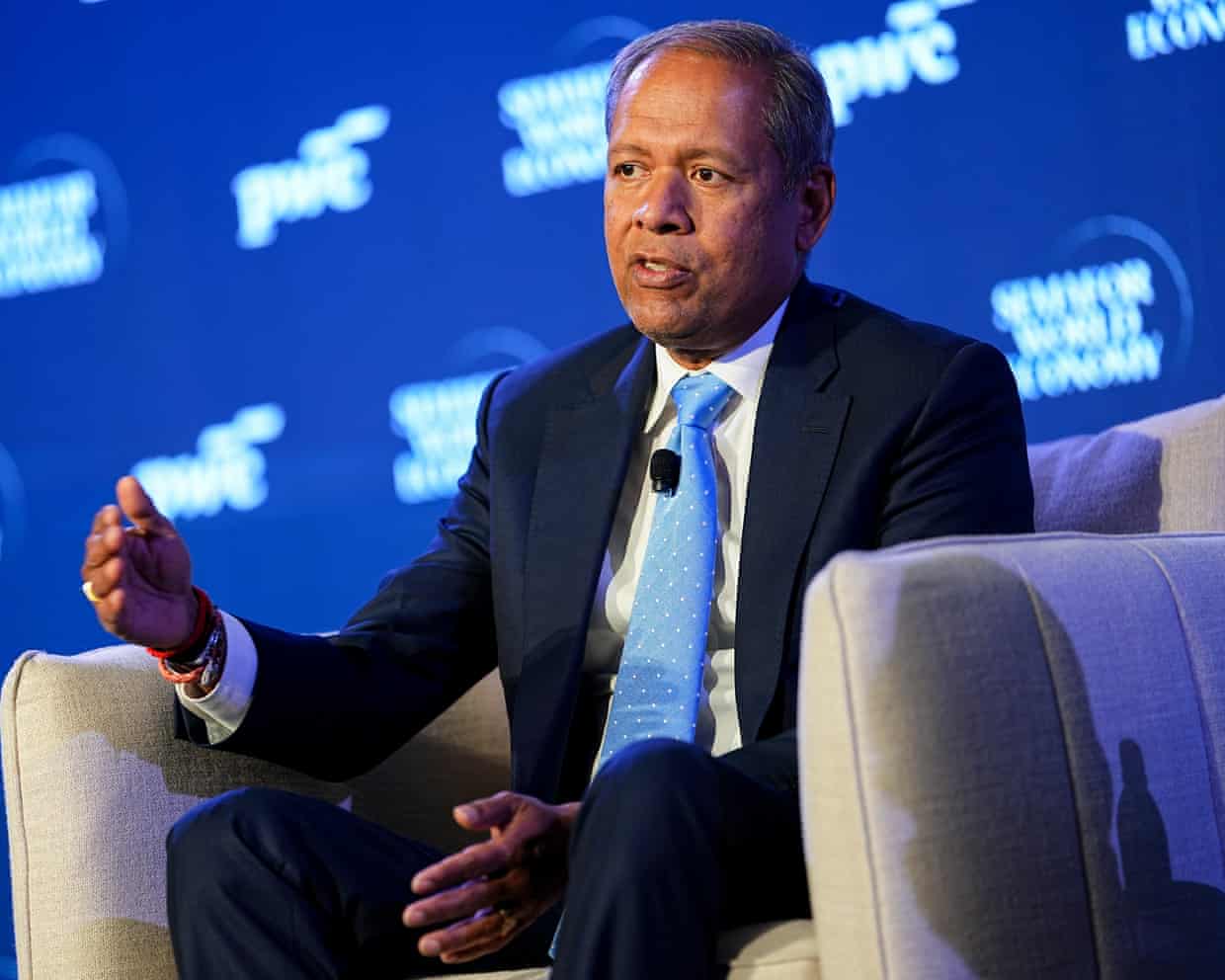
Barclays is pulling back from lending to risky borrowers, as its chief executive warned of increasing numbers of fraud cases and the bank took a £228m hit from the failure of a mortgage lender.The mortgage lender Market Financial Solutions (MFS) collapsed in February amid allegations of fraud, and the UK’s financial regulator has since launched an investigation into the scandal.Barclays provided banking services to MFS and said the £228m hit had pushed total credit impairment charges to £823m in the first three months of 2026, up from £643m a year earlier.Last year the British bank reported a £110m loss over the US sub-prime auto lender Tricolor, which collapsed amid fraud allegations.The chief executive, CS Venkatakrishnan, said: “This [alleged] fraud, as with the one in Tricolor, indicates to us the importance of strong financial controls at borrowers and the difficulty ex-ante of identifying fraud

BP profits more than double as oil prices soar in Iran war
BP has provoked outrage by revealing its profits more than doubled in the first quarter of this year after its oil traders reaped the benefit of the war in Iran.The energy company capitalised on a surge in global oil market prices to report better than expected profits of $3.2bn (£2.4bn) for the first quarter, more than double the $1.38bn it made in the same period last year
Deloitte and Zoom’s trims to parental-leave benefits may hurt them in long run, experts say
Recent moves by US companies Deloitte and Zoom to reduce how much paid parental leave they offer employees could signal a larger reduction in benefits in corporate America, according to labor market experts.American workers are already seen as having less benefits and labor protections than many of their counterparts across the world, especially in Europe.Leadership at the huge accounting and communication technology companies probably made the decisions because the labor market has stagnated, meaning that people looking for jobs do not have the same leverage when considering a job opening, the experts say.But while cutting the benefit might help companies save money in the short term, some consultants argue that the moves will ultimately hurt companies because it will make workers less productive, among other negative consequences.“It feels like someone is just looking at a spreadsheet saying, ‘How can I get more hours?’” said Bobbi Thomason, a professor of applied behavioral science at Pepperdine Graziadio Business School
Another shadow banking hit – but otherwise, Barclays looks fine

US gas prices surge to highest level in four years, averaging $4.18 a gallon

Google reportedly signs classified AI deal with US Pentagon

‘It feels like a betrayal’: anger as Apple to close its first unionized store in the US

‘Like cutting the head off a hydra’: how Mary Cain exposed Nike’s disgraced coaching team

The Breakdown | Celebrating elite speed machines who can send rugby into the stratosphere