UAE quits Opec in ‘pivotal moment’ for oil producing group – as it happened
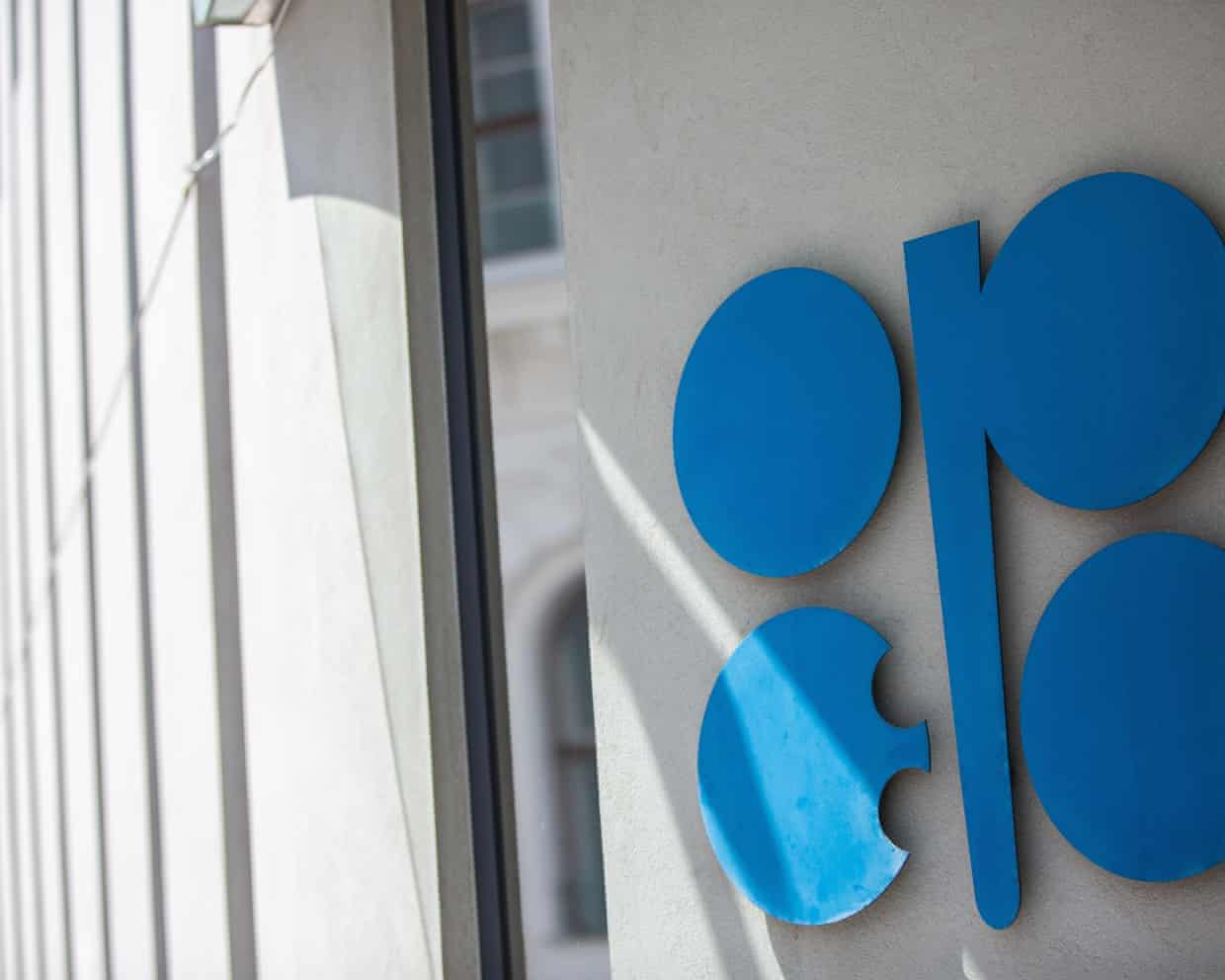
Newsflash: The United Arab Emirates has announced it is quitting the Opec group of oil producers,In an unexpected move, the UAE is leaving Opec and Opec+ (which includes allies such as Russia) from 1 May, a move which could allow it – in theory – to produce more oil and gas,The UAE’s energy ministry says in a statement that the decision “reflects the UAE’s long-term strategic and economic vision and evolving energy profile”, and follows a “comprehensive review” of its production policy, and its current and future capacity,Opec, created back in 1960, agrees and sets production quotes for members in an attempt to control the oil price,The UAE is a long-standing member, having joined in 1967.
The UAE pledges to “act responsibly” after it quits Opec, saying it will bring “additional production to market in a gradual and measures manner” in line with demand and market conditions.In the short-term, though, the UAE – like many Opec members in the Gulf – faces the serious challenge of the blockade on the strait of Hormuz (many of the UAE’s oil export hubs are within the Gulf).Time to recap:The United Arab Emirates has quit the Opec oil cartel in a heavy blow to the group and its de facto leader, Saudi Arabia, amid the global energy shock caused by the Iran war.The stunning loss of the UAE, a longstanding Opec member, could create disarray and weaken the group, which has usually sought to show a united front despite internal disagreements over a range of issues from geopolitics to production quotas.Opec Gulf producers have already been struggling to ship exports through the strait of Hormuz, a narrow choke point between Iran and Oman through which a fifth of the world’s crude oil and liquefied natural gas normally passes, because of Iranian threats and attacks against vessels.
The UAE’s energy ministry said that the constraints on the strait meant the decision to leave would not have a huge effect on the market.Leaving Opec will give it greater “flexibility” and was in line with its “long-term strategic and economic vision”, he said.Analysts said the decision would weaken Opec, and could lead to higher oil production by the UAE – once the disruption caused by the Iran war has ended.The news came hours after BP reported its profits doubled in the first quarter of this year, thanks to an ‘exeptional’ performance by its oil trading division.The surge in earnings was condemned by several campaign groups.
UK chancellor Rachel Reeves said it was important to maintain the UK’s windfall tax on energy company profits in Britain.The UAE’s decision had been rumored as a possibility for some time, Associated Press points out.The UAE has pushed back in recent years against OPEC production quotas it felt had been too low — meaning it wasn’t able to sell as much oil to the world as it had wanted.Regional politics are also likely at play.The UAE has had increasingly frosty relations with Saudi Arabia, OPEC‘s largest producer, over political and economic matters in the Mideast, even after both came under attack by fellow OPEC member Iran during the war.
Some US technology stocks are weakening today, following a report that artificial intellience group OpenAI has recently missed its own targets for new users and revenue.The Wall Street Journal has reported that these “stumbles” have raised concerns about whether OpenAI can support its massive spending on data centers.The WSJ says:double quotation markChief Financial Officer Sarah Friar has told other company leaders that she is worried the company might not be able to pay for future computing contracts if revenue doesn’t grow fast enough, according to people familiar with the matter.Board directors have also more closely examined the company’s data-center deals in recent months and questioned Chief Executive Sam Altman’s efforts to secure even more computing power despite the business slowdown, the people said.Shares in Nvidia have dropped by over 2% in early trading in New York, while chip designer ARM are down over 7%.
Kathleen Brooks, research director at XTB, suggests the “AI theme” that has been pushing up markets could now be under threat:double quotation markOpenAI is the poster child for AI and its capabilities and ambitions,Its touted IPO is expected to raise close to a $1 trillion, but if it is struggling with sales then it could limit its spending on data centres, which would be a blow to the speed of AI uptake,This news may threaten the AI investment theme that has driven US stock markets to record highs,The spending scrutiny could limit OpenAI’s ambitions, which may slow down the speed of AI uptake more generally, considering how central OpenAI has become to the AI revolution,Away from the Opec news….
the World Bank has published its latest Commodity Markets Outlook which warns - not surprisingly - that prices are rising sharply, with knock on effects for inflation and growth across the developing world.The Washington-based Bank’s economists suggest energy costs are likely to be up 24% for 2026 as a whole, with fertiliser prices up 31%, driven by a 60% rise in the price of key input urea.The report points to a warning from the World Food Programme that higher costs for farmers could plunge up to 45m more people into food insecurity.World Bank chief economist Indermit Gill says:double quotation mark“The war is hitting the global economy in cumulative waves: first through higher energy prices, then higher food prices, and finally, higher inflation, which will push up interest rates and make debt even more expensive.”They expect Brent crude oil prices to average $86 a barrel in 2026, up sharply from $69 a barrel in 2025: assuming the disruption in the strait of Hormuz starts to dissipate by the end of May.
However, the World Bank warns prices could average a much higher $115 a barrel, if the war is more prolonged.The UAE’s dash to the Opec exit door may mean that global supplies will be higher than would otherwise be the case once the strait of Hormuz re-opens.David Oxley, chief climate and commodities economist at Capital Economics, says the UAE has been itching to pump more oil, so it will have more flexibility to do so once it’s outside Opec.He also believes that the ties binding OPEC members together have “loosened”.Oxley told clients:double quotation markThe UAE’s desire to pump more oil has been placated up to now by a combination of the rest of OPEC turning a blind eye to its overproduction and also raising its quota levels.
But speculation about the UAE’s future in the group has whirled in the past.Of course, the prospect of the UAE pumping more oil is somewhat moot at present given the ongoing near-complete cessation in energy flows through the Strait of Hormuz.While the UAE has been able to utilise its pipeline to Fujairah to bypass the Strait to a certain extent, this option is currently running close to capacity.That said, as and when energy flows eventually get back to normal, the departure from OPEC+ could feasibly result in the UAE pumping an additional 1m bpd (~1% of global oil demand) – so around 4.5m bpd in total.
The UAE is well placed to increase supplies and live with lower oil prices (particularly compared with other Gulf economies) given its relatively diversified economy and lower reliance on oil revenues,Jorge Leon, analyst at Rystad, says the UAE withdrawal marks a significant shift for OPEC,Leon explains:double quotation markAlongside Saudi Arabia, it is one of the few members with meaningful spare capacity—the mechanism through which the group exerts market influence,”“While near-term effects may be muted given ongoing disruptions in the Strait of Hormuz, the longer-term implication is a structurally weaker OPEC,Outside the group, the UAE would have both the incentive and the ability to increase production, raising broader questions about the sustainability of Saudi Arabia’s role as the market’s central stabiliser — and pointing to a potentially more volatile oil market as OPEC’s capacity to smooth supply imbalances diminishes.
”The UAE did have the third-highest production quota within the Opec system, behind Saudi Arabia and Iraq, as this chart of the quotas agreed for May shows:The UAE’s decision to quit Opec and Opec+ from this Friday is “undoubtedly, a pivotal event for the global energy market,” says Michael Brown, senior research strategist at brokerage Pepperstone.However, the near-term implications of the move are likely to be relatively limited, due to the massive disruption to energy shipments due to the Iran war.Brown explains:double quotation markThough the UAE have pledged to ‘gradually’ increase production after their departure, it goes without saying that actually doing so at present is somewhere between difficult, and impossible.As the US-Iran conflict continues, and the Strait of Hormuz remains impassable, the most significant issue for the crude market is not production, but actually shipping product to where it is needed.Today’s announcement does not change anything on that front.
Still, the UAE’s pre-conflict output target of 5mln bpd in 2027 could now prove more likely to be achieved, in turn helping crude benchmarks to normalise in shorter order once the ongoing Middle East conflict comes to an end,He adds that the UAE has clearly been dissatisfied with Opec for some time, believing that its quotas are an unfair limit, which constrain its major infrastructure investment projects,The UAE’s decision to quit Opec is a blow to the group, but could potentially please the White House,Under normal times, Opec’s production quotas restrict how much oil a member state can sell on the markets,Once the UAE has left, it will be free to pump more – which could push down prices.
Of course, that’s not a factor until the strait of Hormuz is reopened.But it could put downward pressure on prices in the long term.Back in 2018, President Donald Trump on Friday accused Opec of keeping oil prices artificially high, by restraining how much oil was being released onto the markets.Then in 2025, Trump accused Opec’s oil producers of prolonging the Ukraine war by failing to cut prices, as he demanded cheaper oil.Opec hasn’t always managed to stay united.
In March 2020 they failed to agree production cuts when the Covid-19 pandemic hit the world economy, before agreeing a deal the next month.Opec currently includes 12 members, including Iran, Iraq, Saudi Arabia and Kuwait.The current Middle East conflict has created tensions within the group.In March, Iran launched a successful drone attack on the UAE’s Shah gas field, and also attacked the United Arab Emirates port of Fujairah – which lies just outside the strait of Hormuz, while its other export hubs are located within the Gulf.Tensions have also been growing between the UAE and Saudi Arabia, which is the dominant player within Opec.
The two countries have been supporting different groups in Yemen – culminating in Saudi Arabia bombing what it said was a shipment of weapons for Yemeni separatists that had arrived from the UAE in December.The UAE insists it has been a loyal member of Opec, saying:double quotation markDuring our time in the organisation, we made significant contributions and even greater sacrifices for the benefit of all.However, the time has come to focus our efforts on what our national interest dictates and our commitment to our investors, customers, partners and global energy markets.Newsflash: The United Arab Emirates has announced it is quitting the Opec group of oil producers.In an unexpected move, the UAE is leaving Opec and Opec+ (which includes allies such as Russia) from 1 May, a move which could allow it – in theory – to produce more oil and gas.
The UAE’s energy ministry says in a statement that the decision “reflects the UAE’s long-term strategic and economic vision and evolving energy profile”, and follows a “comprehensive review” of its production policy, and its current and future capacity.Opec, created back in 1960, agrees and sets production quotes for members in an attempt to control the oil price.The UAE is a long-standing member, having joined in 1967.The UAE pledges to “act responsibly” after it quits Opec, saying it will bring “additional production to market in a gradual and measures manner” in line with demand and market conditions.In the short-term, though, the UAE – like many Opec members in the Gulf – faces the serious challenge of the blockade on the strait of Hormuz (many of the UAE’s oil export hubs are within the Gulf).
UK government borrowing costs are heading towards their highest levels since the financial crisis in 2008, as the Iran war drags on,The yield, or interest rate, on 10-year UK gilts has risen to 5,02% so far today, up 5 basis points (0,05 percentage points), approaching the 18-year high of 5,11% hit on 23 March.
That’s broadly in line with other government bond moves – the yield on US 10-year Treasury bonds is up 3 basis points to 4.36%.The yield on German 10-year debt, usually a safe haven, is also up 4bps.Yields rise when prices fall.The jump in the oil price is threatening to destabilise government finances – weaker economic growth will hurt tax revenues, while any energy support packages might add to government borrowing.
Overnight, investment group BlackRock warned that higher government bond yields are “here to stay” as the Iran war puts upward pressure on inflation.The weakness in UK government bonds may also reflect political stability, as prime minister Keir Starmer faces the threat of a standards investigation into his decision to appoint Peter Mandelson as ambassador to the US.His former chief of staff, Morgan McSweeney, is testifying about the issue today.