Wu Yize beats Shaun Murphy in thrilling final frame to win World Snooker Championship

As the ticker tape rained down on Wu Yize and the Chinese flag was draped over the shoulders of snooker’s newest superstar as he clutched the game’s most famous prize, it was hard not to imagine that this sport was changing in front of our eyes for ever.If Zhao Xintong broke through the glass ceiling for 12 months ago, then the exploits of the China’s newest Crucible king may have just shattered it into a thousand pieces.The boy who came to England with his father as a 16-year-old to pursue his dreams, living in a windowless flat in Sheffield, is now the champion of the world.But this 22-year-old is not your ordinary champion.He plays with the kind of attacking prowess and risk-taking which will make him a household favourite across the globe, not just back home.
China has a second world champion in as many years but Wu’s star will shine brightly wherever he goes.He scaled snooker’s Mount Everest in unforgettable fashion.The first final to go all the way to the 35th and deciding frame since 2002, Wu looked as though he had spurned his chance when leading 17-16 and he missed a straightforward red to bring a potential championship-winning break to a halt.The magnificent Shaun Murphy responded to take the final the distance.But when it mattered most, Wu was the one who held his nerve.
With the stakes at their highest and the biggest prize of them all on the line, he produced the break of his life, starting with an aggressive and risky red that epitomised his attitude to the game and finishing with a break of 85 that ensured he would become the second-youngest world champion in history.“For the past few months, I’ve been living the same life, and I’m delighted I could pull it off,” he said.Wu’s own journey to this point took on extra emotion too when he revealed: “Since I made the decision to drop out of school, my mum has not been in good health.Since we have been here she has been staying in hospital a long time.She has sacrificed everything for me.
”His momentous and nerve-shredding victory is big for Chinese snooker but also fascinating for the wider narrative of the sport’s young stars taking over.Murphy almost represented a one-man guard of a former era, bidding for a second world title 21 years on from his first, when he too was a 22-year-old with the game at his mercy.How he played his part, taking the final all the way.But in the end it was Wu who showed composure beyond his years and in doing so, became the fourth consecutive first-time winner of snooker’s holy grail.They have all been under the age of 32; suggesting that snooker is beckoning in a new generation of star names.
This was Murphy’s fourth final defeat – his previous one came in 2021, losing 18-15 against Mark Selby – and while this one will undoubtedly sting the most, he had the usual class we have come to expect from ‘The Magician’ in congratulating his opponent.“He’s a wonderful world champion,” Murphy said.“I hate being right.I said earlier in the season after we had a great game out in China that he would be world champion one day.It’s just a real shame it was today.
But I couldn’t have given it any more.” He certainly could not.Murphy transformed an overnight 10-7 deficit into a 12-10 lead at the start of Monday’s afternoon session, but Wu’s response of three consecutive frames to lead going into the evening was a sign of things to come.The pair would exchange blows throughout the final session until eventually, finally, something had to give.First it was 14-14.
Then 15-15.Murphy produced a sublime 131 clearance to square it again at 16-16 before Wu produced a break of 91 littered with attacking, carefree shots to move just one frame from immortality.But suddenly, he blinked: a routine red while on 45 that allowed Murphy to swoop in and take us all the way for only the fourth time in Crucible history.Quite what goes through the minds of the finalists during that excruciating wait to start a deciding frame is anyone’s guess.For Murphy, the lure of joining the exclusive band of men to have won at the Crucible multiple times.
For Wu, the weight of a nation on his shoulders as he sought to create history.It was mere minutes, but must have felt like hours.Both men would have wanted just one chance.They got one, too; Murphy potted a sumptuous red but was forced to go safe before Wu took on an audacious red to the middle.Lesser players would have turned it down, but not Wu Yize.
Not snooker’s newest sensation,

AI facial recognition oversight lagging far behind technology, watchdogs warn
Britain’s biometrics watchdogs have warned that national oversight of AI-powered face scanning to catch criminals is lagging far behind the technology’s rapid growth.With the Metropolitan police almost doubling the number of faces they scan in London over the past 12 months and a rising use of the technology by retailers in the UK, Prof William Webster, the biometrics commissioner for England and Wales, said the “slow pace of legislation was trying to catch up with the real world” and “the horse had gone before the cart”.Dr Brian Plastow, who holds the same role in Scotland, warned the technology was “nowhere near as effective as the police claim it is” and said there was a “patchwork legal framework” throughout the UK. He said in England and Wales, police were “really just marking their own homework”.The watchdogs said new laws were needed to govern when and how police forces used live facial recognition technology, with a new regulator to clamp down on misuse

Guilty until proven innocent: shoppers falsely identified by facial recognition system struggle to clear their names
When Ian Clayton, a retired health and safety professional from Chester, popped into Home Bargains one February lunchtime, he was suddenly approached by a stern-looking member of staff.“Excuse me, can you please put everything down and leave the shop now?” she said. Clayton recalled how he was stunned, and it was only as he was briskly walked past the tills towards the exit that he stopped to ask what he had done.“You’ve come up on our system called Facewatch as a shoplifter,” came the reply. “There’s a poster in the window
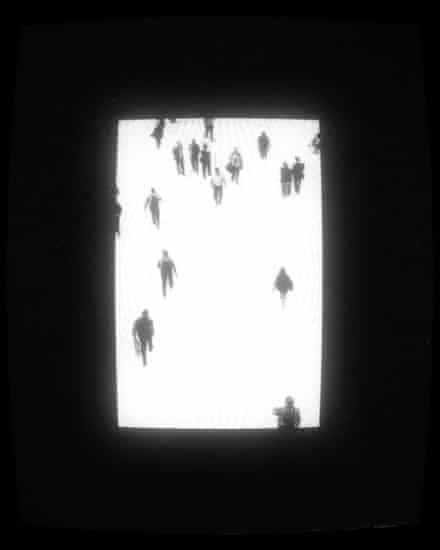
How does live facial recognition work and how many UK police forces use it?
The Labour government thinks facial recognition technology is “the biggest breakthrough for catching criminals since DNA matching”. It wants all police forces to use it and recently announced 40 new vans rigged with live facial recognition cameras to be deployed in town centres across England and Wales.Supporters say it streamlines police work and catches criminals. Opponents fear it violates civil liberties and can be biased against minorities.The simplest systems check faces captured on CCTV, mobile phones, dashcams, social media and doorbell cameras against mugshots held on the police national database
UK ‘invention agency’ grants £50m of public money to US tech and venture capital firms
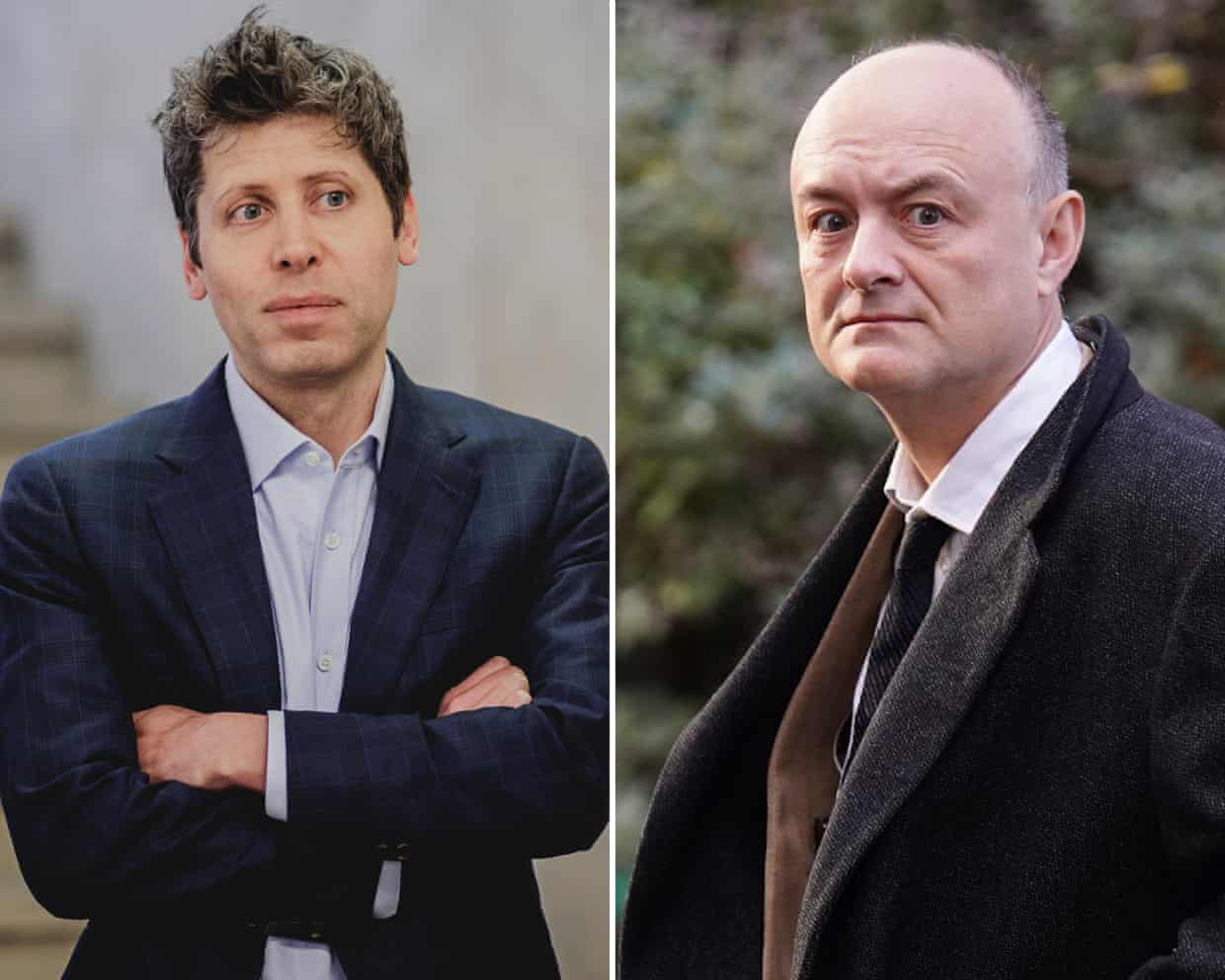
Britain’s “invention agency” has pledged £50m of UK taxpayer money to US tech companies and venture capital projects.Dreamed up by Dominic Cummings to fund “crazy” ideas, the Advanced Research and Invention Agency (Aria) is meant to “restore Britain’s place as a scientific superpower”.But a joint investigation by the Guardian and Democracy for Sale, an investigative website, has established that more than an eighth of the agency’s £400m in research and development funding over the past two years has gone to 14 US tech companies and venture capital groups, in some cases, with no clear return for the UK or Aria.One of these companies, Rain Neuromorphics, is also backed by the OpenAI chief executive, Sam Altman, and was reported to be near collapse last year, shortly after winning Aria money. It did not respond to a request for comment; two of its founders appear to have left the company
Under a cloud: the growing resentment against the massive datacentres sprouting across Australian cities
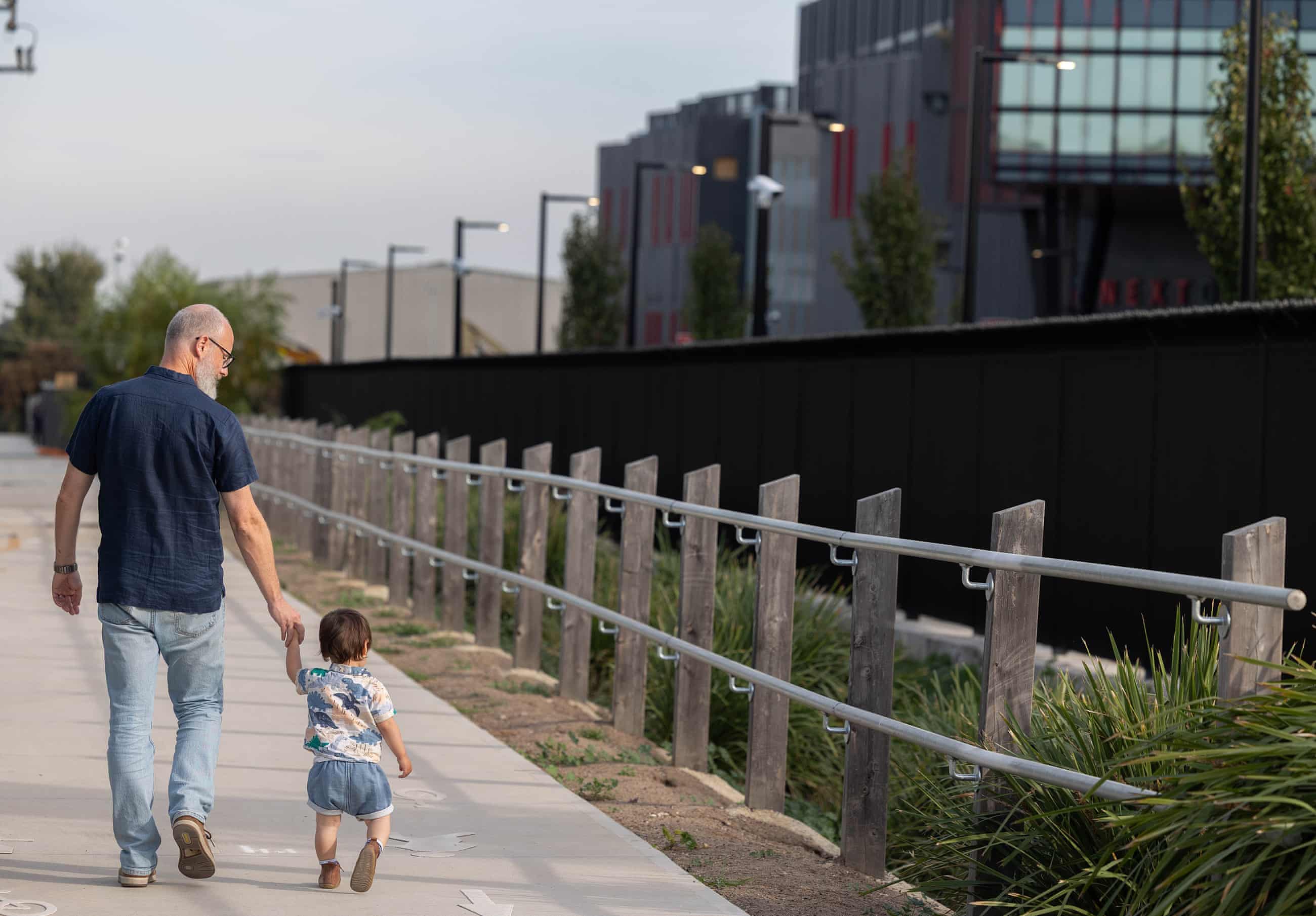
Residents say AI factories with unknown environmental impacts are being rushed into development as proponents argue Australia must ride the data boom or be left behindFollow our Australia news live blog for latest updatesGet our breaking news email, free app or daily news podcastWhen West Footscray resident Sean Brown takes his 19-month-old boy to the park, their walk passes an imposing new building cheerily spruiked as “Australia’s largest hyperscale AI factory”, a datacentre called M3.He hates it: the construction noise from its constant expansion, the looming towers and the insistent background hum, the exhaust from the growing array of diesel generators that can help power the ranks of servers inside.And he worries what it represents for his young child’s future.“He is growing – neurologically, pulmonarily, physically – in the shadow of a facility whose cumulative environmental impact … has never been assessed,” Brown says.“They’re building something which is, frankly, terrible for the community

Parents already have controls over smartphones – they should use them | Letters
A crucial facility seems to be missing from the coverage of smartphones in schools – and outside (I was wrong about the danger of smartphones in schools. It’s far, far worse than I thought, 22 April). Parental controls, which both Apple and Android have, enable downtimes to be set to ensure phones don’t work in school. They can also set downtimes for outside school and block inappropriate apps.We use these for our 14-year-old daughter to keep her safe and manage the addictive effects of phone use

Willy’s, Margate, Kent: ‘It chortles in the face of small plates’ – restaurant review | Grace Dent on restaurants

Helen Goh’s springtime spinach sponge cake with cream cheese icing – recipe | The sweet spot

Why we care so much about preserving family recipes

When it comes to wines, it pays to look beyond the fashionable

How to turn old pitta into spiced chips – recipe | Waste not

The perfect birthday cake: tips for the best blow-out