Team GB chief predicts ‘most potent’ Winter Games ever with sights set on eight medals

Team GB have never made anything more than the occasional ripple at the Winter Olympics,Which makes the prediction of Eve Muirhead, Britain’s chef de mission at the Milano Cortina Games, rather extraordinary,“I believe that we are taking one of the most potent teams of athletes that we have taken to a Winter Olympic Games,” she says,“We have the capability to disrupt the norm,”That norm, between 1952 and 2010, was just 12 medals in 16 Winter Games.
Then came a surge, with five medals in Sochi in 2014 and five in Pyeongchang in 2018, before Britain won just two medals in Beijing.But Muirhead, who led the women’s curling team to Team GB’s only gold four years ago, senses that new ground will be broken by the 53 British athletes over the next 16 days.“I see a set of athletes with a real pedigree in terms of recent results in the winter circuit,” she says.“And while we are a nation that already punches well above our weight, given the relative lack of snow and ice, I believe this team has the potential to really disrupt the natural order of big winter nations.”UK Sport, which has invested £25.
5m across winter sports for the 2022-26 cycle, has set a goal of four to eight medals.But it is clear that Muirhead wants to be right at the top end of that target.“As a nation we are still an emerging challenger in many winter sports and part of our ambition at the Games is to show we are a credible team across all disciplines,” she adds.“And I firmly believe we will be.”There is certainly significant evidence behind her optimism.
In the weeks before the Games, GB Snowsports’ Mia Brookes, Kirsty Muir and Zoe Atkin all won X Games titles, while Charlotte Bankes won her first World Cup race since breaking her collar bone.In the men’s skeleton, Matt Weston and Marcus Wyatt have won all seven World Cup races this season and, according to the bookies, the men’s and mixed curling teams are also favourites to win a medal.It helps that additional resources have also been pumped into technological innovations.At the University of Bath a flight simulator has been converted to simulate any skeleton track across the world, allowing the team to get hours of extra practice on the run they will encounter in Cortina.Weston and Wyatt are also waiting to see whether they will be able to use their new aerodynamic helmets, which could give them an even bigger advantage.
“We try to push the boundaries and find those gains, this is just one of the parts of innovation we do as GB and I think we do it pretty well,” says Weston,Wyatt, meanwhile, is hopeful the helmet will be cleared,“We believe it is legal, it’s currently being debated,All of our success has been with our current helmet, so for me it is the tiniest little thing in the background,”Meanwhile, in sports where speed is the major factor, special tech skinsuits have been introduced to reduce drag in competition, allowing athletes to go faster.
The great unknown, of course, is what other nations have planned.“We know that in some of those sports, particularly the sliding sports, the Germans run an R&I programme which is worth millions,” says UK Sport’s head of performance, Kate Baker.“They could pull something out on the day.“I think if you spend any time hanging around any of our sports, not just the winter sports, you will see that they are all constantly looking at what everybody else is doing.I wouldn’t go so far as to say that it’s an arms race.
It is definitely an expertise race, though.“Where other nations have a sliding track, or a ski slope on their doorstep, they are able to do the kind of behind-closed-doors stuff that we can do more easily in cycling than we can in winter sports.”But for all the emphasis on tech and talent, those competing know their chances could come down to a lucky break or how they handle the pressure.“None of us really want to make the Olympics a big thing, but it is in reality and there’s no hiding that,” says Brookes, the 19-year-old who could end up winning two medals and being Britain’s biggest star at these Games.“I’ve been scared that I’ll go to the Olympics, do the best I can, and it not be enough.
You know the whole world’s going to be watching, and that definitely adds more pressure.”Muirhead agrees.“A lot of these athletes have 20-30 seconds of competition.Then there’s the jeopardy of winter sports.A wrong edge, that could be it over.
It comes down to millimetres, milliseconds.But let’s just kind of hope we’re on the right side of the inch.”Team GB will hope to get off to a strong start on Monday with Muir and Brookes going for gold in the ski slopestyle and snowboard big air respectively, while the mixed curling team will aim to be competing in the semi-finals.Whatever happens, Muirhead expects the nation to quickly renew its once-every-four-year fling with winter sports.“What does the Winter Olympics not have?” she asks.
“You’ve got speed, flair and I guess a bit of chaos thrown in as well.And that’s what people love to watch on TV.”
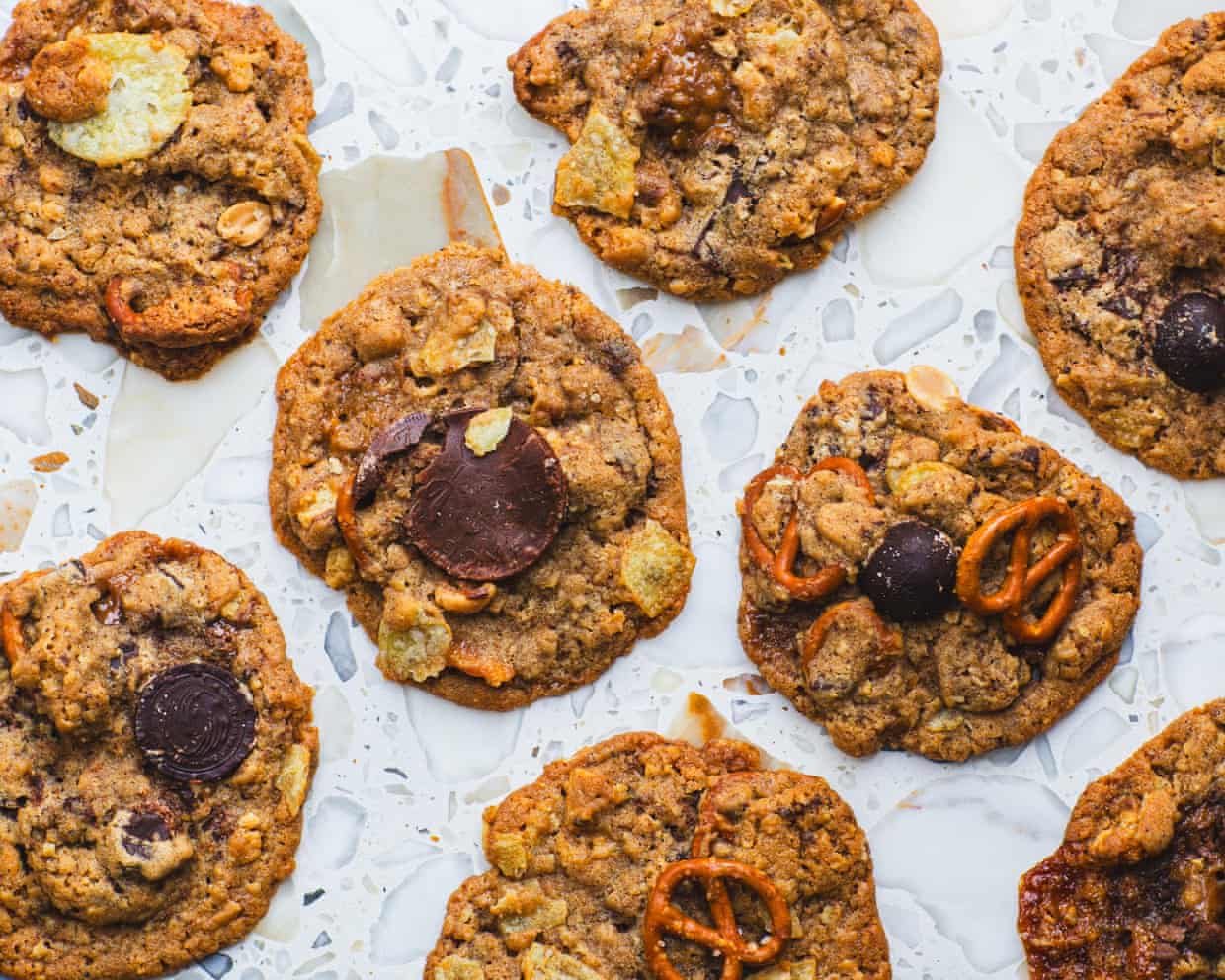
How to make moreish cookies from store-cupboard odds and ends – recipe | Waste not
I often eat a bag of salty crisps at the same time as a chewy chocolate bar, alternating bite for bite between the two, because the extreme contrast of salt from the chips and the sweetness of the chocolate fire off each other and create an endorphin rush. The same goes for these cookies, adapted from a recipe by Christina Tosi at New York’s legendary Milk Bar.Christina Tosi writes in Gourmet Traveller Australia how she first learned to make these cookies at a conference centre on Star Island, New England, where they’d bake them each week with a hodge-podge of different ingredients. Being on an island, they didn’t always have access to what they wanted, so they had to come up with a new recipe every week using whatever they had. In the spirit of the recipe’s origins, I’ve adapted Tosi’s recipe for the UK, and made it flexible, so you can raid your own store-cupboards and adapt and invent your own version from it
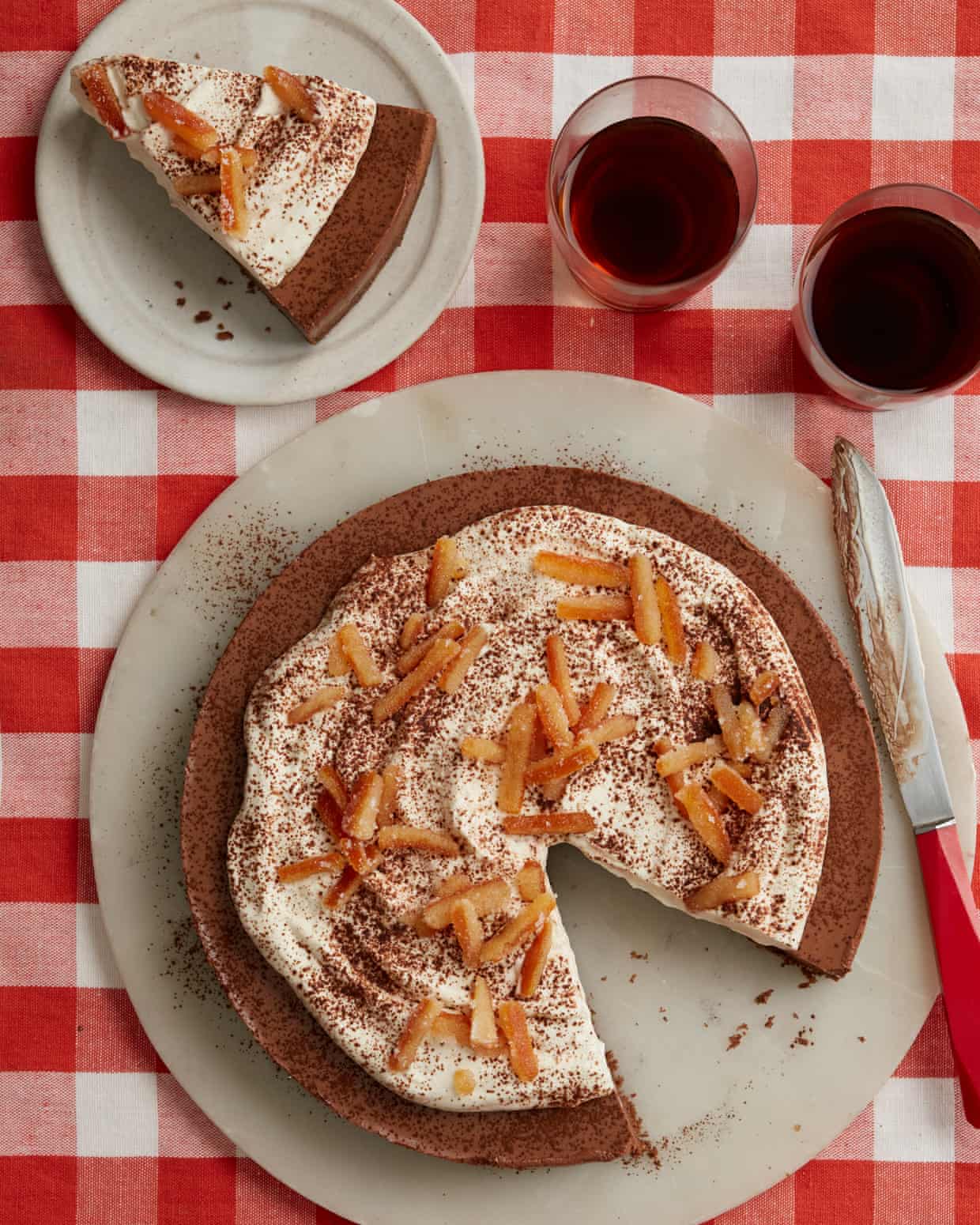
Camilla Wynne’s recipes for blood orange marmalade and no-bake marmalade mousse tart
If you’re intimidated by making marmalade, the whole-fruit method is the perfect entry point. Blood oranges are simmered whole until soft, perfuming your home as they do so, then they’re sliced, skin and all, mixed with sugar and a fragrant cinnamon stick, and embellished with a shot of amaro. Squirrel the jars away for a grey morning, give a few to deserving friends, and be sure to keep at least one to make this elegant mocha marmalade mousse tart. A cocoa biscuit crust topped with a chocolate marmalade mousse and crowned with a cold brew coffee cream, it’s a delightful trifecta of bitterness that no one will ever guess is an easy no-bake dessert.If you’re not up for preserving, make this using shop-bought thick-cut marmalade

The dump dinner: spaghetti is now being served straight on to the table – but why?
Name: Dump dinners.Age: Horribly new.Appearance: Feeding time at the zoo, but for humans.I’ve just Googled this. Apparently a dump dinner is a make-ahead slow cooker recipe
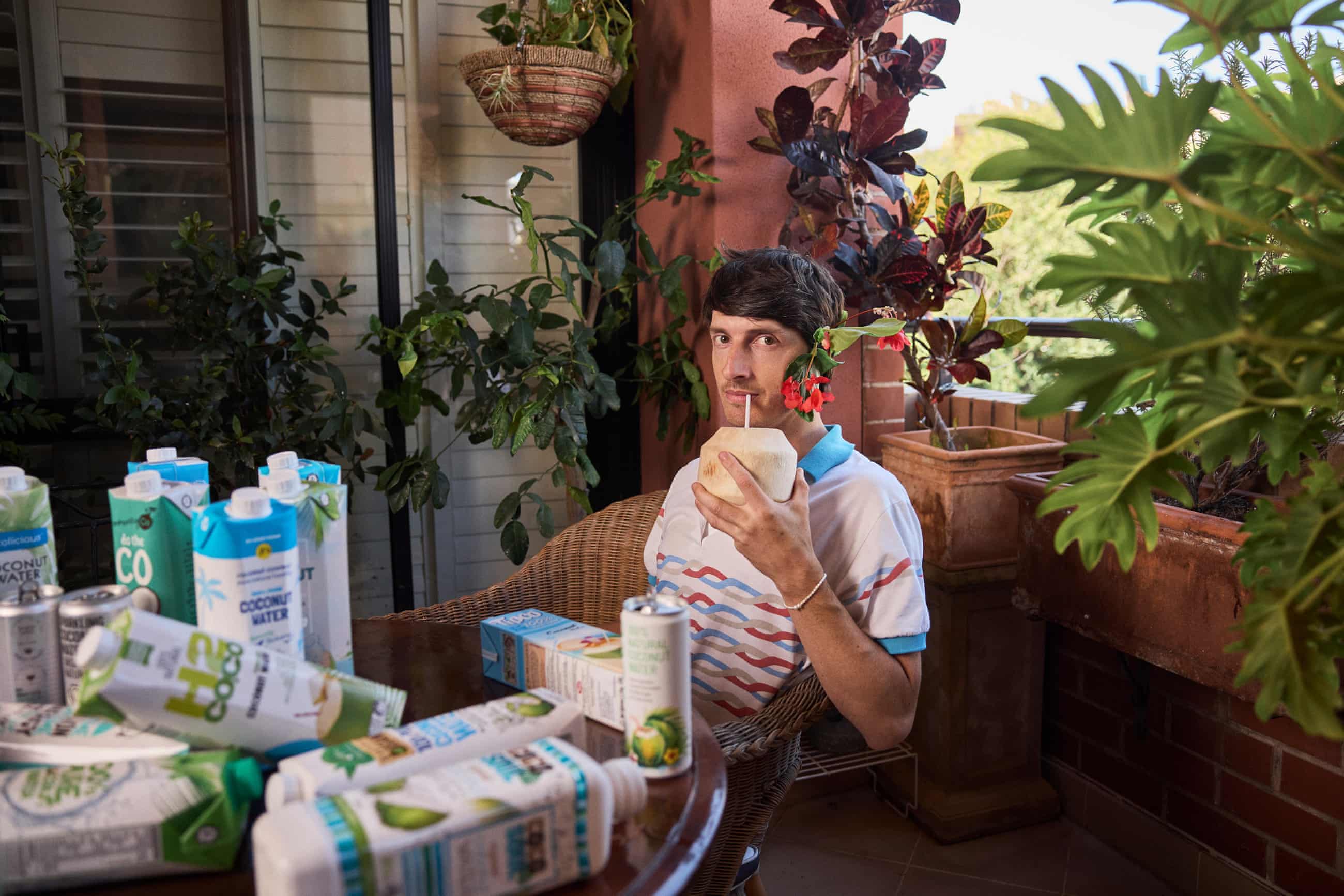
Australian supermarket coconut water taste test: ‘Smells like an island holiday’
Overcoming his irrational fear of coconut products, Nicholas Jordan tests a lovely – and lowly – bunch of coconuts in a rowIf you value our independent journalism, we hope you’ll consider supporting us todayGet our weekend culture and lifestyle emailI have a fear of coconut products. Like all fears it’s based on a questionable rationale and trauma, and my trauma is taste testing “health” coconut-heavy products that taste like soap. Which is why, until recently, almost all the coconut water I’d drunk was from a straw reaching out of a fresh coconut.Surely there’s no way a bottled coconut water, made from 100% coconut, could be that bad. Maybe it could be better than the real thing? I enjoy Melona more than the average honeydew melon
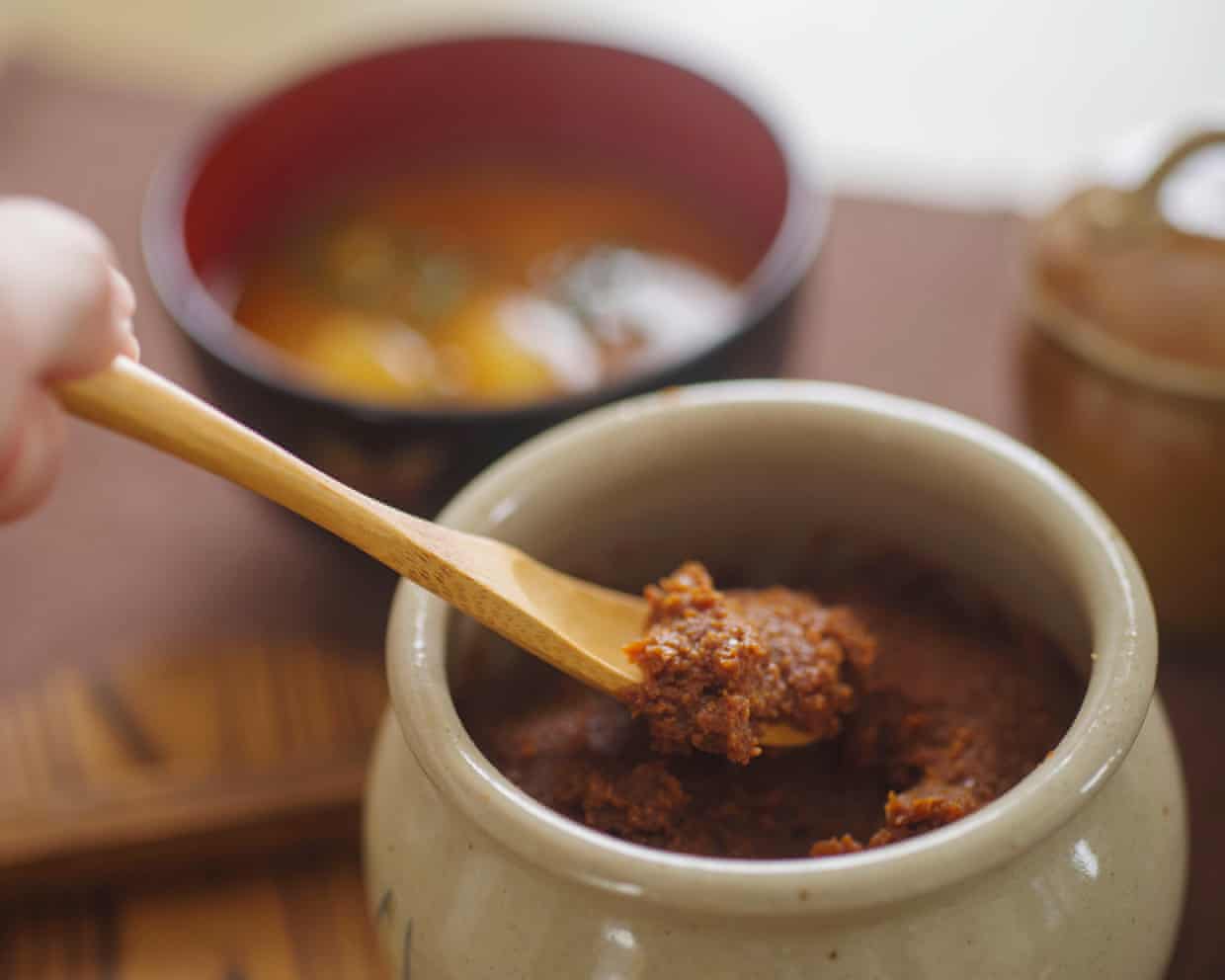
Miso mystery: red, white or yellow – how does each paste change your dish? | Kitchen aide
What’s the difference between white and red miso, and which should I use for what? Why do some recipes not specify which miso to use? Ben, by email“I think what recipe writers assume – and I’m sure I’ve written recipes like this – is that either way, you’re not going to get a miso that’s very extreme,” says Tim Anderson, whose latest book, JapanEasy Kitchen: Simple Recipes Using Japanese Pantry Ingredients, is out in April. As Ben points out, the two broadest categories are red and white, and in a lot of situations “you can use one or other to your taste without it having a massive effect on the outcome of the dish”.The Guardian’s journalism is independent. We will earn a commission if you buy something through an affiliate link. Learn more

The pie and mash crisis: can the original fast food be saved?
There used to be hundreds of pie and mash shops in London. Now there are barely more than 30. Can social media attention and a push for protected status ensure their survival?Outside it’s raining so hard that the sandwich board sign for BJ’s pie and mash (“All pies are made on the premises”) is folded up inside. The pavement along Barking Road in Plaistow is a blur through the front windows and deserted, and there are only two customers in the shop. Another sign – this one on the counter – says “CASH ONLY”

Jimmy Kimmel on Trump: ‘We are now at the women-should-smile-more stage of his presidency’

The Guide #228: Against my better judgment, A Knight of the Seven Kingdoms has me back in Westeros

Jon Stewart on Epstein files: ‘I’m just not sure anybody is going to be held accountable’

Sydney Biennale 2026: Hoor Al Qasimi unveils expansive program for 25th edition

Meryl Streep is as withering as ever in first full-length trailer for Devil Wears Prada 2

Wil Anderson: ‘I honestly believe being mistaken for Adam Hills is one of the great gifts of my life’