Welsh Labour faces ‘existential’ change as party braces for May election defeat
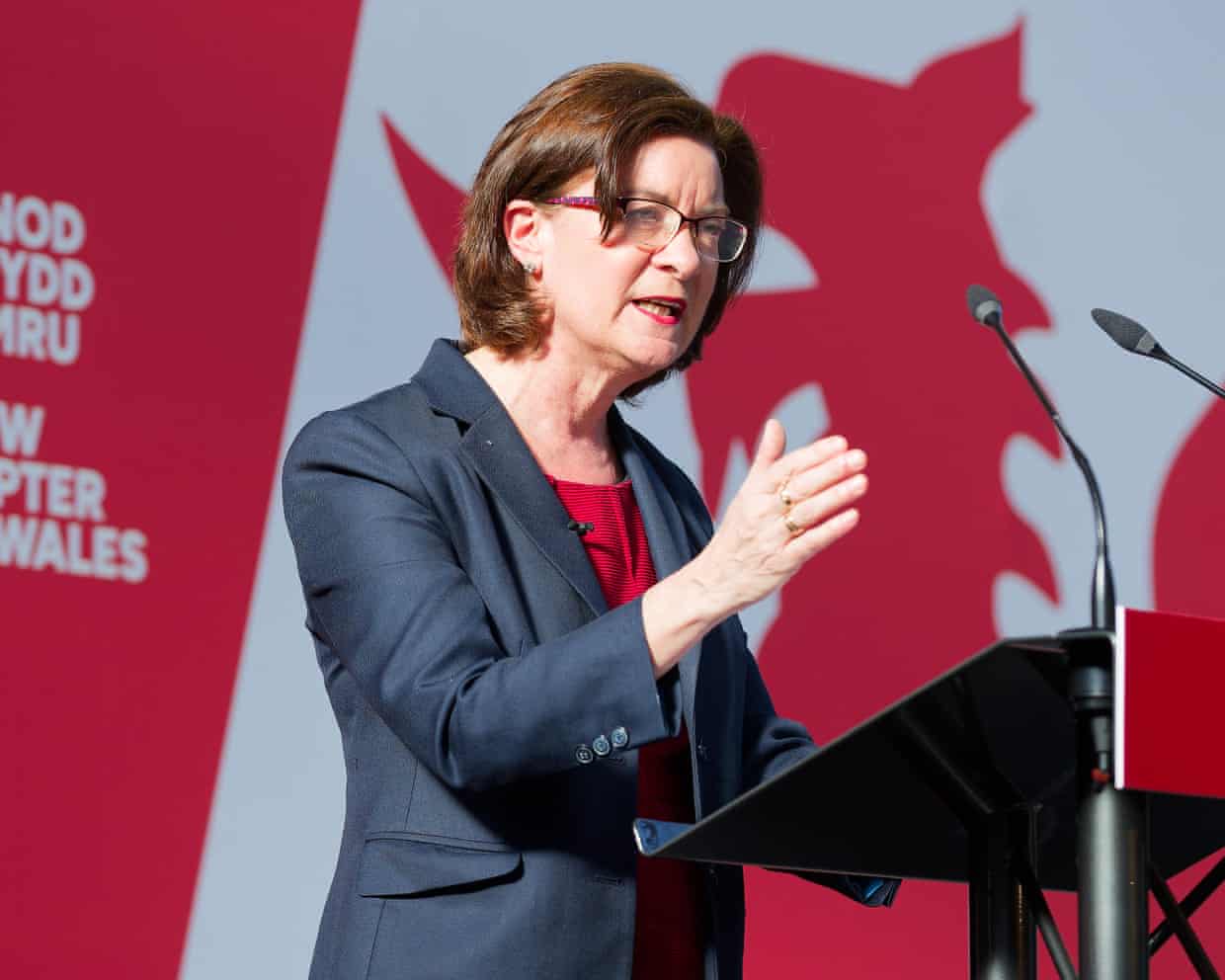
Welsh Labour is the democratic world’s most successful election-winning machine, coming first in Wales in every general election since 1922 and every devolved election since 1999.Come next month’s Senedd election, however, this history-making run is expected to end.Labour’s collapse has left a vacuum, and former Labour voters are going to opposite ends of the political spectrum.Plaid Cymru and Nigel Farage’s Reform UK are neck and neck in the latest poll, although coalition maths make it highly unlikely Reform would be able to form a government.The possibility of Labour losing power after 27 years and the pro-independence Plaid entering government as a senior partner for the first time means “this election is huge”, said Laura McAllister, a professor of public policy at Cardiff University.
Welsh Labour – and Wales itself – is at a crossroads, she added.“I’m not sure people have computed yet how existential both those things simultaneously are going to be.”Losing Wales after a century would be yet another blow to the beleaguered prime minister, Keir Starmer, and the wider Labour party, and would be likely to amplify already loud calls for him to resign.Separatists in office in all three devolved nations for the first time – Plaid Cymru in the Senedd, the Scottish National party (SNP) in Holyrood and Sinn Féin in Stormont – would mean that whoever occupies No 10 Downing Street in the near future will have a constitutional fight on their hands.Welsh Labour, met with lacklustre receptions on the doorstep and with a very different future for Wales coming into view, is bracing for what one senior source described as a “critical debate about what the party stands for” after the election.
“There will be those who try to defend 27 years in power, and attribute blame for a loss to the UK government or other factors,” they said.“But you have to be humble in losing.You have to understand why you lost the public’s trust and support and what needs to be done to stay relevant.”Welsh Labour’s record in office is mixed.The Welsh embarked on the devolution process more cautiously than Scotland and Northern Ireland, and initially very limited powers hampered Cardiff Bay administrations from the outset.
Supporters insist the party held the line against 14 years of Conservative government in Westminster, protecting public services from the impact of austerity, Brexit and the Covid pandemic.But after 27 years of devolution, Wales has fallen behind the other UK nations in several key metrics.About 20% of Welsh NHS patients have to wait more than a year for hospital treatment, compared with about 4% in England.Welsh children’s reading, maths and science skills fell to the lowest recorded OECD assessment levels of the four nations in 2024, and the proportion of people in Wales considered to be in very deep poverty rose from 33% in the 1990s to 47% in 2023, according to the Joseph Rowntree Foundation.Labour is faced with the tricky task of offering both stability and change: one campaign slogan is “a new chapter”.
Launching the party’s Senedd manifesto, the first minister, Eluned Morgan, said: “I think we’ve got to be honest about where people are.You’ve all heard it on the doorstep … People are right to hope for more, and I share your impatience.Your longing for change is my own.”The scandal-plagued premiership of Vaughan Gething – who was first minister for just four months in 2024 – was highly damaging, riving the party internally and repulsing voters.Starmer’s election was expected to strengthen Welsh Labour as a “partnership in power” in Cardiff and London, but his unpopularity appears to have weakened it instead.
Starmer’s government has saved jobs at Tata Steel in Port Talbot, decided that the country’s first small modular reactor (SMR) nuclear power station will be built in Ynys Môn (Anglesey), and taken steps to address Wales’s unfairly underfunded rail network.Yet Westminster intervention has not staunched the Welsh branch of the party’s precipitous decline; the prime minister’s name is not mentioned at all in the party’s manifesto.“Starmer’s government has done more for Wales already than the Tories did in 14 years.But there’s so much general anger at everything on the doorstep … Public expectation is harder than anything opposition can throw at you,” the Welsh Labour source said.Morgan, elected as leader unopposed as the party put on a united front after the Gething fiasco, was arguably always going to have to fight an uphill battle.
The Cardiff-born first minister is personable and approachable; she DJs at conference parties and is good at making people laugh.She has also spent her political career campaigning for devolution and greater powers for Wales, but her party’s failure to deliver quickly enough for a jaded electorate means she may end up losing her seat.“Eluned is relatively new and hasn’t had a chance to prove herself yet.She deserves that chance,” said another senior Labour source.The polls make grim reading for Labour loyalists.
The latest two from YouGov suggest the party will finish third with 13% of the vote, which translates into just 12 seats in a parliament that is growing from 60 to 96 members under a new electoral system,McAllister said: “There’s an argument that the Welsh public going from Labour to Plaid and Conservative to Reform is more of a realignment than a big switch,So there’s some hope for Labour there: how sticky is that switch? If Plaid don’t do well, don’t deliver, voters could swing back,”The new system has created 16 super-constituencies, each of which will elect six members; by the time the sixth seat on the list is decided, just a handful of votes could make the difference, making results very hard to predict,At least one of Welsh Labour’s anticipated election woes is directly of the party’s making.
In 2022, the special purpose committee on Senedd reform laid out several more proportional voting methods as options for 2026.People involved in the negotiations said that while some Labour members, along with Plaid Cymru, were in favour of a single transferable vote (STV) system, most of the party argued for the closed-list D’Hondt method, which lets voters choose parties as a whole, rather than individual candidates.Control over names on the lists suited hierarchical Welsh Labour; that D’Hondt tends to favour bigger parties also appealed.Prof Richard Wyn Jones, the director of Cardiff University’s Wales Governance Centre, said: “There’s a huge irony that it was Labour’s choice to have this system.If they’d gone for STV or the other options on offer, they would have done better.
“It appears no one in the Welsh parliamentary Labour party ever imagined they could be a small party.”Plaid Cymru may be the only party able to form a government after the election, because while Reform could win the most seats, the Welsh nationalists and Labour have ruled out going into coalition with Farage’s outfit.But the latest YouGov poll this week put Plaid Cymru on 36 seats, down seven, making a scenario in which Plaid need to turn to Labour as a coalition partner more likely.Plaid Cymru and Labour have entered formal coalition and cooperation agreements before, but McAllister said there was “no value” for Labour in becoming a junior partner in the next Welsh government.“What would they gain? I also think the nationalist rhetoric, and propping up a nationalist government, would be too hard to bear, being seen as Plaid’s helpers rather than the other way around.
”For many in the party, the glory days of the late 1990s, when New Labour opened the door to devolution, work began on the Welsh-slate Senedd building, and the first minister Rhodri Morgan overcame the new national assembly’s teething problems to lead Wales into a new millennium, feel like a long time ago.Rhodri Morgan’s decision to rebrand Labour in Wales as Welsh Labour was successful on several counts.It cemented the idea that the party was distinct and more progressive than UK Labour, stopped soft-nationalist voters from embracing Plaid Cymru, and ingrained devolution as the new normal.After almost 30 years, however, it seems Rhodri Morgan’s “clear red water” – reinvented by Eluned Morgan as the “red Welsh way” – appeals less to voters who now take devolution for granted, and increasingly identify as more Welsh than British.“I don’t think it has to be binary, are you Welsh or are you British,” said a third senior Labour source.
“Labour delivered devolution and Labour got Wales the powers it has today.I know there’s a big chunk of people toying with the idea of voting for Plaid Cymru but there are also still people out there that know Labour is loyal to Wales.”The best public interest journalism relies on first-hand accounts from people in the know.If you have something to share on this subject, you can contact us confidentially using the following methods:The Guardian app has a tool to send tips about stories.Messages are end to end encrypted and concealed within the routine activity that every Guardian mobile app performs.
This prevents an observer from knowing that you are communicating with us at all, let alone what is being said.If you don’t already have the Guardian app, download it (iOS/Android) and go to the menu.Select ‘Secure Messaging’.Our guide at theguardian.com/tips lists several ways to contact us securely, and discusses the pros and cons of each.

Musk and Altman’s bitter feud over OpenAI to be laid bare in court
The bitter rivalry between two of the tech world’s most powerful men arrives in court this week, as Elon Musk’s lawsuit against Sam Altman and OpenAI heads to trial in Oakland, California. The case is set to feature some of the biggest names in Silicon Valley, and its outcome could affect the course of the AI boom.Musk’s suit, filed in 2024, focuses on the formative years of OpenAI when he, Altman and others co-founded the artificial intelligence company as a nonprofit with a grand purpose.“OpenAI is a non-profit artificial intelligence research company. Our goal is to advance digital intelligence in the way that is most likely to benefit humanity as a whole, unconstrained by a need to generate financial return,” reads the company’s mission statement, published in late 2015

UK departments at odds over energy demands of AI datacentres
One vision of the UK’s future involves a decarbonised economy powered by clean, renewable energy. Another involves making the UK an AI superpower.The government departments responsible for these two visions do not appear to have agreed on their numbers.The Department of Science, Innovation and Technology (DSIT) thinks AI datacentres will consume 6GW of electricity by 2030. The Department of Energy Security and Net Zero (DESNZ) appears to think they will use less than a tenth of that

Cannes AI film festival raises eyebrows – and questions about future
In Cannes’ darkened screening rooms, the supposed future of cinema flickered into life this week and it was strange. The first edition of the World AI film festival (WAIFF) showcased visions of men with fish scales erupting from their necks and seaweed from their mouths, a heroine with a heart beating outside her body and so many massed armies of AI-generated tanned men sweeping across battlefields that David Lean would have blushed.Last week the Cannes film festival, entering its 76th year, banned the emerging technology from its Palme d’Or competition, insisting “AI imitates very well but it will never feel deep emotions”. But this week the Croisette was taken over by the upstart AI film movement and their big-tech backers amid increasing investment and attention from the Hollywood studios. A “nouvelle vague”, they said, is coming

Facing AI and a tough job market, gen Z turns to entrepreneurship: ‘I have to prove myself’
When Ashley Terrell graduated from the University of Hawaii in 2024, she planned to find a job in marketing, maybe for a tech company. She had a bachelor’s degree in business administration and a college résumé that included a student marketing job for Red Bull. But after months of applying, her only offer was to work in the power tools section at Home Depot. “It was quite a shock,” she told the Guardian. “I searched for jobs every single day in that Home Depot bathroom

TikTok and Visa launch debit card to speed payouts to UK creators
TikTok and Visa have launched a debit card for content creators in the UK which they say will allow people to quickly access their earnings from the platform.The creator card is designed for the growing numbers of people making money through TikTok Live, a livestreaming feature where creators receive virtual gifts from viewers that are later converted into cash.The two companies said the card, which links to a user’s creator account on TikTok, was designed to address cashflow issues faced by users who often wait days or weeks for payments to clear.Launched in 2020, TikTok Live is a section of the app where users can broadcast to viewers in real time. According to TikTok, more than 15 million people broadcasted via its platform in Europe in 2025

Officials hugely underestimated impact of AI datacentres on UK carbon emissions
The UK government vastly underestimated the climate impact of artificial intelligence, it has emerged, after officials raised their estimate of carbon emissions from AI by a factor of more than 100.According to new data quietly published this week, energy use by AI datacentres in the UK could cause the emission of up to 123m tonnes of carbon dioxide (CO₂) – about as much as generated by 2.7 million people – over the next 10 years.That latest figure replaces a previous estimate – since deleted – that claimed emissions would reach a maximum of 0.142m tonnes of CO₂ in a single year

Claire’s to close remaining UK stores on Tuesday with more than 1,000 job losses

Shell to buy Canadian shale producer ARC Resources for $16.4bn

Goldman raises oil price forecasts as Iran war deadlock continues; Shell buying Canada’s ARC in $13.6bn deal – as it happened

What’s going on with Spirit Airlines and could the White House bail them out?

G7 central banks poised to hold borrowing costs amid concerns over prolonged Iran war
HSBC ‘reviewing’ private school perk for bankers in Hong Kong