G7 central banks poised to hold borrowing costs amid concerns over prolonged Iran war
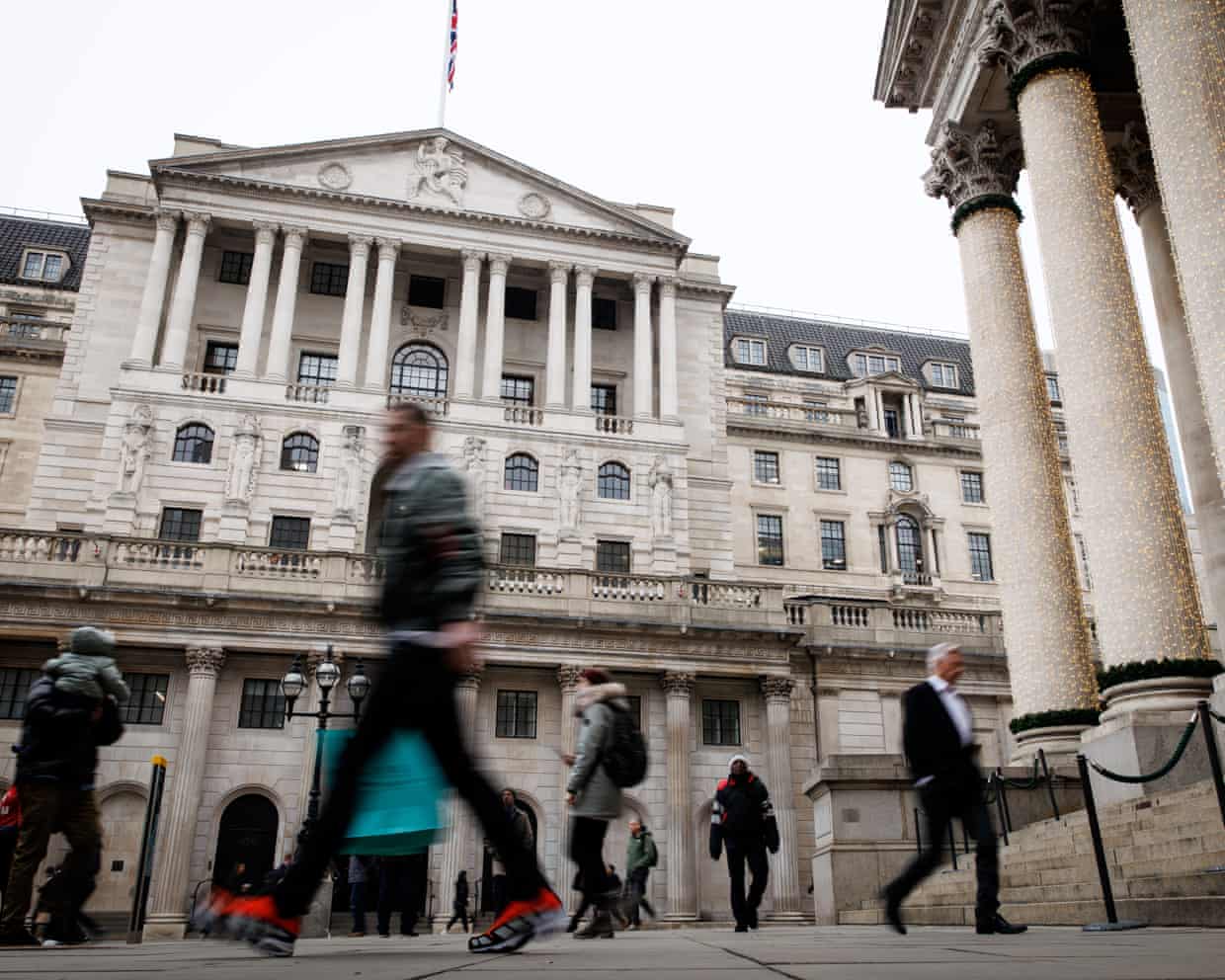
The world’s most powerful central banks are poised to hold borrowing costs unchanged this week amid growing concerns over the unfolding inflation shock from the Iran war.In a critical week for the global economy, each of the central banks in the G7 are expected to issue warnings over the risks from the Middle East war driving up prices for households and businesses.Financial markets are braced for signals from the central banks of the US, Canada, Japan, Britain and the eurozone on the prospects for interest rates amid concerns that a prolonged conflict could force them to keep borrowing costs higher for longer.“Another week of no fighting, no deal and no energy flows, another week that pressure on inflation and supply chains continues to build,” said Wei Yao, an analyst at the French bank Société Générale.“We will probably see all the major central banks sticking to the strategy of ‘keep clam but stay vigilant’.
Communications will be the focus.”In what is expected to be Federal Reserve chair Jerome Powell’s final meeting in charge, the US central bank is widely expected to keep borrowing costs unchanged on Wednesday as the Middle East war stokes inflationary pressures in the world’s largest economy.Financial markets are also pricing in an almost 100% chance of the Bank of England, European Central Bank, Bank of Japan and Bank of Canada holding rates.City traders give an outside probability of the UK central bank raising borrowing costs by a quarter-point.Last month the Bank kept rates on hold at 3.
75%.Susannah Streeter, chief investment strategist at Wealth Club, said officials at Threadneedle Street were set to be “super wary”.She said: “While price pressures are clearly mounting, the economy is set to struggle and that could limit the chances of inflation becoming embedded.So, while they are likely to indicate that a fresh hike could be ahead, there are unlikely to be any kneejerk moves, until there’s more clarity about the length of the Iran conflict.”It comes as Rachel Reeves, the UK chancellor, prepares to give speeches in May and June to outline the government’s approach to emergency energy support as the Iran war has driven up costs for households and businesses.
With Keir Starmer’s government under pressure after the revelations over the appointment of Peter Mandelson as Britain’s ambassador to the US, the Financial Times reported that the chancellor would restate Labour’s commitment to economic growth and sound government finances,Labour faces a tough round of local elections next week, amid speculation that Starmer’s critics within the party could move to replace him,The prime minister is expected to involve the Bank of England in a meeting of the government’s emergency Cobra committee on Tuesday on the economic fallout from the Iran war,Speaking at a conference held by the shop workers’ union Usdaw on Monday, Starmer was applauded for restating Britain’s opposition to the US-Israeli war on Iran, highlighting tensions between Downing Street and the White House as King Charles travels to Washington this week for a state visit,“I have to level with you about Iran because the truth is the economic consequences could still be with us for some time.
You don’t have to be a politician to know that.You can see it on every petrol forecourt across the country,” he said.“We are monitoring this daily.So, delegates, for example, tomorrow I’m chairing a meeting in Cobra on the impact, bringing in people from the Bank of England, so you can be sure we will stand by working people in this crisis.”Inflation had been cooling across advanced economies before the start of the US-Israeli war on Iran.
There have been signs of the UK economy beginning to turn a corner, with stronger-than-expected growth at the start of the year, falling unemployment, and resilience in the public finances.However, experts have warned the throttling of global energy supplies by the Iran war will drive up inflation globally this year.Earlier this month, the International Monetary Fund warned the conflict risked triggering a global recession as the resurgence of high inflation hits consumers and businesses still reeling from a cost of living crisis.
What’s going on with Spirit Airlines and could the White House bail them out?
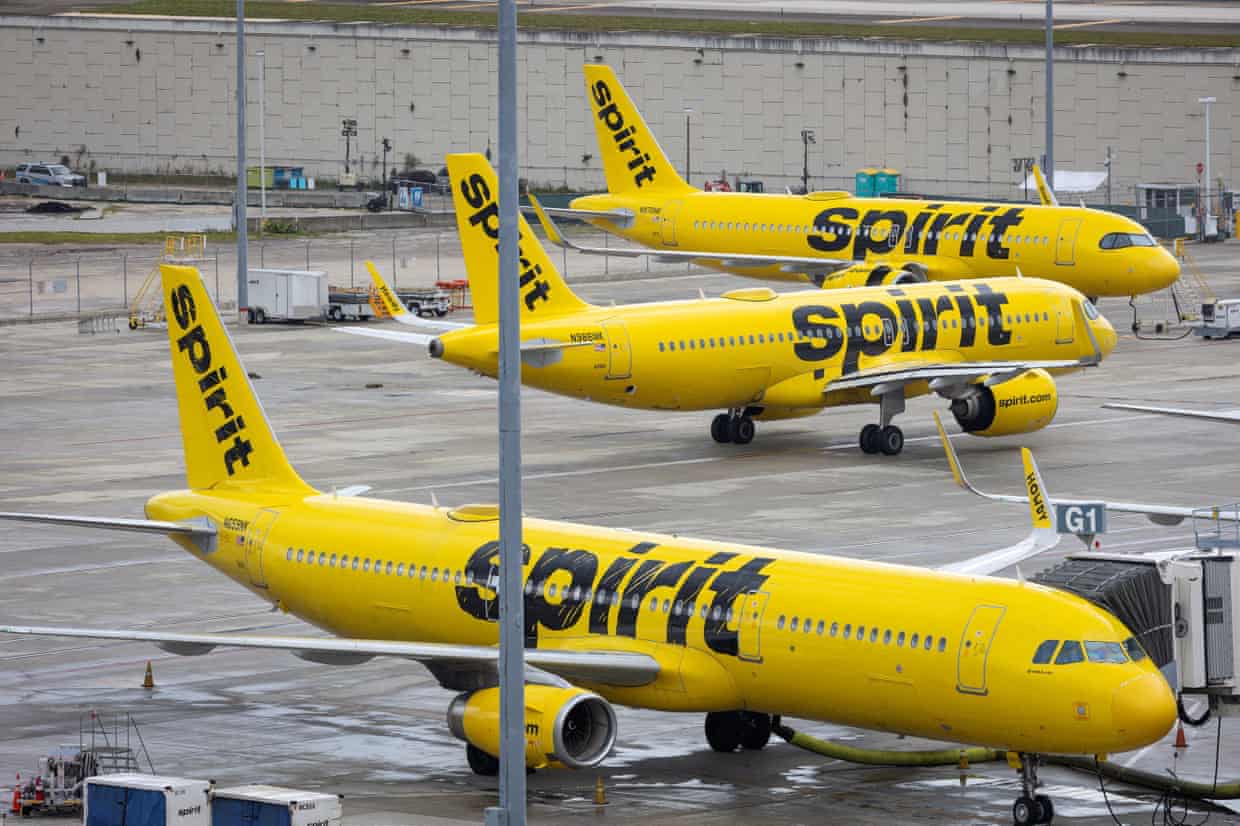
Soaring fuel prices are threatening air carriers around the world, and in the US the White House is scrambling to save the long-troubled Spirit Airlines.The carrier is in bankruptcy court and is quickly running out of cash. Reports last week suggested that the Trump administration was in talks to loan as much as $500m to the company as it teetered on the brink of liquidation. Then on Thursday, Donald Trump told reporters the federal government might buy the ailing airline.“We’re thinking about doing it, helping them out, meaning bailing them out, or buying it,” Trump said, adding that the government could “sell it for a profit” when oil prices come down
G7 central banks poised to hold borrowing costs amid concerns over prolonged Iran war
The world’s most powerful central banks are poised to hold borrowing costs unchanged this week amid growing concerns over the unfolding inflation shock from the Iran war.In a critical week for the global economy, each of the central banks in the G7 are expected to issue warnings over the risks from the Middle East war driving up prices for households and businesses.Financial markets are braced for signals from the central banks of the US, Canada, Japan, Britain and the eurozone on the prospects for interest rates amid concerns that a prolonged conflict could force them to keep borrowing costs higher for longer.“Another week of no fighting, no deal and no energy flows, another week that pressure on inflation and supply chains continues to build,” said Wei Yao, an analyst at the French bank Société Générale.“We will probably see all the major central banks sticking to the strategy of ‘keep clam but stay vigilant’
HSBC ‘reviewing’ private school perk for bankers in Hong Kong
HSBC is reportedly reviewing a perk that covers school fees for bankers in Hong Kong as part of a big overhaul of the bank under its chief executive, Georges Elhedery.Europe’s largest bank is considering whether to scrap the perk for new employees or make changes to total compensation, Bloomberg News reported. No decisions have been made yet.Hundreds of staff in Hong Kong – HSBC’s biggest market – benefit from the subsidy, which costs the lender tens of millions of dollars a year, and is not available in its other hubs around the world, reportedly leading to tension at its headquarters in London.It is also not offered to staff of Hang Seng Bank, which HSBC acquired in full in January for £10bn and delisted from the local stock exchange

Nationwide could have first customer on board for nearly 25 years
Nationwide building society could have a customer on its board for the first time in nearly a quarter of a century after one of its longtime members secured enough support for a spot on the lender’s annual ballot.James Sherwin-Smith will be up for board elections at Nationwide’s annual general meeting (AGM) in July, having gathered more than the 250 peer nominations necessary to run alongside existing directors.If successful, the 45-year-old from West Sussex would be the first Nationwide customer – known as members – to sit on the board of the building society for 24 years, with the last having retired in 2002.The last time a member-nominated customer was even on the AGM ballot was 2005, though they failed to secure enough votes to be elected to the board.The building society’s board members are typically appointed by the existing directors

Gina Rinehart calls for immigrants’ social media to be screened in Anzac memorial speech
Australia’s richest person, Gina Rinehart, called for immigrants’ social media to be screened and said children are being taught to be ashamed of the Australian flag in untelevised remarks before an Anzac memorial service on the steps of Sydney Opera House on Friday.Rinehart’s public appearance was attended by about 4,000 people and sponsored by her company, Hancock Prospecting, and RSL New South Wales.Rinehart claimed the Australian government was wasting money, eroding freedoms, running an ineffective defence force, leaving veterans homeless, teaching children to be ashamed of the Australian flag and doing nothing in response to “death chants”.“Our immigration procedures must only allow immigrants who have been thoroughly checked – including their phones, iPads, laptops and social media,” Rinehart said in a speech later posted online.“We need to protect our country – and welcome only peace-loving, contributing immigrants to our shores

Children’s shoe retailers say closure of specialist shops is harming foot health
Parents should care for their children’s feet in the same way as their eyes and teeth, according to footwear specialists who say they are seeing more young people with painful conditions such as bunions.Bunions are bony lumps on the side of the foot. People can be genetically pre-disposed but ill-fitting shoes are seen as an aggravating factor.Nadia Arden-Scott, a co-founder of Footwear Hub, said: “Parents have been led to believe that fitting shoes is simple and can be done at home, when the reality is that do-it-yourself shoe fitting is potentially causing long-term damage to their child’s feet.”Data from the property analysts Green Street shows that more than 1,000 shoe shops have closed in Great Britain since 2020

Drug use in England spikes during heatwaves and big sports events, research finds

People in UK spend fewer years in good health than a decade ago, study finds
Britain is undermining the care workers it depends on | Heather Stewart

Suicide-related callouts to fire services triple in England in a decade

Baby died after NHS trust failed to warn mother of ‘unsafe’ home birth, coroner finds

Three men guilty of repeatedly raping woman on Brighton beach in ‘predatory, callous’ attack