Slop it like it’s hot: the rise of build-your-own takeaway salad bowls
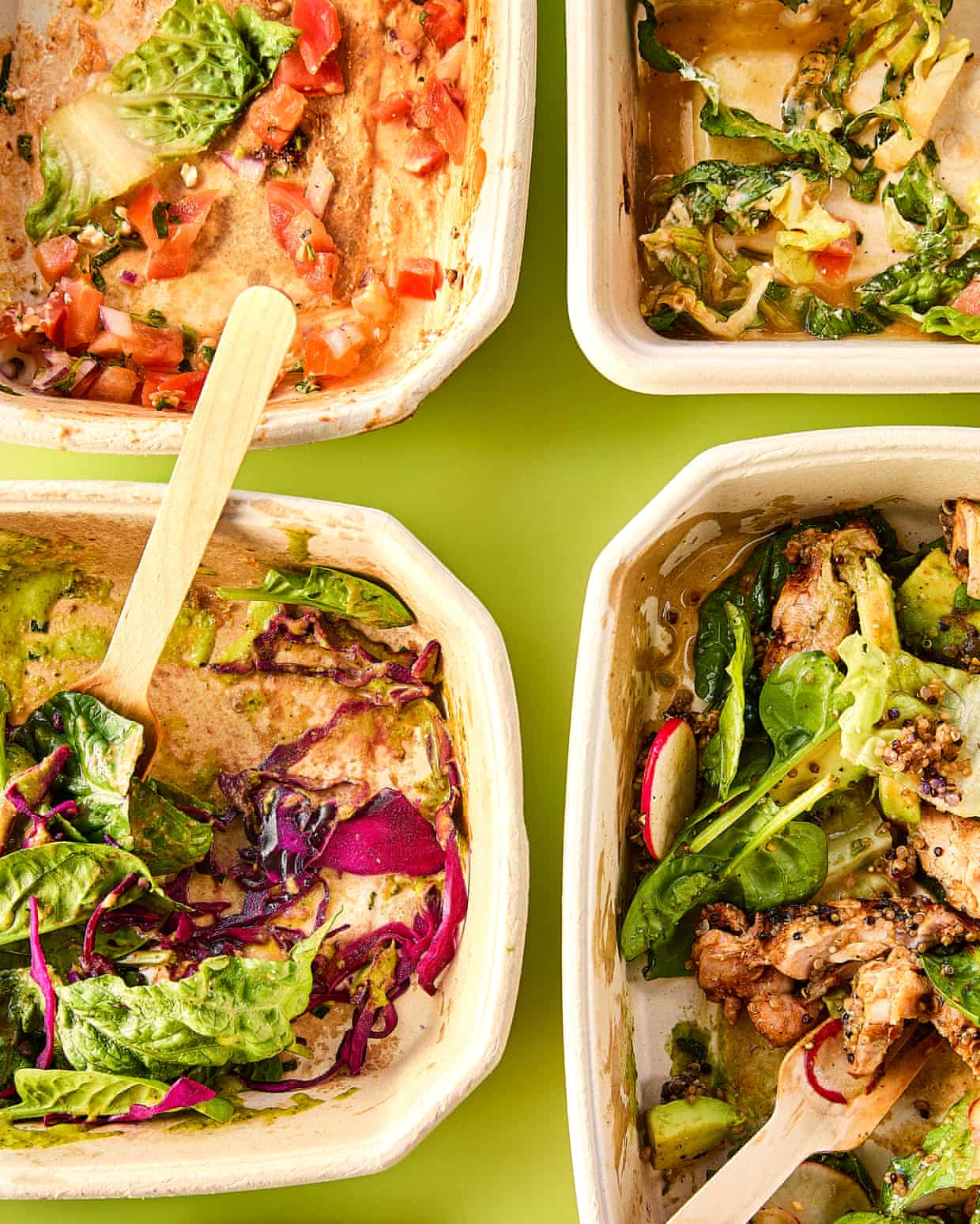
Few things have killed the leisurely lunch like capitalism, but to really see this in action, the food court of London’s financial shadowland, Canary Wharf, is a good place to start.Wandering the warren of Prets and Itsus are Deliveroo riders and suits-on-the-clock.And they’re usually carrying the same thing: a nice big bowl of slop.A slop bowl is the universal term for a mishmash of pick-your-own dishes assembled and sold in fast-casual spots that have become the de facto working lunch.The contents vary (they tend to feature Asian and eastern Mediterranean dishes) but as the name suggests, it is always served in a bowl, and by the time you’ve got to your desk, has usually become slop.
They can cost anything from £7 to £25 depending on what you add – much like coffee, the slop bowl is as customisable as a modular shelving unit from Ikea.This sounds like a lot.But we also live in an era where a salad bowl from Pret can cost £12, so maybe it’s not.The slop bowl at Atis, a small chain of “bowl restaurants” that opened last year, begins with leaves, or padding, spooned into a cardboard bowl, then rice or some sort of grain.What follows depends: in upmarket chains such as Farmer J it might be grilled hispi cabbage; at The Salad Project, roast sweet potato.
Then protein – perhaps chargrilled salmon sprinkled with sesame seeds, or marinated cubes of tofu.This is the main event at most places, though the serving is usually meagre.Texture is one of the slop bowl’s key tenets, so it’s usually finished with a crunchy sprinkle, something pickled (cucumber dominates, though maple walnuts are among “the most popular” at the queue in The Salad Project) and an optional dressing.Then off you go to your desk.There is nothing appetising about the term “slop bowl”.
But Merriam-Webster announced in December that its word of the year was “slop” and it has stuck online and on social media, tapping into both the AI-driven slop found on the internet, and the precise sound the food makes when it hits the base of its little bowl – baby food for grownups.In many ways, it’s the perfect culinary avatar for 2026.As one executive assistant in the queue at the Marylebone outpost of Farmer J told me: “I usually get lunch at Pret, or sushi.But once you’ve had J, it’s hard to go back.”The British eateries that serve them – Farmer J, Atis, Build a Bowl, The Salad Project – don’t call them slop.
But they have become a staple of a 9-5er, trickling down from finance bros to influencers to social media and ultimately, even the supermarket.In January, Ocado launched M&S “nutrient dense” bowls containing grains, vegetables and dressing, and at an affordable £5.95, it’s slop for the masses.As with most food trends – the rise of matcha, the march of avocado-on-toast – slop bowls are largely born out of health and wellness.Alex Ruani, a researcher in health and diet misinformation at UCL, thinks there are several macro food trends behind what she calls slop culture.
“The main ones are plant-forward eating and minimising our intake of ultra-processed food,” she says.Mainly, though, it’s how to achieve both those things, with the minimum effort and time: “I am a working mum.I don’t have time to rinse and cook beans.”As with many trends, it’s a repackaging of something old, says Dr Annie Gray, food historian and author of The Bookshop, The Draper, The Candlestick Maker.The word slop speaks to AI but it also refers to the way it homogenises global cuisine.
“A pick-your-own approach to various dishes from varying cultures which all slop together fails to reflect the cuisine of any given country.It’s fusion cooking from the 1990s – the turbo version.”The genesis of the slop bowl depends on who you ask.“One-meal food-in-a-bowl has always made sense.It’s practical – not to mention that spoons were invented before forks,” says Gray.
Think about medieval potage or lobscouse or mutton stew with dumplings, she says,“But to me, it sounds like gen Z trying to rename something that has been around for ever, modernised with the health twist,” She’s not wrong,It was following the pandemic that Deliveroo became a household verb and the restaurant industry imploded,“Slop bowls are a pragmatic way to serve food, but it’s also food for a [hospitality] industry in dire straits, an example of how in some places cooking has become completely deskilled.
Who cares about watching an assembly line?” says Gray.“The slop bowl presents as meeting all your needs, giving you choice.But it’s just the illusion of choice.”As it is easy to package and carry, most fast, casual British food chains offer a version of the slop bowl.Leon alone has been putting a mix of hot and cold food in a takeaway bowl for almost 20 years, while Chipotle’s westernised bowls of beans, chilli and quenelles of avocado have been more than a guilty secret since 2010.
In America, outposts such as Cava and Sweetgreen have been doing it for decades.In a way, says Dr Eleanor Barnett, food historian and author of Leftovers: A History of Food Waste and Preservation, “‘slop bowls’ go back to the start of human civilisation, if we mean a mix of protein, grains, and vegetables thrown together in one bowl”.“Cook shops existed in medieval England, set up in busy areas and serving pre-made food like pies.Oftentimes, the pie crust wasn’t eaten, serving instead as a kind of Tupperware or bowl, so perhaps even this practice isn’t too far away from the modern slop bowl trend, either.” The difference perhaps is how we eat them.
“This would have been in a big pot and everyone would help themselves to a bowl of it.” And Ruani agrees.“The working lunch used to be a communal experience between colleagues.Slop bowls today are inherently designed to be eaten with your laptop as a plus-one.They are messy.
They are noisy.It is not pleasant to watch someone eat one, trust me.Having a conversation with a colleague over slop? No way.”“The thing about the famous Mediterranean diet, it’s not just the food that makes you live longer,” adds Camilla Stokholm, a GP and author of What Your Doctor Eats.“It’s the social connection, the pace, the eating together.
” These bowls mostly serve the lunch-hour rush, but Farmer J, which opened its first spot in London 10 years ago but has this year launched in the US, now serves slop for breakfast, too: shak pots, based on shakshuka, being the most popular.In the new series of Industry, set in the high-pressure world of investment banking, they double as antagonist Harper Stern’s dinner.Even online meal kit service Planthood recently advertised a slop bowl of soup (AKA soup with other food piled on top), as if there was an alternative receptacle for the stuff.To that end, maybe the slop bowl is just about status; carrying your little cardboard bowl around is like carrying a Daunt’s tote or a Fitzcarraldo paperback.“You walk in, you get the base, you begin adding ingredients and before you know it you’ve dropped almost £20 – and I believe the pressure to look healthy in front of peers, the ones you’ve queued with, forces you to spend more,” says Ruani.
“It’s social contagion.”The other unavoidable factor in their rise is the continued use of GLP1 drugs, adds Ruani.“These are compact bowls of food for people with small appetites marketed as nutrient-dense,” she says.But really, there’s not much in a lot of them; they just pass as lunch.I tried one slop bowl without any protein at Atis.
It cost £7, about the same as Pret, but weighed in at around 200g and less than 500 calories (it barely touched the sides).Slop bowls are a product of today’s diet culture and a record of it.Blame the pandemic, or bankers – it was Wall Street’s Gordon Gekko who, in 1987, uttered, “Lunch is for wimps.” But as lunches go, adds Stokholm, “if yours contains legumes – chickpeas, black beans, that sort of thing – and a wholegrain like quinoa or spelt; then seeds, avocado, extra-virgin olive oil and something fermented, then you could do a lot worse”.Maybe just pop to Pret, then.

UK government yet to trial OpenAI tech months after signing partnership
When the UK government signed a memorandum of understanding with OpenAI, the tech firm behind ChatGPT, the partnership was hailed as one that could harness artificial intelligence to “address society’s greatest challenges”.But eight months on from the fanfare of that announcement, the government has yet to hold any trials involving the firm’s tech.A freedom of information (FoI) request asked the Department for Science, Innovation and Technology (DSIT) for information about trials conducted under the memorandum, which said the company would work with civil servants to “identify opportunities for how advanced AI models can be deployed throughout government and the private sector”.The department replied that it held none of this information and had “not undertaken any trials under the memorandum of understanding with OpenAI”.In response to a query from the Guardian, DSIT pointed to an agreement under which the Ministry of Justice (MoJ) last October enabled civil servants to use ChatGPT “with an option for UK-based data storage for customers”
Tory peer accuses Nick Timothy of ‘instilling fear’ over Islamic prayers
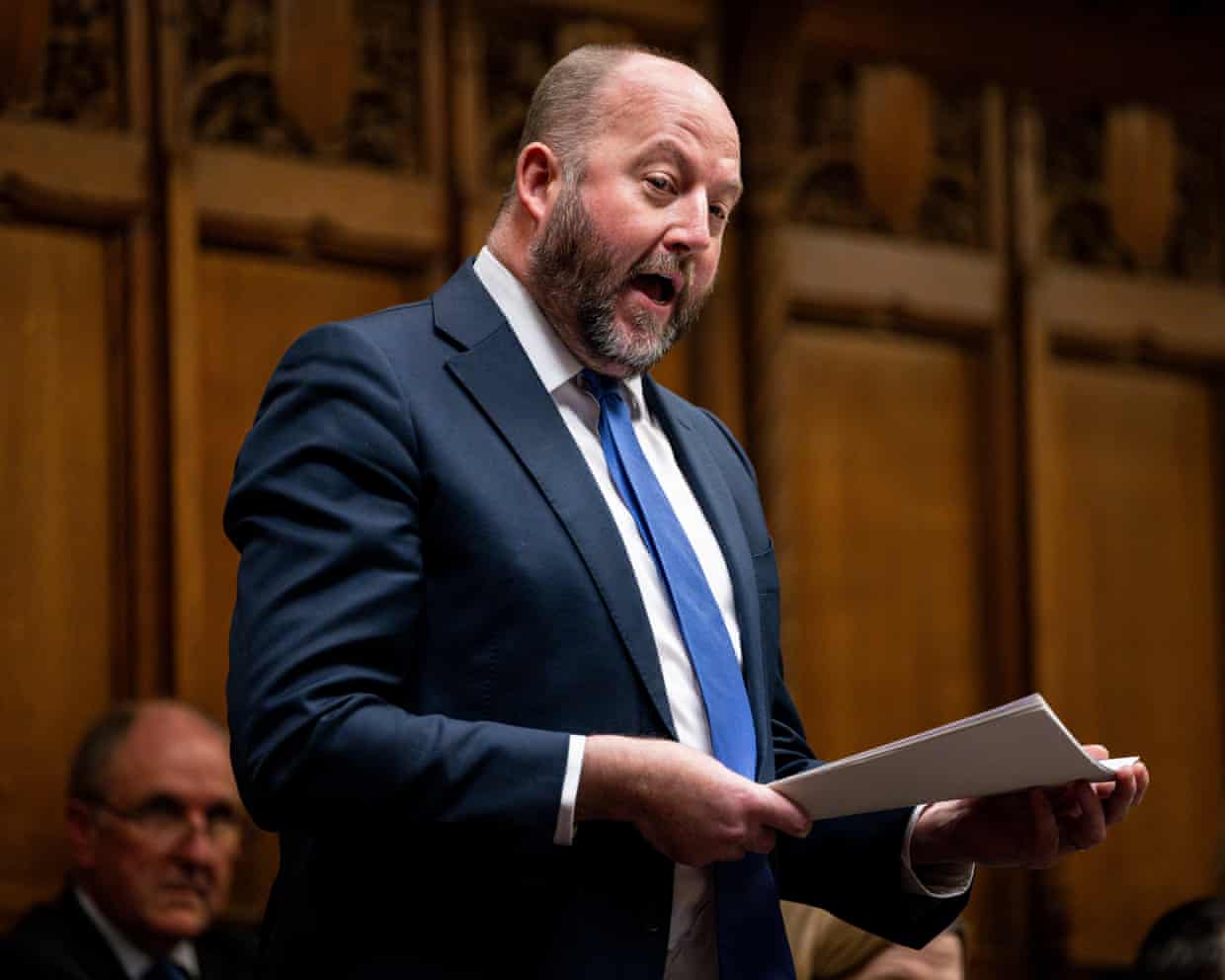
The shadow justice secretary, Nick Timothy, has been accused by a Conservative peer and former counter-extremism minister of “instilling fear” among Muslims with his comments about public prayer.British Muslims were openly talking about leaving the Conservative party, added Tariq Ahmad, who said he had raised his concerns with the party leadership and expected action to be taken.“I have known Nick for a long time and am deeply disappointed by his divisive comments. He needs to reflect carefully on his own words,” Lord Ahmad told the Guardian.“If he is aspiring to be lord chancellor, he has to stand up for the principles of equality and justice before the law for all, that comes with that responsibility

Department of Health retracts claim sunbeds are as dangerous as smoking
The Department of Health and Social Care (DHSC) has had to retract a misleading claim that sunbeds are as dangerous a cancer risk as smoking.In January, health officials announced stricter rules for sunbeds, incorrectly claiming they were “as dangerous as smoking”. The comparison was repeated in social media posts shared by the health secretary and NHS England and was reported by a number of media outlets.But the factchecking organisation Full Fact said the claim was wrong, concluding “misleading information about the risk of cancer … risks making smoking seem less harmful than it is”.While both smoking and sunbeds cause cancer, the risks are not equal
More British teenagers stranded abroad as result of new rules on dual nationals
Two more British teenagers have found themselves unable to return to the UK because of new Home Office border rules on British dual nationals.Their cases emerged just hours after reports a 16-year-old British schoolgirl was blocked from boarding a flight in Denmark home to the UK because she was a dual national and did not have a British passport. She has missed two weeks of school so far.A 19-year-old student, Anna*, from Oxfordshire is stuck in Madrid after a university-organised trip to the Spanish capital.She is part French and had not yet obtained a British passport to comply with the new rules, which require British dual nationals to present a passport, new or expired, or certificate of entitlement to airlines before boarding flights to the UK

Is it time for the UK to acknowledge the ‘rhetoric to reality gap’ on its military power?
It will have been more than three weeks since the US and Israel first attacked Iran when the first British warship finally arrives off the coast of Cyprus, a belated defensive deployment that has highlighted the lack of military capacity available to the UK.Nominally, HMS Dragon was one of three destroyers available out of six. In reality the warship has had to be hauled out of dry dock, prepared and then, after launch, tested for several days in the Channel. Its arrival date is still unconfirmed.“It’s clear one of the military’s big problems is giving the government contingency options,” said Matthew Savill, of the Royal United Services Institute, reflecting years of spending constraints

Claimants drop lawsuit against Gerry Adams over IRA bombings
Three victims of IRA bombings who sued Gerry Adams alleging he was a member of the paramilitary group and culpable for the attacks have withdrawn their lawsuit on the last day of the civil trial.John Clark, Jonathan Ganesh and Barry Laycock, who were injured respectively in the 1973 Old Bailey bombing and the 1996 London Docklands and Manchester bombings, were seeking symbolic “vindicatory” damages of £1 each.They alleged that the former Sinn Féin leader, who is credited with helping to bring about the Northern Ireland peace process that ended the Troubles, was a member of the IRA and had sat on its army council. Adams denied being a member of the IRA or being involved in bombings.On Friday, the ninth and final day of the trial, the claimants’ lawyer, Anne Studd KC, was expected to finish her closing submissions, but she told the high court that the claim would be discontinued after “proceedings developed overnight”
‘We can create hype’: H&M’s UK boss on its commitment to the high street

‘Trumpflation’: how the Iran war’s economic storm could affect Britons

‘Thank God they’re still alive’: Kaiser therapists claim its new screening system puts patients at higher risk by delaying their care
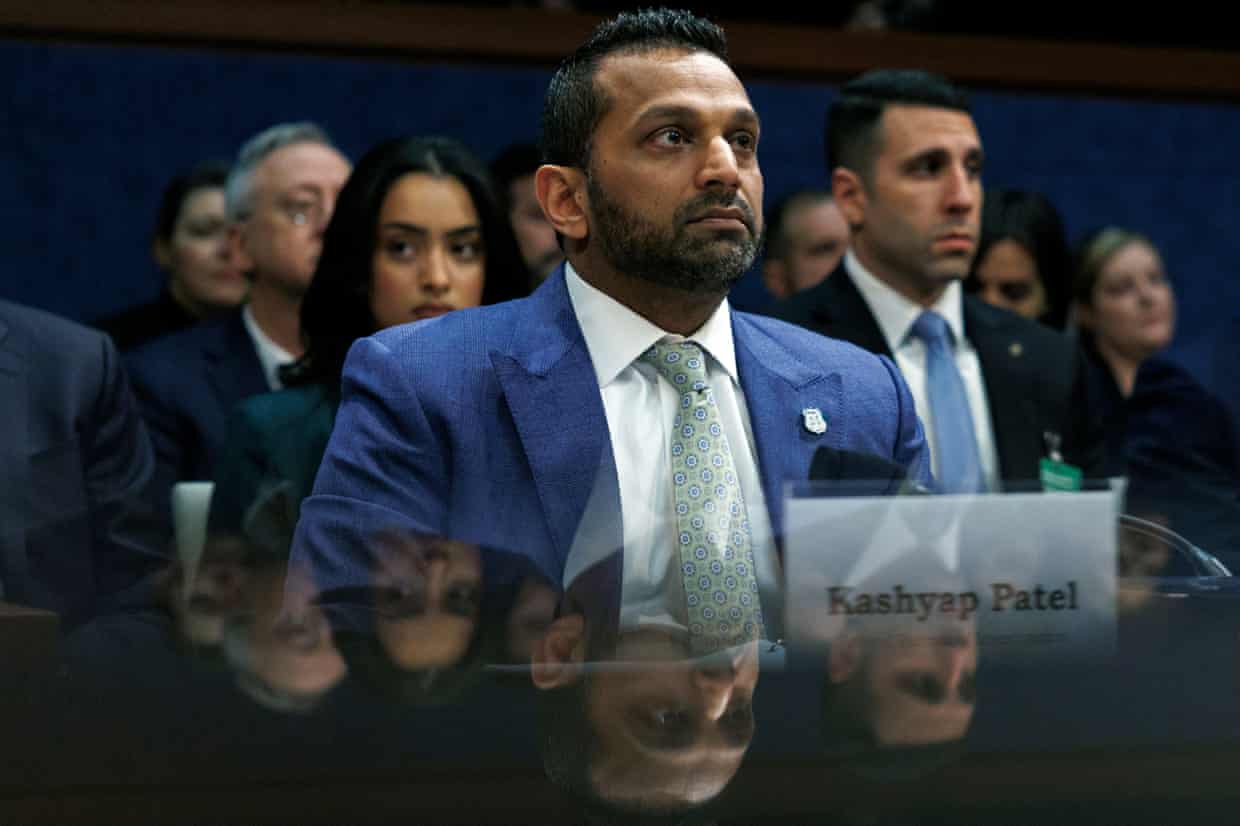
How the FBI can conduct mass surveillance – even without AI

England’s McCullum told to improve relations with counties before Ashes review

Serena Williams courts drama once again as game of ‘will she won’t she’ goes on