The UK needs more North Sea gas; imports from the US are the real enemy | Nils Pratley
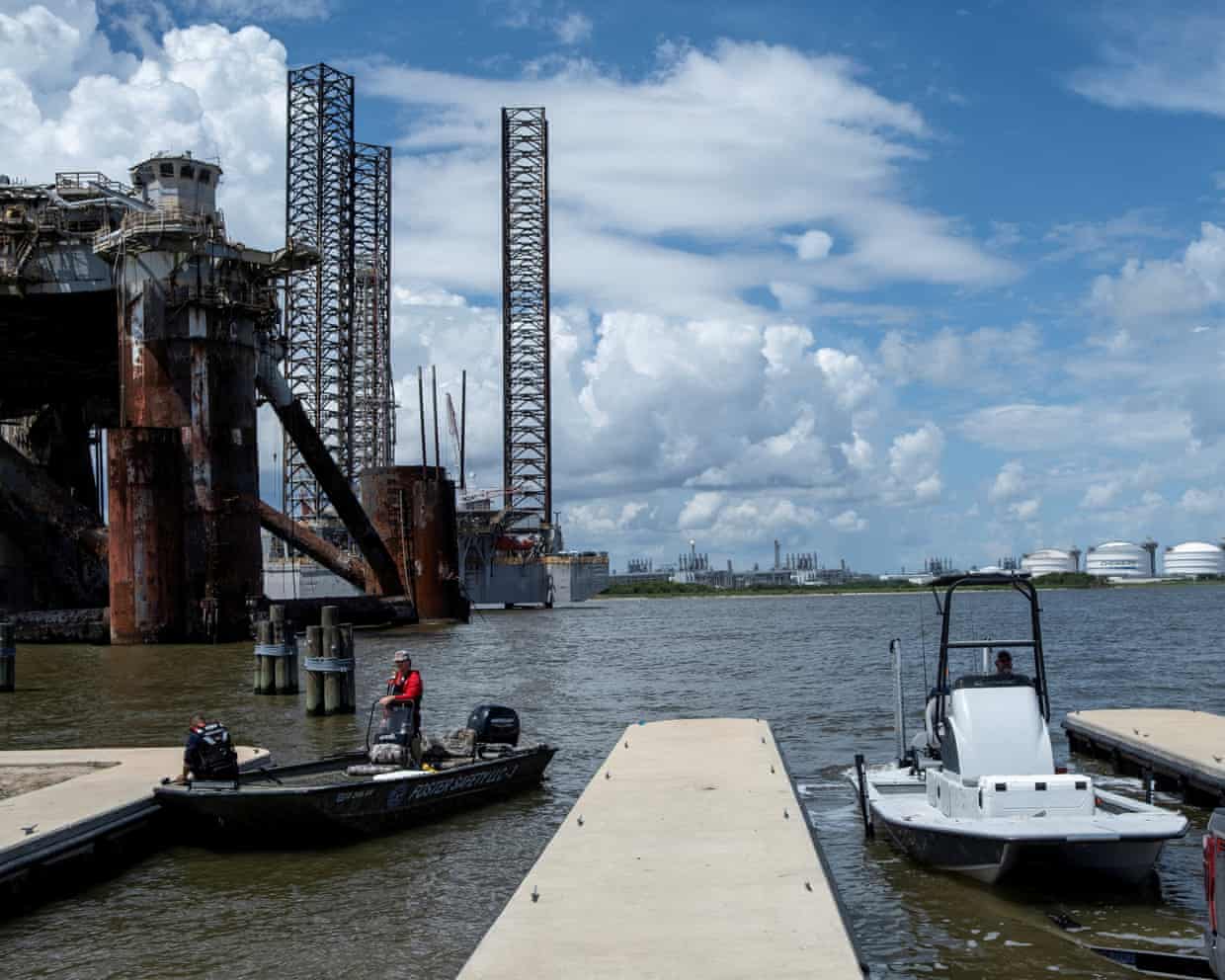
Terrific news: despite turmoil in the strait of Hormuz, the UK will have sufficient supplies of gas to meet demand this summer, said National Gas, which operates the gas transmission system, on Monday.But contain your relief.The summer months of lower usage were never likely to be a moment of stress.Gas via pipelines from the UK and Norwegian fields in the North Sea can handle virtually all UK demand when most of the 24m households with a gas connection have their heating turned off.Little liquefied natural gas, or LNG, the stuff that arrives on ships, is needed during the summer.
The real supply challenges are for the future – not just this winter, but over the next couple of decades,The appealing notion that the rapid rollout of renewables will soon eliminate the need for gas is, sadly, a delusion,Gas for electricity generation is indeed in long-term decline but represents only a quarter of the UK’s overall demand for gas,The biggest slice, at 37% in 2024, was for domestic consumption, according to government data, and replacing all those gas boilers with heat pumps is not a quick job, especially not at the UK’s current sluggish pace,Nor are wind, solar and batteries about to make gas-fired power stations obsolete: the government’s clean power 2030 plan dictates that the entire 35 gigawatts of gas generating capacity must be retained as backup.
Zoom out and the energy department’s data for 2025, released just before Easter, showed gas demand “broadly stable” for the third year in a row.It made up about half of the UK’s 75.2% dependency on fossil fuels in 2025, again about the same as in 2024.Transition to a cleaner future is essential but takes time.So one question – critical in the context of the raging debate about more North Sea drilling – is where the gas molecules should come from.
Here’s Sir Dieter Helm, Oxford University energy economist, on a recent podcast from the Chatham House thinktank: “Gas is 35% of our total energy supply,It’s big,And we are going to go on burning gas for the next decade or two at least, or probably beyond that,That’s realism,So the question is: what’s the best way of securing those supplies in the least polluting way and at the lowest cost to consumers? That is a perfectly sensible structure to think of the problem.
The first thing you’d say is: ‘we don’t want any LNG because LNG is much more polluting than pipeline gas’,”How much more polluting? According to numbers from energy analysts Wood Mackenzie, showing the carbon intensity of the UK’s gas supplies in 2024, pipeline gas from Norway’s modern North Sea platforms is the least polluting in terms of emissions from production and supply (so-called scope 1 and 2 emissions),Then comes UK North Sea pipelines,But then it’s a leap to LNG, where the process of liquefying and regasification adds emissions,And the worst of the lot is LNG from the US because much of its gas is shale gas, where some methane escapes during fracking.
Wood Mackenzie’s forecasts for UK’s gas imports out to 2045 also show that on the current trajectory, the UK looks set to max out on LNG from US if domestic supplies diminish,Why? Well, gas from the Middle East is optimised to flow to Asia, whereas US cargoes head to Europe,It’s no use wishing for more Norway gas because those supplies are not inexhaustible,On Wood Mackenzie’s forecasts, the UK will rely on US LNG for over 60% of its overall gas supplies as soon as 2035,“Recent history highlights the risks of reliance on a single country,” it comments.
Therein lies the case for more drilling for UK North Sea gas.You do it to be less dependent on the US, a country whose president seems to regard energy as a tool of foreign policy.And you do it to avoid LNG’s greater emissions.One usual objection runs along line of “ah, but North Sea output is sold on the international market so doesn’t make us more secure.” There are two obvious replies.
First, pipeline gas that goes straight into the UK gas network is plainly more secure than a cargo from across the Atlantic.Second, if the objection is price, then the UK, as Helm points out, is free to negotiate long-term fixed-price supply contracts with producers as part of new licences.It is how the North Sea operated in the early years; a similar set-up may make sense in the final ones.None of which is an argument against renewables and nuclear generation.Electrification is the long-term direction.
But gas is plainly in the mix for a couple of decades yet.Industry body Offshore Energies UK reckons reliance on LNG could be contained to 6% in 2035 under a more pragmatic approach to UK North Sea licensing.Its projections may be optimistic, but the ambition sounds better than becoming a semi-forced buyer of US LNG for a couple of decades.Once the current political agonising is over, one assumes the Jackdaw gas field, equating to 6% of current domestic production, will be approved.At that point, there should be a proper debate about North Sea gas policy that moves beyond the misleading framing of “renewables or gas” and asks what a sensible procurement policy would be during the period in which the UK is still consuming gas.
One of the lessons of the Iran war is the need for more national resilience, including “secure, homegrown energy,” argued the prime minister on these pages last week.If that’s his view, two conclusions surely follow.First, keep electrifying to reduce gas usage and make best use of renewables and nuclear.Second, while gas is still on the system, don’t make the UK an energy prisoner of the US.Quite apart from the benefits for taxes, balance of payments and jobs, the UK needs more North Sea gas.
The UK needs more North Sea gas; imports from the US are the real enemy | Nils Pratley
Terrific news: despite turmoil in the strait of Hormuz, the UK will have sufficient supplies of gas to meet demand this summer, said National Gas, which operates the gas transmission system, on Monday.But contain your relief. The summer months of lower usage were never likely to be a moment of stress. Gas via pipelines from the UK and Norwegian fields in the North Sea can handle virtually all UK demand when most of the 24m households with a gas connection have their heating turned off. Little liquefied natural gas, or LNG, the stuff that arrives on ships, is needed during the summer
Oil price dips below $100 a barrel after Trump claims Iran wants deal
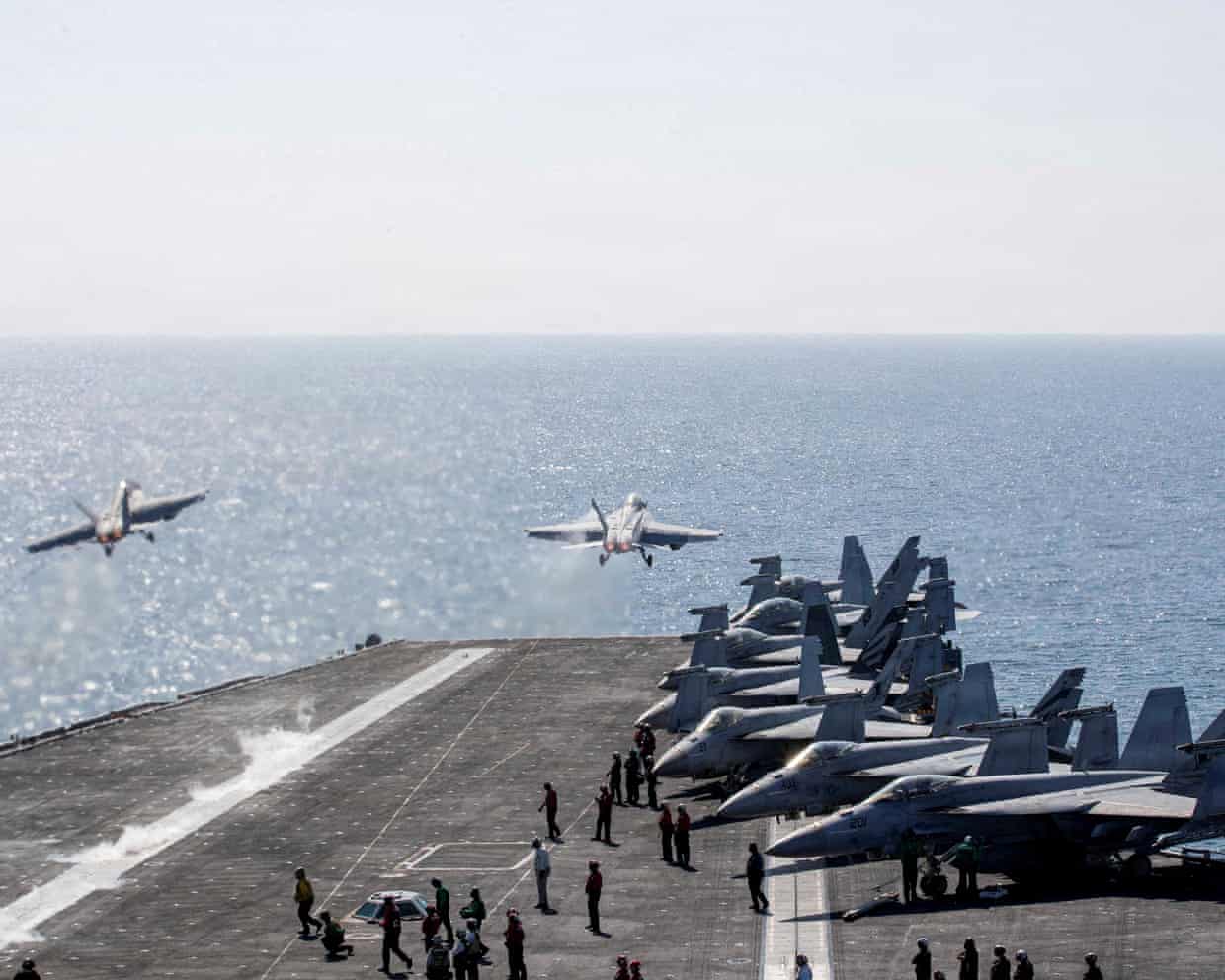
Oil prices have fallen back after briefly rising to above $100 a barrel as Donald Trump claimed Iran had made contact and wanted “very badly” to strike a deal in the face of his blockade of the strait of Hormuz.The Brent crude international benchmark rose above the key psychological threshold earlier in the day, at one point up 6.9% to $101.70 a barrel on news of the US president’s plan to block the waterway to Iranian marine traffic.However, it later eased back to a little over $99 a barrel after Trump said the blockade had come into force at 10am ET (3pm BST) and the Iranians had subsequently got in touch

Don’t make Marshal Foch’s mistake on AI | Letters
Emma Brockes’ article struck a chord (It’s finally happened: I’m now worried about AI. And consulting ChatGPT did nothing to allay my fears, 8 April). I am reading Marc Bloch’s Strange Defeat, in which the eminent French historian and soon-to-be-executed resistance worker gives a first-hand account of the collapse of the French army in 1940. He attributes the debacle at least in part to a failure of imagination on the part of the French general staff, who were incapable of grasping that technology, and war, had fundamentally changed since 1918.Brockes’ article suggests that we, and our leaders, are suffering from the same inability to understand that a technology which is currently amusingly alarming will develop in less amusing ways – the future Marshal Ferdinand Foch had, according to Bloch, earlier dismissed aircraft as being a toy for hobbyists and not of any military interest

Meta creating AI version of Mark Zuckerberg so staff can talk to the boss
If you are one of Meta’s almost 79,000 employees and cannot get hold of the boss, do not worry. The owner of Facebook and Instagram is reportedly working on an AI version of Mark Zuckerberg who can answer all your queries.The AI clone of Zuckerberg, Meta’s founder and chief executive, is being trained on his mannerisms and tone as well as his public statements and thoughts on company strategy.The rationale behind the project, according to the Financial Times, is that employees could feel more connected to one of the most powerful people in Silicon Valley.The Meta chief has a history of creating and experimenting with digitalised versions of himself

WNBA draft 2026: Azzi Fudd is No 1 pick; where will other top prospects land? – live updates
Flau’jae Johnson had a special guest on stage after she was selected by the Valkyries at No 8: her little brother.New Mystics draftee Lauren Betts says she can’t wait to play with Kiki Iriafen – her former teammate at Stanford and an All-Star as a rookie after being drafted No 4 last year.On UCLA’s wave of early draftees: “I want to say I’m surprised, but I’m not. … To have this night showcase all of the things we worked on all season is really amazing.”Johnson has a high upside as a player

‘Carelessly squandered’: Wisden scolds England’s tumultuous Ashes tour
The latest edition of Wisden is unsparing in its criticism of England’s Test team, describing their Ashes defeat in Australia as a “wing-and-a-prayer” campaign that ended up “feckless, reckless and legless”.Published this Thursday, the sport’s longstanding bible has a strong Indian flavour to its awards. Haseeb Hameed, captain of title-winning Nottinghamshire, is the sole Englishman among the five players of the year, with Shubman Gill, Rishabh Pant, Ravindra Jadeja and Mohammed Siraj recognised for their roles in last year’s memorable 2-2 Test series draw in England.But the nature of England’s 4-1 defeat in Australia – a tour derailed by a poor buildup, lurching tactics, and accusations of an unprofessional approach off the field – leads this year’s notes, with the editor, Lawrence Booth, saying it is “hard to think of a privilege so carelessly squandered, a chance so blithely spurned”.Booth writes: “Much of the misery was self-inflicted: from the paper-thin preparation, via a string of schoolboy dismissals, to the revelation of Harry Brook’s scrape with a nightclub bouncer in New Zealand

‘It feels as if I’ve made a new best friend’: my experiment with AI journalling

Dr TikTok: patients diagnose chronic illnesses with anonymous commenters’ help

AI companies know they have an image problem. Will funding policy papers and thinktanks dig them out?

‘Too powerful for the public’: Inside Anthropic’s bid to win the AI publicity war

‘It has your name on it, but I don’t think it’s you’: how AI is impersonating musicians on Spotify
OpenAI CEO Sam Altman’s home targeted with molotov cocktail