Oil prices plunge 15% to below $100, stocks surge and dollar slumps after Trump announces US-Iran ceasefire – business live

European gas prices have fallen 20% since the ceasefire was announced, after nearly six weeks of war,The European bellwether front-month gas contract on the Dutch TTF hub initially dropped to €42,50 per megawatt hour this morning, its lowest since 2 March, before rising slightly to €43,46 per megawatt hour,Iran has agreed to reopen the strait of Hormuz, through which around a fifth of the world’s gas and oil passed prior to the war, assuming there are no more strikes from the US and Israel.
Henning Gloystein, managing director of energy and resources at the political risk consultancy Eurasia Group, said:double quotation markThe first thing to see is whether ships can safely pass through the strait of Hormuz.If they pass freely, it’s possible that Qatar starts repairs to its Ras Laffan facilities, but I don’t think they can ramp up production within the two-week ceasefire window.The waterway has remained effectively closed since the US and Israel launched strikes on Tehran on 28 February.A retaliatory Iranian strike on Qatar’s Ras Laffan LNG (liquefied natural gas) hub on 18 March knocked out an estimated 17% of export capacity.Yahdian Falah, senior portfolio manager at trading firm Trianel told the European energy market newswire Montel News:double quotation markThis is a strong relief and could be the turning point for the global gas market to rebalance.
The ceasefire removes risk of further damage to infrastructure, while reopening the Strait of Hormuz will bring volumes back into the market.However, “further elimination of risk premium” would be subject to evidence of increased traffic through the strait, he added.ANZ bank analysts said in a note:double quotation markEven if shipping routes reopen, missing Qatari output cannot be replaced quickly, leaving the market to clear through higher prices, inventory drawdowns and demand rationing.The FTSE 100 index has risen to the highest level since the Tuesday after the US and Israel started attacking Iran.The UK’s benchmark index rose as high as 10,655.
92 this morning, and is now trading 2.4% higher at 10,603, up 253 points.This is the highest since 3 March, the fourth day of the war.Stock markets in the rest of Europe have jumped even more.Germany’s Dax soared 5.
2% to 24,118, up 1,194 points.France’s CAC jumped 4.45% to 8,260, up 352 points.Italy’s FTSE MiB has gained 3.5% to 47,016, up 1,601 points.
Spain’s Ibex climbed 3.5%, or 608 points to 18,053.Matt Britzman, senior equity analyst at Hargreaves Lansdown said the ceasefire gives Donald Trump “a clear offramp and lowers the immediate risk of further escalation”.double quotation markThe FTSE 100 has opened 2% higher, while US futures are pointing to an even larger jump when markets open later this afternoon.The S&P 500 notched its fifth consecutive positive session last night, with the index now on track to record a six-day winning streak if it can hold on to pre-market gains, something not seen since October 2025.
Oil prices have moved sharply lower as the ceasefire agreement marks the first meaningful step toward a potential resolution.News that all parties are now working toward reopening the Strait of Hormuz is another clear positive for market sentiment, even if energy markets remain cautious.There is still work to be done, though, and oil prices will likely remain elevated and choppy until there is a more permanent resolution.The return of free-flowing traffic through the Strait of Hormuz, without any Iranian tolls or controls, feels essential if oil prices are going to start trending back toward levels we saw before the conflict began.Interest rate expectations have shifted slightly following the ceasefire, bringing markets back toward the view that further US tightening is off the table.
Investors are now becoming more comfortable, tentatively pricing in the potential for rate cuts to resume toward the end of this year or into early 2027.In the UK, markets are still attaching some probability to another hike, although conviction has faded meaningfully in recent sessions.We still see rate hikes as unlikely, given lingering growth concerns, with a holding pattern more probable for now.Further moves in this direction, and perhaps an eventual return to expectations of rate cuts, would be supportive of both stock markets and gold.The Danish shipping giant Maersk has issued a cautious statement, saying the two-week ceasefire between the US and Iran including the temporary reopening of the strait of Hormuz does not yet provide full maritime certainty.
The war that began with US-Israeli strikes on Iran on 28 February, followed by Iranian attacks across the region and Tehran’s effective closure of the strait, has brought shipping in the Gulf to a near standstill, disrupting oil, gas and fertiliser shipments and rippling across global supply chains,Maersk said in a statement to Reuters:double quotation markAny decision to transit the strait of Hormuz will be based on continuous risk assessments, close monitoring of the security situation, and available guidance from relevant authorities and partners,At this point, we take a cautious approach, and we are not making any changes to specific services,And we’re off,The FTSE 100 index has jumped 273 points, or 2.
6%, to 10624 in early trading.There are only three fallers: oil companies BP and Shell, down by 8.3% and 7.3% respectively, and British Gas owner Centrica, down 3.5%.
Interest rate expectations have shifted dramatically, and government bond yields have fallen sharply.Markets are now pricing in one interest rate hike from the Bank of England this year, probably by September.Last week, investors were expecting two to three rate increases to rein in rising inflation.UK government bond yields plummeted on news of the ceasefire as rate hike expectations receded, with the yield, or interest rate on the 10-year gilt down 18 basis points.The five-year yield dropped by 20 basis points.
Sterling has also risen sharply, by 0,9% against the dollar, to $1,3416,Eurozone government bond yields also plunged as traders scaled back bets on future rate rises from the European Central Bank,Markets are now pricing in a 20% chance of a rate hike in April, compared with 60% on Tuesday, before the dramatic announcement of a US-Iran ceasefire overnight.
The yield, or interest rate, on Germany’s 10-year government bond fell 18 basis points to 2.91%.Jim Reid, markets analyst at Deutsche Bank, saiddouble quotation markInvestors will be breathing a big sigh of relief that an offramp out of the war is being taken even as there’ll be various elements to watch to see whether this leads to sustained de-escalation.Will the ceasefire hold? We saw some strikes by Israel and Iran overnight though these may have been in the works before the conditional ceasefire.We’ve also seen conflicting commentary on whether the ceasefire will extend to Israel’s action in Lebanon.
Can talks lead to a permanent cessation of hostilities?Trump’s comment last night that “Almost all of the various points of past contention have been agreed to” suggests a lower bar for agreement, but Iran’s reported 10-point plan includes elements such as the lifting of all sanctions and Iran controlling the Strait of Hormuz that have previously been unacceptable to the US and allies.Those points also do not restrict Iran’s enriched uranium, which Trump suggested would be “perfectly taken care of” as he claimed a “total and complete victory” in an interview to AFP late last night.And in his latest post overnight, Trump appeared keen to lean into the prospects for full resolution, claiming “a big day for World Peace” and that the US “will be helping with the traffic buildup in the Strait of Hormuz”.Good morning, and welcome to our rolling coverage of business, the financial markets and the world economy.Oil prices plunged more than 15% below $100 a barrel, Asian stocks surged and the dollar slumped after the US and Iran agreed a two-week conditional ceasefire on Tuesday evening, including a temporary reopening of the strait of Hormuz.
Investors breathed a sigh of relief, and Brent crude, the global oil benchmark, fell by more than $15 to $93.82 a barrel in early London trading.It reached a low of $91.7 a barrel in Asian trading – but remains much higher than before the US and Israel launched attacks on Tehran on 28 February, when it traded around $72 a barrel.Japan’s benchmark Nikkei 225 jumped 5.
45%, the Australian market climbed 2.55% and South Korea’s Kospi soared 7.7%.Elsewhere, Hong Kong’s Hang Seng surged 3%, while the Shenzhen Composite in China rose just over 4%.European stock futures are pointing to a strong rally when markets open soon, with Germany’s Dax seen rising more than 5% and the UK’s FTSE 100 up nearly 3%.
The dollar fell more than 1% against a basket of major currencies.Spot gold rose 2.6% to $4,825 an ounce.After a last-minute diplomatic intervention led by Pakistan, Donald Trump held off on his threat to bomb Iran “back to the stone ages” and wipe out “a whole civilization”.With less than two hours to go until his ultimatum of 8pm Eastern time, the US president said a ceasefire agreement had been mediated through Pakistan, whose prime minister, Shehbaz Sharif, had requested the two-week peace in order to “allow diplomacy to run its course”.
Trump wrote in a post that “subject to the Islamic Republic of Iran agreeing to the COMPLETE, IMMEDIATE, and SAFE OPENING of the Strait of Hormuz, I agree to suspend the bombing and attack of Iran for a period of two weeks”.Soon after, Iran’s national security council confirmed it had accepted a two-week ceasefire under the management of its military if attacks against Iran were halted.Tehran said peace negotiations with the US would begin in Islamabad on Friday.However, there is still much uncertainty about the outcome of the talks, how the strait of Hormuz will be managed and what will happen to shipping after the two-week period ends.Charu Chanana, chief investment strategist at Saxo Bank in Singapore, said:double quotation markMarkets were positioned for a much worse outcome, so the relief rally in equities, FX, and oil makes sense.
This is the market unwinding some of its disaster hedges.The ceasefire does not resolve all the underlying risks.Investors still need clarity on whether hostilities truly stop, whether Hormuz remains reliably open, how quickly disrupted energy supply can recover, and whether the 10 April talks in Islamabad produce real progress.For macro and rates, the worst immediate inflation shock has eased, so markets can start to put some rate cuts back on the table.But I would not assume they simply return to the exact same pricing as before the war, because shipping, insurance, and supply-chain disruptions may take longer to normalize.
Tactically, the Iran playbook may now be flipping,Relief-sensitive areas such as airlines, consumer discretionary, selected cyclicals, and broader risk assets could benefit if de-escalation holds,Structurally though, I still think investors should balance growth and AI exposure with energy, supply-chain resilience, hard assets, and national-security themes,The Agenda8,30am BST: Eurozone construction PMI for March9.
30am BST: UK construction PMI for MarchNoon BST: US mortgage applications
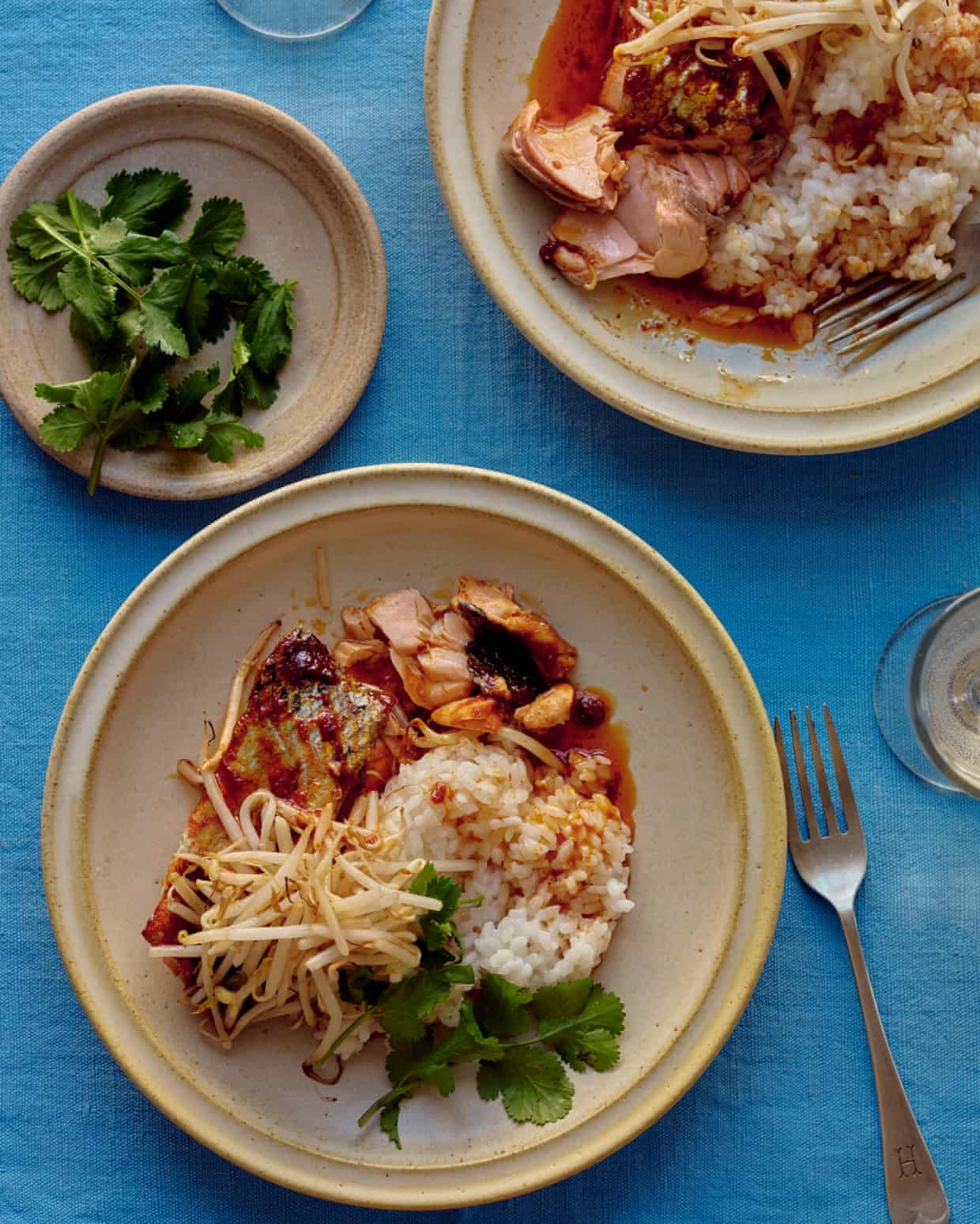
Georgina Hayden’s quick and easy recipe for gochujang butter salmon | Quick and easy
The classic combination of soy sauce and honey salmon is a staple in our house, and works for kids and adults alike. However, sometimes I want to change things up, so here I’ve elevated it slightly with a gochujang dressing – similar principle, but with a bit of heat and depth, as well as richness from the butter. Using butter might seem unusual, but it is often paired with soy sauce in Japan (shoyu butter) with an indulgent result. Serve the fish over sticky rice, to soak up all those spicy, buttery juices, with steamed greens on the side.Prep 10 min Cook 25 min Serves 41 tbsp sesame oil 4 tbsp soy sauce 2 tsp gochujang paste 2 garlic cloves, peeled and finely grated4cm piece of ginger, peeled and finely grated½ tsp caster sugar 4 sustainably caught skin-on salmon fillets Sea salt and white pepper70g unsalted butter 150g bean sprouts Sticky rice, to serveA handful of roasted peanuts, roughly chopped10g coriander, leaves pickedHeat the oven to 220C (200C fan)/425F/gas 7
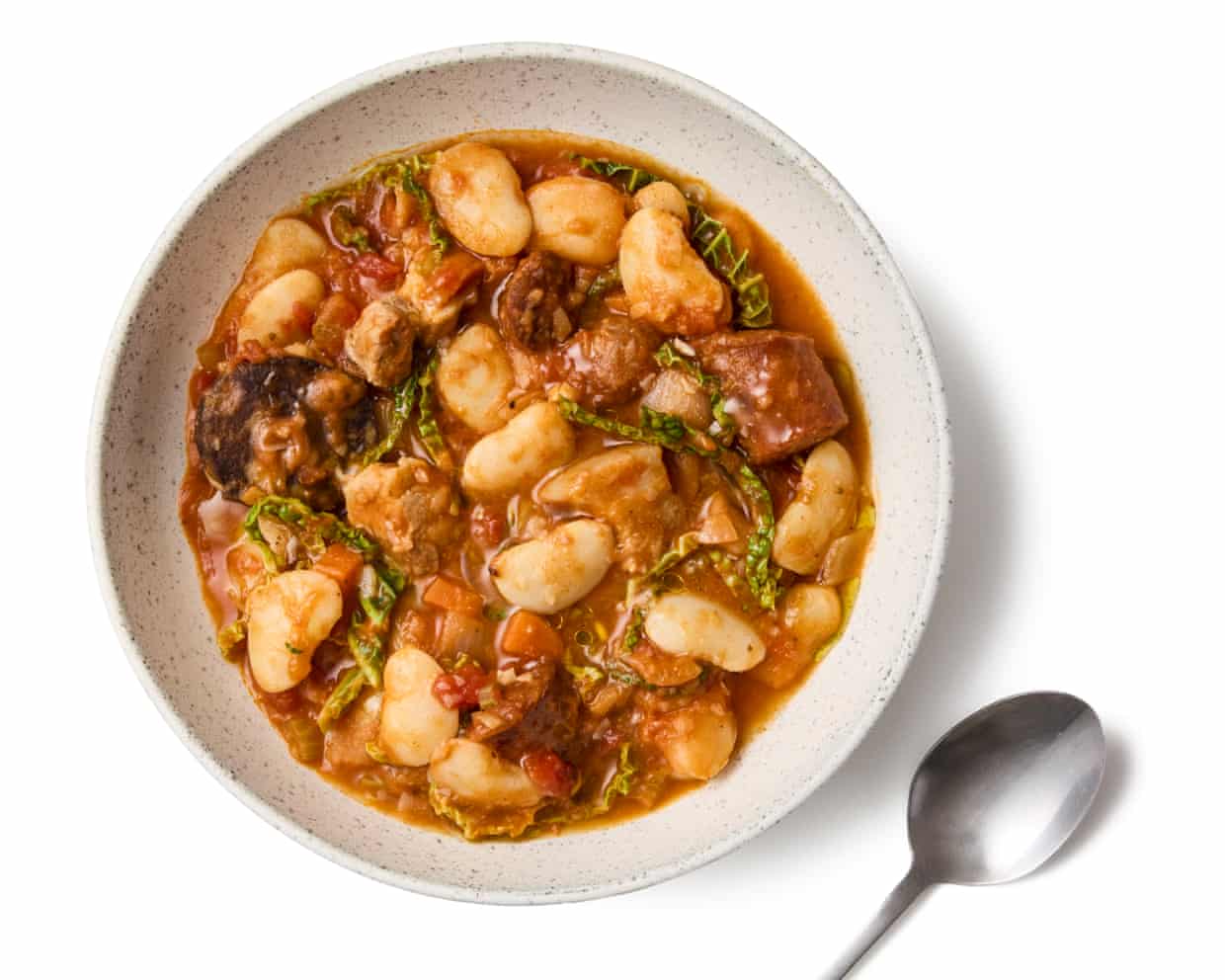
How to make the perfect Portuguese feijoada – recipe | Felicity Cloake's How to make the perfect
If you are trying to incorporate more beans and pulses into your diet, as I am, then this robust, one-pot feast, which food writer Edite Vieira describes as “a marvellous standby of the Portuguese kitchen”, is one to bear in mind. Though each region has its own variations, “basically”, she explains, “feijoada is a rich bean stew with pork and sausages”. The Brazilian version, often cited as that country’s national dish, is the product of the West African “love of beans”, according to the Oxford Companion to Food, with some suggesting that it’s a South American creation that travelled to Europe along with returning colonisers. Others insist with equal fervour that the dish was “born in the north of Portugal, and imported and adapted to what was available in Brazil”. Like so many such homely favourites, its precise history will probably ever remain a mystery; what’s important is that it’s simple to prepare, easy to adapt according to taste and budget, and very satisfying
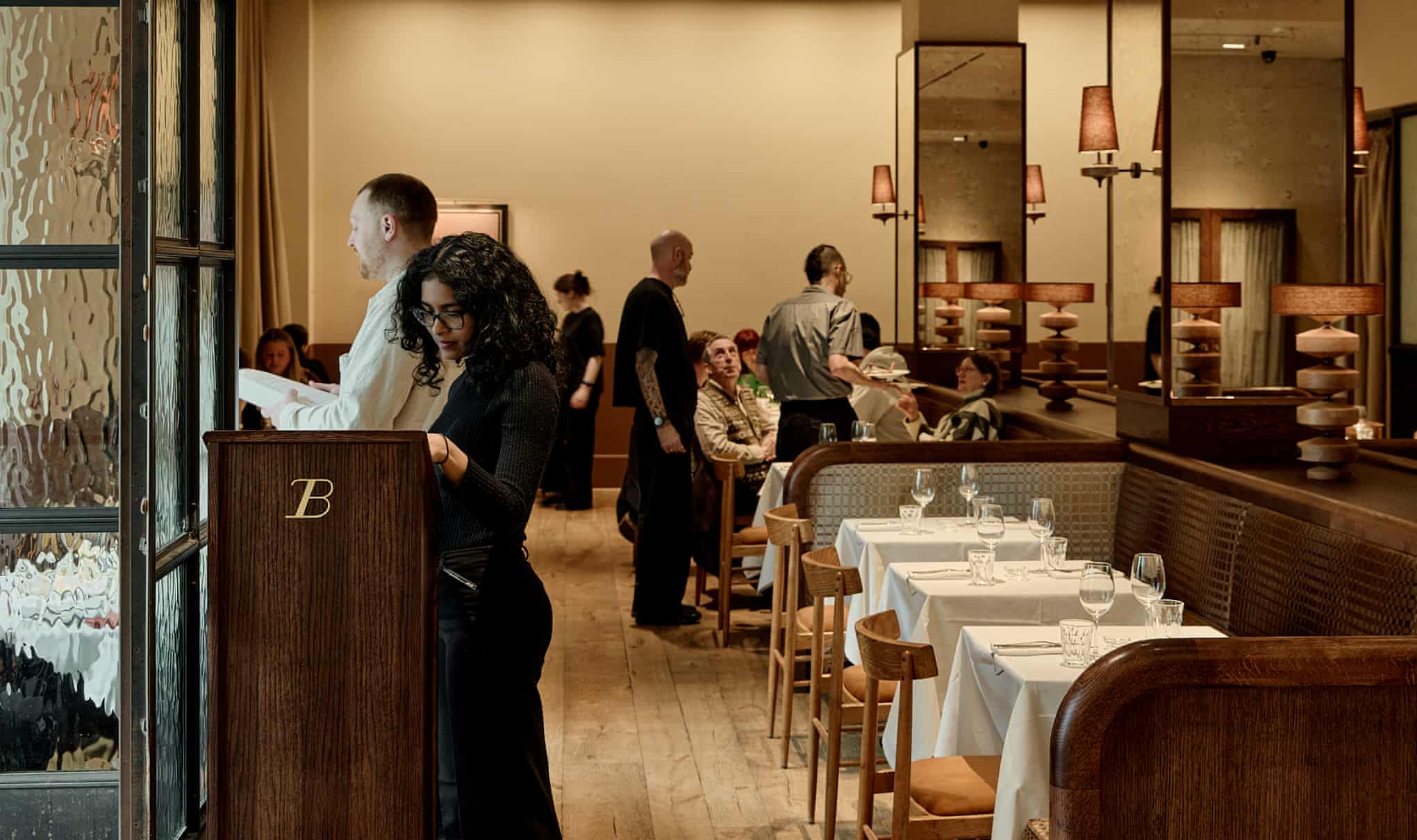
Burro, WC2: ‘Big but the opposite of brash – restaurant review | Grace Dent on restaurants
Brings old-school charm to a touristy part of townBurro, a new Italian restaurant in Covent Garden, London, had been on my horizons even before the napkins were on order, because Conor Gadd, the chef-owner, has form. His first restaurant Trullo, up in Islington, has sat unshakably around the top of my recommendations list for about 15 years and is namechecked by me at least twice weekly when complete strangers want a tip for a birthday, proposal or a client they need to impress. Or simply, “somewhere to take a foodie” who “really likes food”. Yes, the brief given to restaurant critics is often that vague, but to all these things I say: “Have you been to Trullo? Order the beef shin ragu and some good red wine. It’s been there for ages and they know what they’re doing

Sunday best: Thomasina Miers’ recipes for aromatic chicken one-pot and salted caramel banana cake
I love Mexican chillies for the subtle flavour they give to cooking. Take the ancho, with its sweet, earthy notes of chocolate and plum. That adds immense depth to dishes traditional and avant garde alike, and is now readily available online and in shops. In today’s one-pot, which is a near-perfect way to cook a whole chicken, the ancho adds character to a classic sofrito, while in the pudding the savoury notes and touch of heat complement the dark caramel, helping to create a banana cake that is anything but bland. If you can’t find ancho, try any other medium-heat chilli flake in its place (nora, aleppo), or simply leave it out
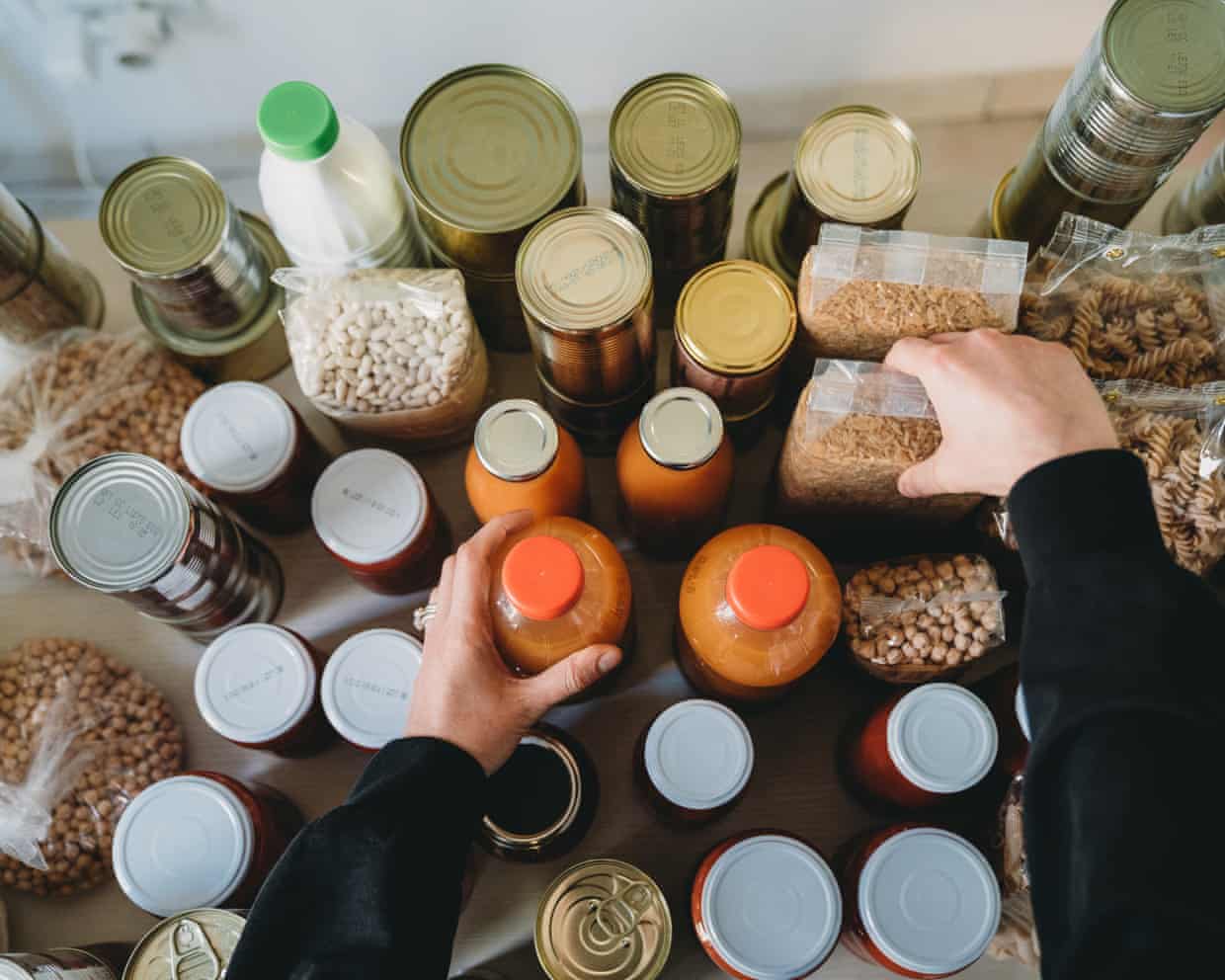
Oats, sardines and crisps: emergency foods to stockpile – and why you should share them
People should have an emergency stockpile of food in their homes in case conflicts, extreme weather or cyber-attacks shut down supplies, leading UK experts have told the Guardian.In an ever more turbulent world, they say it is essential to choose long-life items that can be eaten without cooking – think tinned beans, vegetables and fish, rice crackers, and oats that can be soaked. But it is also important to choose items you actually like to eat, and some treats such as chocolate or crisps to keep your spirits up. You will also need water – lots of it – not just to drink but for washing too.Perhaps the most surprising advice is to be prepared to share your stockpile with neighbours

Reese’s chocolate heir accuses Hershey of altering recipes: ‘It wasn’t real peanut butter’
The grandson of HB Reese, the inventor of Reese’s Peanut Butter Cups, has accused the chocolate giant Hershey of faking a pledge to investors to switch back the recipes of its popular products – including KitKat – to the original milk and dark chocolate ones.A confectionery-focused dust-up between Brad Reese and the $42bn Pennsylvania-based company began in February when Reese, 70, accused the company of “quietly replacing” the ingredients – or “architecture” – in his grandfather’s invention with cheaper “compound coatings” and “peanut-butter-style crèmes”.At a recent Hershey investor conference, the company said it would change about 3% of select products to the original recipes but maintained it had never altered the renowned Reese’s Peanut Butter Cups.The company’s chief growth officer, Stacy Taffet, said Hershey was “transitioning our sweets portfolio to colors from natural sources, and ensuring that all Hershey’s and Reese’s offerings are consistent with their brand’s classic milk and dark chocolate recipes”. The changes are planned to come into effect by next year

UK house prices fall in March amid uncertain impact of Middle East conflict
Oil prices plunge 15% to below $100, stocks surge and dollar slumps after Trump announces US-Iran ceasefire – business live

The life-changing magic of wearing smartglasses | Letters

Tell us: do you use AI chatbots to make decisions for you?

From the Pocket: Music works for a showman like Charlie Cameron but fans need space between the notes

Bryson DeChambeau making his own golf clubs in quest for Masters title