Oil rises above $110 as Trump deadline looms for Iran to reopen strait – business live
In other news, the American billionaire Bill Ackman’s hedge fund has offered to buy Universal Music Group (UMG) in a deal that values the world’s biggest music company at more than €50bn (£44bn).Pershing Square, the New-York based hedge fund, has offered to buy the business, which is home to artists including Taylor Swift and Elton John, in a cash and stock deal.Ackman said in a statement that while the company, which is led by the British-born Sir Lucian Grainge, had done “an excellent job nurturing and continuing to build a world-class artist roster and generating strong business performance”, its share price had lagged owing to issues “unrelated to the performance of its music business”.Shares in UMG, which have been listed in Amsterdam since 2021, have lost more than a quarter of their value in the past year alone.The company is one of the “big three” record labels, alongside Sony Music Entertainment and Warner Music Group.
Its roster ranges from classical music to stars such as Adele, Drake and Ariana Grande,On the stock markets, the FTSE 100 index in London rose by 70 points in early trading, but is now down nearly 22 points, or 0,2%, at 10,414,Germany’s Dax slipped 0,2% while France’s CAC rose 0.
45%, and Italy’s FTSE MiB and Spain’s Ibex edged 0,1% and 0,2% higher respectively,Spot gold has dipped 0,07% to $4,644 an ounce.
Richard Hunter, head of markets at interactive investor, said:double quotation markUS markets finished on a cautiously positive note after the long weekend, but in the immediate term investors are facing a binary event – ceasefire or further escalation of the conflict.As such, guidance continues in the form of often unconfirmed third party reports detailing progress (or the lack of it) in negotiations.Of little doubt is that the US president’s latest deadline to Iran expires this evening where, in the absence of any agreement from his foes, he has threatened to destroy Iran’s power plants and bridges, causing irreversible damage to the country’s energy infrastructure.The latest reports perhaps suggest a less sinister outcome, with claims that mediators are discussing a 45-day ceasefire, which could conceivably mark an end to the war.Separately it is claimed that such an agreement would be accompanied by an immediate reopening of the Strait of Hormuz.
In any event, time is quickly running out as the deadline approaches which in turn will keep investor sentiment brittle and on high alert,Construction activity in the UK has tumbled as the industry struggles to cushion the blows from the war in the Middle East and a persistently weak economy, according to a survey,Work starting on site declined by 17% in the three months to March compared with the fourth quarter of last year, and was 18% below 2025 levels, according to Glenigan’s latest construction index,The US-Israel war on Iran started at the end of February and shows no sign of coming to an end any time soon, resulting in considerable uncertainty for the construction sector,Residential construction dropped by 13% quarter on quarter, and was down 30% year on year, also hit by confusion around planning policy and a weak economy.
Non-residential project starts fell by 15% on the quarter, and by 5% on the year.Offices bucked the trend, with increases in new projects starting on site.The index covers all underlying projects with a value of £100m or less.It highlights the serious challenges facing the UK construction sector, a “severely disrupted supply chain and unprecedented market volatility”.Glenigan’s Allan Wilen said:double quotation markAll three main verticals: housing, non-residential buildings and civil engineering are considerably lower than a year ago and on the previous quarter on a seasonally adjusted basis.
The sector is fighting on all fronts, home and abroad.Particularly, the Iran war will depress activity further near-term as private developers and house purchasers delay investment decisions due to fears of higher than anticipated interest rates, rising material costs, spiralling energy costs and stalled economic growth.It will have a knock-on effect on the non-residential verticals which, although many have ring-fenced funding, will no doubt be putting activity on hold to ensure they don’t waste budgets whilst rates spike.Good morning, and welcome to our rolling coverage of business, the financial markets and the world economy.Oil prices continued to climb on Tuesday above $110 a barrel amid a deadline imposed by Donald Trump for Iran to open the strait of Hormuz or be “taken out,” with the US president threatening to order attacks on Iranian power plants and bridges.
He threatened to rain “hell” on Tehran if it does not meet his deadline of Tuesday 8pm ET (1am BST Wednesday) to reopen the strait, a key shipping route.In response to a US proposal through mediator Pakistan, Tehran rejected a ceasefire and insisted on a permanent end to the war.Brent crude rose 1.1% to $111.01 a barrel, while New York light crude hit $115.
3 a barrrel, up 2.6%.Asian stock markets were mostly higher, with Japan’s Nikkei rising 0.19% and South Korea’s Kospi up 1.2%, while Hong Kong’s Hang Seng fell by 0.
7%,The war in the Middle East will lead to higher inflation and slower global growth, the head of the International Monetary Fund warned, ahead of the lender’s latest forecast next week,The war has triggered the worst-ever disruption in global energy supply, with millions of barrels of oil production shuttered due to Iran’s effective blockage of the strait of Hormuz, through which a fifth of the world’s oil and gas pass in normal times,Even if the conflict is swiftly resolved, the IMF is set to reduce its forecast for economic growth and lift its outlook for inflation, Kristalina Georgieva, managing director of the IMF, told Reuters,Kyle Rodda, senior financial market analyst at the trading platform Capital.
com, said:double quotation markThe markets are back on a Trump-imposed countdown clock.To use a sporting analogy, it’s red time, and the result could go either way.Like a fortnight ago when the first threats from the Trump administration to attack Iranian power plants and other infrastructure were made, the markets are plonked at a crossroad, facing a binary outcome, at least in the short term.Either the attacks happen, marking a possibly catastrophic escalation where regional energy assets and civilian infrastructure across the Gulf is considered fair game.In such an instance, the energy complex jumps, pushing the US Dollar and global yields higher, and equities and non-yielders like gold lower.
Or there’s a backdown, even better, a ceasefire, and the markets stage an epic relief rally, where a plunge in oil takes yields and the US Dollar with it, and equities and gold rip.Despite some hopeful headlines yesterday, most of the news paints a grim picture of how things are unfolding roughly 27 hours after Trump’s deadline.President Trump’s rhetoric is hawkish and increasingly unhinged and the Iranians remain obstinate, with reports suggesting both sides remain worlds apart on the terms of a ceasefire, especially as it pertains to the Strait of Hormuz.Neither would benefit from an escalation.New car sales in the UK climbed by around 6% in March – usually the biggest month for vehicle registrations, according to preliminary industry data.
Sales of battery electric vehicles reached a record high, the Society of Motor Manufacturers and Traders said,However, their market share of 23% is still below the government-mandated target of 33% for this year,The industry has called for an urgent review of the UK’s electric vehicle transition, as surging gas prices driven by war in the Middle East have lifted electricity rates,The Agenda8,45am-9am BST: Italy, France, Germany, eurozone S&P Global PMIs (final) for March9am BST: UK new car sales for March9.
30am BST: UK S&P Global PMI for March1,30pm BST: US durable goods for February

People living with incontinence face shortage of sanitary pads as NHS limits supplies
Millions of people across the UK living with incontinence are facing shortages of sanitary products due to supplies being rationed by NHS trusts, according to a coalition of charities.The shortages are leading to a “pad gap” where people are having to pay for incontinence products themselves, according to an open letter from organisations including the Royal College of Nursing, Prostate Cancer UK, and Bowel and Bladder UK.Around 14 million people across the UK experience incontinence. Healthcare workers in the NHS expect to fit up to five pads a day for patients who experience incontinence, according to research, but freedom of information data from 110 NHS trusts show that more than half (53%) have a cap on the availability of products.Of these trusts, 34% have a cap of three products a day, while the remaining 66% have a cap of four products a day, which is lower than the expected need

NHS urges patients not to put off care as doctors in England prepare for strike
The NHS is urging patients not to put off seeking the care they need when resident doctors press ahead with strike action from Tuesday, a stoppage that the health secretary has called “disappointing”.Tens of thousands of resident doctors in England are to stage a six-day strike after the government took a key part of its offer off the table.The Department of Health and Social Care said last week that an offer of 1,000 extra training places would no longer be “financially or operationally” possible.NHS England said hospital teams across the country would be working to minimise disruption for patients during the stoppage, which is “expected to be particularly challenging” because of a shorter notice period.Patients have been advised to attend planned appointments unless they have been contacted to reschedule, and those with life-threatening emergencies should still call 999 or attend A&E

Say it right! The trouble with unfamiliar names | Letters
Priti Ubhayakar’s article resonated with me because of my non-English surname (A moment that changed me: for the first time in my life, a stranger pronounced my name correctly, 1 April). I grew up in the 1950s on a very English council estate. Most other kids were a Brown, Smith, Jones, etc, but I was an Uszkurat. My lineage is complex on my dad’s side, with a Lithuanian grandfather whose original name was changed to Uszkurat by, I think, German authorities. My dad was born in a part of Europe that was German until the Treaty of Versailles made it part of the new Poland
A striking exchange between nurse and doctor | Brief letters
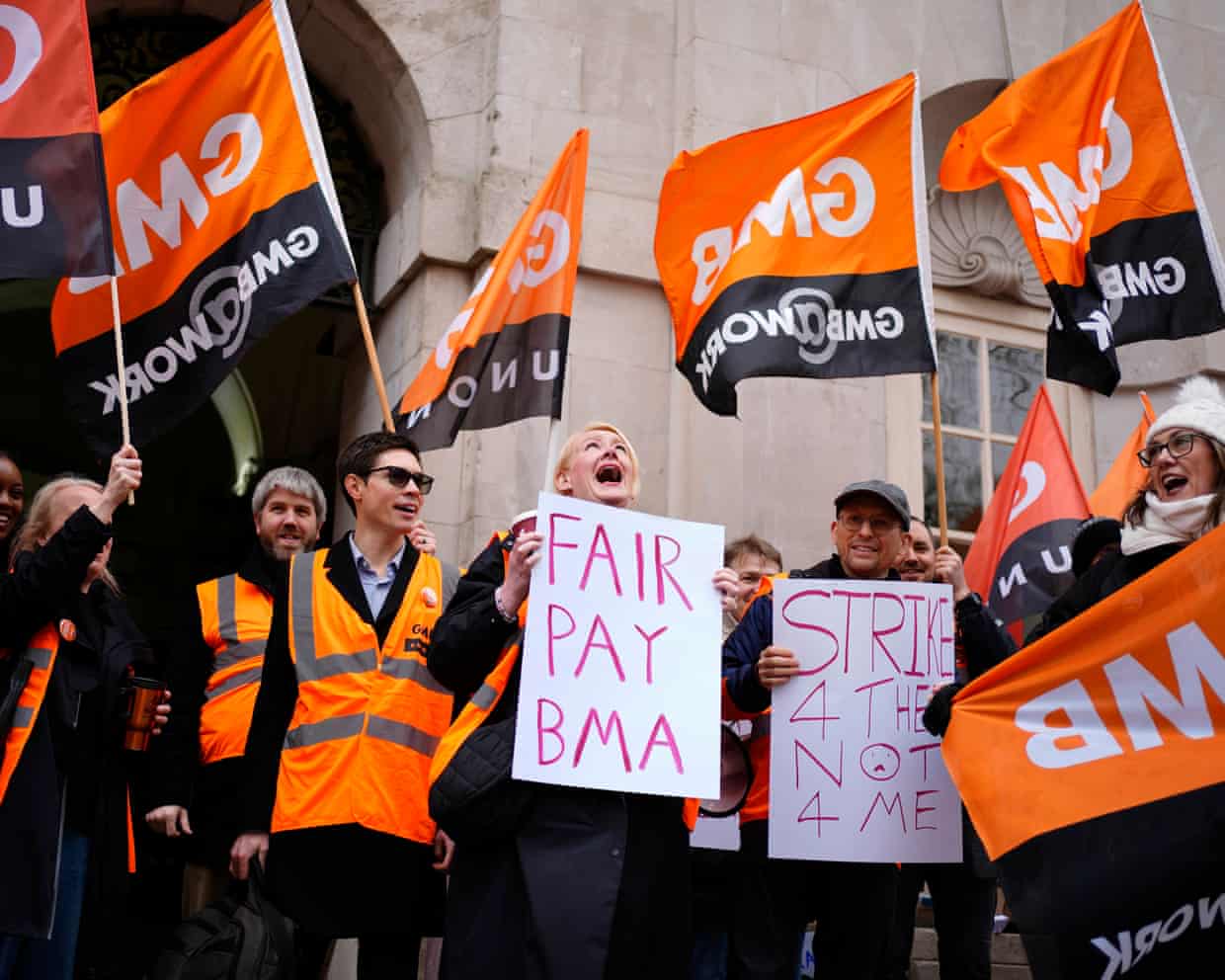
As a young ward sister and trade union steward, I remember, in the 1980s, when I was on the picket line in front of my hospital, stopping a doctor in his Mercedes. He asked me who I was, and I replied: “One of your colleagues.” He looked at me with contempt and answered: “I don’t think so, my colleagues are intelligent people.” So I wonder where their newfound enthusiasm for industrial action comes from. Has the price of Range Rovers gone up?Hilary BramleyCourbesseaux, France There seem to be experts for every aspect of life nowadays, but to read that the Woodland Trust has a “conversation adviser” in the form of Dr Ed Pyne surely takes the biscuit (Contractor that cut back 500-year-old oak in London park identified, 3 April)

Medicines watchdog to investigate UK peptide clinics over health claims
The medicines regulator is investigating whether UK clinics are breaking the law by making claims about the benefits of unregulated, experimental peptide therapies, the Guardian can reveal.Interest in experimental peptides has boomed in recent years. The substances are delivered by injection and are touted by sellers, influencers and even some medics as aiding everything from anti-ageing to recovery from injury.There is little scientific evidence to support such health and wellness claims in humans. Where studies have been carried out, most are in animals or cells

‘Young people want to come together’: experts respond to mass teen meet-ups in Clapham
It started with a flyer sent around on Snapchat. Teenagers were invited to gather at a south London basketball court to celebrate the start of the Easter holidays. They were told to bring their own weed and laughing gas because it was going to be a late one.What followed in the hours after was chaos. Hundreds of young people came to the “link-up” last Saturday, and then gathered on Clapham High Street
County cricket: Sussex beat Leicestershire, Yorkshire draw against Glamorgan – as it happened

Chicago Sky trade Angel Reese to Atlanta Dream in first major move of WNBA offseason
Horse welfare debate helps highlight Grand National’s unrivalled status
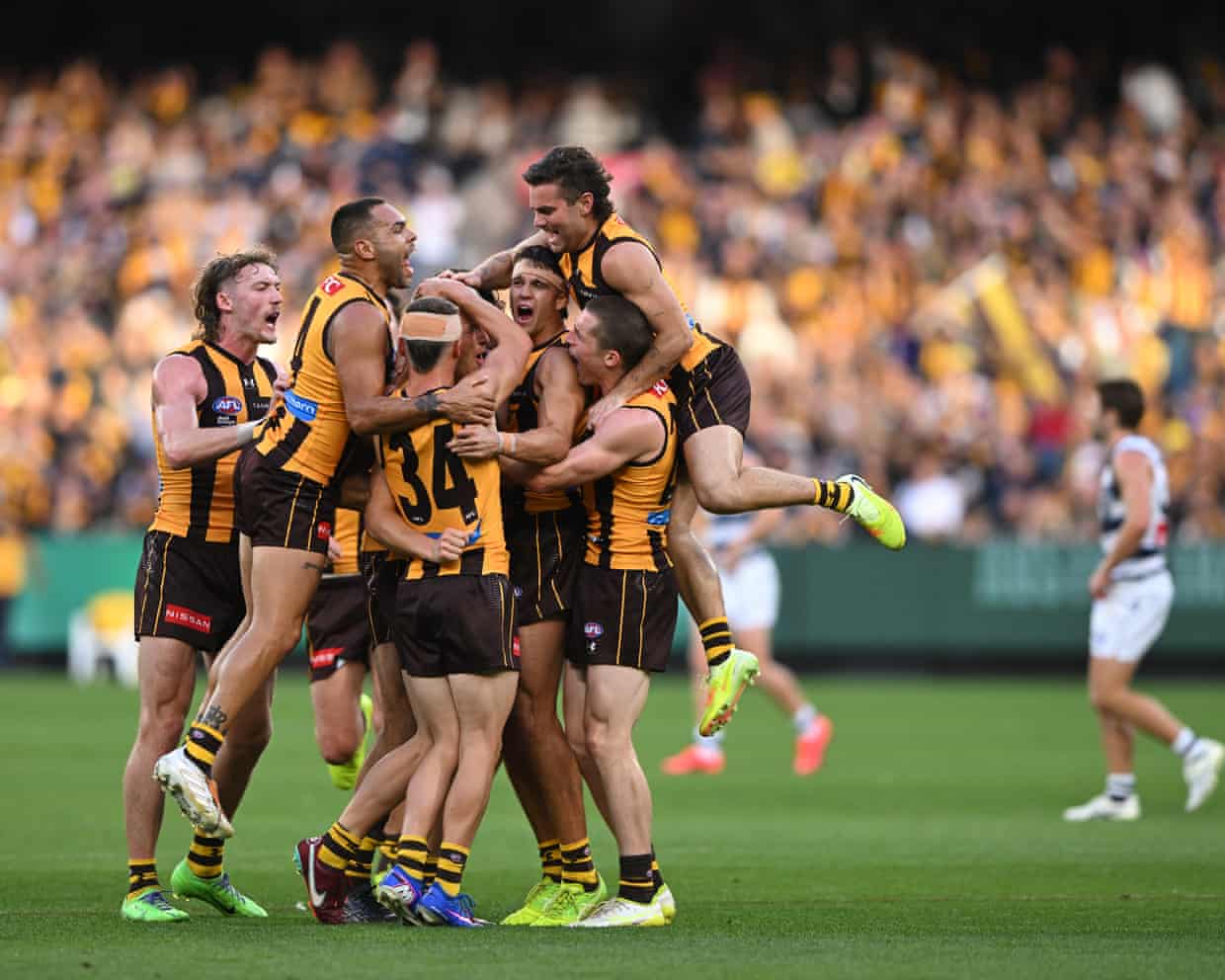
Sharper Hawks claim thriller over Cats with one mad minute of the utmost drama | Jonathan Horn

Courtney Lawes to return to Prem from Brive and would be again eligible for England
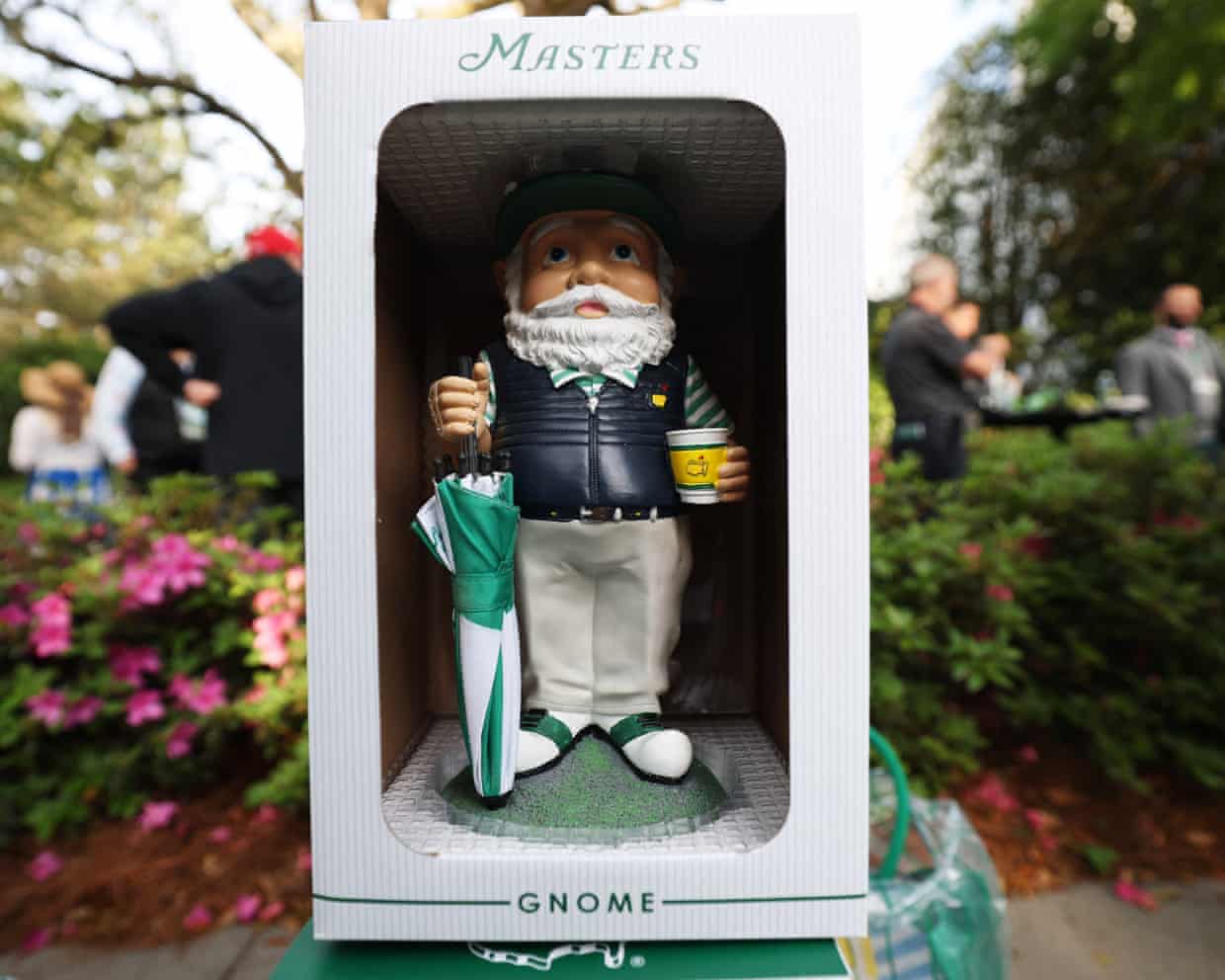
Retirement gnome? Masters miniatures rumoured to have short future at Augusta