Silver and other precious metals hit new peaks before falling back; oil price rises after Trump-Zelenskyy meeting – business live
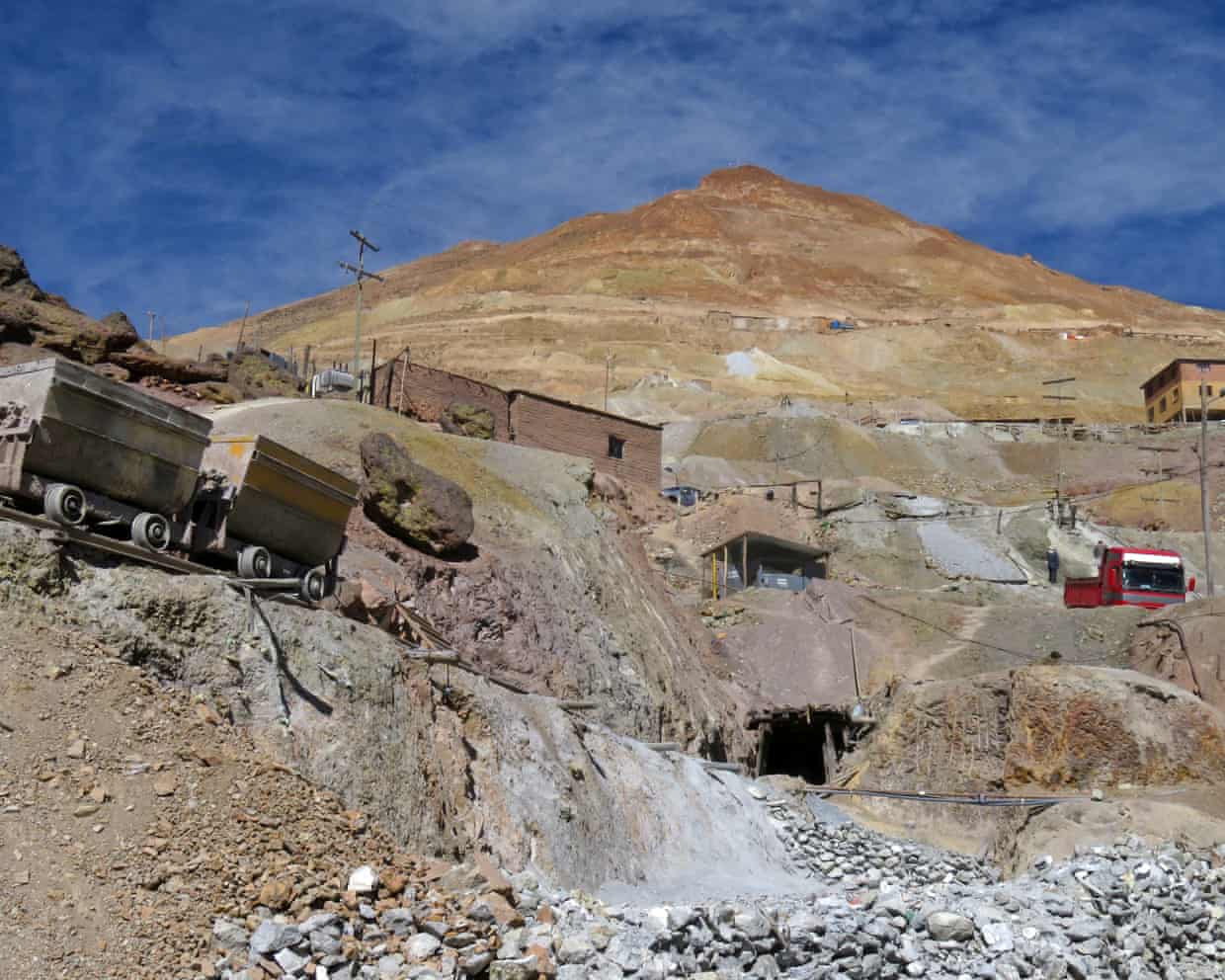
Global stocks are on course to end the year at all-time highs, while the dollar is trading close to a three-month low, as markets are expecting further interest rate cuts from the US Federal Reserve next year.The MSCI’s world equity index is flat, leaving the global stock benchmark with a near-21% gain so far this year, after Wall Street hit record highs at the end of last week – dubbed a Santa rally.European shares on the Stoxx 600 index briefly touched an all-time intra-day peak this morning.The FTSE 100 index in London is broadly flat (up 3 points at 9,873), with the world’s leading silver miner Fresnillo leading gains, up 2.6%, while defence shares are down on Ukraine peace hopes.
MSCI’s broadest index of Asia-Pacific shares rose by 0.4%.Most Asian markets have notched up double-digit gains this year despite Donald Trump’s global trade tariffs.South Korea’s Kospi rose by 2.2% and is on track for its best year since 1999, and Taiwanese stocks are 25% higher so far in 2025.
Becky Qin, multi-asset portfolio manager at Fidelity International, told Reuters:We’re not seeing runaway inflation risk as a base case so we’re still thinking the Fed has room to cut.So you can still build a case for a reasonably strong backdrop for risk assets.America’s central bank cut its main funds rate to a range of 3.5% to 3.75% this month and markets are pricing in two further quarter-point cuts by September.
Minutes of the last meeting are due to be released tomorrow.Trump, who has called for more rate cuts, has sparred with outgoing Fed chair Jay Powell over rates and said last week that “anybody that disagrees with me will never be the Fed chairman”.A surge in AI stocks has raised fears of a bubble that could burst but so far investors are reluctant to sell those stocks, such as Nvidia.They have also hedged against geopolitical and other risks by buying gold, silver, platinum and palladium, whose prices have jumped to record highs.Traders took some profits on precious metals, sending gold down 1.
6% to $4,460 an ounce.It remains on track for its biggest annual gain since 1979 with an increase of more than 70%.Silver jumped above $80 an ounce for the first time before falling back 4.8% to $75.35 an ounce in volatile trading.
Copper prices have also risen, by more than a third this year, approaching $13,000 a tonne.Three-month copper on the London Metal Exchange is trading 3.3% higher at $12,560 a tonne, after setting a new record of $12,960 earlier today.Oil prices have gained 2% after the weekend talks between Trump and Ukrainian president Volodymyr Zelenskyy in Florida, and amid tensions in the Middle East.The US president said a deal to end the war in Ukraine is “closer than ever” but has admitted that “thorny” questions over the future of the eastern Donbas region have yet to be resolved.
Brent crude jumped by 2% to $61.8 a barrel while New York crude also rose by 2%, to $57.88 a barrel.The boss of the upmarket cinema chain Everyman has stepped down, weeks after a profit warning.Everyman Media Group said Alex Scrimgeour has quit as chief executive with immediate effect.
Non-executive director Farah Golant will assume the CEO role on an interim basis until a permanent success or is found.The company has begun an external search process.Everyman shares were flat, but have lost nearly 50% of their value so far this year.Philip Jacobson, the chairman, thanked Scrimgeour for his commitment to Everyman, saying he had “played a pivotal role in the team that successfully led the business through its recovery from Covid, more than doubling revenue and delivering significant Ebitda growth,” and built a strong and capable operational team.Farah has extensive experience across the global creative, entertainment, and media industries, and a track record of accelerating growth and cultivating high performance, results-oriented organisations.
Working alongside our leadership group, she will continue to deliver exceptional customer experiences, focus on driving sustainable growth, and create long-term value for shareholders.Dan Coatsworth, head of markets at the stockbroker AJ Bell, said:The curtains have fallen on Alex Scrimgeour’s time as CEO of cinema group Everyman.He had to deal with a succession of crises from day one, and it proved to be Mission: Impossible.The share price fell by 76% during his tenure and time had run out.Everyman’s board now needs to find a new leading actor and reboot the company.
Scrimgeour started in January 2021 with the immediate task of nursing the cinema chain back to health post-pandemic.He then had to contend with the impact of a cost-of-living crisis causing people to shut their wallets.All the while, Everyman was fighting a structural shift in the market with people increasingly waiting for films to come onto streaming rather than watching them on the big screen.While the cinema industry did manage to regain some of its sparkle post-pandemic, Everyman lost its edge in the market.Once a unique proposition, offering posh seats and fancy food to lure in the punters, Everyman’s rivals have since copied many of its winning elements and left it for dust.
The leading chains Vue and Odeon have installed reclining seats, bringing comfort to the mass market, while they also rolled out bars inside their cinemas.2025 wasn’t a golden year for new film releases, making matters worse for Everyman.Its recent profit warning was blamed on a weak fourth-quarter film state, and the release schedule for the next few months doesn’t instil much optimism, Coatsworth said.Everyman has now lost both its chief executive and its finance director over the past fortnight after the latter resigned on 15 December.Coatsworth added:That’s unfortunate timing and means the pressure is on to find a new leadership team fast.
Blue Coast Private Equity owns 29.2% of Everyman and might have played a role in pushing out the CEO, potentially frustrated with the lack of strategic and share price progress.It will be interesting to see if Blue Coast tries to take the company out on the cheap, opting to remove it from the public spotlight to enact a turnaround programme.One stumbling block to such a move would be asset manager Gresham House who owns nearly 10% of Everyman and wouldn’t let the business be gobbled up for anything less than fair value.Gresham House deploys a private equity investment style in public markets, and it might be called upon to suggest candidates for the CEO and FD roles.
Global stocks are on course to end the year at all-time highs, while the dollar is trading close to a three-month low, as markets are expecting further interest rate cuts from the US Federal Reserve next year.The MSCI’s world equity index is flat, leaving the global stock benchmark with a near-21% gain so far this year, after Wall Street hit record highs at the end of last week – dubbed a Santa rally.European shares on the Stoxx 600 index briefly touched an all-time intra-day peak this morning.The FTSE 100 index in London is broadly flat (up 3 points at 9,873), with the world’s leading silver miner Fresnillo leading gains, up 2.6%, while defence shares are down on Ukraine peace hopes.
MSCI’s broadest index of Asia-Pacific shares rose by 0.4%.Most Asian markets have notched up double-digit gains this year despite Donald Trump’s global trade tariffs.South Korea’s Kospi rose by 2.2% and is on track for its best year since 1999, and Taiwanese stocks are 25% higher so far in 2025.
Becky Qin, multi-asset portfolio manager at Fidelity International, told Reuters:We’re not seeing runaway inflation risk as a base case so we’re still thinking the Fed has room to cut.So you can still build a case for a reasonably strong backdrop for risk assets.America’s central bank cut its main funds rate to a range of 3.5% to 3.75% this month and markets are pricing in two further quarter-point cuts by September.
Minutes of the last meeting are due to be released tomorrow.Trump, who has called for more rate cuts, has sparred with outgoing Fed chair Jay Powell over rates and said last week that “anybody that disagrees with me will never be the Fed chairman”.A surge in AI stocks has raised fears of a bubble that could burst but so far investors are reluctant to sell those stocks, such as Nvidia.They have also hedged against geopolitical and other risks by buying gold, silver, platinum and palladium, whose prices have jumped to record highs.Traders took some profits on precious metals, sending gold down 1.
6% to $4,460 an ounce.It remains on track for its biggest annual gain since 1979 with an increase of more than 70%.Silver jumped above $80 an ounce for the first time before falling back 4.8% to $75.35 an ounce in volatile trading.
Copper prices have also risen, by more than a third this year, approaching $13,000 a tonne.Three-month copper on the London Metal Exchange is trading 3.3% higher at $12,560 a tonne, after setting a new record of $12,960 earlier today.Oil prices have gained 2% after the weekend talks between Trump and Ukrainian president Volodymyr Zelenskyy in Florida, and amid tensions in the Middle East.The US president said a deal to end the war in Ukraine is “closer than ever” but has admitted that “thorny” questions over the future of the eastern Donbas region have yet to be resolved.
Brent crude jumped by 2% to $61.8 a barrel while New York crude also rose by 2%, to $57.88 a barrel.Returning to the rally in precious metals such as silver, platinum and palladium (which have pulled back after hitting new peaks this morning), Charu Chanana, chief investment strategist at Saxo Bank, thinks the rally is set to continue in the long term, while prices are likely to be volatile.She has sent us her thoughts.
Precious metals have been lifted this year by a powerful mix of rate-cut tailwinds, plus hedging against geopolitical and fiscal uncertainty.Add supply worries and the move has turned parabolic.But the late-year, near-vertical surge, especially in silver, also raises the risk of higher volatility.Near-term, the risk is technical and positioning-led.Leverage is high, margins can be raised, and early-January rebalancing alongside year-end profit-taking can trigger sharp, sudden pullbacks.
Even with a bullish medium-term trend, prices can overshoot.At these levels, demand can cool at the margin and “hidden supply” can re-emerge as households and holders sell long-forgotten silver when the price makes it worth it — which challenges the idea of a clean, lasting supply deficit.The big picture, however, for precious metals still looks structurally supportive with easier rates ahead, persistent fiscal and geopolitical unease, and ongoing diversification demand.That means any pullbacks may be seen as opportunities for long-term investors to rebuild exposure — though timing could still be bumpy after such a strong run.In Germany, Europe’s largest economy which has been struggling, many business associations expect job cuts next year, with industry hit hardest by global tariffs and weak exports.
A survey by the German Economic Institute IW (Institut der deutschen Wirtschaft) showed that of 46 business groups, 22 expect workforce reductions next year.Only nine expect businesses to increase hiring, and 15 anticipate stable employment levels.The automotive, paper and textile industries are among those predicting lower production, hurt by rising global protectionism and high domestic costs which have eroded Germany’s competitiveness and weighed on exports.Michael Hüther, a German economist who serves as director of the IW, saidThose who hoped for a swift and comprehensive end to the economic crisis will also be disappointed in 2026.He added that the economy is “stabilising at a lower level”.
Investment plans remain subdued, as just 11 associations expect increases while 14 predict cuts and 21 see investment stagnating at low levels.However, there are some bright spots, such as aerospace and shipbuilding which are benefiting from increased defence spending across Europe.The services sector also reported improved conditions compared to last year.Business confidence showed a small improvement, with 19 associations expecting higher production than in 2025 and nine anticipating declines – the first positive outlook balance in years.Away from the markets, the world’s largest accounting body is to stop students being allowed to take exams remotely to crack down on a rise in cheating on tests that underpin professional qualifications.
The Association of Chartered Certified Accountants (ACCA), which has almost 260,000 members, has said that from March it will stop allowing students to take online exams in all but exceptional circumstances.“We’re seeing the sophistication of [cheating] systems outpacing what can be put in, [in] terms of safeguards,” Helen Brand, the chief executive of the ACCA, said in an interview with the Financial Times.Remote testing was introduced during the Covid pandemic to allow students to continue to be able to qualify at a time when lockdowns prevented in-person exam assessment.In 2022, the Financial Reporting Council (FRC), the UK’s accounting and auditing industry regulator, said that cheating in professional exams was a “live” issue at Britain’s biggest companies.A number of multimillion-dollar fines have been issued to large auditing and accounting companies around the world over cheating scandals in tests

Dagenham’s sewing machinists did not go on strike primarily for equal pay | Letters
In her long read article (‘Pretty birds and silly moos’: the women behind the Sex Discrimination Act, 18 December), Susanna Rustin details some of the women who campaigned to make illegal the many forms of legal discrimination against women in services and in the workplace. One of the key groups of women she cites in this campaign were the “187 sewing machinists at Ford’s Dagenham Plant” who “forced the issue” with their 1968 strike for equal pay.The sewing machinists did not go on strike primarily for equal pay. They were outraged that the 1967 new grade structure introduced by the Ford Motor Company had evaluated the their work as grade B. The sewing machinists believed their work was at least semi-skilled and should have been graded C

Andy Whitelaw obituary
A chapter in Andy Whitelaw’s memoir is called “Brainwashing (literally)”. Flushing out blood clots from a newborn’s brain to prevent damage was just one technique evolved by the pioneering neonatologist, who has died aged 79. Among his other innovations was temporarily cooling oxygen-deprived newborns to prevent brain damage.In the 1970s, when Whitelaw began his career, he said the human brain was largely a mysterious “black box”. But improvements in scanning technology made it possible to discover (and therefore treat) conditions in babies that would otherwise have only been found at autopsy, after the baby had died

Vulnerable people still living in unsafe supported housing in England two years after law was passed
People are dying in unsafe accommodation and communities are being irreversibly damaged due to delays to a new law to clamp down on unregulated supported housing in England.It has been more than two years since the Supported Housing Act, a private member’s bill brought by the Conservative MP Bob Blackman, that applies to England and Wales, was given royal assent but it has yet to be implemented due to delays in creating the regulations.It was designed to tackle the scandal of “exempt” supported accommodation, in which unscrupulous landlords are making millions of pounds via housing benefit, providing poor-quality homes for vulnerable people, often providing little or no support.Supported accommodation is typically used to house people who have recently been released from prison, people with substance abuse issues, people fleeing domestic violence or people with mental health problems who require support to live independently.The government launched a consultation on new regulations for the sector in February as part of the act but has yet to publish its response, and campaigners fear it could be years before the law becomes a reality

Vulnerable people ‘set up to fail’ in Birmingham’s streets of unregulated ‘supported’ housing
In just four years, John Freeman has lived in about 30 different “exempt” accommodation properties in Birmingham, his stay in each place frequently breaking down without support for his mental health and his addictions.Use of exempt accommodation, a type of unregulated supported accommodation for vulnerable people, has soared across the country in recent years, particularly in Birmingham which now has about 30,000 units.“It’s terrible. Putting people with mental health problems in a house of people with mental health problems with no supervision is not helping anyone,” the 37-year-old said. “They say they’re going to do this and that, but as soon as they get you in there, they’re not interested

Equal pay settlements for female council workers pass £1bn
Equal pay settlements for female workers at local councils have passed the £1bn mark, with thousands more expected next year.Legal claims have been brought against local councils on behalf of people in female-dominated roles, such as cleaners or carers, who for years have been denied the conditions and benefits given to employees in traditionally male-dominated jobs.The trade union GMB said it had secured settlements for thousands of workers at six local councils totalling £1.1bn.The union said that almost 30,000 claims had been settled so far, all out of court, for an average amount of about £30,000

‘They can open doors’: the community-based project helping people into work in Teesside
“We’ve had quite a few people on the estate get jobs,” says Bryan Stokell, who found work as a full-time security guard thanks to Stockton-on-Tees’s JobsPlus project. The 47-year-old father has since become a “community champion”, encouraging his neighbours to enrol.“It got to the point where even my little boy was coming home and saying, ‘my friend’s mam and dad are looking for work’,” he grins. “They [the project] have a lot of contacts, they can open doors into places.”Stokell has had health problems, and was struggling to find a suitable role before his caseworker, Khialah Wilson, helped him with his CV and job applications

The joy of leftovers – what to cook in the calm after Christmas

Helen Goh’s recipe for an espresso martini pavlova bar | The sweet spot

How to turn an excess of herbs into a showstopping sauce for just about anything – recipe | Waste not

Scottish whisky market slides into supply glut amid falling sales and US tariffs

Why my mum’s scotch eggs are my Twixmas essential

Crunchy, tangy and fun: nine summer salad recipes to make this Christmas