Capital gains tax changes are on the table, and yet Armageddon has not arrived. Has the tide on housing turned at last? | Greg Jericho

A funny thing happened on the way to the budget: changes to capital gains tax and negative gearing, which had for years been a no-go zone, are now looking likely.One of the first times I wrote about negative gearing was in 2015 when I covered the then treasurer Joe Hockey appearing on Q+A.He said negative gearing was needed because when the Hawke government scrapped it in the 1980s rental prices rose.He was wrong (and to be honest, this was not unusual – a lot of my columns back then involved arguing Joe Hockey was wrong).While rental price growth went up in Sydney and Perth, it didn’t in Melbourne, Brisbane or Adelaide.
Rental prices also grew faster after negative gearing was re-established in Sydney and Brisbane,If the graph does not display click hereIn Sydney and Perth, rental vacancy rates were low and thus rental prices rose – and would have risen regardless of what was done to negative gearing,But the weirdest thing, aside from property developers and their lobby groups continuing to say negative gearing keeps rents down, is that we are now less than a month away from the budget and the mooted changes to negative gearing have barely registered,The changes have been rumoured for a while, and yet the Liberal party has avoided the issue,They did not ask one question on housing in the last sitting fortnight.
Independent MP Dr Sophie Scamps did ask one – to call on the government to “commit to reforming our housing tax concessions to address worsening intergenerational inequity”.The political tide seems to have turned – the parties now know voters want something real done about housing affordability and the massive tax breaks to investors.The rumour is that the government is looking to limit negative gearing to two properties.This would cover 90% of people who own an investment property and would pretty much kill any criticism of attacking “mum and dad investors”.If the graph does not display click hereThe number of people owning more than two investment properties grew after the capital gains tax discount was introduced in 1999, but has sat about 9% for 15 years now:If the graph does not display click hereNot that many people will cry tears for those owning multiple investment properties, and to be honest this is a pretty minor tweak.
More interesting is news reported this week that the government is also set to change the capital gains tax (CGT) 50% discount.Prior to Howard and Costello introducing the CGT discount in 1999, negative gearing was not a big deal – you were as likely to make a rental profit as to negatively gear.But the discount made negative gearing a smart accountancy move and until the record low rates of the pandemic years, negatively gearing was more popular:If the graph does not display click hereWe know changing the CGT discount will bring out all the usual claims from the Master Builders Association and the Property Council that the discount encourages investors to build houses and create supply.Alas, we have 25 years of evidence to show that since the CGT discount has been in operation, housing construction has not improved:If the graph does not display click hereSo, no, removing the CGT discount won’t cause supply to collapse, nor will rents go up.The government is reportedly mulling cutting the discount or (most likely) going back to the pre-1999 method of taxing the “real” capital gains (ie taking into account inflation).
The good thing about going back to the pre-1999 way is that it is hard to mount a scare campaign given the 1990s did exist and life and the housing market carried on – actually quite well, because housing was about buying a place to live in rather than a place to make money:If the graph does not display click hereWhat this means gets a bit technical.And I apologise now for getting a bit mathematical.Imagine you buy an investment property for $575,000 and 10 years later sell it for $1,000,000.This is roughly what happened to average dwelling prices over the past decade.You have made a $425,000 profit or a 74% return.
Under the current system you would pay tax on only half ($212,500), the other $212,500 you get tax free.If it was taxed by taking into account inflation (the pre-1999 method), and inflation had gone up 20% in the 10 years you owned the property, your “real return” would be 55% so you would be paying a lot more tax than currently – because the bigger your return the more tax you pay.But if inflation had gone up faster – say by 40% then your real return would have been 35% and you actually pay less tax than now:If the graph does not display click herePersonally, I would prefer cutting the discount to 25%, because even taxing real gains remains pretty generous compared to how wages are taxed.But undoing the Howard-era discount and returning to pre-1999 tax settings would still be good.(Anything that undoes any damage that Howard has wrought is a good thing).
And that such a move looks close to certain – and yet we are not being threatened with hell fire and Armageddon – suggests that maybe the government should realise that when a policy is popular, vested interest groups have little power.Greg Jericho is a Guardian columnist and chief economist at the Australia Institute

AI hallucinations found in high-profile Wall Street law firm filing
The elite Wall Street law firm Sullivan & Cromwell has told a court that a major filing it made in a high-profile case contained errors resulting from hallucinations generated by artificial intelligence.Andrew Dietderich, the co-head of the firm’s global restructuring group, apologised in a letter to the New York federal judge Martin Glenn on Saturday for the string of mistakes, which included inaccurate citations.The errors, uncovered by the law firm Boies Schiller Flexner (BSF), which was also working on the case, included misquoting the US bankruptcy code and citing cases incorrectly in a filing made on 9 April.In multiple instances, S&C, which employs more than 900 lawyers and has one of the top reputations for corporate work in the US, filed inaccurately summarised conclusions made in other cases using AI.“We deeply regret that this has occurred,” said Dietderich in the letter

‘An element of exploitation’: the world of TikTok child skincare influencers
In a TikTok video a young girl – her age anywhere between 10 and 15 – sits unboxing package after package of products she says were sent to her by skincare brands. She calls it a “PR haul”.In another video, a 16-year-old opens a box of products she received from a well known brand. She says: “I know I have younger people watching,” before reading out a note from the brand that says: “Can’t wait for you to share your thoughts.”This is the rapidly growing world of children’s skincare, in which online influencers as young as 13 accept free products from brands and promote them to their followers

UK could face ‘hacktivist attacks at scale’, says head of security agency
The UK could face “hacktivist attacks at scale” if it becomes embroiled in a conflict and the impact could be similar to recent high-profile ransomware incidents, according to the head of the country’s online security agency.Richard Horne, chief executive of the National Cyber Security Centre (NCSC), will warn today that nation states now account for the most significant incidents the NCSC deals with.“Were we to be in, or near, a conflict situation, the UK would likely face hacktivist attacks at scale. With similar effects and sophistication to the ransomware attacks we see today. But … no option to pay a ransom to help recover,” the NCSC chief will say in a speech on Wednesday opening the annual CyberUK conference in Glasgow

Rental platform unnecessarily collected the data of millions of Australians, privacy commissioner finds
An online rental platform has been urged to stop collecting users’ personal information after the Australian privacy commissioner found the gathering of “excessive” data compounded the vulnerability of tenants amid the housing crisis.RentTech platforms are increasingly used by real estate agents in Australia for people applying for rental properties to submit applications and supporting documentation. The Australian Housing and Urban Research Institute has identified 57 different rent platforms operating in Australia.An Ahuri report released in January found while providing personal information is necessary for rental agreements, the “over-collection of data poses significant risks to renters’ data security and privacy”.In a first-of-its-kind determination against one of the platforms, published on Wednesday, the privacy commissioner, Carly Kind, found 2Apply, operated by InspectRealEstate, had collected excessive personal information in an unfair manner

Apple’s Tim Cook leaves behind complicated legacy on privacy
In his 15 years as Apple’s top executive, Tim Cook has projected an image of the company as a champion of privacy rights. As he prepares to leave that role in September, that legacy has come back into focus. Cook trumpeted the iPhone maker’s commitment to privacy at home in the US and the EU, calling privacy “a fundamental right” but his acquiescence to government demands abroad call his dedication to protecting users into question.Cook cemented Apple’s pro-privacy reputation in 2015 when he resisted the FBI’s demands to unlock the iPhone of a mass shooter in San Bernardino, California. The company played up that public image in 2019 with playful ads that read, “Privacy

‘I’ll key your car’: ChatGPT can become abusive when fed real-life arguments, study finds
ChatGPT can escalate into abusive and even threatening language when drawn into prolonged, human-style conflict, according to a new study.Researchers tested how large language models (LLMs) responded to sustained hostility by feeding ChatGPT exchanges from real-life arguments and tracking how its behaviour changed over time.One expert not connected with the study described it as “one of the most interesting ever done into AI language and pragmatics”.Dr Vittorio Tantucci, who co-authored the research paper with Prof Jonathan Culpeper at Lancaster University, said their research found AI mirrored the dynamics of real-world disputes.“When repeatedly exposed to impoliteness, the model began to mirror the tone of the exchanges, with its responses becoming more hostile as the interaction developed,” he said

Yes, retail investment needs a boost – but the squirrel looks too tame | Nils Pratley
Capital gains tax changes are on the table, and yet Armageddon has not arrived. Has the tide on housing turned at last? | Greg Jericho

Tesla reports mixed financial results as Musk pivots automaker to AI and robots

What is Mythos AI and why could it be a threat to global cybersecurity?

Bournemouth 2-2 Leeds, Charlton 1-2 Ipswich: football clockwatch – as it happened
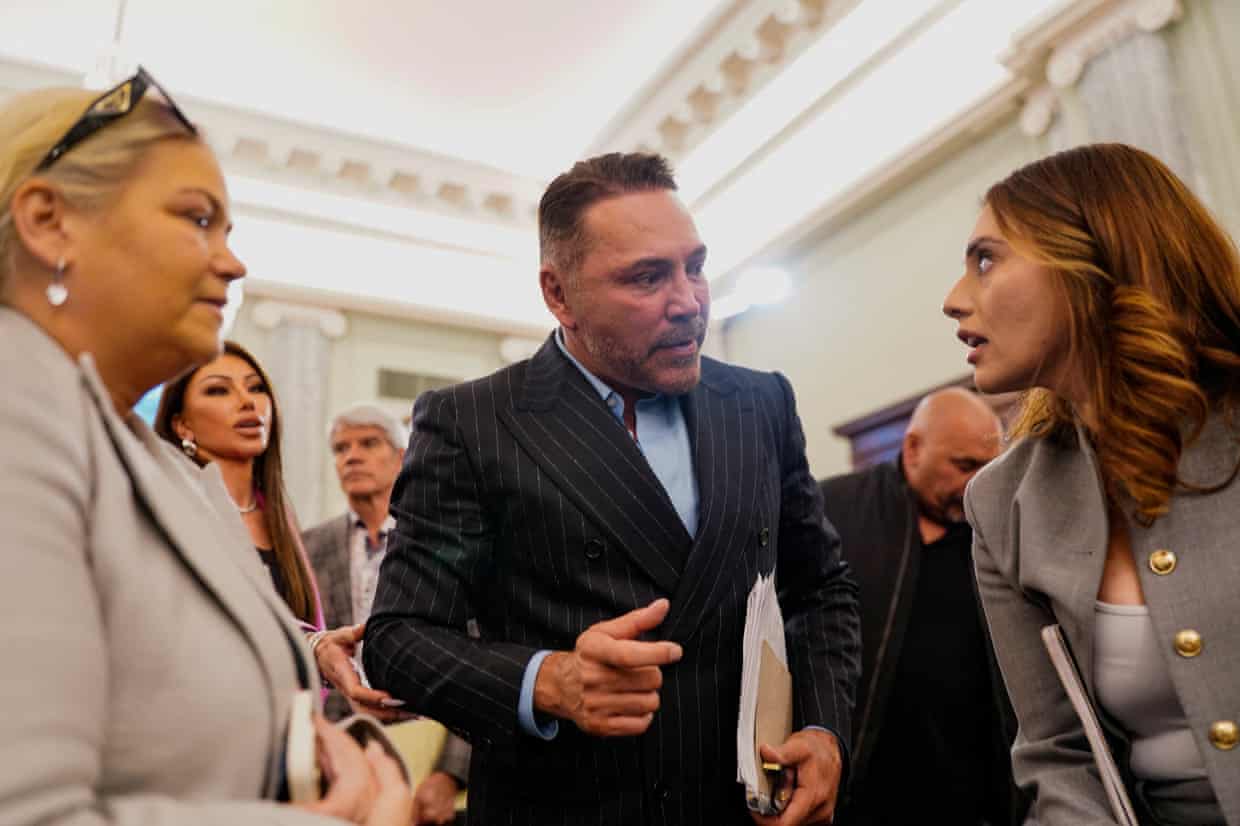
‘For billionaires, not boxers’: De La Hoya warns over Ali Act overhaul in Senate hearing