Ocado failing to deliver on its potential as one of UK’s great technology hopes

Only six years ago, the boss of Ocado Group was writing the obituary for supermarkets as he predicted that a surge in online grocery shopping during the pandemic had brought forward the hi-tech future,“Not every store will disappear, but there will be a dramatic shift,” Tim Steiner said at the height of the Covid pandemic, when shopping from the sofa became the only option for many,Fast-forward to today and the prospect seems distant as the UK grocery technology group again slashes jobs as it battles heavy losses,Shares in the group slumped more than 6% to 220p on Thursday, as it revealed worse than expected annual losses and 1,000 job cuts, half of which are in research and development,At that price, shares are 22% above Ocado’s stock market float price of 180p in 2010 and a staggering 90% lower than their pandemic peak.
It has rarely made a profit since it was founded a quarter of a century ago.The company, once one of the UK’s great technology hopes, has suffered setbacks in terms of taking its technology to new clients and has had to rein in ambitions on that front.Kroger, a major partner to Ocado in the US, announced last November it was closing three warehouses using the UK company’s equipment.Two months later Ocado revealed its Canadian partner, Sobeys, was closing its Calgary facility.Steiner admitted to the Guardian on Thursday that “the market for large automated distribution centres in the US is smaller than we thought it would be”.
One member of Ocado staff said workers had been told that some Ocado technology offices – which span from Hatfield, Welwyn Garden City and central London to Bulgaria, Poland, Spain and Canada – were likely to be closed or significantly downsized.The worker said they had not been told exactly which jobs would go and “communications are very unclear, putting people under a lot of stress”.“Before Covid, what we were building was absolutely at the front row in logistics.During Covid, there was huge expansion and we lost technology leadership,” they said.Several rounds of redundancies in recent years meant “morale is dropping”, they said.
“Prospects are more uncertain and a lot of competitors are appearing.”Ocado’s retail joint venture with Marks & Spencer may be the UK’s fastest-growing grocer but only about 13% of groceries are bought online in the UK according to Worldpanel by Numerator, with about a fifth of us choosing that option.The online grocery market continues to grow but there is hefty competition for those sales and Ocado’s technology is not necessarily the first choice for retailers trying to take their share.Grocers around the world are finding that large distribution centres, even those run super-efficiently with robots, are an expensive and inflexible option for managing deliveries.Instead they are turning to the likes of Deliveroo, Just Eat and Uber Eats who are all competing to manage swift deliveries from stores.
Big operators such as Tesco and Sainsbury’s have built their own grocery delivery networks with a combination of hi-tech warehouses, store-based distribution hubs and picking directly from shelves.Ocado’s model requires hefty upfront investment and often a long road to profitability, with money tied up in automated warehouses, state-of-the-art robots and refrigerated vans.It works well in high-density cities where there is consistent requirement for home deliveries but it struggled to scale up rapidly during Covid, for example, when demand rocketed.The alternative is cheap, using spare space in stores to hold and sort product or picking items straight from supermarket and convenience store shelves.These operations can also expand and contract with ease to reflect consumer demand given its reliance on a usually self-employed army of bike riders and existing store staff.
Chris Beauchamp, the chief market analyst at the share trading platform IG, said: “Ocado continues to be one of the most impressive vehicles for shareholder value destruction we have seen.For a company once seen as the future of supermarket delivery, its fate has been to be overtaken by its more pedestrian, but larger, rivals utilising their size and reach and building on their existing business to tell a much more compelling story for investors.“Rather than use Ocado’s technology, they have instead built their own and simply bypassed the newcomer, leaving Ocado as the great white elephant that failed to deliver.”Steiner counters that demand for Ocado technology is “bigger than ever” as the company can put smaller-scale versions of its robotic equipment into local stores to help make picking and packing groceries more efficient.He said this could work alongside delivery aggregators such as Deliveroo, Amazon and Just Eat, which pick up products from stores.
A similar model is being tested by its client Morrisons in the UK.“We have the designs and we are taking it to our clients at the moment,” Steiner said.“The market is evolving and we are evolving.The market is huge.It is complex and it is not always a straight road but we are in good shape.
”But Tintin Stormont, an analyst at Deutsche, said ultimately investors “want to see Ocado maximise monetisation of the innovations it has developed”.“We believe the stock is in a ‘show-me’ phase till this happens.”
Ocado failing to deliver on its potential as one of UK’s great technology hopes
Only six years ago, the boss of Ocado Group was writing the obituary for supermarkets as he predicted that a surge in online grocery shopping during the pandemic had brought forward the hi-tech future.“Not every store will disappear, but there will be a dramatic shift,” Tim Steiner said at the height of the Covid pandemic, when shopping from the sofa became the only option for many.Fast-forward to today and the prospect seems distant as the UK grocery technology group again slashes jobs as it battles heavy losses.Shares in the group slumped more than 6% to 220p on Thursday, as it revealed worse than expected annual losses and 1,000 job cuts, half of which are in research and development. At that price, shares are 22% above Ocado’s stock market float price of 180p in 2010 and a staggering 90% lower than their pandemic peak

Subsidies for Rolls-Royce might seem a bit rich, but they are inevitable | Nils Pratley
Rolls-Royce, the engine-maker and defence firm that is spitting out so much cash it can shove £7bn to £9bn towards buying back shares over the next three years, would like UK taxpayers to find a few quid – reportedly up to £200m as a first slug – to help fund one its big bets. The company would “appreciate” financial support from the government to smooth work on a new engine, says its chief executive, Tufan Erginbilgiç.Outrageous? Well, corporate welfare for Rolls is obviously absurd in the abstract. If there is a definition of a company that can afford to pay for its own research and development, this is it. One might also say Rolls owes us a favour since it was the recipient of billions of pounds worth of loan guarantees from the UK’s export finance agency when the Covid wolf was at the corporate door in 2020

Riaz Hasan obituary
My father, Riaz Hasan, who has died aged 87, was a water resources engineer with a distinguished career working across 40 countries – in the 1970s with the British firm Halcrow and, from the 80s, at the UN and the World Bank.Originally from Hyderabad, Riaz arrived in the UK in 1965 with £3 and an A–Z, invited, like many engineers in India at that time, by the government. After completing a master’s degree in water resources at Bradford University, where he developed a love of Yorkshire pudding and received his degree from Harold Wilson (which he described as a real privilege), he embarked on his career designing life-saving, long-term water and food solutions for the most vulnerable and those affected by war, famine and natural disasters.Born in the small town of Warangal, near Hyderabad, to Mohammed, an English professor, and his wife, Khadija, Riaz went to Nizam college. He did his engineering degree at Osmania University, graduating in 1960, then got his first job at the Central Water Power Commission (CWPC) in Delhi

Met police to pilot facial recognition identity checks, mayor confirms
Metropolitan police officers are to start scanning citizens’ faces using automated facial recognition technology to check their identities, in a move backed by the mayor of London but described as “alarming” by opponents.The pilot was revealed on Thursday when Sadiq Khan said 100 officers would use the roaming technology – commonly deployed on smartphones – for six months. The mayor was responding to questioning from an opposition politician amid rising concern about the rollout of AI-powered policing tools. The Met’s website still states it “does not presently use the so-called operator initiated facial recognition”.Face scanning has already been deployed by police with cameras on vans and in fixed locations including in Croydon, Manchester and South Wales

Birmingham City’s owners explore moving into rugby union and buying Prem franchise
Birmingham City’s owner, Knighthead Capital Management, is among a number of American investors exploring the purchase of potential new franchises in Prem Rugby before a radical shake-up of the sport due to be ratified by the Rugby Football Union on Friday.The RFU council will vote at Twickenham on proposals to ringfence the 10-team Prem with no promotion or relegation until 2030, when a staged expansion is planned, beginning with the addition of two more teams.While former top-flight sides such as London Irish, Wasps and Worcester Warriors as well as ambitious Champ clubs like Ealing Trailfinders will be given the opportunity to apply, Prem Rugby is also keen to secure new additions. New York-based merchant bank, The Raine Group, and Deloitte have been engaged with a brief to discuss franchise opportunities with potential new owners, as well as bringing new investment into Prem Rugby itself.Knighthead is understood to have expressed interest in acquiring a franchise as the next stage of its multisport strategy that has seen it buy a 49% share in the Birmingham Phoenix Hundred franchise, and a majority share in Netball Super League club Birmingham Panthers

Brady Tkachuk decries White House’s AI video of him insulting Canadians after US gold
US ice hockey star Brady Tkachuk has said he does not appreciate an AI video released by the White House that shows him insulting Canadians.Tkachuk played in the Americans’ victory over Canada at the Winter Olympics on Sunday, which secured the US men their first gold medal since 1980. In the wake of that win, the White House’s TikTok account published video of Tkachuk saying: “They booed our national anthem, so I had to come out and teach those maple syrup eating fuckers a lesson.”Tkachuk never said those words and the video, which has had more than 10m views, is labelled as AI-generated.“Well, it’s clearly fake, because it’s not my voice, not my lips moving,” Tkachuk said on Thursday

Record number of rough sleepers in England last year, official figures show

Jersey approves bill to legalise assisted dying for terminally ill adults
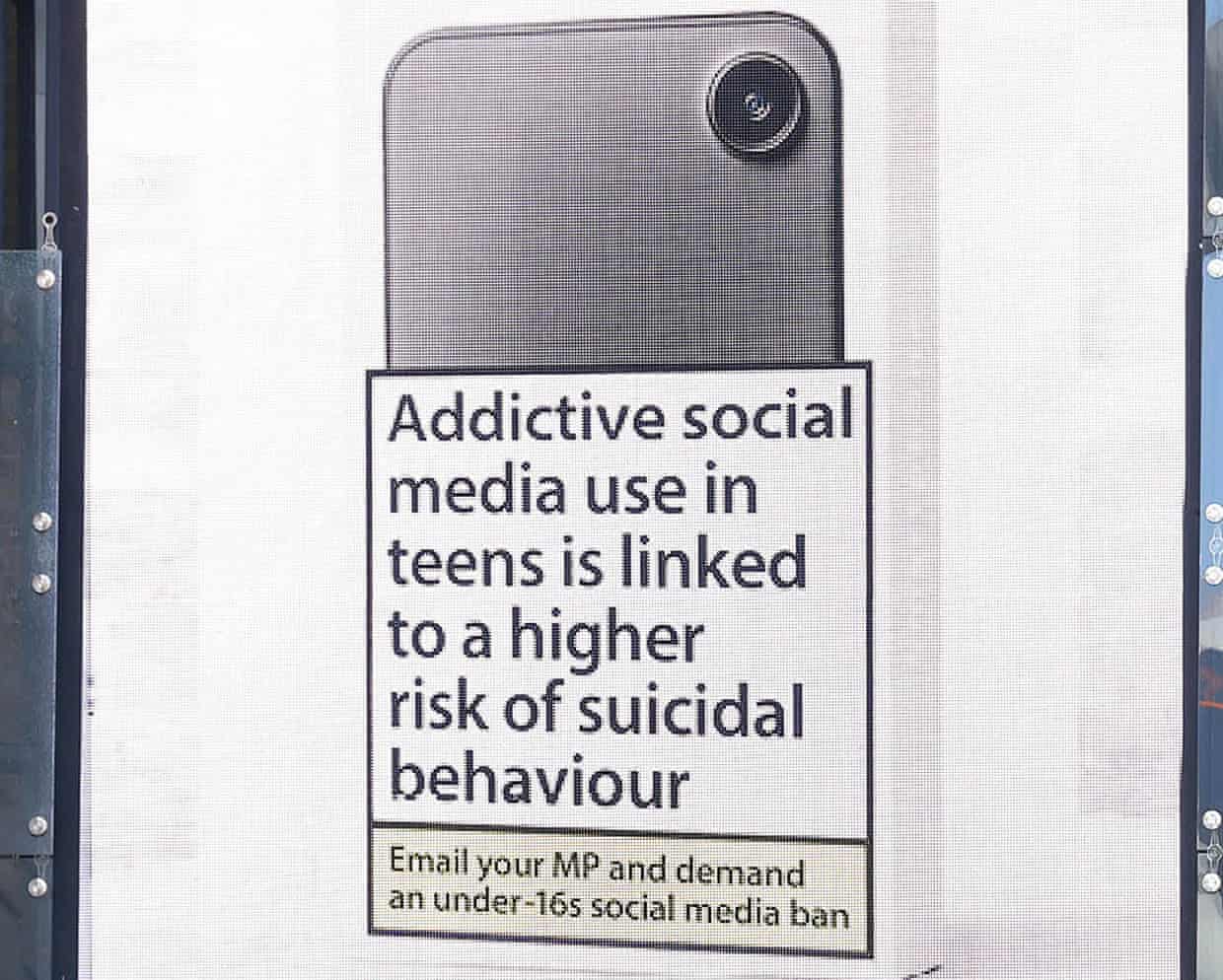
Mumsnet calls for under-16s social media ban with cigarette-style health warnings

Cruel comments, racism and cover-ups: key findings from England’s maternity care report

CPS issues new guidance on ‘honour’-based and dowry abuse

UK anti-slavery watchdog calls for overhaul of adult sexual services sites