Did you buy a coffee machine with a tax refund? Such purchases may have affected Australian interest rates

One of the first things many Australians did last year after receiving a tax refund or a lower mortgage rate was to buy an armchair, an air fryer or a coffee machine.The purchases, evident in company earnings published this week, came after households had endured years of high living costs – and consumption had been weak up until that point.And policymakers didn’t think homeowners or renters had the spare capacity.This pickup in demand – along with rising prices – for such goods turned out to be an important factor in the Reserve Bank’s decision to raise interest rates, because it was concerned inflation was broadening.“The things that are driving the uptick in inflation really are housing, durable goods and market services,” Michele Bullock, the RBA’s governor, said last week.
Sign up: AU Breaking News emailSo, why are people increasingly buying consumer durables – goods that are designed to last for at least three years, like fridges, TVs and vehicles? What does that tell us about Australians’ attitudes towards debt – and how does it affect interest rates?For much of 2024 and early 2025, goods inflation was weak amid a cost-of-living crisis before suddenly accelerating.AMP’s head of investment strategy and chief economist, Shane Oliver, says the spending patterns show that Australians just needed a bit of financial relief to feel confident again.“People seem to be withstanding higher levels of debt than previously thought,” Oliver says.Breville reported double-digit revenue growth in Australia over the past six months, backed by surging coffee machine sales.While some customers bought simple drip devices and, at the other end of the price scale, touchscreen brew-to-order machines, most bought middle-class models priced at about $700.
Premium furniture retailer Nick Scali reported a 13% lift in sales revenue from its Australian and New Zealand business unit while also expanding profit margins.Meanwhile, revenue at online retailer Temple & Webster increased 20% – although many customers waited for discounts, crimping the company’s profitability.Such discretionary purchases were made despite very high household debt in Australia, both historically and compared to the rest of the world.While mortgage and rental stress is traditionally defined as spending more than 30% of pre-tax income on loan repayments and rent, many Australians are now either comfortable with (or resigned to) the fact that they will breach this metric due to high housing costs.It appears that as long as someone has a job, and Australia has robust employment levels, they are willing to spend.
Ashwin Clarke, a senior economist at the Commonwealth Bank, says Australians have been willing to spend on discretionary items such as household goods as easing inflation and rate cuts brought respite after some “pretty tough” years,“We had three interest rate cuts last year which also helped to boost household incomes,” Clarke says,“We have seen mortgagees increase their spending more than other housing cohorts over the last several months,”CBA’s analysis of deidentified payments data from 7 million customers found household spending rose 0,5% in January, marking 16 consecutive months of growth.
Its data shows that consumers recently splashed out on tickets, travel and fitness, with major events including the Australian Open tennis and summer festivals drawing strong crowds.It also noted strong purchases of clothing and hardware.There is also evidence that mortgage-free young adults are seeking ways to navigate affordability pressures without completely giving up on indulgences, even if that means plunging deeper into debt.This contrasts with the historical, cautious response of forgoing discretionary items altogether when facing financial pressure.Gary Mortimer, a retail expert at the Queensland University of Technology, says those aged over 55 remain the cohort most likely to buy durable goods.
“They’re updating tv sets, they’re travelling … they’re upgrading the car.They’re the big spenders at the moment,” says Mortimer.When the RBA lifted the cash rate earlier this month, ending its shortest rate cut cycle in 30 years, it cited housing and consumer durables as key drivers of a resurgence in underlying inflation.The RBA also noted there were constraints on the economy’s ability to deliver the things people and businesses demanded, leading to higher prices.Although consumer durables are still a modest contributor to the recent rise in the consumer price index, central bankers see them as a “canary in the coal mine” for the broader economy, given they could usher in more permanent inflationary pressures that are hard to reverse.
While the central bank anticipated demand for both housing and consumer durables to slow, bringing down inflation in these sectors, it warned this outlook was “highly uncertain”.The question now turns to whether rising inflation will sour sentiment, or if Australians will keep buying more couches and coffee machines.While this earnings season has delivered mixed answers to that question, shares in Nick Scali plunged by more than 15% after it released its earnings on Friday.Investors were reacting to weaker-than-expected January sales figures, which could indicate some of last year’s buying enthusiasm is already waning as cost-of-living pressures reignite.
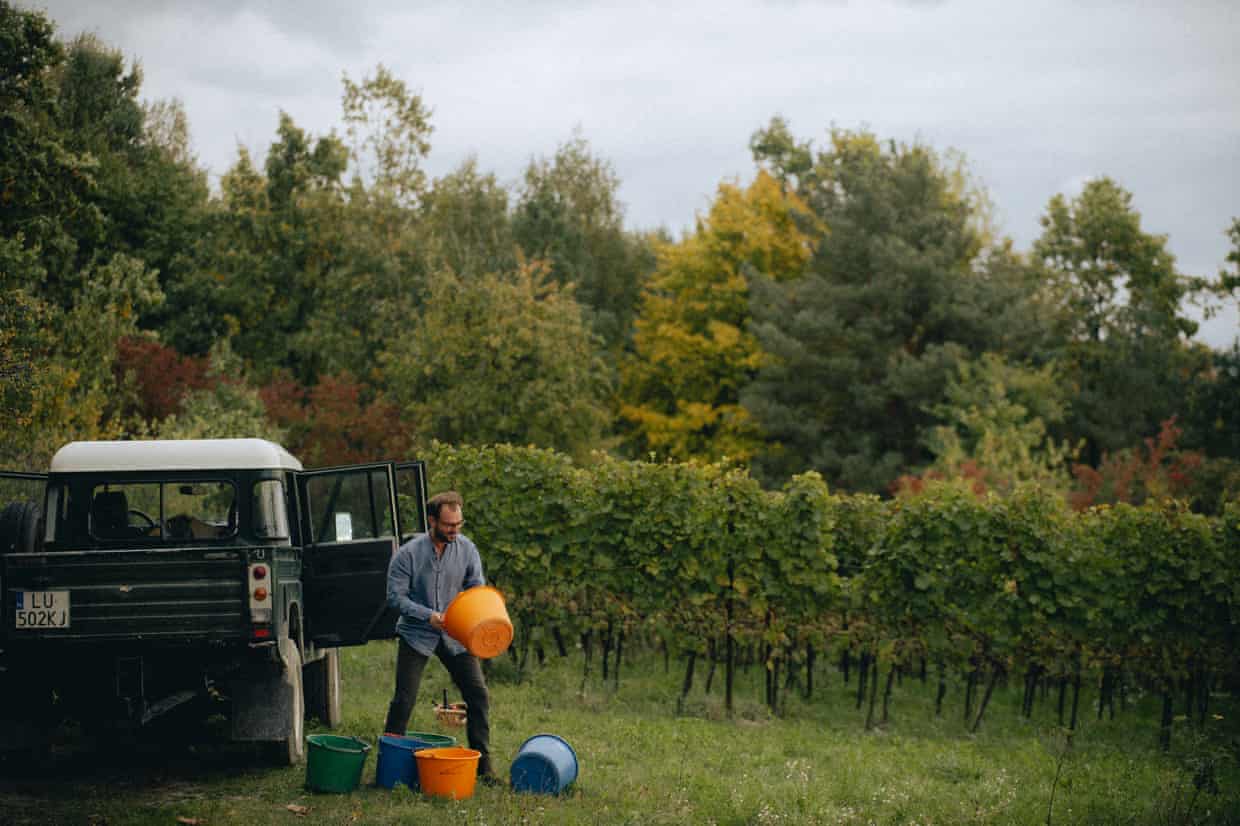
Heard it on the grapevine: Polish wine’s quiet renaissance
Swap the staid stereotypes of Żubrówka vodka and Żywiec lager for vineyards and vintages, because Poland is in the throes of a viticultural renaissance, the likes of which hasn’t been seen for centuries. On a road trip tracing Poland’s best terroirs back in the summer of 2023, I met winemakers going against the grain, unshackled by tradition and producing unpretentious, expressive pours that more than merit a place on your dining table.Lately, Polish wines have been cropping up all over bar and restaurant lists: Niemczańska’s chardonnay at London’s most emblematic Polish restaurant, the borscht-fronted Daquise in South Kensington, say, while chic bar Spry in Edinburgh has started stocking my favourite producers, Dom Bliskowice, Kamil Barczentewicz and Nizio. But you won’t find bottles nestling between the neat rows of kabanos sausages of your local Polski sklep, nor lining the supermarket shelves. Or not just yet, anyway
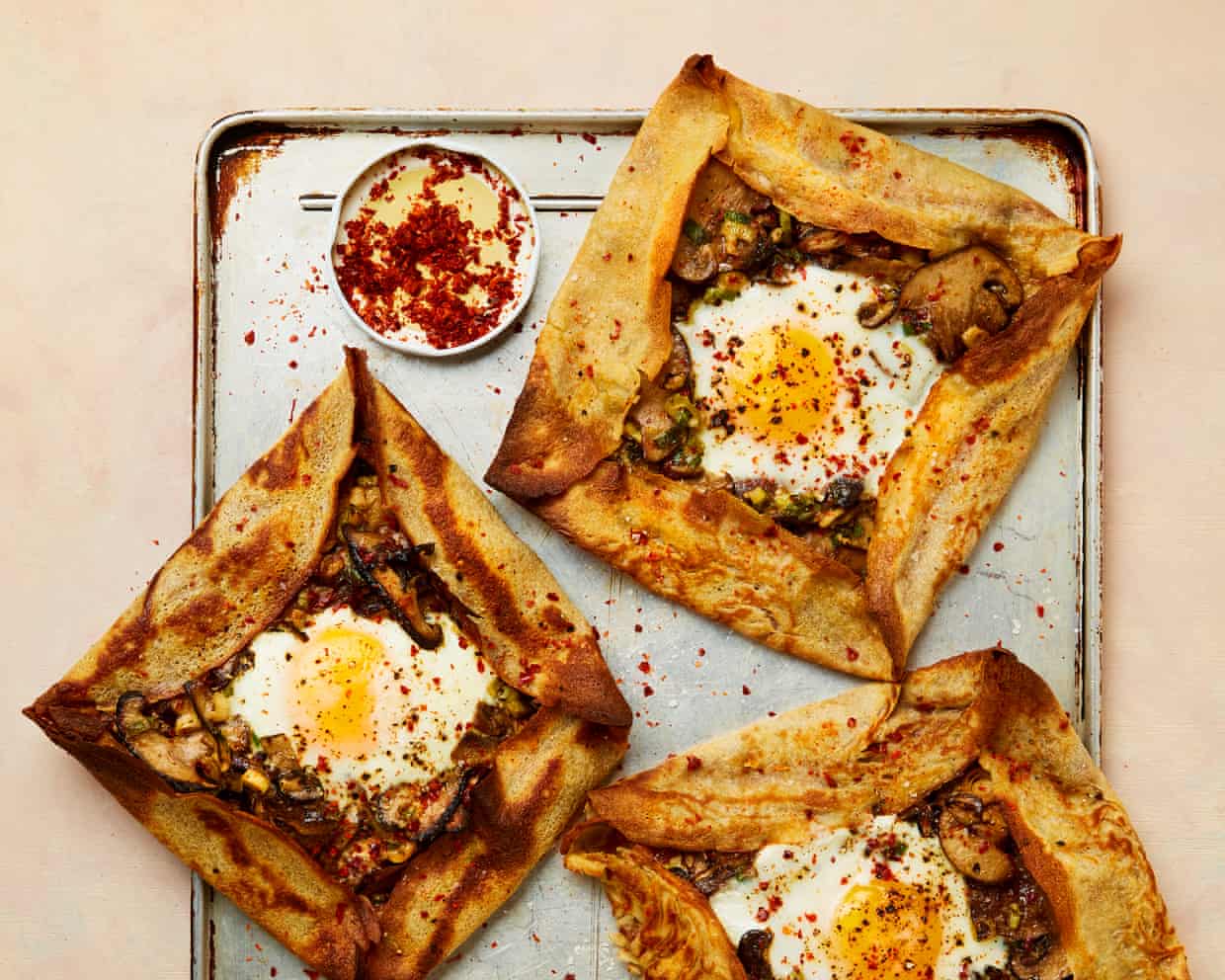
My love letter to Brittany’s best exports
Every February – or occasionally March – I get together with two friends to gorge on pancakes; I provide the pan, Caro does the cocktails and poor old Harry is invariably the chef because she never fails, even three ciders in. With two half-Frenchies in the room, we always start with buckwheat galettes, usually served complète with gruyère, ham and a fried egg (though the more we eat, the more adventurous the combinations become). Then we move on to softer, thicker British sweet pancakes with lemon juice and crunchy demerara sugar to finish. We rarely manage to meet on Shrove Tuesday itself, but apart from the year I went vegan for Lent, that’s no problem. After all, any cold, dark evening is improved by a pancake party
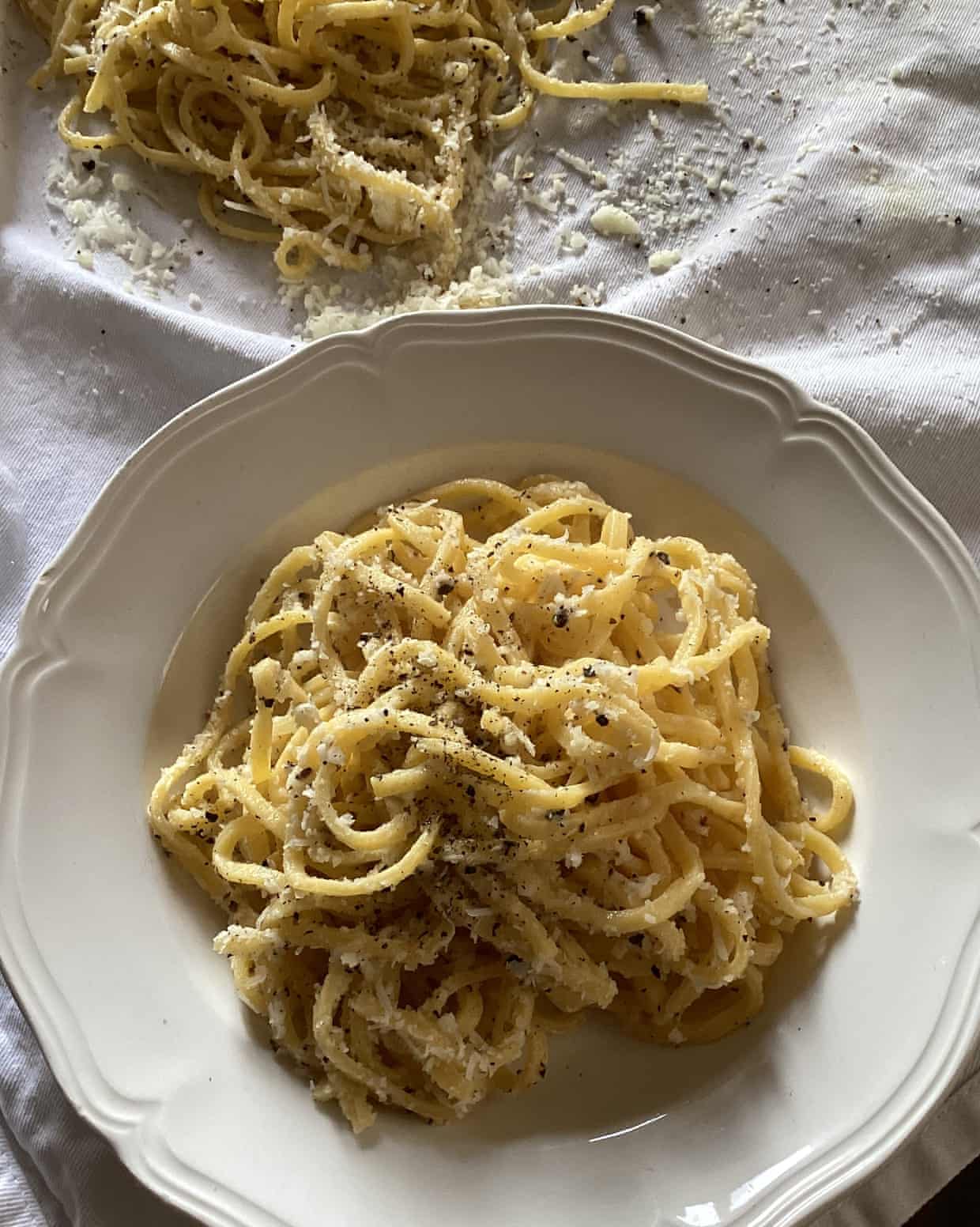
Rachel Roddy’s recipe for cacio e pepe, the old-fashioned way | A kitchen in Rome
Nightclubs, mechanics, restaurants, a theatre, a wholesale butcher and an Apostolic church occupy some of the network of caves and tunnels that, over the centuries, were burrowed into Monte Testaccio, an ancient rubbish dump hill in the middle of Rome that’s made entirely of broken amphorae. Some places make a feature of their situation, revealing sections of pots not dissimilar to the cross section of snapped wafer biscuits, while others have smoothed the curves with plaster.A few use the caves as originally intended – that is, as natural warehouses offering steady low temperatures and good humidity. In short: the ideal temperature for storing certain foods and wine. Most recently, Vincenzo Mancini, whose project DOL distributes artisanal products from small agricultural realities in Lazio, has taken over a deep cave behind door 93, reclaiming it as an urban ageing space for cheese and cured meat
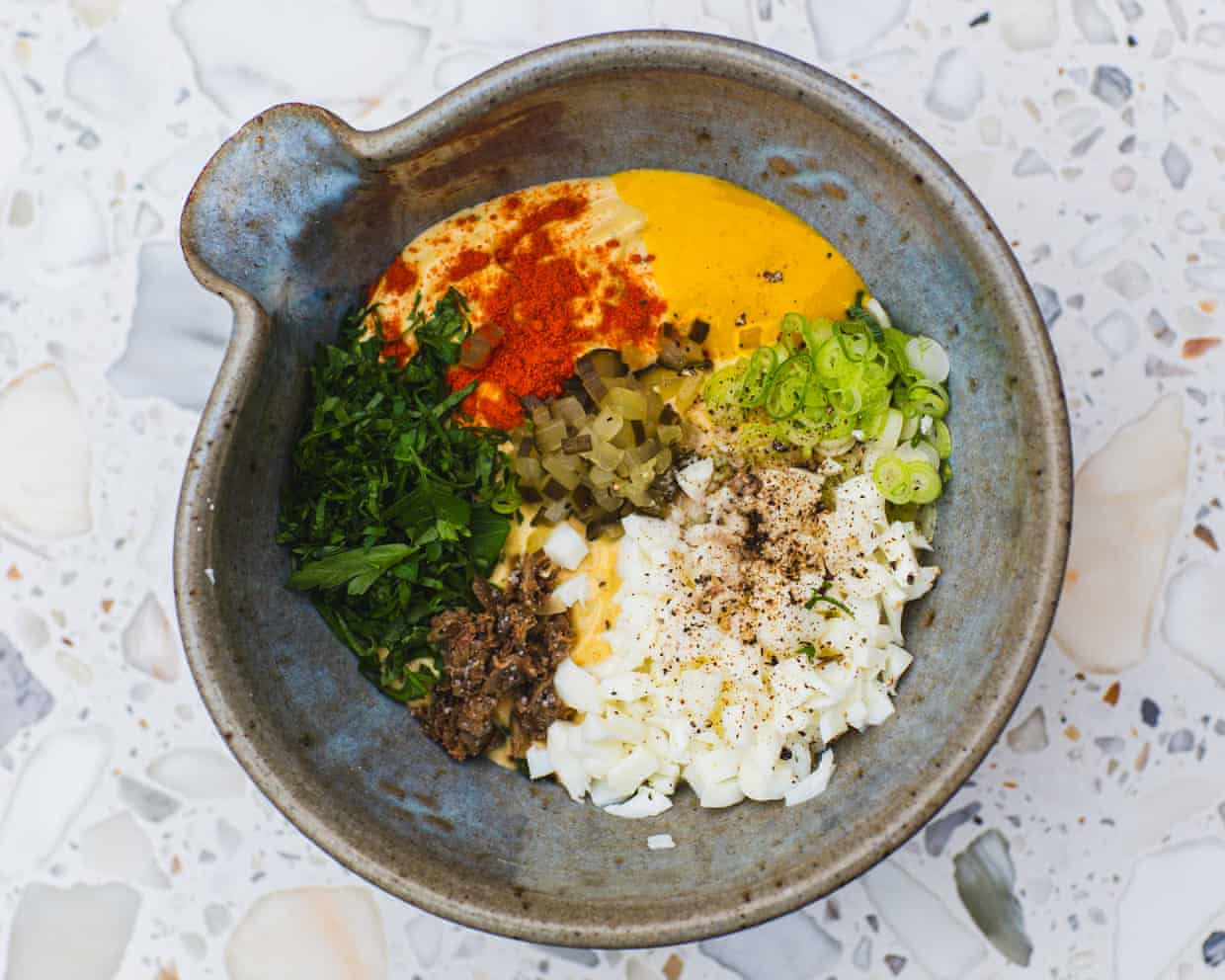
How to use up leftover pickle brine in a tartare sauce – recipe | Waste not
Depending on country, region, household or restaurant, every cook makes tartare sauce in their own way. Inspired by Auguste Escoffier’s exceptionally simple tartare, I’ve given his recipe a zero-waste twist by using whole boiled eggs and swapping in pickle brine from a jar of gherkins or capers to replace the vinegar. Everything else is optional: tarragon, mustard, cayenne … add what you like or have in store.Traditionally, tartare sauce is delicious with fish and chips, calamari or in a chicken sandwich, but I also like it tossed through potato salad with tinned sardines and radicchio. It’s also great as a dip with crudites and on top of a steaming jacket potato
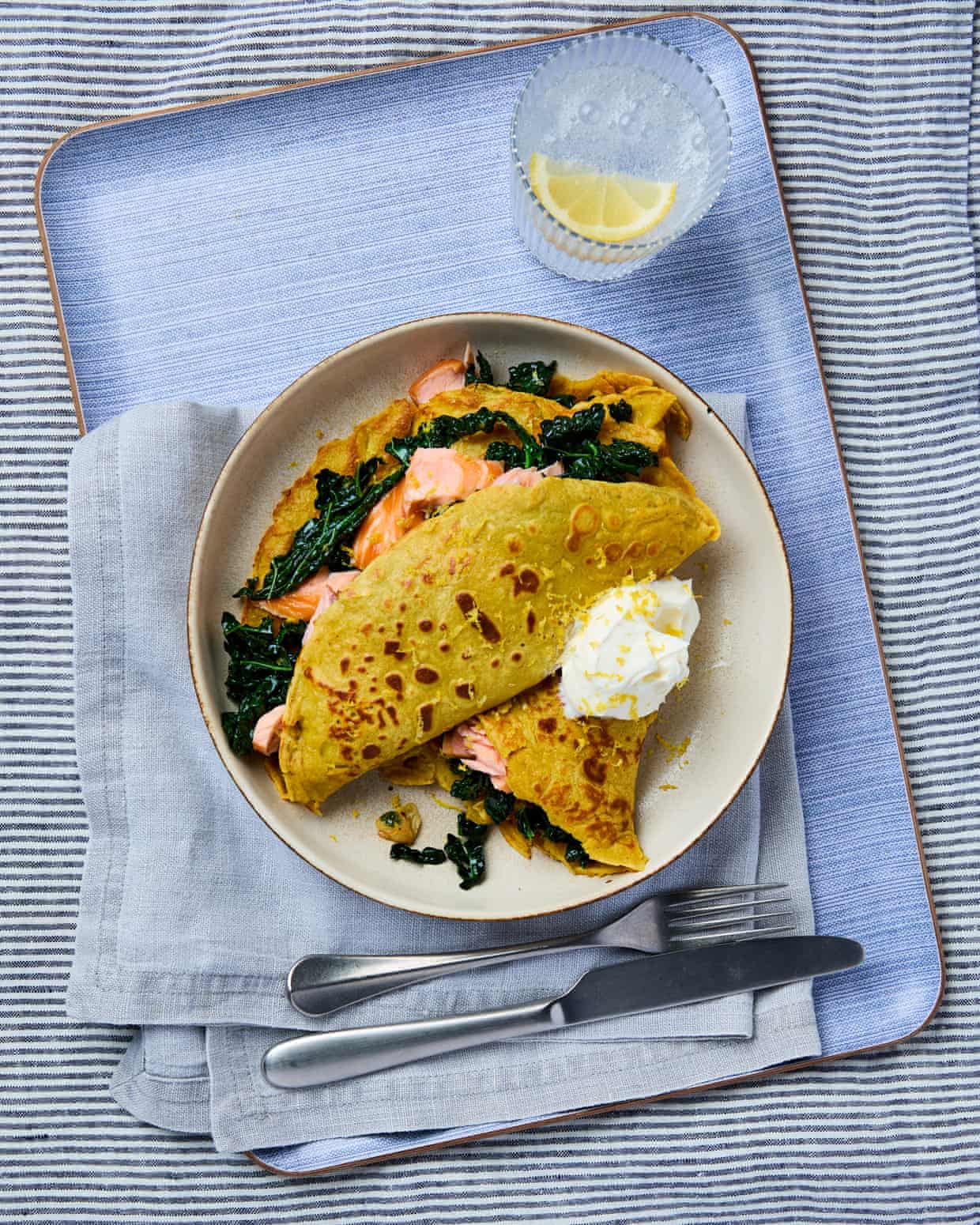
Cocktails and crepes in bed? Ravinder Bhogal’s recipes for Valentine’s Day breakfast
Give me breakfast in bed over a bunch of limp supermarket roses any day. Nothing says “I love you” more genuinely than a decadent tray of delicious things to savour between the sheets. Because V-Day falls on a weekend this year, you can do better than just buttered toast and an unbidden cup of tea. Whether it’s sweet or savoury (or even a cheeky cocktail), I’ve got you!These French crepes are given the Midas touch with a pinch of saffron. Use your favourite fish – mackerel and salmon also work well here

‘Boy kibble’: why are young men turning to dog food for meal inspiration?
The dried food, traditionally for pets, has become an unlikely influence for meal preppers. Some commenters have even claimed the trend could be an antidote to toxic masculinity Name: Boy kibble.Age: It’s new.Appearance: Like a dog’s dinner.Isn’t that what kibble is? Traditionally, yes, kibble is dried food for pets in pellet form, made of grains, vegetables and meat

Scotland 31-20 England: Six Nations – as it happened

‘A big call for the IOC’: is the fight over Olympic rowing on Australia’s predator-infested Fitzroy River all a croc?

Canada’s curling war of words with Sweden escalates after warning over ‘F-bomb’

Two races, two golds: Jordan Stolz smashes another Olympic record in 500m

Ireland 20-13 Italy: Six Nations rugby union – as it happened

Baloucoune spares Ireland’s Six Nations blushes as they recover to see off Italy