UK trade policy: time to stop the secret deals and get systematic

Trade can be a dirty business.Andrew Mountbatten-Windsor was tolerated as a “special representative for trade and investment” in the noughties despite allegations that he kept convicted gun smugglers for friends, while Peter Mandelson’s ability to schmooze the rich and famous repeatedly overruled concerns about his probity.To close a deal, there are always compromises to be made, and sometimes the terms are unsavoury.Britain is at the forefront of international deal making.It has been a trading nation for as long as it has existed.
And even before that.Recent studies have shown the Cornish were trading tin and copper long before even the Romans arrived in the UK.The question is, as trade routes become dominated by new powers, such as China and India, does the UK pursue its interests in the same old ways or attempt to clean up its act.Keir Starmer told us what he thought last year when he appointed Mandelson to be US ambassador, and in so doing, became yet another prime minister to put the art of the deal before more ethical concerns.When Liz Truss appointed Ian Botham as a trade envoy to Australia, the former cricketer’s qualifications for the job were not immediately obvious.
Last week, a group of MPs said the prime minister had spurned an opportunity to show he wanted to promote more sophisticated, secure and transparent trading relationships when he refused to appoint a “cross-government minister for economic security”.Liam Byrne, the business and trade committee chair and former Treasury minister, said deals were being done that needed more scrutiny, especially when Chinese companies are involved, to prevent them becoming national security issues later on.Byrne wants the government to be more mindful of the intrusion, coercion and spying that can accompany deals with big businesses in other countries.Byrne mentions China consistently in his warnings about trade deals and there are clear reasons to be concerned: China’s ruling Communist party is calculating and amoral in its dealings with the outside world.There are also the governments and powerful elites that have become corrupted by the discovery of natural mineral wealth before they adopted democratic institutions, or were handed them by former colonial rulers.
The financial waters have become even murkier in the last 30 years after an explosion in the money generated by the drug trade, which needs legitimate agencies to clean up the dirty cash.This is where corruption arrives on the doorstep of every country, regardless of their democratic history.Robin Cook wanted to establish Britain as an ethical trading nation when he became foreign secretary in the first Blair government.It was 1997 and China was emerging as big exporter.He gave a speech just 10 days after the election, in which he said: “The Labour government does not accept that political values can be left behind when we check in our passports to travel on diplomatic business.
Our foreign policy must have an ethical dimension,”In the 1980s, the £40bn al-Yamamah deal, initially for the supply of 120 Tornado aircraft and other military equipment, was agreed by the government of Margaret Thatcher and the son of the Saudi defence minister, Prince Bandar bin Sultan Al Saud,Thirty years later a report on the deal emerged to show how civil servants appeared to have lied about illicit commissions being paid to lubricate the deal,Cook lasted almost four years in the job, but his ethical foreign policy proved to be temporary,Those who see al-Yamamah as expedient won.
Cook was described as naive when he embarked on his mission and it was probably a fair criticism.Byrne’s mission is more focused and hard headed.Yet it still prompts the question.Can Britain navigate relationships with the likes of India, China, South Africa and Brazil in a way that avoids backroom deals.The Liberal Democrats would say the answer is to get back inside the EU.
That might happen 20 years from now, but the obstacles are many.Access to the single market and the customs union are strict.Switzerland and Norway have discovered this, and both have accepted being rule takers to gain access.Last month, trade minister Chris Bryant announced new trade envoys for France, Germany and Italy in an effort to build bridges beyond Brussels.It was Bryant who, in 2011, criticised “AirMiles Andy” for being a close friend of Libyan leader Muammar Gaddafi’s son Saif and the convicted Libyan gun smuggler Tarek Kaituni.
The trade minister’s plan to use some of the smartest Labour MPs outside government to link up with officials on the continent might help secure trade access at the margins.But Byrne is right that the more pressing issuing is how to protect ourselves from the temptation of cheap stuff, especially from China.And the kind of major deals – in defence, in the NHS and infrastructure – that store up problems for the future.Beijing’s seduction of the UK, now that it lies outside any major trading bloc, is just beginning.Beijing wants to tempt us with cheap electric cars, cheap telecoms equipment and cheap artificial intelligence now the EU and the US have placed stricter limits on trade.
In response, the UK needs a more systematic way of deciding what to buy.No more secret deals.No more laissez-faire.
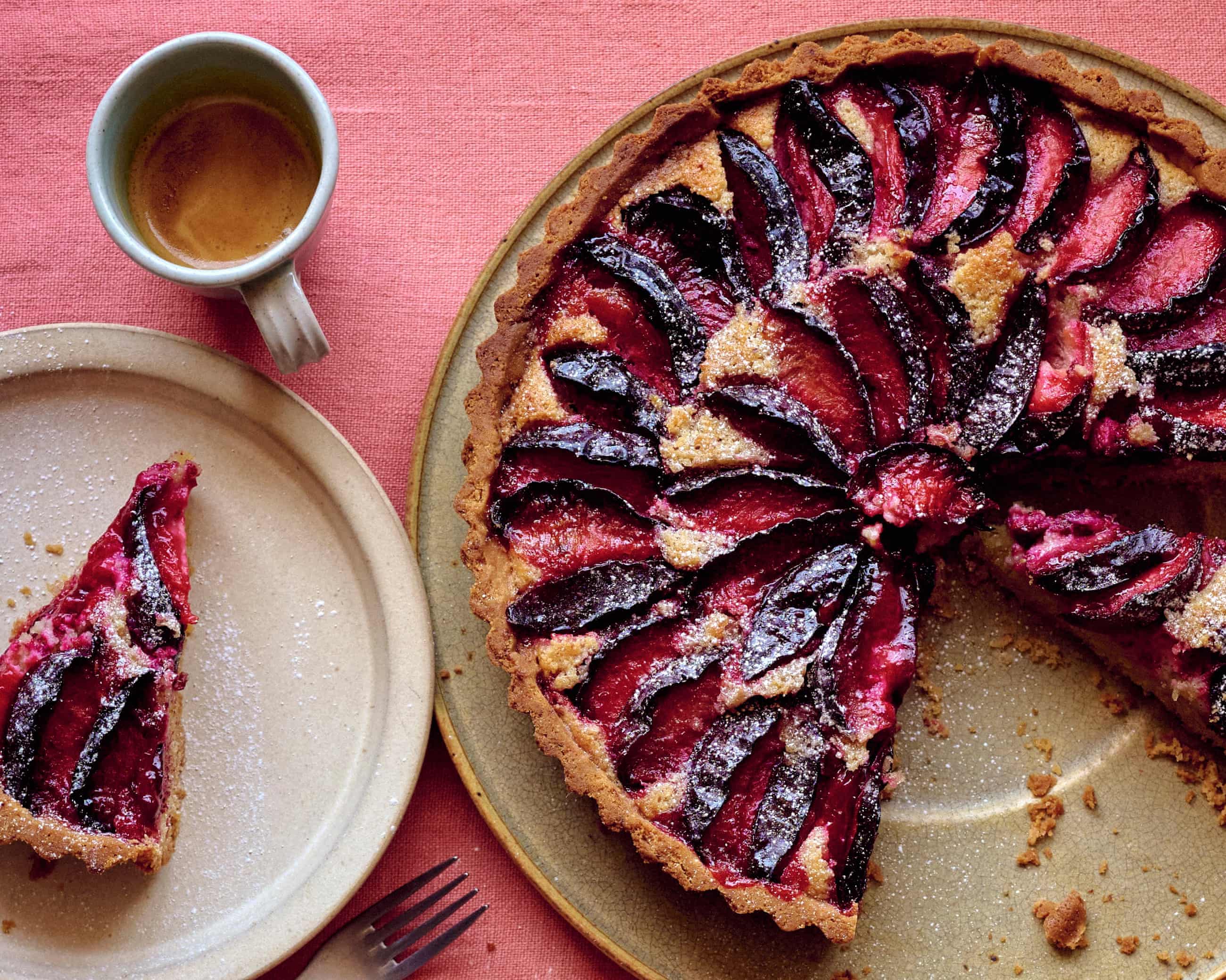
Rich plums and ripe tomatoes: Australia’s best-value fruit and veg for February
Tomatoes ripe for cooking, cheap watermelon and cucumbers for $2 a piece – but it’s the final call for apricots, cherries and mangoesGet our weekend culture and lifestyle emailJuicy watermelon, deep-purple plums and ripe roma tomatoes are some of the vibrant fruit and veg highlights this month, says Graham Gee, senior buyer at the Happy Apple in Melbourne.“Tomatoes are plentiful, in particular the saucing varieties,” he says. “Roma varieties are sold nice and ripe, ready to make passata.” Cooking tomatoes are roughly $2 a kilo at the Happy Apple, with Australian field tomatoes going for about $5 a kilo in supermarkets.Watermelon is “very cheap”, says Michael Hsu, operational manager at Sydney’s Panetta Mercato
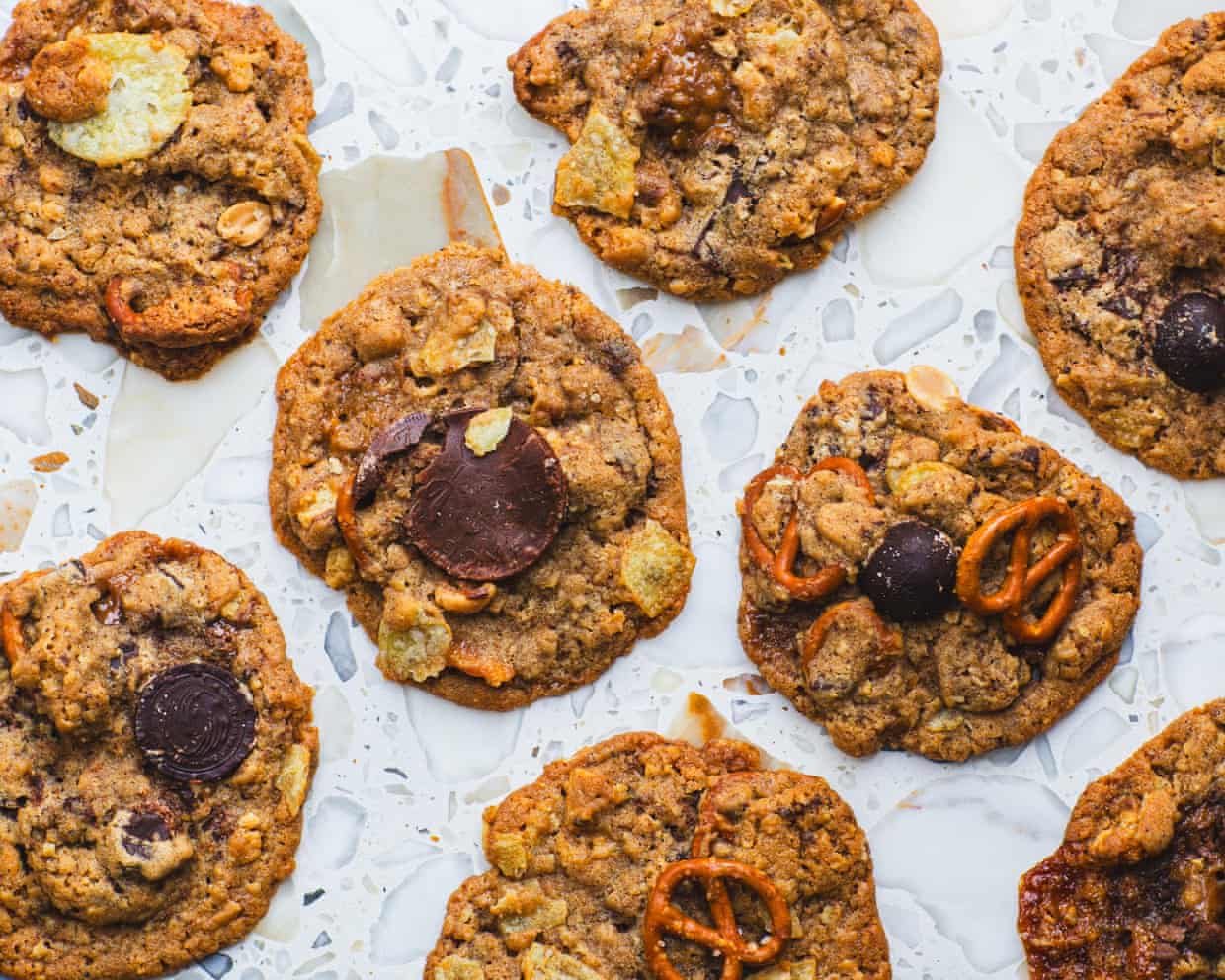
How to make moreish cookies from store-cupboard odds and ends – recipe | Waste not
I often eat a bag of salty crisps at the same time as a chewy chocolate bar, alternating bite for bite between the two, because the extreme contrast of salt from the chips and the sweetness of the chocolate fire off each other and create an endorphin rush. The same goes for these cookies, adapted from a recipe by Christina Tosi at New York’s legendary Milk Bar.Christina Tosi writes in Gourmet Traveller Australia how she first learned to make these cookies at a conference centre on Star Island, New England, where they’d bake them each week with a hodge-podge of different ingredients. Being on an island, they didn’t always have access to what they wanted, so they had to come up with a new recipe every week using whatever they had. In the spirit of the recipe’s origins, I’ve adapted Tosi’s recipe for the UK, and made it flexible, so you can raid your own store-cupboards and adapt and invent your own version from it
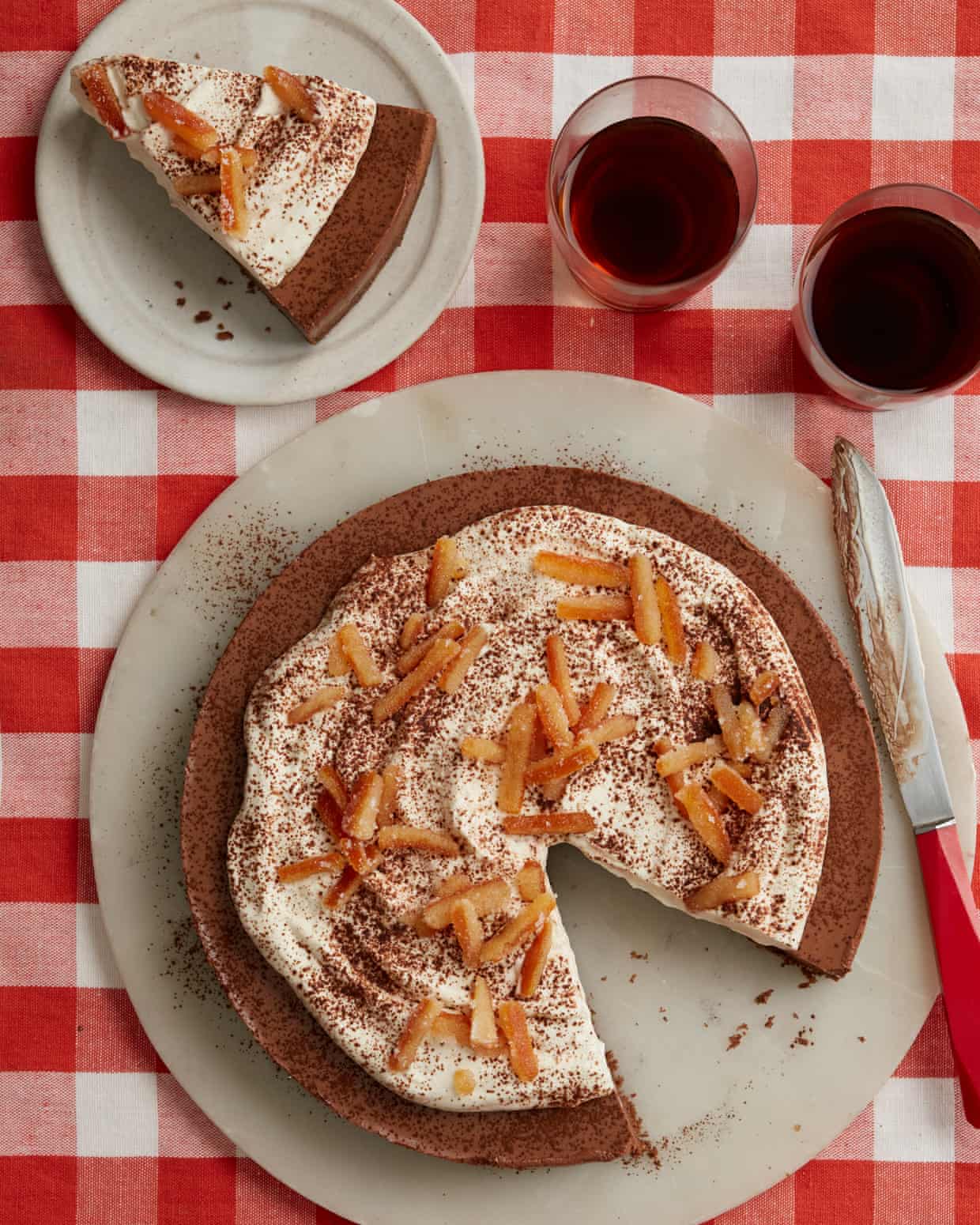
Camilla Wynne’s recipes for blood orange marmalade and no-bake marmalade mousse tart
If you’re intimidated by making marmalade, the whole-fruit method is the perfect entry point. Blood oranges are simmered whole until soft, perfuming your home as they do so, then they’re sliced, skin and all, mixed with sugar and a fragrant cinnamon stick, and embellished with a shot of amaro. Squirrel the jars away for a grey morning, give a few to deserving friends, and be sure to keep at least one to make this elegant mocha marmalade mousse tart. A cocoa biscuit crust topped with a chocolate marmalade mousse and crowned with a cold brew coffee cream, it’s a delightful trifecta of bitterness that no one will ever guess is an easy no-bake dessert.If you’re not up for preserving, make this using shop-bought thick-cut marmalade

The dump dinner: spaghetti is now being served straight on to the table – but why?
Name: Dump dinners.Age: Horribly new.Appearance: Feeding time at the zoo, but for humans.I’ve just Googled this. Apparently a dump dinner is a make-ahead slow cooker recipe
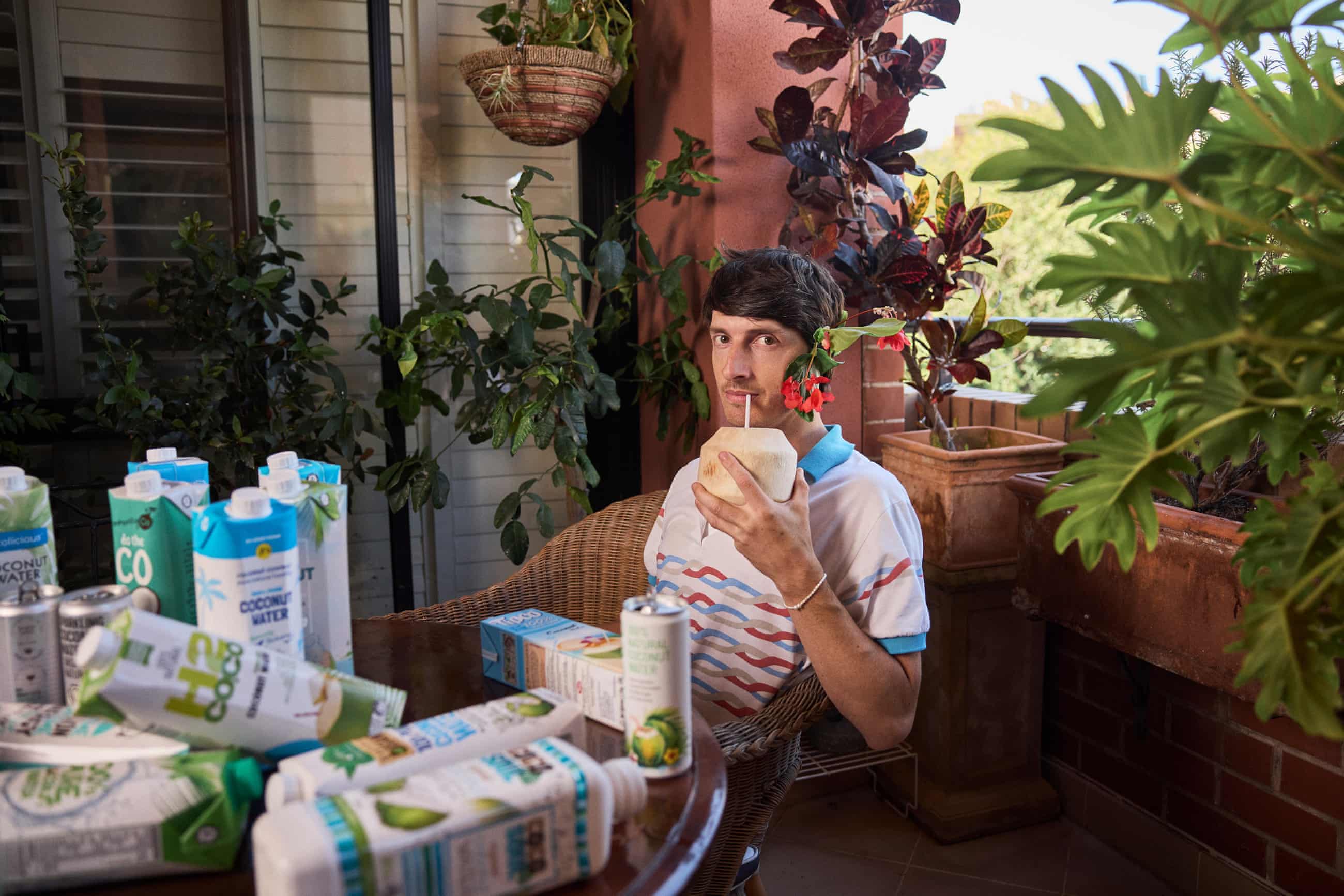
Australian supermarket coconut water taste test: ‘Smells like an island holiday’
Overcoming his irrational fear of coconut products, Nicholas Jordan tests a lovely – and lowly – bunch of coconuts in a rowIf you value our independent journalism, we hope you’ll consider supporting us todayGet our weekend culture and lifestyle emailI have a fear of coconut products. Like all fears it’s based on a questionable rationale and trauma, and my trauma is taste testing “health” coconut-heavy products that taste like soap. Which is why, until recently, almost all the coconut water I’d drunk was from a straw reaching out of a fresh coconut.Surely there’s no way a bottled coconut water, made from 100% coconut, could be that bad. Maybe it could be better than the real thing? I enjoy Melona more than the average honeydew melon
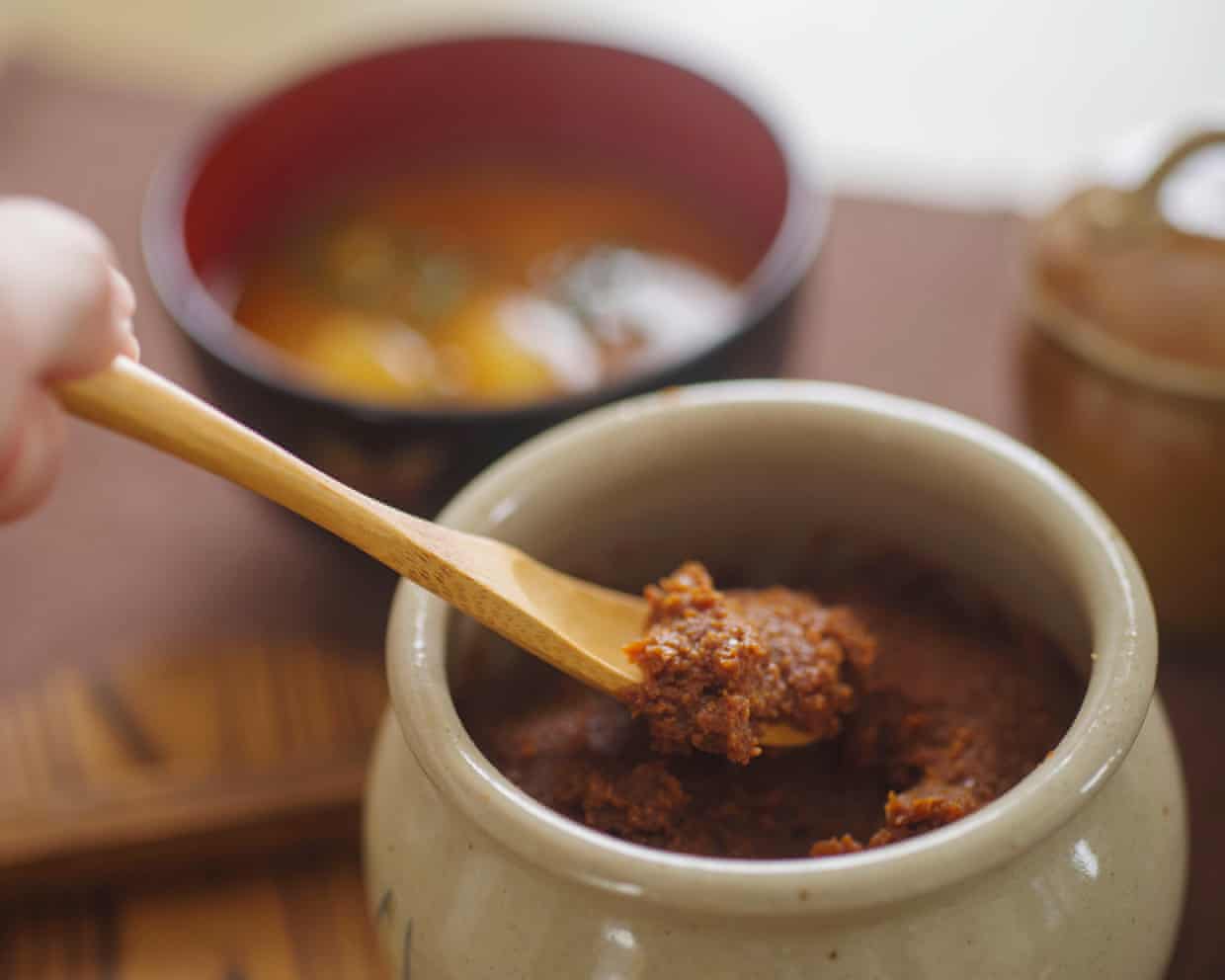
Miso mystery: red, white or yellow – how does each paste change your dish? | Kitchen aide
What’s the difference between white and red miso, and which should I use for what? Why do some recipes not specify which miso to use? Ben, by email“I think what recipe writers assume – and I’m sure I’ve written recipes like this – is that either way, you’re not going to get a miso that’s very extreme,” says Tim Anderson, whose latest book, JapanEasy Kitchen: Simple Recipes Using Japanese Pantry Ingredients, is out in April. As Ben points out, the two broadest categories are red and white, and in a lot of situations “you can use one or other to your taste without it having a massive effect on the outcome of the dish”.The Guardian’s journalism is independent. We will earn a commission if you buy something through an affiliate link. Learn more
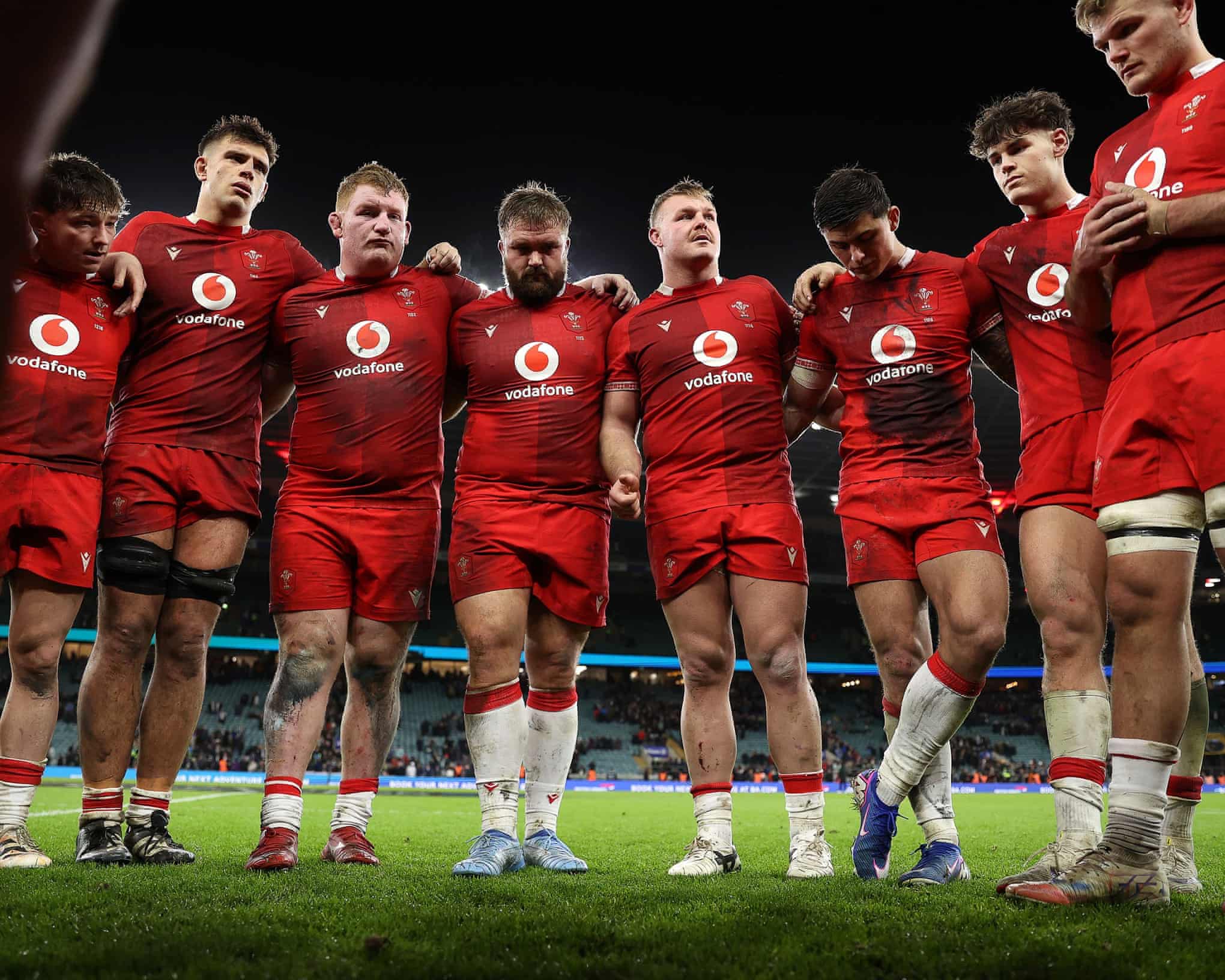
Wales’ woes are not just for their team and fans, but a crisis for the Six Nations | Michael Aylwin

‘We let people down’: Dewi Lake apologises to Wales fans after England thrashing

Team GB lose Cas appeal over new skeleton helmets at Winter Olympics

England 48-7 Wales: Six Nations player ratings from Twickenham

‘It’s bigger than just coach and athlete’: Jess Hull’s family ties bind an Olympic dream

England 48-7 Wales: Six Nations 2026 rugby union – as it happened